
Origins & spiritual significance
Arupadai Veedu means the six battle-camps or sacred abodes of Lord Murugan, the Tamil god of youth, wisdom and victory. The circuit brings together six important Murugan shrines in Tamil Nadu and is rooted in Tamil devotional tradition. Its literary foundation is commonly associated with Tirumurukarruppatai, an early Tamil devotional poem traditionally attributed to Nakkirar, which praises Murugan and guides devotees towards his sacred places. The six-site pilgrimage as practised today joins those literary and regional traditions into a single journey of worship; individual temples also preserve their own local histories and legends.
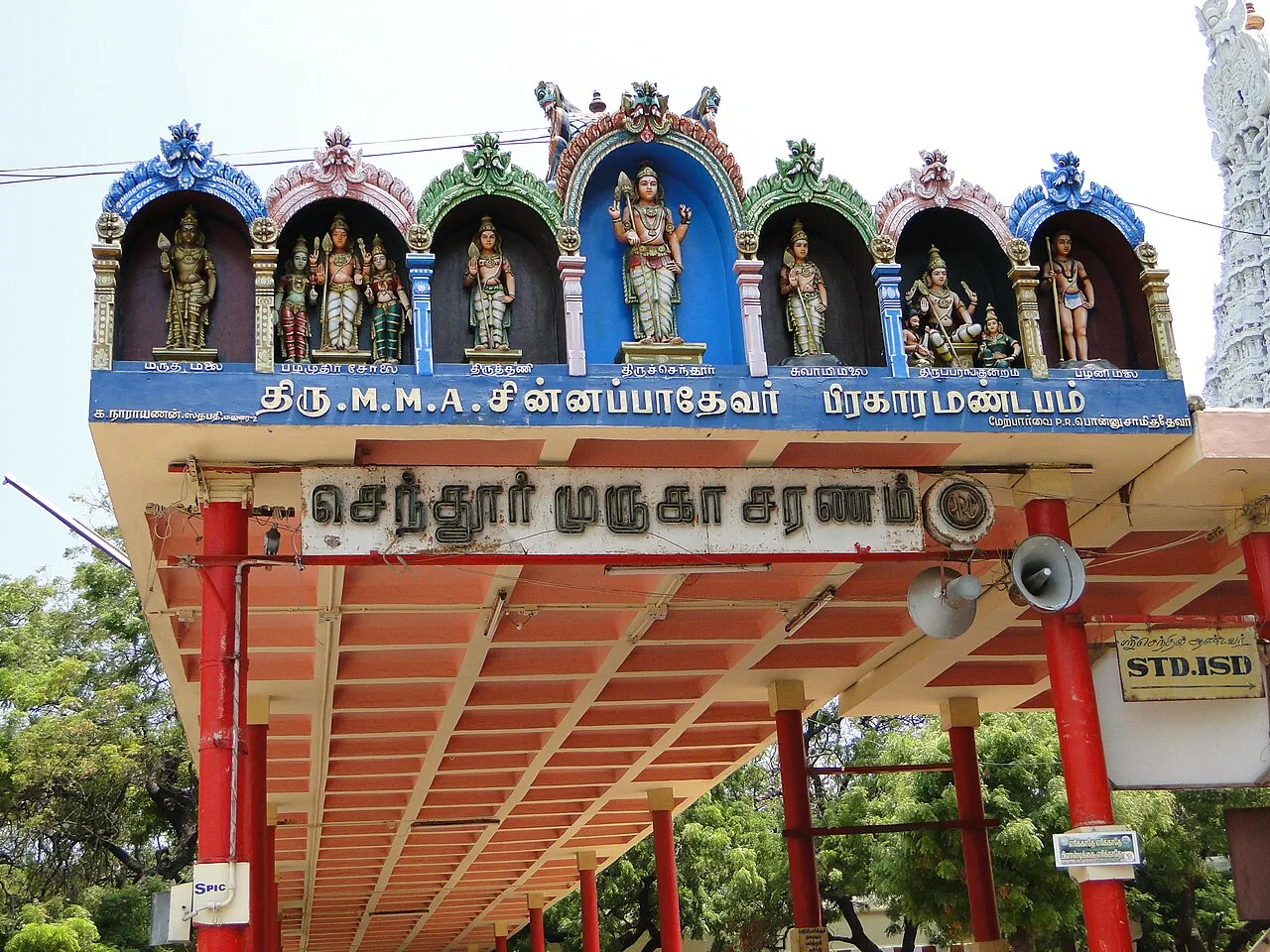
The stories give each shrine a distinct spiritual emphasis. Murugan’s victory over the asura Surapadman is especially remembered at Tiruchendur, while Thiruparankundram is associated with his marriage to Devasena. At Palani, he is revered as the renunciant Dandayudhapani, and at Swamimalai as the teacher who revealed the meaning of the sacred syllable Om to Shiva. Tiruttani traditions connect the hill with peace after conflict and with Murugan’s marriage to Valli. The final abode in the conventional six is Pazhamudircholai, a wooded hill shrine near Alagar Kovil, associated with both Valli and Devasena.
Devotees undertake the circuit to offer thanks, seek courage or clarity, fulfil vows, and experience the different landscapes and forms of Murugan worship. Some travel all six sites in sequence; others visit one or more shrines according to family custom, health or available time. The journey is not a single prescribed rite, and the order of travel need not determine the sincerity of a pilgrimage.