
Ghumoopedia — Explore, Discover, Experience
Sign in

Harvest · Tamil Nadu

Aadi Perukku

Cauvery delta districts

Dates

Last verified 17 November 2026. Confirmed: announced by organisers or government. Provisional: from a published almanac, not yet announced. Seasonal: no date announced.

The complete guide

Aadi Perukku: everything to know before you go

Also known as
Aadi 18, Aadi Pathinettam Perukku, River Cauvery Water Festival
State & District
Tamil Nadu; Delta & Riverine Districts (Tiruchirappalli, Thanjavur, Erode, Salem, Karur, Nagapattinam)
When
18th day of the Tamil Month of Aadi (Late July – Early August)
Duration
1 Day
Faith & Community
Hindu (Nature Worship, Sacred River Veneration, Agrarian Community)
Type
Agrarian Festival, River Worship, Women's Sacred Ritual, Nature Thanksgiving
Entry
Free and open to all public on riverbanks and ghats
Best for
River ghat rituals, Chitraannam feasts, Mulaipari sprouted grain float, new wedding vows renewal

Overview

Aadi Perukku, celebrated on the 18th day of the Tamil solar month of Aadi (falling in late July or early August), is Tamil Nadu's grand festival of nature worship, river veneration, and agricultural thanksgiving. The word 'Perukku' means 'rising' or 'overflowing', signifying the swelling of water levels in the sacred Cauvery River and its tributaries due to the onset of the South-West Monsoon in the Western Ghats. For the agrarian heartland of Tamil Nadu—particularly the Cauvery delta districts of Tiruchirappalli, Thanjavur, Karur, Erode, and Nagapattinam—Aadi Perukku marks the official commencement of the new agricultural paddy sowing season ('Aadi Pattam').

The festival is essentially a tribute to water as the life-giving force of the universe, personified as Goddess Cauvery (Cauvery Amman). Families, newly married couples, and women gather at riverbanks ('Ghats'), lakes, and water reservoirs at dawn to perform elaborate pujas, offer sprouted seeds ('Mulaipari'), float floral lamps, and share traditional flavored rice feasts ('Chitraannam'). The festival reflects the ancient Tamil eco-spiritual ethos of living in harmonious gratitude with natural water ecosystems.
Origins and legend

The origin of Aadi Perukku is rooted in ancient Sangam Tamil literature and Vedic mythology. According to divine legend, Goddess Cauvery descended to Earth from the water pot of Sage Agastya to turn the dry plains of Tamil Nadu into a fertile paradise. On the 18th day of Aadi, the river goddess undergoes her divine manifestation of abundance, filling the riverbanks to the brim.

Another legend links Aadi Perukku to the Mahabharata: after the great Kurukshetra war, the Pandavas performed sacred rituals on the banks of the Cauvery on Aadi 18 to cleanse war sins and seek prosperity. In Tamil agrarian culture, the ancient proverb 'Aadi Pattam Thedi Vidhai' ('Sow seeds in the month of Aadi') highlights the historical wisdom of planting crops when monsoon waters swell the rivers, ensuring a bounty during the winter harvest.

How it is celebrated

On the morning of Aadi Perukku, households are decorated with intricate rice-flour Kolam designs representing water waves and lotus flowers. Women and young girls prepare sacred offerings and head to the nearest river ghats, canal banks, or sea shores.

At the river ghat, a small patch of river sand is smoothed out to form a symbolic shrine for Goddess Cauvery. Devotees place turmeric idols of Goddess Ganesha and Cauvery Amman, offering flowers, betel leaves, mango leaves, lit camphor, and sacred yellow threads ('Manjal Kayiru'). Newly married women tie fresh yellow threads around their necks, praying for their husbands' longevity and happy marital lives, while unmarried girls tie yellow threads around their wrists praying for good life partners. Old wedding garlands from recent marriages are reverently immersed into the flowing river water.

The Cultural Days

Though Aadi Perukku is a single-day public festival, it forms part of the broader month-long Aadi celebrations in Tamil Nadu, which include Aadi Velli (Fridays), Aadi Chevvai (Tuesdays), and Aadi Amavasai (New Moon).

On riverbanks across Srirangam (Tiruverumbur/Amma Mandapam ghat in Trichy), Bhavani Kooduthurai (Erode), Hogenakkal (Dharmapuri), and Thanjavur, folk musicians gather to play Nadaswaram tunes. Folk dances such as 'Kavadi' and 'Kummi' (traditional circular clapping dance by women) are performed on the green lawns surrounding river parks.

The Pilgrimage Days

Major pilgrimage congregations take place at sacred river confluences ('Triveni Sangam'). At Bhavani Kooduthurai in Erode district—where the Cauvery, Bhavani, and invisible Amudha rivers meet—tens of thousands of pilgrims take holy dips and perform rituals.

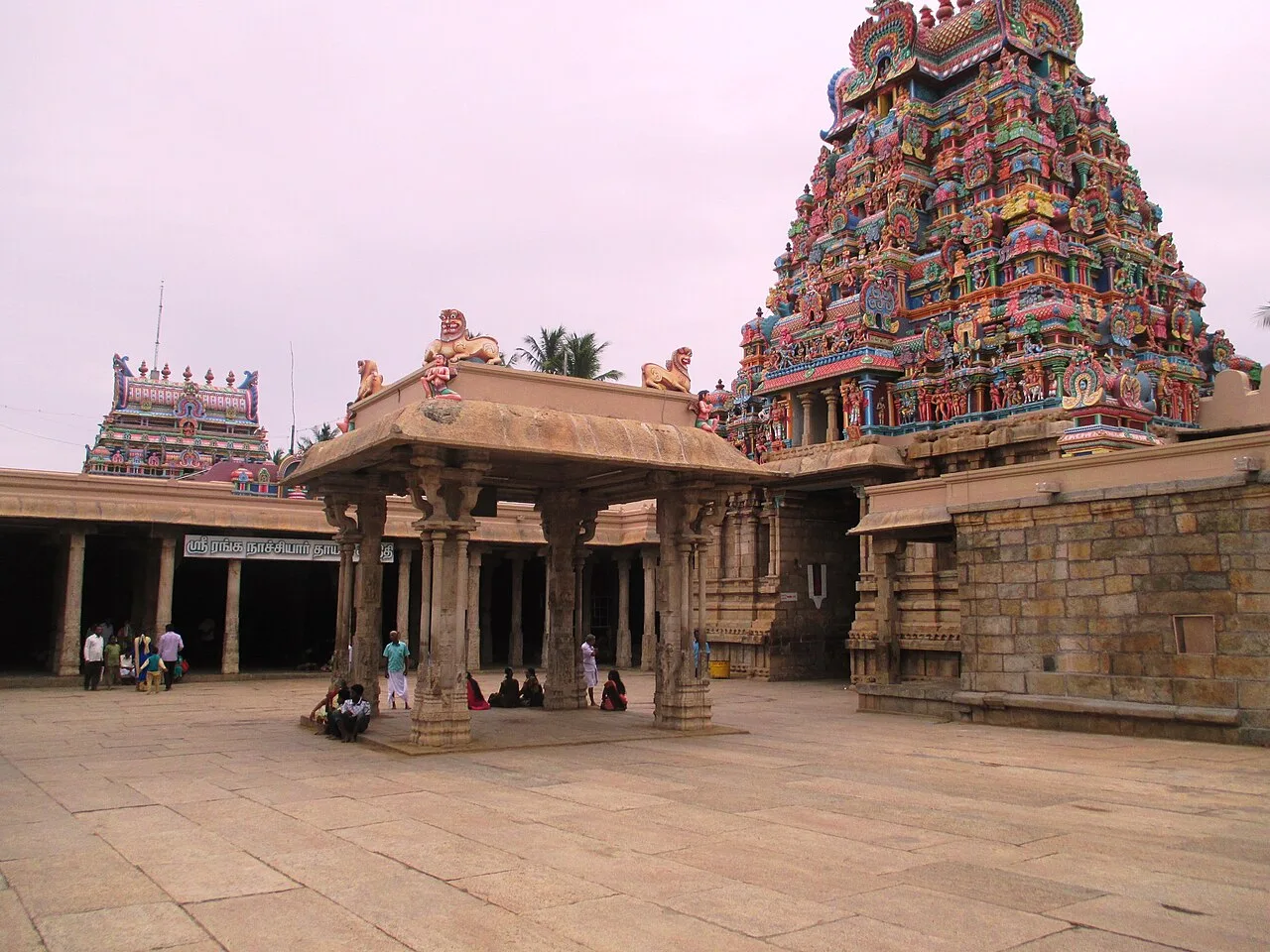
In Tiruchirappalli, the Amma Mandapam river ghat along the Cauvery near Srirangam Ranganathaswamy Temple witnesses one of the largest gatherings in South India. In a famous temple ritual, Lord Ranganatha (the presiding deity of Srirangam) is carried in procession to the riverbank, where divine gifts—including silk sarees, gold ornaments, and garlands—are offered to Goddess Cauvery on behalf of the temple.

Food and flavours

Food is an integral highlight of Aadi Perukku, famous for 'Chitraannam'—a colorful feast of multiple variety rices packed in banana leaves and enjoyed during riverside family picnics.

The traditional Aadi 18 menu features five to seven variety rices: 'Elumichai Sadam' (Lemon Rice), 'Puli Sadam' (Tamarind Rice), 'Thengai Sadam' (Coconut Rice), 'Thayir Sadam' (Curd Rice), 'Ellu Sadam' (Sesame Rice), and 'Sarkkarai Pongal' (Sweet Jaggery Rice). These are accompanied by crispy 'Vadagam' (sun-dried lentil wafers), fried 'Appalam', sweet 'Kozhukattai' (steamed jaggery dumplings), and 'Payasam'.

Music, dance, art and dress

Women dress in vibrant silk sarees (Kanchipuram or Madurai cotton) and adorn their hair with fragrant jasmine flowers ('Gajra'). Newly wedded couples wear new festive silks.

Visual art is showcased through 'Mulaipari'—earthen pots containing sprouted nine grains ('Navadhanyam') cultivated by women for nine days prior to Aadi 18. On festival day, these lush green sprouted pots are carried on heads in procession with folk songs and gently immersed in the flowing river to fertilize the soil.

Where to experience it

Prime locations to experience Aadi Perukku include Amma Mandapam Ghat in Srirangam (Tiruchirappalli), Bhavani Kooduthurai in Erode district, Hogenakkal Falls in Dharmapuri, Grand Anicut (Kallanai) in Thanjavur district, and Kodumudi in Karur district.

Visitor guide

  • • Getting there: Tiruchirappalli (Trichy) is the central gateway with an international airport and major railway junction. State transport buses run frequently to all river ghat towns.• Where to stay: Book hotels in Trichy, Erode, Salem, or Thanjavur.• What to wear & pack: Wear modest, lightweight clothes suitable for riverbank outings. Carry dry clothes if planning a river dip, towels, and reusable bags for picnic waste.• Etiquette: Respect river purity; do not discard plastic bags or synthetic trash into the flowing river. Take care when stepping on slippery ghat steps.• Safety & comfort: Water currents in the Cauvery swell significantly during Aadi; stay within designated safe bathing zones guarded by police and fire services.

Today and tomorrow

In modern urban Tamil Nadu, Aadi Perukku has expanded beyond farming communities to become an essential eco-cultural celebration of water conservation. Environmental groups and schools use Aadi 18 to launch tree-planting drives and river-cleaning campaigns, reaffirming the timeless message of respecting and protecting India's natural water heritage.

Nearby

Places to see around the festival