Ghumoopedia — Explore, Discover, Experience
Sign in

Religious · Tamil Nadu

Masi Magam

Kumbakonam and coastal Tamil Nadu

Dates

Last verified 17 November 2026. Confirmed: announced by organisers or government. Provisional: from a published almanac, not yet announced. Seasonal: no date announced.

The complete guide

Masi Magam: everything to know before you go

Also known as
Masi Makam, Theerthavari, Mahamaham (held once every 12 years)
State & District
Thanjavur District (Kumbakonam Mahamaham Tank), Chennai (Marina/Elliot's Beach), Coastal TN
When
February–March (Full moon day in the Tamil month of Masi under Magha Nakshatra)
Duration
1 Day (Annual Masi Magam); 10 Days during the 12-year Mahamaham mega-festival
Faith & Community
Shaivite & Vaishnavite Hinduism; riverine and coastal Tamil temple tradition
Type
Sacred River & Sea Bathing Festival, Temple Procession (Theerthavari), Cosmic Purification
Entry
Free public access to riverbanks, beaches, and Mahamaham temple tanks
Best for
Witnessing dozens of temple processional deities brought to the ocean or tanks for holy immersion

Overview

Masi Magam is an auspicious annual holy bathing festival celebrated across Tamil Nadu, Puducherry, and Tamil diaspora communities worldwide on the full moon day of the Tamil month of Masi (February–March), when the moon aligns with the bright star Magha (Makha). It is a grand cosmic purification festival centered on the ritual of 'Theerthavari'—where processional bronze deities (Utsava Murthies) from dozens of surrounding temples are carried in grand processions to sacred riverbanks, ocean beaches, or holy temple tanks for a ceremonial holy immersion.

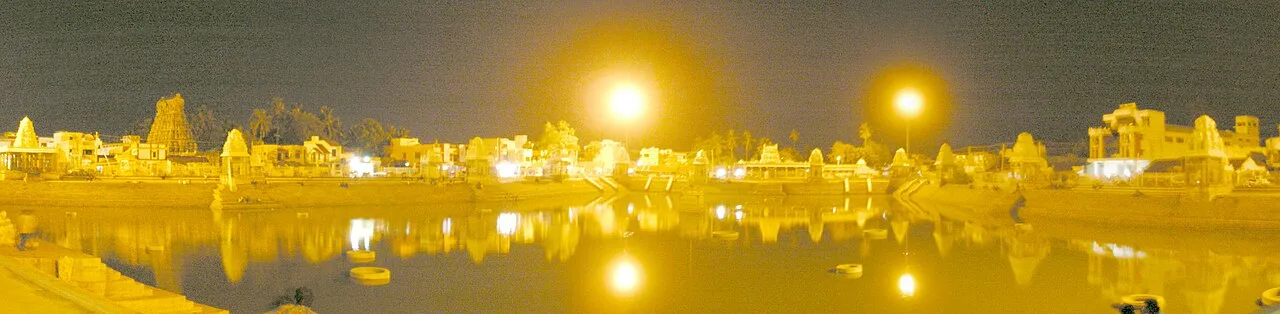
While Masi Magam is celebrated annually across coastal Tamil Nadu (including Chennai, Puducherry, Cuddalore, and Nagapattinam), its spiritual capital is the historic temple town of Kumbakonam in Thanjavur district. Here, processional deities from 12 major Shiva temples and 5 Vishnu temples assemble at the famous 6.2-acre Mahamaham Tank. Once every 12 years, when Jupiter enters the zodiac sign of Leo (Simha Rasi) during Masi Magam, the festival transforms into 'Mahamaham'—the 'Kumbh Mela of South India'—attracting over two million bathers seeking spiritual cleansing.

Origins and legend

The mythological origins of Masi Magam are rooted in the Brahmanda Purana and Skanda Purana. According to legend, at the end of the previous cosmic cycle (Pralaya), Lord Brahma was concerned about preserving the seeds of creation. Lord Shiva instructed Brahma to place the seeds of all living beings, the Vedas, and sacred scriptures inside a sacred clay pot (Amrita Kalasam), filled with divine nectar (Amrita), and set it afloat on the deluge waters atop Mount Meru.

As the deluge waters recended southward, the pot floated down and came to rest at Kumbakonam. Lord Shiva, assuming the form of a hunter (Kirata), shot an arrow at the pot, piercing it. The divine nectar spilled out and collected into two sacred water bodies: the Mahamaham Tank and the Potramarai Tank. The spot where the pot rested became the Adi Kumbeswarar Temple. Lord Shiva declared that on the full moon day of Masi under Magha star, the holy rivers of India (Ganga, Yamuna, Saraswati, Narmada, Godavari, Krishna, Kaveri, Tungabhadra, and Sarayu) would wash away the sins of bathers by merging invisibly into the Mahamaham Tank.

Another famous legend connects Masi Magam to King Vallala of Tiruvannamalai. Being childless, the king prayed to Lord Shiva, who promised to perform his funeral rites upon his death. When the king passed away on Masi Magam day, Lord Shiva personally performed his final rites and granted salvation to the king and anyone taking a holy dip in sacred waters on this day.

How it is celebrated

Masi Magam unfolds through vibrant water-centered rituals starting at the break of dawn:

1. Morning Deities Procession: At daybreak, processional bronze idols of Lord Shiva, Vishnu, Goddess Amman, and Murugan from scores of temples are carried on palanquins, silver chariots, and decorated vahanas to the designated sea beach, riverbank, or temple tank. The streets echo with Nadaswaram music and drum beats as villagers accompany their local village deities.

2. Theerthavari Ritual: Upon reaching the water body, priests perform elaborate Abhishekam (sacred bath) to the Utsava Murthies using milk, tender coconut water, sandalwood paste, turmeric, and holy water. At the precise auspicious planetary moment (Muhurtham), the temple priests submerge the sacred processional weapons (Astra Raja or Trident) three times into the water body.

3. Mass Dip by Devotees: As the deity's weapon enters the water, hundreds of thousands of waiting devotees simultaneously submerge themselves in the sea, river, or Mahamaham tank, chanting 'Hara Hara Mahadeva!' and 'Govinda Govinda!'. This synchronized bath is believed to cleanse ancestral karma, remove physical ailments, and grant spiritual liberation.

4. Evening Illuminations: In the evening, temples host 'Floating Festivals' (Teppotsavam), where illuminated barges carrying the divine couples float across temple tanks amidst fireworks and devotional chanting.

The Cultural Days

Along coastal beaches like Marina Beach in Chennai, Vaithikuppam in Puducherry, and Silver Beach in Cuddalore, Masi Magam creates a breathtaking sea-front cultural spectacle. Over 50 to 100 processional deities from surrounding rural shrines are lined up along the seashore, creating a temporary open-air divine court against crashing ocean waves.

Fisherfolk and coastal communities play host, offering flower garlands, silk shawls, and cooked rice prasadam to visiting temple retinues, reinforcing the traditional bond between coastal communities and inland temples.

The Pilgrimage Days

Devotees undertake ancestral rituals ('Pitr Tarpanam') on Masi Magam day, offering sesame seeds and water on riverbanks to honor departed ancestors. Pilgrims visit the 'Kumbakonam Temple Circuit'—including Adi Kumbeswarar, Nageswarar, Ramaswamy, and Sarangapani temples—to complete their holy pilgrimage.

Food and flavours

The culinary offerings reflect traditional Tamil festival fare suitable for post-fasting consumption:

Masi Magam Prasadam: Devotees consume Sakkarai Pongal, Puliyodarai (tamarind rice), Sundal (spiced chickpea salad), and curd rice offered at temple mandapams.

Beach Fair Snacks: Along coastal sites, temporary food stalls sell freshly fried Milagai Bajji, Murukku, coconut water, and traditional jaggery sweets.

Music, dance, art and dress

The event is bathed in maritime and riverine beauty. Processional palanquins are adorned with red carnations, jasmine garlands, and peacock feathers. Traditional Nadaswaram players stand knee-deep in water while playing sacred ragas during the Theerthavari immersion.

Bathers wear traditional cotton dhotis and sarees, dipping into the water with folded hands in reverence to the water element (Varuna Deva).

Where to experience it

Kumbakonam Mahamaham Tank (Thanjavur District): The spiritual epicenter of Masi Magam and 12-year Mahamaham.

Vaithikuppam Beach (Puducherry): Famous for over 100 processional deities assembling along the seashore from interior districts.

Marina Beach & Elliot's Beach (Chennai): Where suburban Chennai temples bring their deities for ocean bath rituals.

Poompuhar & Nagapattinam Coast: Historic ancient port towns offering serene river-mouth ocean immersions.

Visitor guide

  • Getting there: Kumbakonam is well-connected by rail to Chennai, Tiruchirappalli, and Madurai. Puducherry is easily accessible via the East Coast Road (ECR).
  • Where to stay: Book hotels in Kumbakonam or Puducherry well in advance. For 12-year Mahamaham events, accommodations are booked years ahead.
  • What to wear & pack: Carry extra dry clothes, towels, and waterproof bags for mobile devices. Wear simple clothes suitable for entering water bodies.
  • Etiquette: Follow designated bathing areas demarcated by life-guards and police. Do not pollute water bodies with plastic or soap.
  • Safety & comfort: Ocean tides can be strong along beaches like Marina and Puducherry; bathers must remain within designated safe swimming zones guarded by coastal police.

Today and tomorrow

Masi Magam remains a vital eco-spiritual reminder of India's ancient river-reverence heritage. Modern municipal authorities implement extensive water purification, dredging, and safety barricading at the Mahamaham tank in Kumbakonam, preserving this ancient holy immersion tradition for millions of future bathers.

Nearby

Places to see around the festival