
Ghumoopedia — Explore, Discover, Experience
Sign in

Religious · Tamil Nadu

Thaipusam

Palani, Dindigul

Dates

Last verified 17 November 2026. Confirmed: announced by organisers or government. Provisional: from a published almanac, not yet announced. Seasonal: no date announced.

The complete guide

Thaipusam: everything to know before you go

Also known as
Palani Thaipusam, Thai Poosam, Kavadi Festival
State & District
Tamil Nadu; Palani, Dindigul District
When
January – February (Full moon of Thai month during Pushya star)
Duration
10 Days (Main day on Thai Poosam)
Faith & Community
Hinduism (Kaumaram & Tamil Shaivism)
Type
Sacred Pilgrimage, Vow Fulfillment & Penance Festival
Entry
Free and open to all devotees and visitors
Best for
Murugan devotees, spiritual pilgrims, and photojournalists

Overview

Thaipusam is the grandest, most intense, and visually arresting sacred pilgrimage festival dedicated to Lord Murugan (Kartikeya), celebrated with supreme fervor at the Palani Dhandayuthapani Swamy Temple in Dindigul District—the foremost among the Arupadai Veedu (Six Abodes of Murugan). Occurring on the full moon day of the Tamil month of Thai (January–February) when the Pushya star is at its zenith, Thaipusam marks the divine occasion when Goddess Parvati presented the sacred Vel (spear) to Lord Murugan to vanquish the demon Soorapadman.

During Thaipusam, over 2 to 3 million barefoot pilgrims clad in vibrant yellow and green garments converge upon Palani Hill. Carrying decorated physical burdens known as Kavadi (wooden arches adorned with peacock feathers) and Paal Kudam (milk pots) over hundreds of kilometers on foot, pilgrims demonstrate awe-inspiring acts of faith, intense asceticism, and deep physical surrender to Lord Murugan.

The sight of endless human waves flowing along the highways leading to Palani creates an extraordinary visual spectacle. Pilgrims sing ecstatic devotionals (Kavadi Chindu) while carrying their heavy burdens, oblivious to physical fatigue. The air is thick with the fragrance of camphor, rosewater, and sandalwood, punctuated by ecstatic cries of 'Vel Vel Muruga! Vetrivel Muruga!'
Origins and legend

The legend of Thaipusam originates from the cosmic battle between the Devas and the demon army led by Soorapadman. Goddess Parvati bestowed her supreme divine energy in the form of the invincible Vel upon her son Lord Murugan at the Thiruvinnagar temple, empowering him to destroy evil and restore righteousness.

The tradition of carrying Kavadi to Palani originates from the legend of Sage Agastya and his disciple Idumban. Agastya instructed Idumban to carry two sacred hills—Shivagiri and Shaktigiri—slung across his shoulders on a wooden beam (Kavadi). At Palani, Lord Murugan tested Idumban's devotion by residing atop the hill. When Idumban fought to lift it, Murugan blessed him and decreed that anyone carrying a Kavadi to Palani with pure devotion would have their vows fulfilled.

Palani Hill itself holds immense spiritual significance as the abode where Lord Murugan retreated as a renunciate (Dhandayuthapani) after losing the cosmic fruit of wisdom (Jnana Pazham) to his brother Lord Ganesha. Clad in a simple loincloth with a staff in hand, Murugan embodies supreme spiritual detachment and wisdom.

How it is celebrated

Preparation for Thaipusam begins 48 days prior with strict ascetic vows (vratham). Pilgrims abstain from meat, alcohol, leather goods, and footwear, consuming a single simple vegetarian meal daily and sleeping on bare floors.

On Thaipusam day, millions of devotees trek up the 659 granite steps of Palani Hill. Many undertake intense ritual penances, including body piercings with silver skewers (Vel Alagu) through their cheeks, tongues, and back skin. Massive wooden Kavadis (Pal Kavadi, Mayil Kavadi, Agni Kavadi) are danced up the hill to the hypnotic beat of thavil drums and trumpet fanfares.

Upon reaching the hill shrine, devotees pour their carried pots of fresh milk over the sacred idol of Lord Dhandayuthapani during continuous abhishekam rituals. The spent milk flows down the sanctum channels, accepted by pilgrims as divine prasadam.

The Cultural Days

The 10-day festival timeline at Palani Temple is marked by grand ritual processions:

Kodiettram (Flag Hoisting): Day 1 marks the official commencement with sacred flag hoisting at the Periyanayaki Amman Temple in town.

Thirukalyanam & Thaipusam Car Festival: Day 6 features the celestial wedding of Lord Murugan with Valli and Deivanai, followed by the grand wooden Chariot (Ratholsavam) procession around the giri veethi (hill circumambulation path).

Floating Festival (Theppotsavam): Day 10 concludes with the colorful float festival on the Shanmuga Nadi river, where the processional deities are taken on decorated rafts.

The Pilgrimage Days

The core spiritual intensity centers around the Pada Yatra (foot pilgrimage):

Pada Yatra (Walking Pilgrimage): Millions walk hundreds of kilometers barefoot from cities across Tamil Nadu (such as Karaikudi, Madurai, Coimbatore) along highways to reach Palani.

Giri Pradakshinam & Abhishekam: Pilgrims circumambulate the 3.2 km hill base path before ascending the hill to offer their carried milk (Paal Abhishekam) to the Navapashanam idol of Lord Murugan.

Offering Hair (Mondan): Thousands of men, women, and children tonsure their heads as an act of humility and vow fulfillment at the foot of the hill.

Food and flavours

Palani is world-famous for its unique, sacred medicinal prasadam:

Palani Panchamirtham: A sacred GI-tagged sweet delicacy made from five natural ingredients: hill bananas (Virupakshi variety), jaggery, cow ghee, honey, and cardamom, blended with dates and sugar candy. It is famous for its long shelf life without preservatives.

Annadhanam Meal: Steaming hot rice, lentil sambhar, butter milk, and lemon rice served continuously to walking pilgrims across highway camps.

Palani Milk Prasadam: Pure boiled milk flavored with cardamom and saffron, distributed to pilgrims waiting in long hill queues.

Music, dance, art and dress

Thaipusam is characterized by hypnotic music and ecstasy-inducing folk dance:

Kavadi Attam: A ritual folk dance performed by pilgrims carrying heavy Kavadis, swaying frantically to the rhythmic cadence of Kavadi Chindu songs and pambai drums.

Sacred Dress Code: Pilgrims wear bright yellow, saffron, or neem-green cotton dhotis and sarees, smeared with holy ash (Vibhuti) and sandalwood paste.

Where to experience it

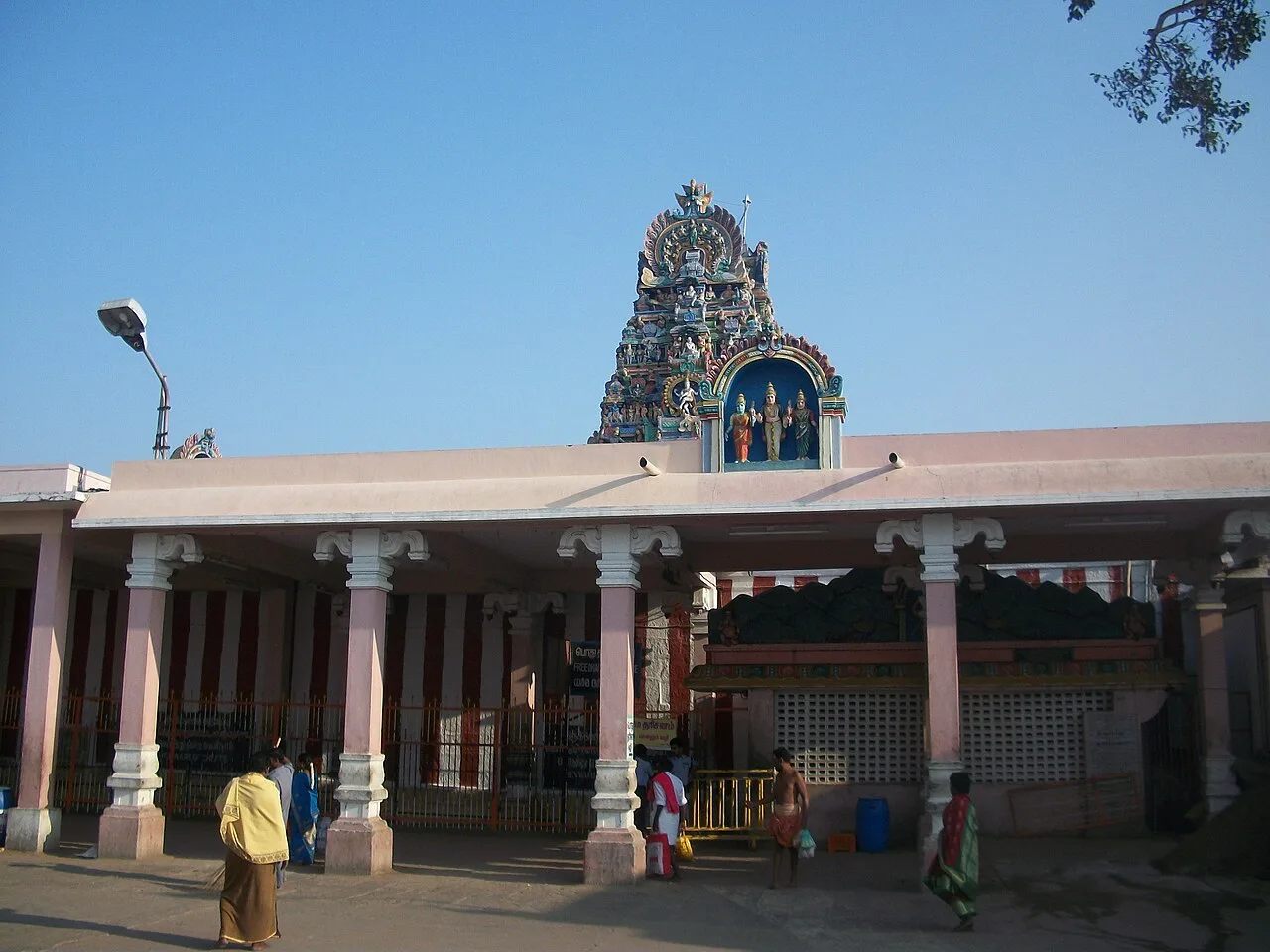
The main center of celebration is the Palani Dhandayuthapani Swamy Temple atop Sivagiri Hill in Palani, Dindigul District. Pilgrims also gather along the Giri Veethi (hill circumambulation road) and the Periyanayaki Amman Temple.

Visitor guide

  • Getting There: Palani is well connected by rail and road. The nearest airports are Coimbatore International Airport (CJB, 100 km) and Madurai Airport (IXM, 115 km). Direct trains link Palani with Chennai, Madurai, and Palakkad.
  • Where to Stay: Devasthanam guesthouses, private hotels, and pilgrim halls are abundant, but require advance booking months ahead.
  • What to Wear & Pack: Saffron/yellow traditional attire, comfortable walking sandals, skin ointments for long walks, and water bottles.
  • Etiquette: Show deep respect to barefoot pilgrims and Kavadi dancers. Avoid taking intrusive close-up photos of individuals undergoing extreme piercings without consent.
  • Safety & Comfort: Use the rope car or winch train systems if unable to climb the 659 steps. Be prepared for extensive queues lasting 6 to 12 hours for sanctum darshan.

Today and tomorrow

Thaipusam at Palani is one of the world's largest annual peaceful gatherings. The festival is also celebrated with immense grandeur by Tamil diaspora communities at Batu Caves in Malaysia, Sri Srinivasa Perumal Temple in Singapore, and in Mauritius and South Africa.

Nearby

Places to see around the festival