
Ghumoopedia — Explore, Discover, Experience
Sign in

Religious · Tamil Nadu

Velankanni Feast

Velankanni, Nagapattinam

Dates

Last verified 17 November 2026. Confirmed: announced by organisers or government. Provisional: from a published almanac, not yet announced. Seasonal: no date announced.

The complete guide

Velankanni Feast: everything to know before you go

Also known as
Feast of Our Lady of Good Health, Velankanni Church Festival, Annai Velankanni Thiruvizha
State & District
Tamil Nadu; Nagapattinam District (Velankanni)
When
29 August to 8 September (Annual 10-day festival culminating on the Nativity of Mary)
Duration
10 Days
Faith & Community
Catholic Christian; Open to pilgrims of all faiths (Hindu, Muslim, Secular)
Type
Religious Marian Pilgrimage, Car Procession, Interfaith Sacred Festival
Entry
Free and open to all pilgrims and visitors
Best for
Marian devotion, illuminated car procession, barefoot padayatra, interfaith harmony, coastal basilica

Overview

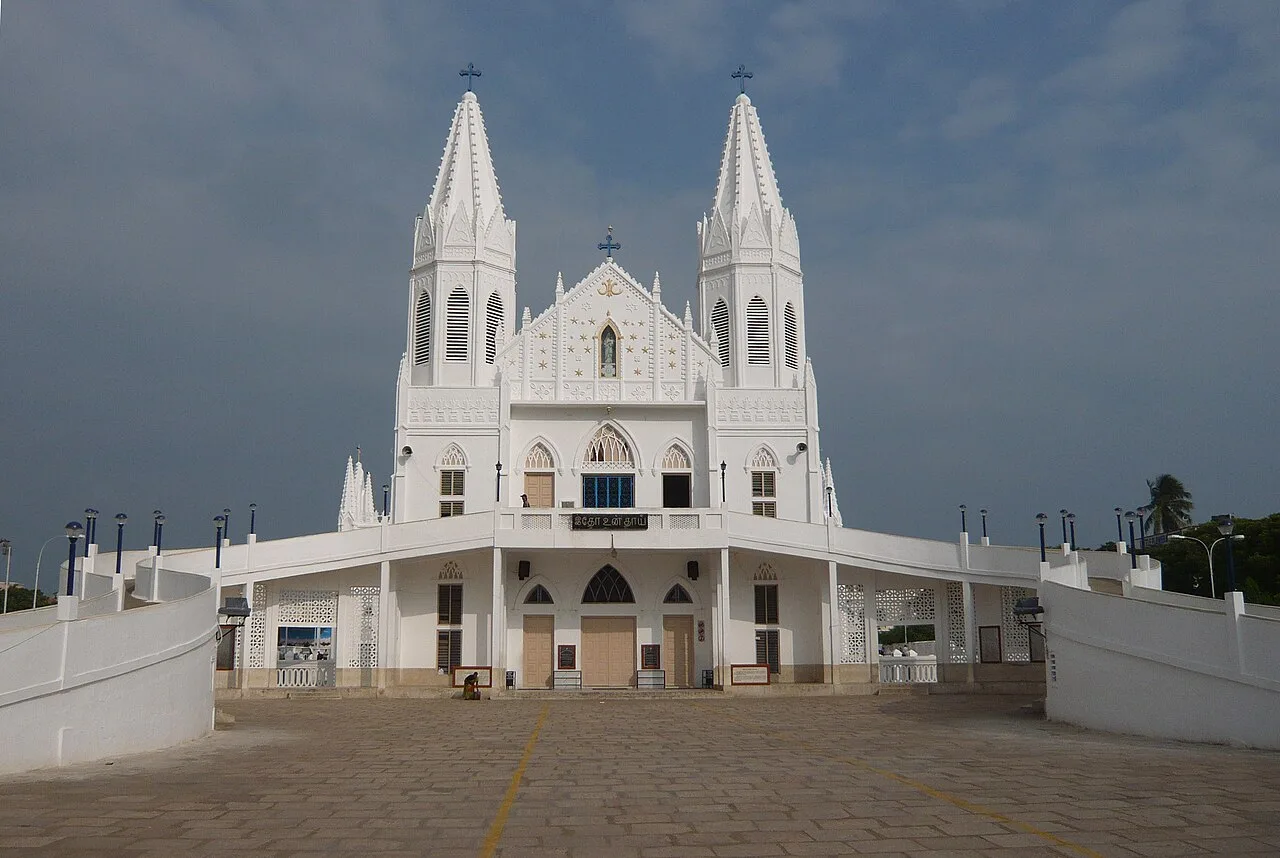
The Velankanni Feast, celebrated at the world-renowned Basilica of Our Lady of Good Health in the coastal hamlet of Velankanni, Nagapattinam district, is India's largest and most famous Christian pilgrimage festival. Popularly known as the 'Lourdes of the East', Velankanni attracts over three million pilgrims during its 10-day annual feast held from August 29 to September 8 (celebrating the Nativity of the Blessed Virgin Mary). What makes the Velankanni Feast extraordinary is its deeply inclusive, interfaith character: millions of Hindus, Muslims, and Christians gather side by side to seek physical healing, spiritual peace, and divine blessings from 'Arokia Matha' (Our Mother of Good Health).

The festival is marked by deep acts of devotion—including barefoot walking pilgrimages ('Padayatra') spanning hundreds of kilometers, tonsuring of hair, carrying miniature silver and gold anatomical votive offerings, and tying sacred threads. The visual highlight of the festival is the majestic nightly procession of the illuminated chariot ('Rathothsavam'), where a statue of Our Lady dressed in traditional Indian silk sarees is drawn through packed crowds amidst chanting, hymn singing, and flower offerings.
Origins and legend

The origin of the shrine and its annual feast dates back to three miraculous events recorded in the 16th and 17th centuries in the coastal village of Velankanni:

1. The Shepherd Boy Apparition (Late 16th Century): A young Hindu boy carrying milk to his master rested near a pond under a banyan tree. A beautiful lady holding an infant child appeared and requested milk for her babe. The boy willingly gave milk. Upon reaching his master, he apologized for the short measure, but miraculously, his milk pot overflowed. The pond came to be known as 'Matha Kulam' (Mother's Pond).2. The Buttermilk Vendor Healing: A few years later, Mother Mary appeared to a lame boy selling buttermilk under a banyan tree, asking for buttermilk for her child and instructing the boy to inform a wealthy Catholic in Nagapattinam to build a chapel. The boy instantly stood up, fully cured of his lameness, and ran to Nagapattinam. A thatched chapel was promptly constructed.3. The Portuguese Mariners' Rescue (17th Century): A Portuguese merchant vessel caught in a violent tempest in the Bay of Bengal prayed to the Virgin Mary for rescue. The ship washed ashore safely at Velankanni on September 8th (the feast of the Nativity of Mary). In gratitude, the sailors transformed the thatched chapel into a permanent brick structure.

How it is celebrated

The 10-day celebration begins on August 29th at 6:00 PM with the solemn hoisting of the sacred flag of Our Lady of Good Health by the Bishop of Thanjavur, accompanied by thunderous applause, releasing of white doves, and the ringing of massive basilica bells.

Each day of the festival features Holy Mass celebrated in multiple Indian and international languages—including Tamil, Malayalam, Telugu, Kannada, Hindi, Konkani, English, and Marathi—to accommodate pilgrims arriving from every corner of India and abroad. Pilgrims participate in sacred vows: many walk barefoot for hundreds of kilometers from cities like Chennai, Bengaluru, and Tiruchirappalli; others tonsure their heads, perform prostration walks ('Angapradakshinam') around the church plaza, and offer miniature silver human organs (eyes, heart, legs) seeking miraculous healing.

The Cultural Days

The cultural landscape of Velankanni during the feast reflects a seamless fusion of Catholic litany and traditional Tamil folk customs. Surrounding the pristine white Gothic Basilica, hundreds of cultural stalls showcase Christian devotional music, street plays ('Drama'), brass band concerts, and choir performances.

Tamil Hindu cultural traditions are prominently integrated into the worship: Mother Mary is adorned in rich silk sarees (Kanchipuram pattu) changed daily; devotees offer coconut, flowers, and incense sticks; and brass oil lamps ('Kuthuvillakku') are lit across the shrine grounds alongside candles.

The Pilgrimage Days

The climax of the festival takes place on the evening of September 7th and the morning of September 8th. On September 7th at sunset, the grand illuminated Chariot Procession ('Peruvizha Ther') takes place. A massive 40-foot decorated wooden chariot bearing the statue of Our Lady of Good Health moves slowly through a sea of hundreds of thousands of weeping, chanting pilgrims.

On September 8th, the Feast Day of the Nativity of Mary, the Bishop leads the high solemn Concelebrated Holy Mass on the open-air basilica stage. The feast concludes in the evening with the ceremonial lowering of the flag, marking the end of the 10-day spiritual retreat.

Food and flavours

Food during the Velankanni Feast caters to millions of traveling pilgrims. Free food distribution ('Annadhanam') is organized by church trusts and private donor associations along all approach roads.

Local coastal food stalls in Velankanni serve fresh Nagapattinam seafood delicacies, including spicy fish curry ('Meen Kuzhambu'), fried prawns, crab masala, alongside traditional South Indian vegetarian tiffin—crispy dosas, idlis, and hot filter coffee. Sweets like 'Halwa' and candied fruits are popular souvenirs bought by pilgrims.

Music, dance, art and dress

Musically, the festival is enriched by magnificent choral singing in multiple languages accompanied by pipe organs, electronic keyboards, and traditional Indian instruments like Nadaswaram and Tavil. Devotional hymns to 'Arokia Matha' reverberate across the township 24 hours a day.

Pilgrims dress in yellow or blue attire—the traditional colors associated with vow-takers of Our Lady of Velankanni. The architecture of the Basilica itself, featuring towering white Gothic spires extended into a Basilica of major status, forms a dramatic artistic backdrop against the blue waters of the Bay of Bengal.

Where to experience it

The entire coastal township of Velankanni in Nagapattinam district serves as the venue. Key spots include the Main Basilica Church, the Morning Star Church extension, the historical 'Matha Kulam' (Mother's Pond) chapel located 1 km away, and the beach road where the nightly Chariot Procession moves.

Visitor guide

  • • Getting there: The nearest major airport is Tiruchirappalli International Airport (150 km). Velankanni has its own railway station connected to Chennai, Madurai, and Vasco da Gama. Direct state transport buses operate from all major South Indian cities.• Where to stay: Book accommodation months in advance through the Basilica Lodge booking office or private hotels. Camping tents and open-air pilgrim shelters ('Choultries') are available for budget travelers.• What to wear & pack: Modest dress is required inside church premises. Wear yellow or white light cotton clothes; carry umbrellas/raincoats (monsoon showers occur in Sept) and comfortable walking shoes.• Etiquette: Respect sacred silent zones inside the Basilica. Maintain order during Holy Communion and line queues for the miracle statue.• Safety & comfort: Beware of coastal sea currents; ocean bathing during high tide is restricted by marine police. Keep emergency contact tags on children.

Today and tomorrow

Declared a Shrine Basilica by Pope John XXIII in 1962, Velankanni continues to grow as a global spiritual hub. The church management has incorporated modern digital live-streaming services, eco-friendly solar infrastructure, and expanded medical aid centers to handle massive pilgrim surges. Velankanni remains a shining beacon of communal harmony in India, where faith transcends religious boundaries.

Nearby

Places to see around the festival