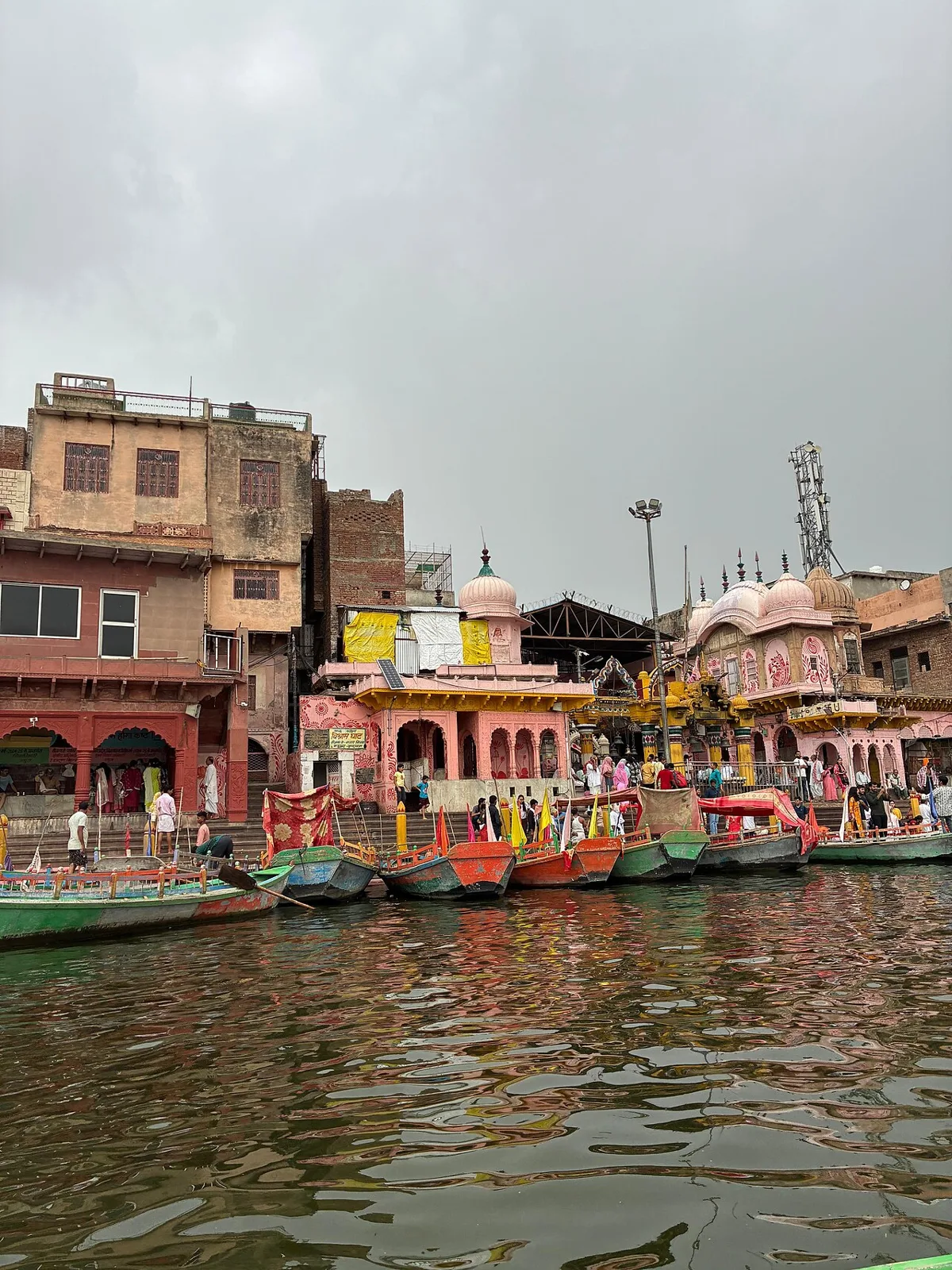
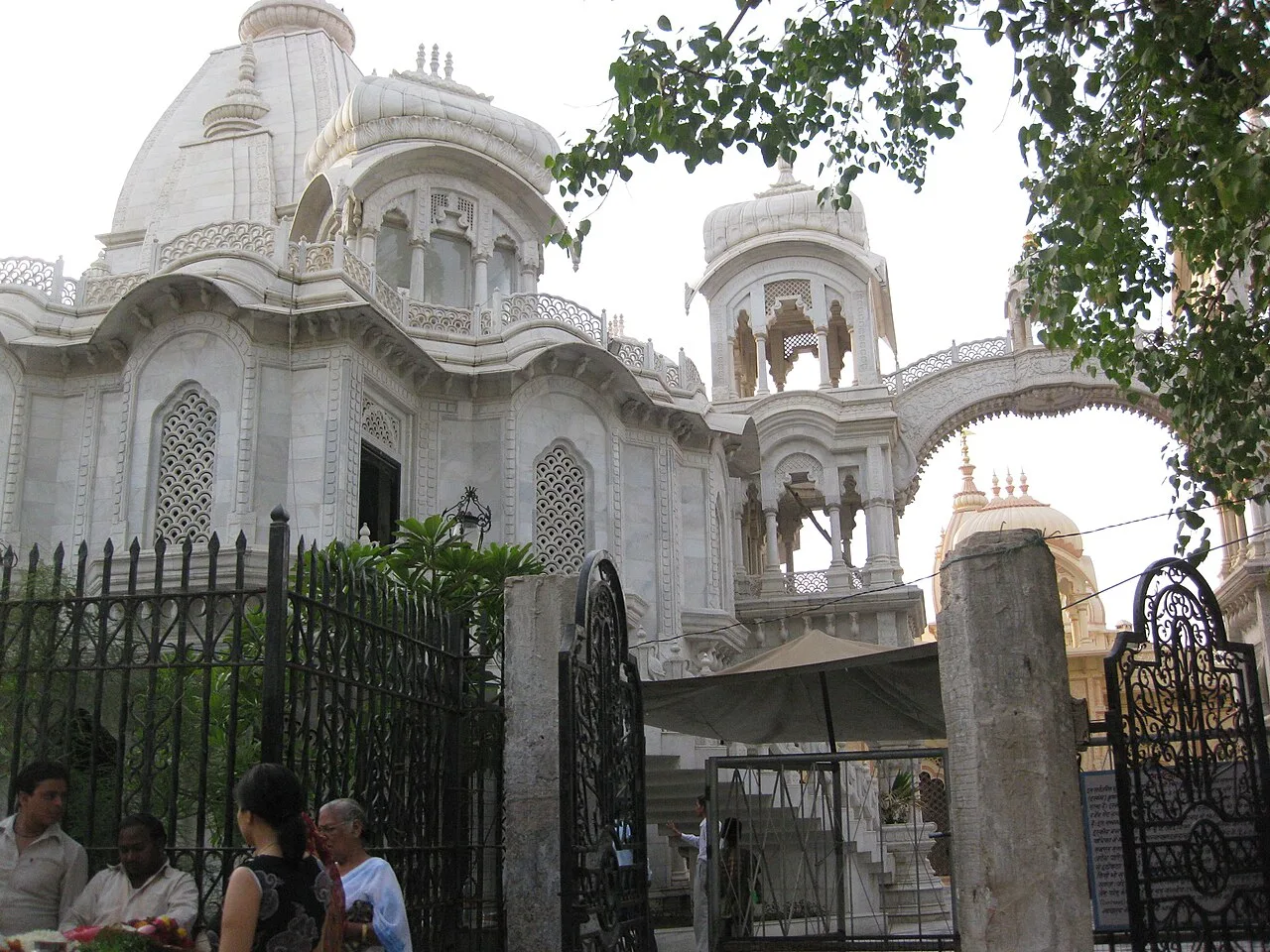
Janmashtami celebrations begin with early morning *Mangala Aarti* across all major temples of Mathura and Vrindavan. Devotees observe a strict day-long fast, breaking it only after midnight. Temples are intricately decorated with flower garlands, electric lights, and elaborate *Jhoolas* (swings) housing metal or marble idols of Bal Krishna (Laddoo Gopal). High lamas and temple priests perform continuous recitation of the Bhagavata Purana, accompanied by classical *Havi* and *Sama* music.
As midnight approaches, the atmosphere reaches fever pitch. At exactly 12:00 AM, the deity is ritually unveiled, and priests perform *Abhishekam* using milk, curd, honey, ghee, and holy Yamuna water, accompanied by the blare of conch shells and ringing bells. In Vrindavan's Radha Raman and Banke Bihari temples, special *Maha Aarti* is performed, after which *Makhan-Mishri* (butter and rock sugar) and *Panjiri* Prasad are distributed to thousands of waiting devotees. The following morning features *Nandotsav*, where curd and turmeric mixed water (*Dahi-Kala*) is joyously sprinkled over crowds.
Braj Ki Holi unfolds as a multi-stage carnival. On *Phoolon Ki Holi* day at Vrindavan's Banke Bihari Temple, priests shower quintals of fresh rose, marigold, and jasmine petals over devotees while temple musicians sing classical *Hori* songs. On *Lathmar Holi* in Barsana, men from Nandgaon arrive dressed in traditional turbans with leather shields, while Barsana women playfully strike their shields with heavy wooden poles amid teasing songs and bursts of dry organic *Gulal*.
The Cultural Days
During Janmashtami, the *Raas Leela* performance troupes (*Mandalis*) stage multi-act theatrical dramas depicting Krishna's childhood escapades, the slaying of demons like Putana and Kansa, and the divine *Maharaas* on the banks of the Yamuna. These folk plays use archaic Braj Bhasha dialogue, classical vocals, and traditional Kathak movements passed down through hereditary artist families.
During Holi, specific days are designated for distinct ritual forms. *Laddoo Holi* at Barsana's Radha Rani Temple involves tossing sweet laddoos into crowds of singing devotees. *Chhaddimar Holi* in Gokul features women using small sticks (*Chhaddis*) to gently hit men, symbolizing the tender protection of infant Krishna. The festival culminates on *Huranga* at Dauji Temple in Baldeo, where women tear the shirts of men and soak them in colored water, followed by the burning of massive *Holika* bonfires on Choti Holi.
The Pilgrimage Days
The primary pilgrimage circuit for both festivals involves the *Braj 84 Kosi Yatra* or the shorter *Goverdhan Parikrama*. During Janmashtami, pilgrims undertake the barefoot 21-kilometer circumambulation of Sacred Mount Goverdhan, chanting 'Radhe Radhe' as an act of penance and devotion.
On Janmashtami night, the *Shri Krishna Janmabhoomi Temple Complex* in Mathura attracts over a million pilgrims who queue for hours to view the reconstructed prison cell (*Garbha Griha*) marking Krishna's birth site. In Vrindavan, pilgrims visit the seven ancient Goswami temples: Radha Raman, Radha Damodar, Radha Govinddev, Radha Gopinath, Radha Madanmohan, Radha Gokulananda, and Banke Bihari.