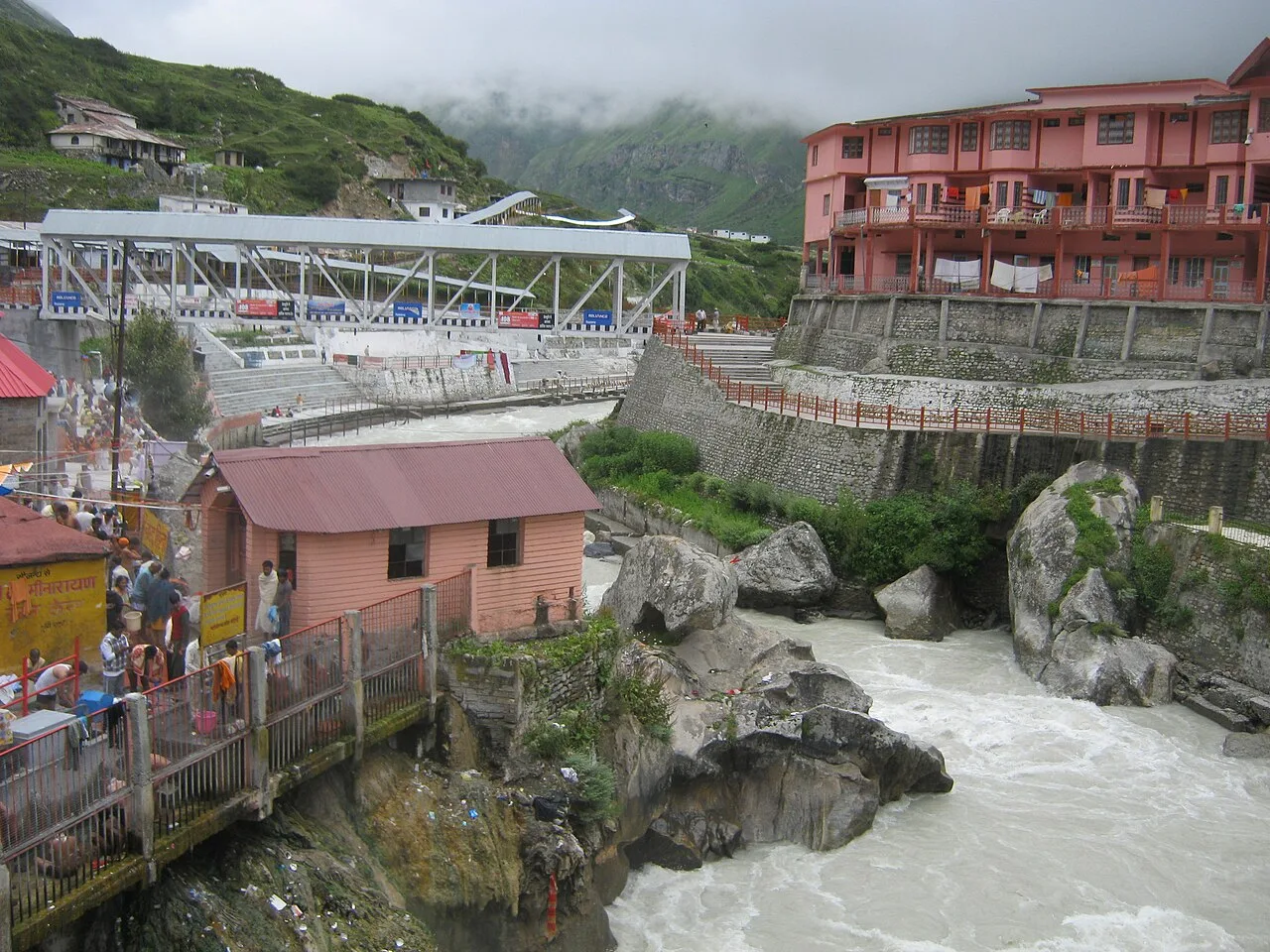
The reopening of the Char Dham portals is celebrated through elaborate ritual processions known as Utsav Doli Yatra. Days before Akshaya Tritiya, the silver idol of Goddess Yamuna leaves her winter residence at Kharsali village, accompanied by traditional dhol-damau drumming and folk singing, arriving at Yamunotri on Akshaya Tritiya morning. Simultaneously, the idol of Goddess Ganga moves from Mukhba village to Gangotri in a grand procession led by the Indian Army band and local priests. For Kedarnath, the idol of Lord Shiva (Bhairavnath and Rawal priests leading) departs from the Omkareshwar Temple in Ukhimath, travelling on foot in a palanquin over three days to reach Kedarnath Dham. For Badrinath, the sacred Akhand Jyoti (oil lamp) and the idol of Lord Badri Vishal leave the Narsingh Temple in Joshi Math, arriving at Badrinath amidst Vedic chanting. Upon arrival at each shrine, temple priests break the ceremonial seals, light the sanctum lamps, perform Vedic purification rituals (Abhishekam), and open the temple doors (Kapat) to public view amidst cheers of 'Jai Badri Vishal' and 'Har Har Mahadev'.
The Cultural Days
The week surrounding the Kapat Udghatan is characterized by intense regional cultural celebrations across Garhwal. Local villagers dress in traditional attire to bid emotional farewells to the deities as they depart their winter seats. Folk musicians play traditional Garhwal instruments—including the Dhol, Damau, Bhankora (long brass trumpets), and Ransingha—creating an echoing soundscape across mountain valleys. Village women perform traditional Pandav Nritya and Mangal Geet, singing devotional folk hymns that recount the journeys of the gods and the bravery of mountain ancestors. Cultural fairs spring up along the Yatra route at gateway towns such as Rishikesh, Haridwar, Uttarkashi, Guptkashi, and Joshimath, showcasing local handicrafts, woollen garments, hand-carved wooden artifacts, and Himalayan herbs.
The Pilgrimage Days
Following the opening of the portals, the official Yatra season begins, demanding rigorous physical endurance and spiritual resolve. Pilgrims follow a traditional clockwise circuit starting at Yamunotri, progressing to Gangotri, continuing to Kedarnath, and concluding at Badrinath. The journey involves steep mountain trekking: a 6-km trek from Janki Chatti to Yamunotri, and a 16-km high-altitude trek from Gaurikund to Kedarnath (or transit by pony, doli, or helicopter). Pilgrims bathe in thermal hot springs such as Surya Kund at Yamunotri and Tapt Kund at Badrinath before entering the sanctums. The pilgrimage requires patience, as pilgrims navigate narrow mountain roads (Char Dham All-Weather Highway), sudden weather changes, high-altitude sickness, and extended queues at temple compounds.