Ghumoopedia — Explore, Discover, Experience
Sign in

Religious · Ladakh

Dosmoche

Leh Palace, Likir and Diskit monasteries

Dates

Last verified 17 November 2026. Confirmed: announced by organisers or government. Provisional: from a published almanac, not yet announced. Seasonal: no date announced.

The complete guide

Dosmoche: everything to know before you go

Also known as
Dosmoche, Festival of the Scapegoat, Festival of the Ritual Spirit-Trap
Where
Leh (at the Leh Palace and nearby), Likir Monastery and Diskit Monastery (Nubra), in Leh district
When
The 28th–29th day of the 12th Tibetan month, usually in February.
Duration
Two days
Faith and community
Buddhist (Tibetan Buddhism), observed by monasteries and lay communities
Type
Ritual purification festival at the end of the Tibetan year
Best for
Winter visitors who want an authentic, less commercial festival

Overview

Before the Tibetan new year begins, Ladakh clears away the troubles of the old one. Dosmoche is the festival of that cleansing, a time when the evils, misfortunes and bad luck of the past year are gathered into a ritual object and symbolically cast out of the community. The festival takes place in winter, when the valley is covered in snow and the mood is quiet and solemn, but also full of colour and ceremony.

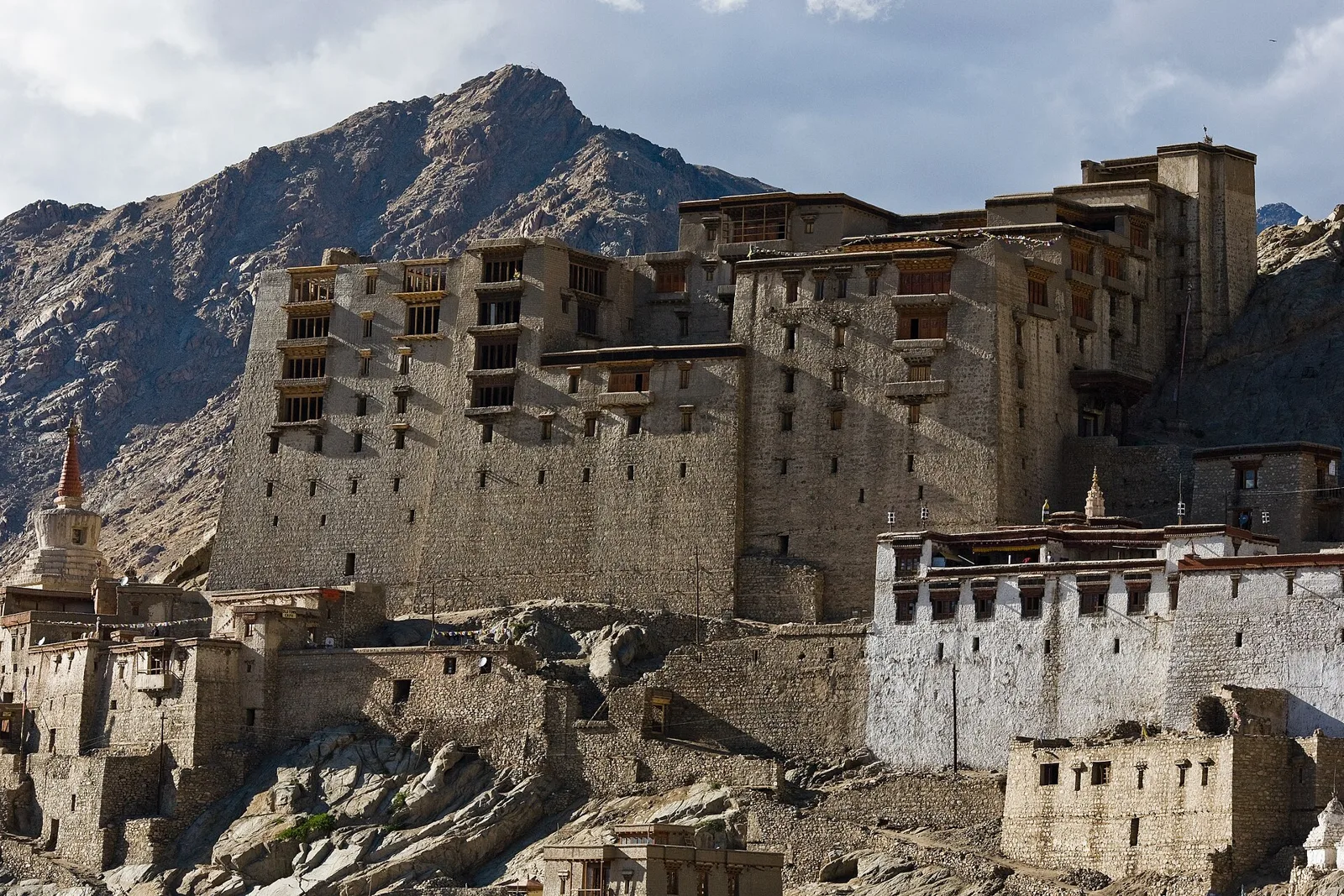
In Leh, the event is a major occasion, and the open ground below the old palace fills with local people in woollen robes and fur hats. It is one of Ladakh's most traditional festivals, and one where visitors are likely to meet mainly local families rather than crowds of tourists.
Origins and legend

The name Dosmoche is usually explained as coming from dos (a ritual thread-cross or spirit-trap) and moche, meaning "great". The ritual belongs to an old tradition in Tibetan Buddhism, in which an offering or effigy is made to attract and contain harmful spirits, which are then removed from the community. Many Ladakhi traditions blend Buddhist teaching with older Himalayan beliefs in local spirits and protectors.

The festival is thought to have been established in the Ladakhi royal period, with the Leh royal family sponsoring the rituals as a way of protecting the kingdom. The monks of local monasteries traditionally led the ceremonies. Over time it has become a community festival, with families taking part in the closing rites.

How it is celebrated

  • Preparation: In the days before, monks build a large, elaborate structure of wood and coloured threads, called the dos or spirit-trap, along with torma (ritual dough offerings) and other symbolic objects.
  • Masked dances (Cham): On the festival days, monks perform dances in the palace grounds and courtyards. The dances depict deities and protectors who subdue harmful forces.
  • Procession: Lamas and monks in full robes lead a procession with horns, drums and incense, followed by villagers. The dos and the offerings are carried through the old town.
  • Divination: An oracle or senior lama may foretell the fortunes of the coming year, and local officials and families watch for signs.
  • The final ritual: The dos, representing the accumulated misfortunes of the community, is taken out of the town to a designated spot and burned or discarded, accompanied by chanting and sometimes by gunfire or firecrackers, to drive away evil spirits.
  • Return and blessing: The community returns, and the monks give blessings. People then prepare for the new year.

Food and flavours

The festival's food is simple and warming. Families share butter tea, chang, thukpa, momos and khapse, and many carry packed lunches to eat on the palace grounds. Kitchens begin to prepare for Losar, with large batches of fried pastries and breads. In Leh, small cafes and eateries offer hot soups, noodles, and tea, and some stay open for visitors during the winter season.

Music, dance, art and dress

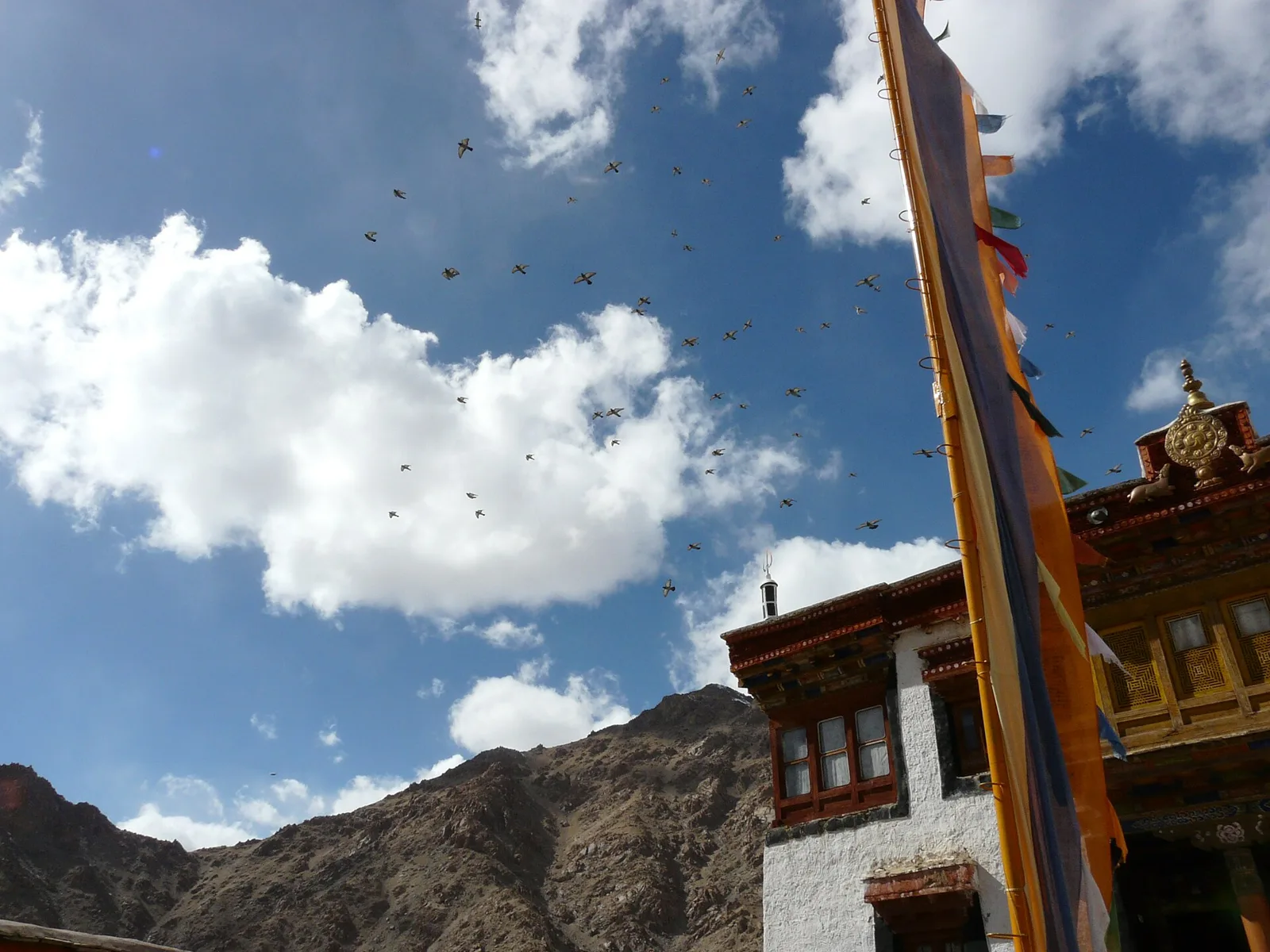
The soundscape includes the long Tibetan horns, drums, cymbals and oboes. The masks and costumes echo those of other monastic dances but are specific to Dosmoche, with figures that include protectors, skeleton dancers and deities. The dos itself is a work of folk art: coloured threads woven across wooden frames, decorated with torma and symbolic items. Local people dress in woollen robes and fur-lined hats, women wear the perak, and the old town is dotted with prayer flags and lamps.

Where to experience it

  • Leh Palace and Leh old town: the main festival site in the capital.
  • Likir Monastery: about 50 km west of Leh, where the festival is also held.
  • Diskit Monastery (Nubra Valley): a large monastery with a giant Maitreya statue, where winter festivals are observed.
  • Thiksey and Shey: nearby monasteries that can be visited on the same trip.
  • Spituk Monastery: near Leh, and the site of its own winter festival, the Spituk Gustor.

Visitor guide

  • Winter conditions. February is very cold, with temperatures far below freezing at night. Wear thermal underlayers, a down jacket, insulated boots, gloves and a warm hat. Test your gear before travelling.
  • Altitude. Leh is at 3,500 m. Plan at least two days of acclimatisation, drink lots of water and take it easy at first.
  • Getting there. Leh is reached by air in winter, as the roads over the passes are closed. Book early and expect flight delays due to weather.
  • Accommodation. Only some hotels and guesthouses stay open in winter. Check heating and hot water before booking.
  • Etiquette. Keep to the edges of the courtyard, do not interrupt the dancers or touch the ritual objects, and ask before photographing. Remove your hat when entering monastery buildings and avoid loud behaviour.
  • Dates. Because the festival follows the Tibetan lunar calendar, it is best to confirm the exact dates with the Leh tourism office, local hotel or monastery shortly before you travel.

Today and tomorrow

Dosmoche remains an important community festival and is also a draw for winter tourism, helping to support local businesses in the off-season. Monastic schools train young monks in the dances and rituals, preserving a tradition that might otherwise fade. The administration and monasteries work together on crowd management and heritage conservation, including the care of the old Leh Palace and the old town. Warmer winters and irregular snowfall are a growing concern in Ladakh, and the festival's prayers for protection and renewal take on new meaning in this context.

Nearby

Places to see around the festival