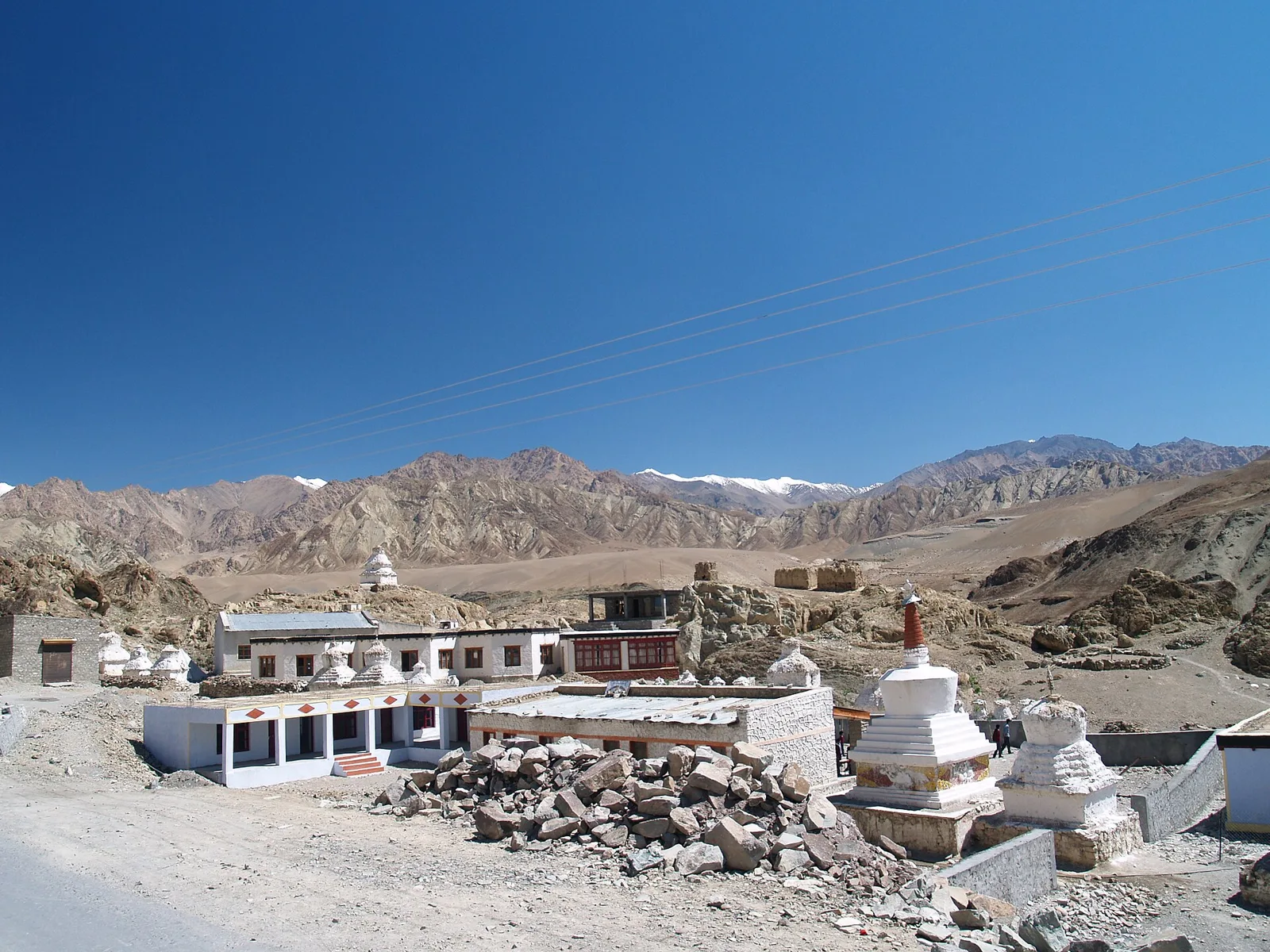
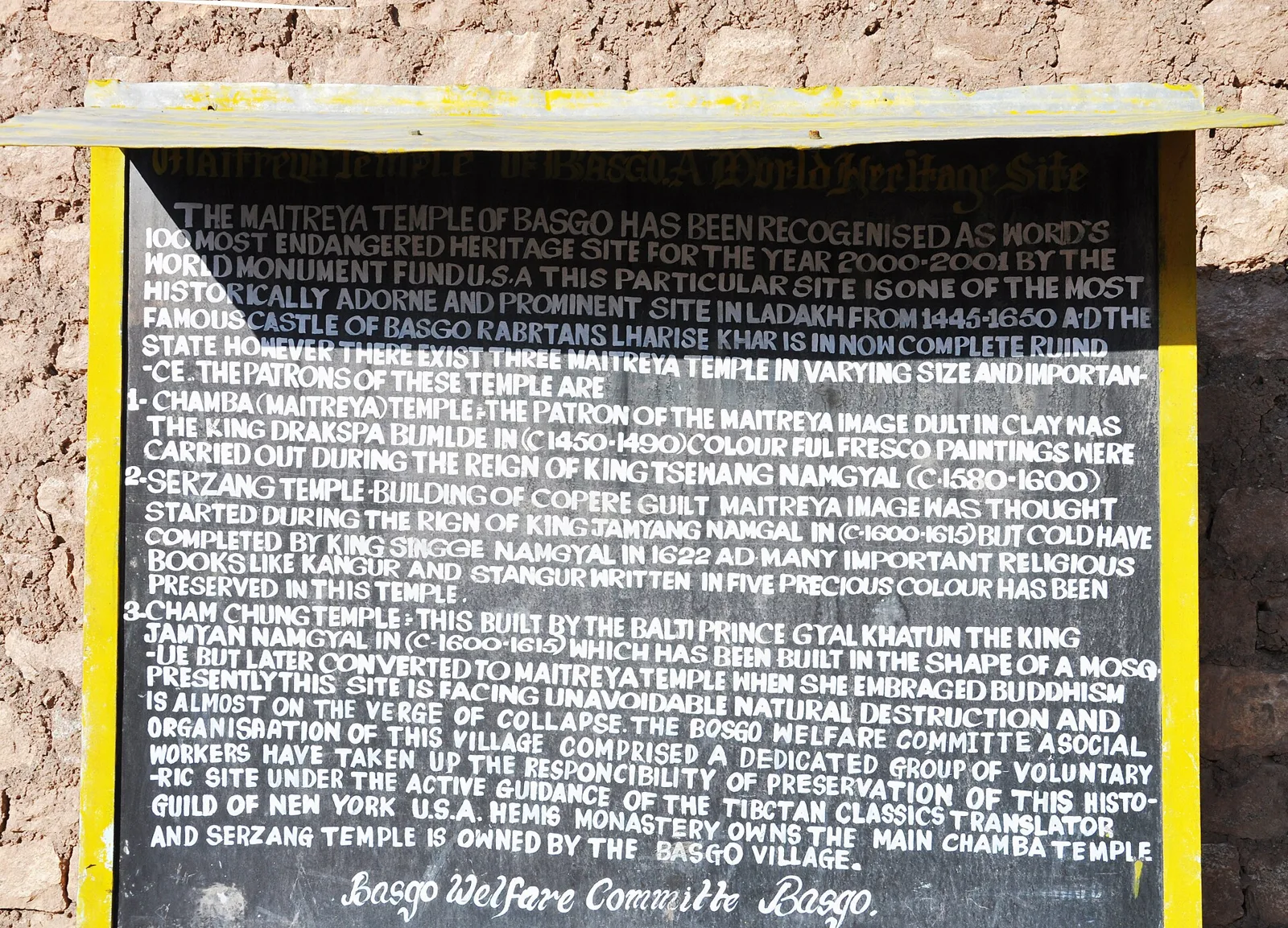
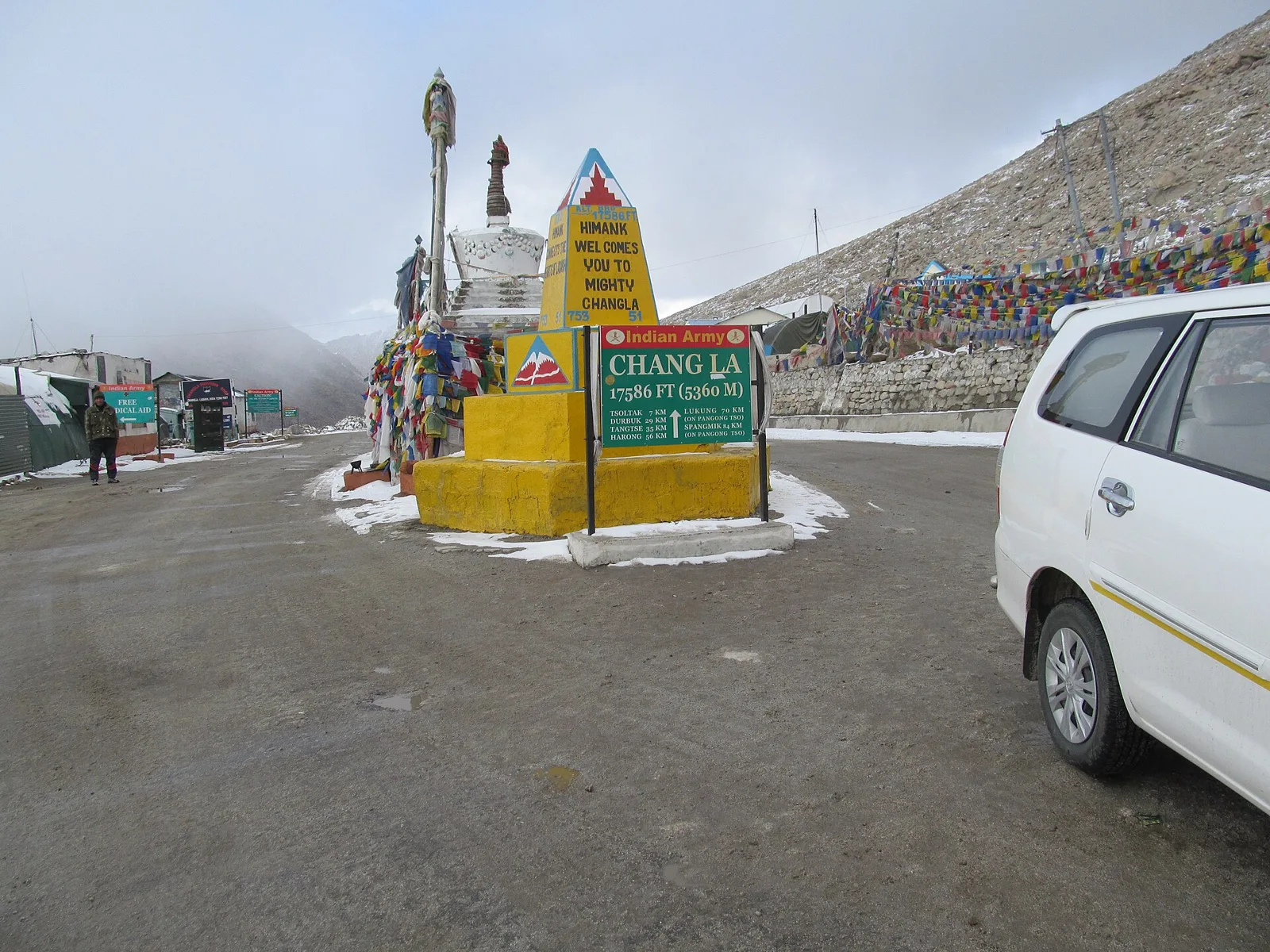
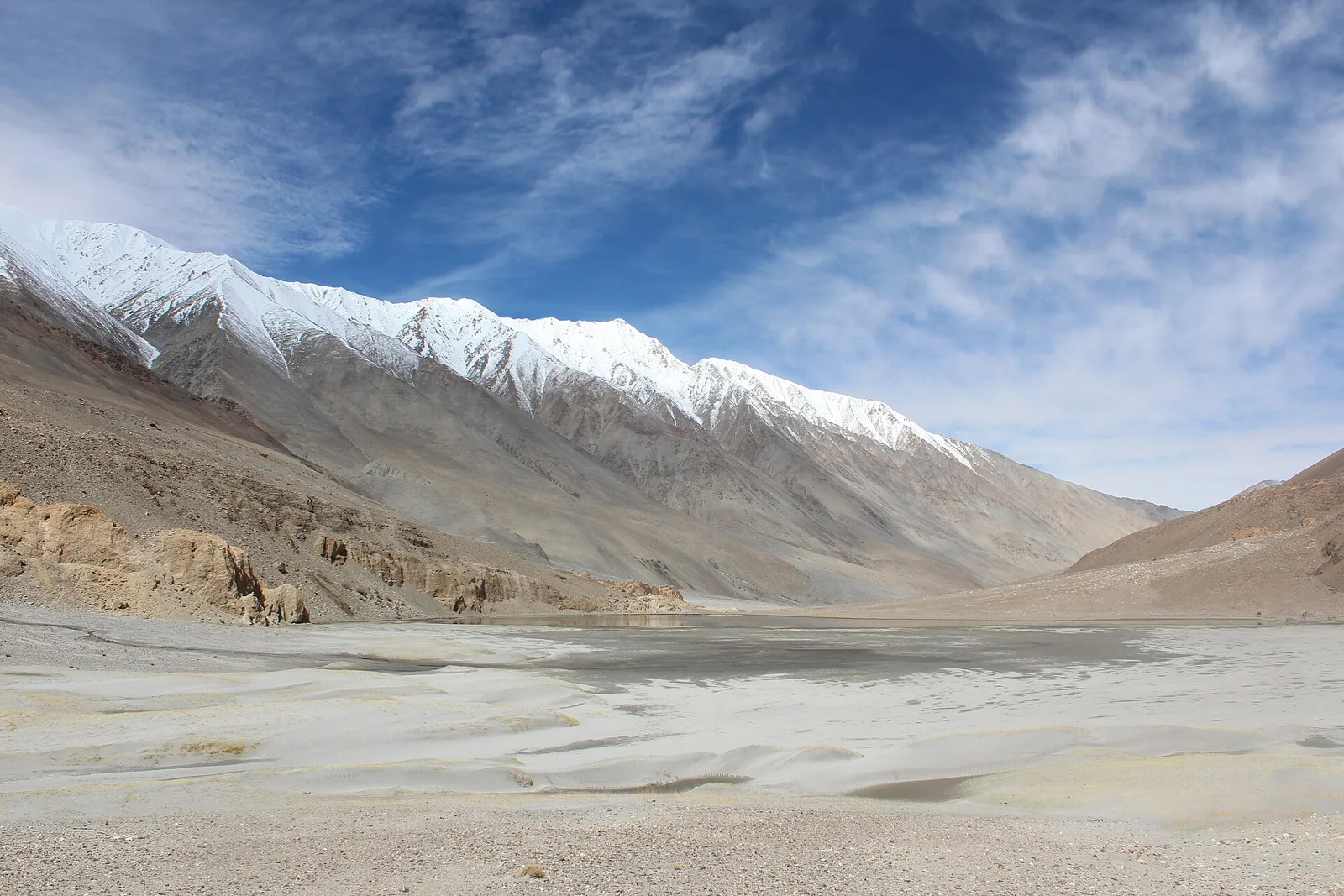
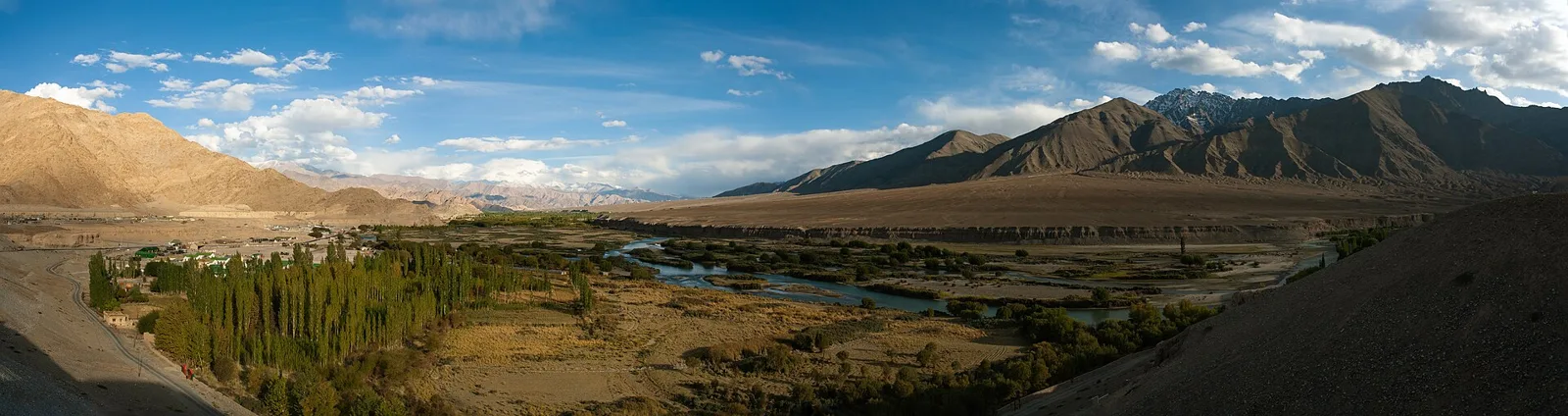
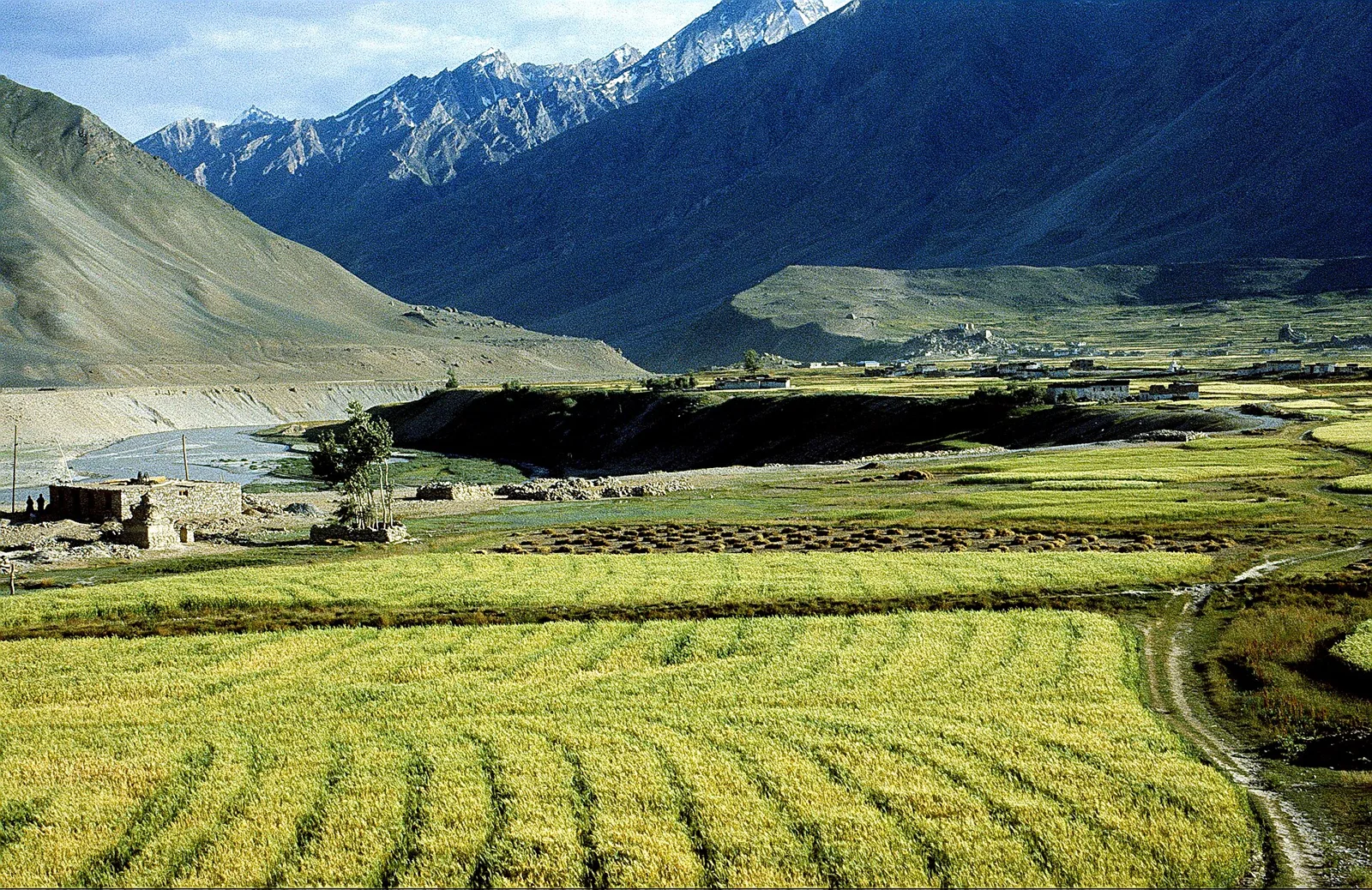
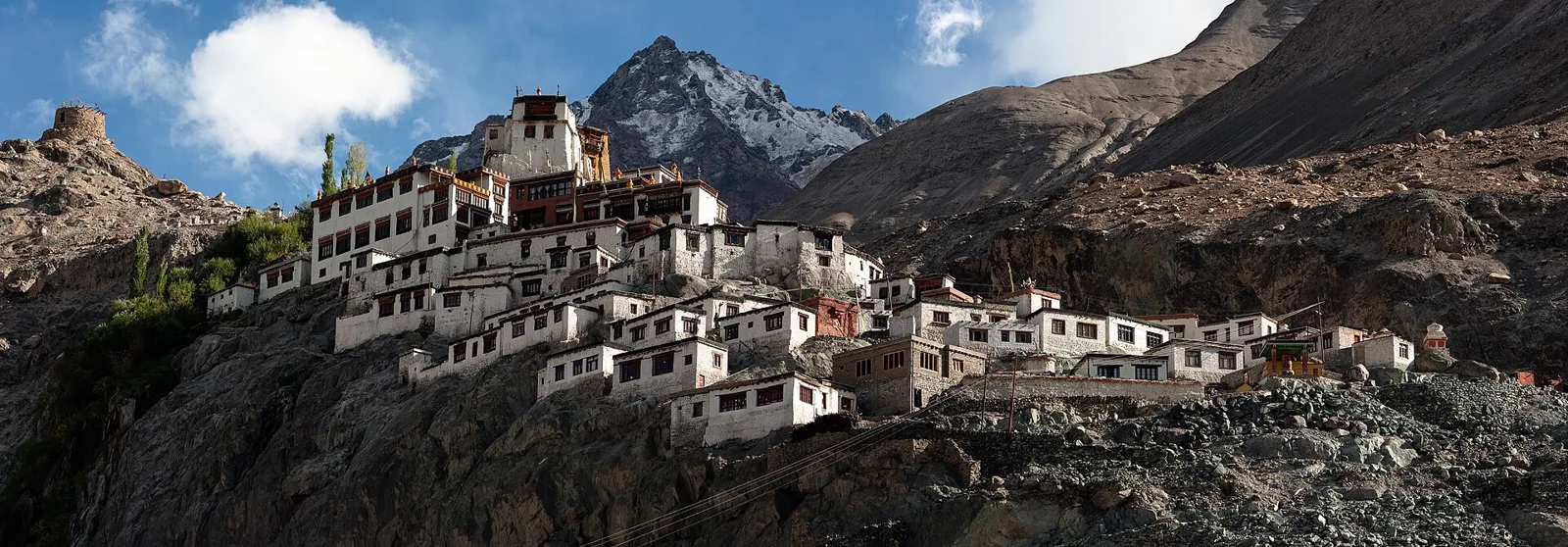
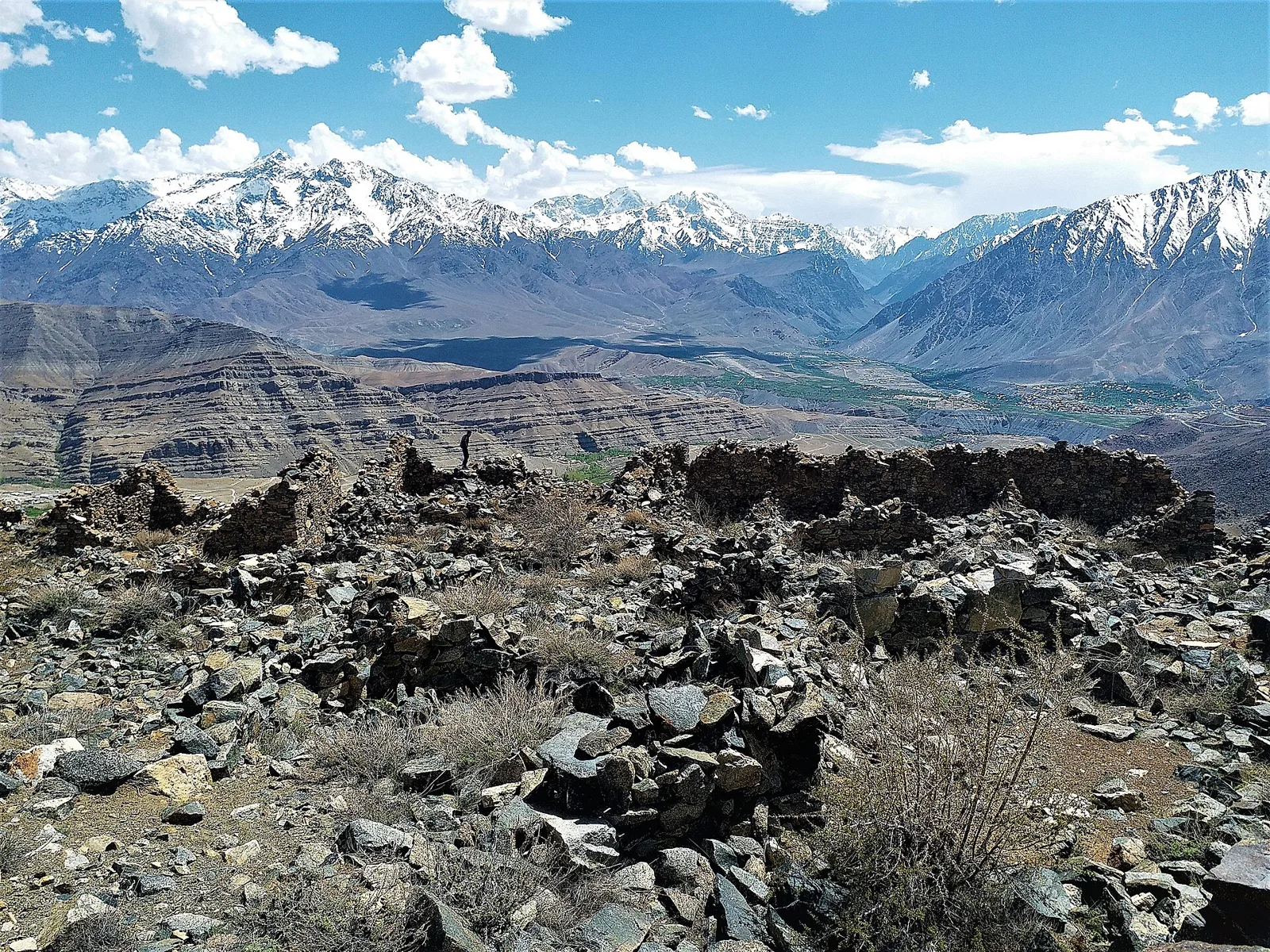
Ladakh’s position between the Indian subcontinent, Tibet and Central Asia shaped its history as a place of exchange as well as a remote mountain homeland. Archaeological traces point to long-settled communities, while trade routes carried goods, ideas and religious traditions across the Himalaya. Buddhism took root in the region over many centuries, with strong links to Tibetan religious life. Monasteries became centres of learning, ritual and local authority. Alchi’s early temple art, the hilltop complex at Basgo and the major gompas of Hemis and Thikse reflect different periods of this history. The Indus corridor and routes through Nubra and Zanskar connected communities to wider networks.
A distinct Ladakhi kingdom emerged in the medieval period, and the Namgyal dynasty shaped the region’s political and cultural life from the fifteenth century onward. Leh developed as a trading centre; Leh Palace, built under the Namgyal rulers in the seventeenth century, remains a prominent reminder of royal power. Local rulers negotiated shifting relationships with neighbouring Tibetan and Central Asian powers. In the nineteenth century, Dogra forces from Jammu conquered Ladakh, and it became part of the princely state of Jammu and Kashmir. British influence was exercised largely through that princely state rather than through direct colonial administration of Ladakh. Trade routes and political boundaries changed as imperial competition and later modern borders altered regional connections.
At the 1947 Partition, Jammu and Kashmir acceded to India, and Ladakh became part of the Indian-administered state. The region’s border location brought strategic significance and conflict, including the 1999 Kargil War, commemorated at the Kargil War Memorial near Drass. Leh and Kargil developed distinct administrative and cultural centres, while roads, schools and other services expanded in the decades after independence. In 2019, Ladakh was separated from the former state of Jammu and Kashmir and became a Union Territory administered directly by the Union government. Its contemporary story includes continued debates about local representation, land, employment and environmental pressures alongside growing tourism.