
Spituk Monastery
This Buddhist monastery in Spituk, near Leh, draws visitors for its long religious history, Gelugpa tradition, Kali statue and annual Gustor Festival.
Key facts · verified by Ghumoopedia editors
- Type of place
- Temple / pilgrimage site
- Best time to visit
- June to September; October for clear skies with colder nights; January–February only for winter trips such as the Chadar trek
- Nearest railway station
- Srinagar (Nowgam) · about 251 km (straight line)
- Verified
- 21 Nov 2026
Plan a trip from Spituk Monastery — a day-by-day route through places nearby.
Known also as Spituk Gompa and Pethup Gompa, Spituk Monastery is a Buddhist institution in Spituk, within Ladakh’s Leh district, around 8 km from Leh. Tradition holds that Arhat Nyimagung blessed the site. Its establishment is attributed to Od-de, elder sibling of Lha Lama Changchub Od, who arrived in Maryul during the 11th century and set up a monastic community. This marked the beginning of organised monastic life at the site. Later, the translator Rinchen Zangpo visited and foretold that a model religious community would develop there. The name Spituk, meaning exemplary, is linked to this prediction. Under Dharma raja Gragspa Bum-Ide, Lama Lhawang Lodos undertook restoration, and the Tsonkhapa order was brought in. That tradition has continued at the monastery. The monastery began as a Red Hat institution, before control passed to the Gelugpa, or Yellow Hat, school in the 15th century. It has 100 monks and a large statue of Kali, unveiled during the annual celebration. Spituk holds its Gustor Festival each year on days 27–29 of the Tibetan calendar’s eleventh month. Ladakh is a high-altitude desert between the Karakoram and the Great Himalaya, with Tibetan Buddhist monasteries such as Hemis, Thiksey, Diskit and Lamayuru, the Shia and Balti culture of Kargil and Turtuk, the Brokpa villages of Dha-Hanu, the turquoise lakes Pangong Tso and Tso Moriri, and some of the world's highest motorable passes. Summers (June to September) are sunny and dry, with warm days and cold nights; winters are long and severe, often far below −15 °C, and the high passes close with snow. The sun is intense at this altitude, and weather on the passes can change within an hour. The usual best time to visit is June to September; October for clear skies with colder nights; January–February only for winter trips such as the Chadar trek. Timings, fees and access arrangements must be confirmed locally. For official information, see Ladakh Tourism at https://tourism.ladakh.gov.in.
Why it matters
Spituk Monastery, also called Spituk Gompa or Pethup Gompa, is a Buddhist monastery in Spituk, about 8 km from Leh. It is a living Gelugpa institution and a place of worship, study and community life in Ladakh’s Tibetan Buddhist landscape. Its annual Gustor festival and the large image of Kali, revealed for the occasion, are among its distinctive local traditions. The monastery also matters for its long association with the spread and development of monastic Buddhism in Maryul, the historic name for Ladakh. The available guide does not identify Spituk as a UNESCO World Heritage Site or an Archaeological Survey of India-protected monument; check official sources for current heritage status.
The monastery’s origins are traditionally traced to the 11th century, when Od-de, elder brother of Lha Lama Changchub Od, came to Maryul and established a monastic community at Spituk. The site is said to have been blessed by the Arhat Nyimagung. When the translator Lotsewa Rinchen Zangpo visited, tradition says he predicted that an exemplary religious community would arise there; the name Spituk is associated with the idea of being exemplary. Spituk was first established as a Red Hat institution. During the rule of Dharma Raja Gragspa Bum-Ide, Lama Lhawang Lodos restored the monastery and introduced the order of Tsongkhapa. In the 15th century, the monastery came under the Gelugpa, or Yellow Hat, school, and published accounts say that affiliation has continued to the present. These changes reflect the wider history of Buddhist institutions in Ladakh, where teachings and monastic lineages developed through regional religious networks. The monastery remains active, with the guide reporting a community of around 100 monks. Its annual Gustor celebration is one continuing expression of its religious life.
Origin stories & folklore
According to local religious tradition, the site of Spituk was blessed by the Arhat Nyimagung before the monastery was established. Another origin story links the name to a visit by the translator Rinchen Zangpo. He is said to have foretold that an exemplary religious community would flourish there, and the monastery was consequently called Spituk, a name associated with “exemplary.” These accounts belong to the monastery’s remembered spiritual history rather than independently verified events. Visitors can encounter them as part of Ladakh’s oral and religious heritage; they are best understood respectfully as traditions that express the community’s sense of the site’s auspiciousness and purpose.
Architecture & design
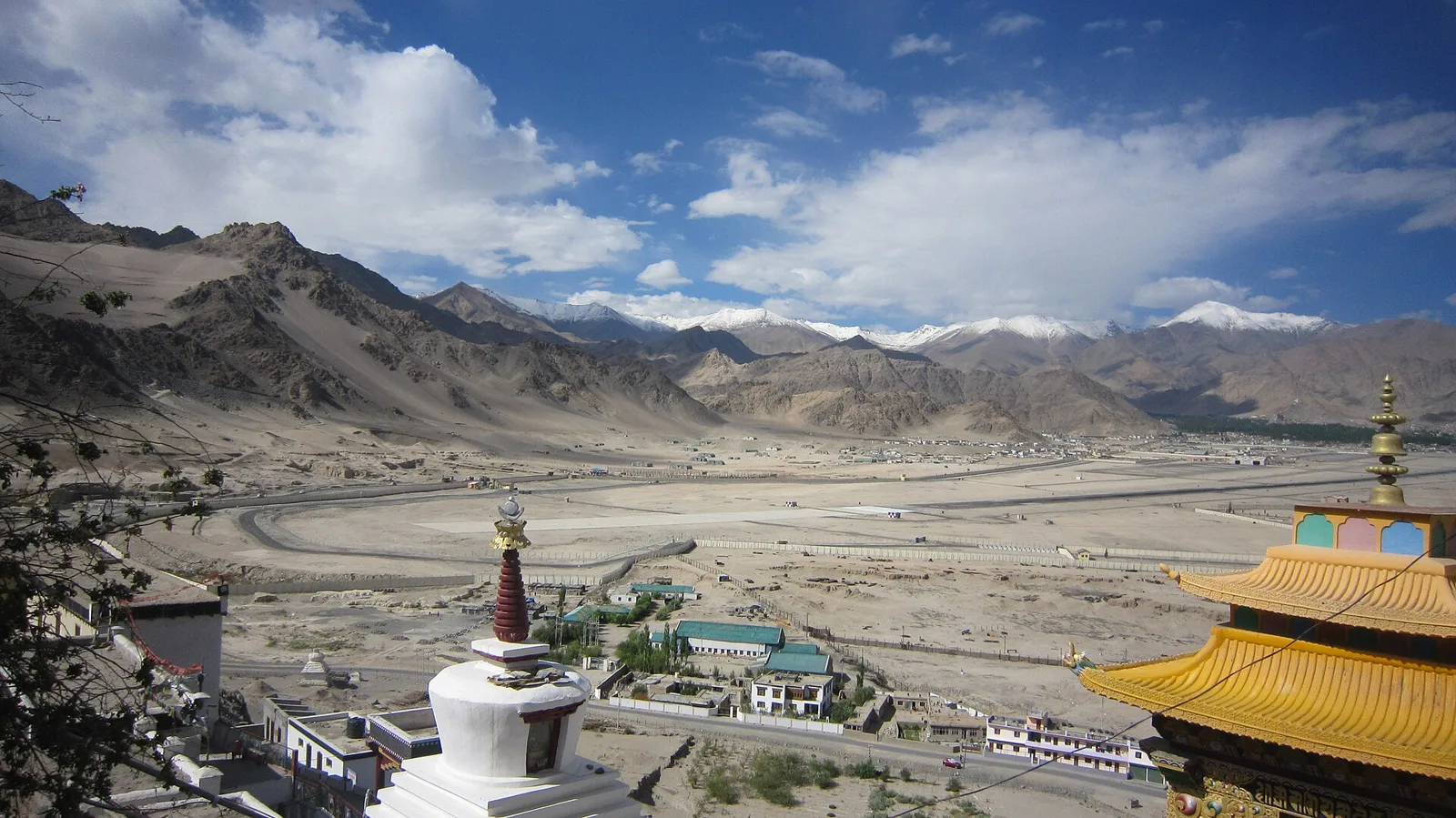
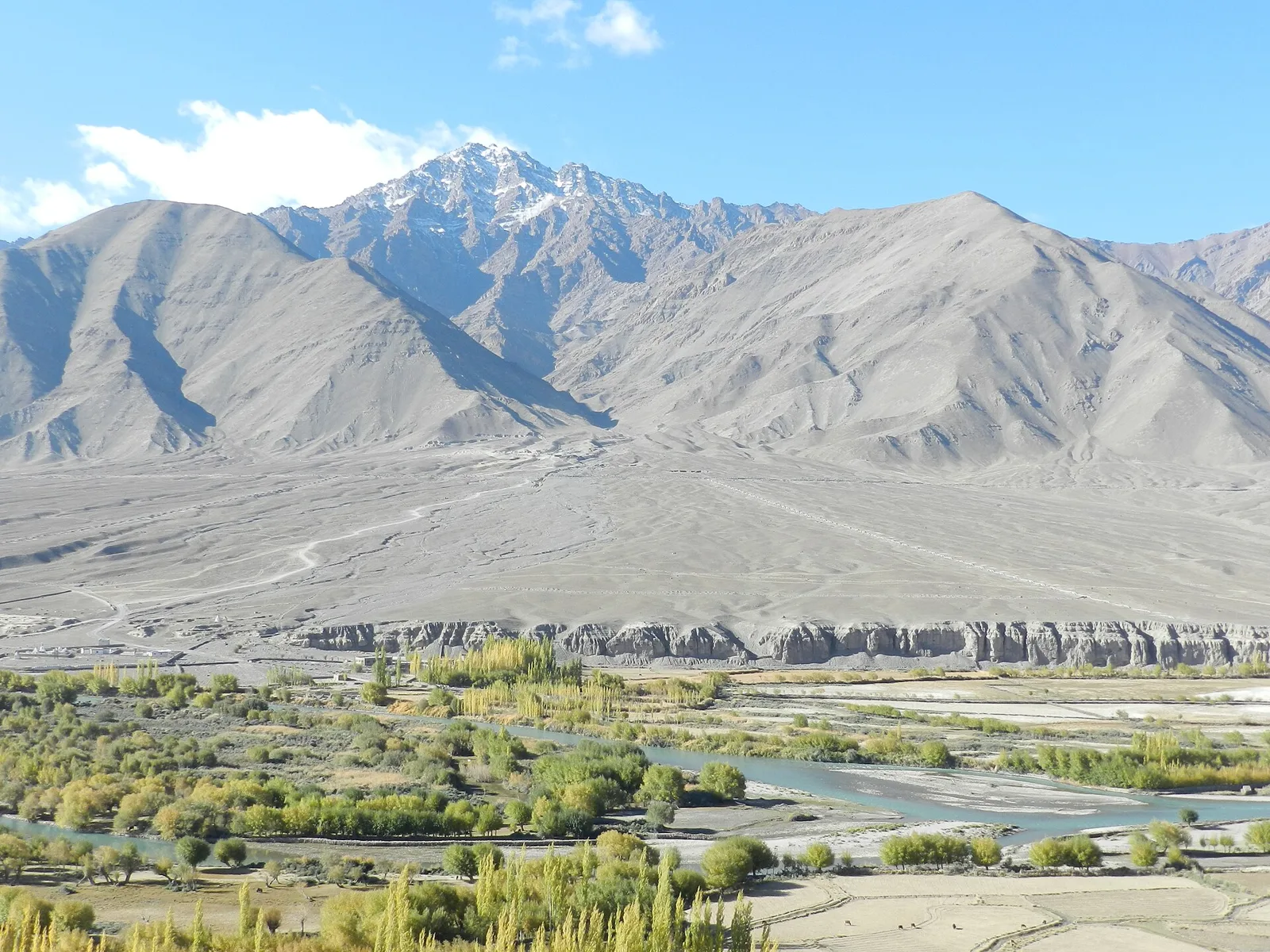
Spituk is a traditional Tibetan Buddhist monastery set on elevated ground in the village of Spituk. Its buildings form a compact complex of religious spaces and monastic rooms, with prayer halls and shrines arranged around courtyards and circulation areas. The setting gives views across the surrounding Indus valley and toward the landscape around Leh. Ladakhi monastic buildings commonly use locally available stone, earth-based construction and timber, but visitors should not assume every structure at Spituk uses the same materials or is of the same age. Inside, painted religious imagery, altars and devotional objects mark the sacred character of the halls. Stupas and prayer wheels are part of the broader monastery environment. The layout reflects ongoing use for worship and community life rather than a purpose-built museum route, so access to individual rooms may vary. The complex has developed over centuries, and its buildings should be viewed as a layered religious site rather than a single, uniform architectural project.
Important objects & sculptures
The monastery’s most notable image, is a large statue of Kali that is unveiled during the annual Gustor festival. Its display is connected with the festival and may not be available to view at other times. Within accessible prayer halls, visitors may see Buddhist images, altar arrangements, painted religious scenes and ritual furnishings; which objects are on view can vary with services and room access. Stupas and prayer wheels are also part of the devotional landscape. Treat these as sacred objects, not displays: do not touch them, move offerings or enter cordoned spaces. Ask before photographing any image or interior, as permissions may differ by room and occasion.
Religious significance
Spituk is a living Buddhist monastery associated today with the Gelugpa, or Yellow Hat, tradition. Its prayer halls and monastic community support worship, religious study and ritual practice. The monastery’s history also records an earlier Red Hat affiliation, followed by the introduction of Tsongkhapa’s order and a transition to Gelugpa stewardship in the 15th century. For worshippers, the monastery is a sacred place rather than simply a heritage attraction. Visitors may encounter prayers, offerings and devotional movement around stupas or prayer wheels. The large image of Kali is unveiled during Gustor, according to the guide. Observe quietly, follow directions from monks or caretakers, and avoid interrupting prayers or treating ritual activity as a performance.
Visit Spituk Monastery with time to observe daily prayers and rituals respectfully. Walk clockwise around stupas, prayer wheels and chortens, remove shoes and hats before entering prayer halls, never point your feet at the altar, and ask before photographing monks or the interior; the morning prayer is the most atmospheric time to visit. A comfortable itinerary is one main visit in the morning, a local meal at midday and a short nearby stop before an afternoon return. Start early: high passes are clearer and safer in the morning, and wind rises in the afternoon at lakes such as Pangong. Use the district list on this site to find other places in Leh, but check the route and its condition before combining stops. If a festival is on — such as Hemis Tsechu in summer, Losar in winter, the Ladakh Festival in September or a monastery masked-dance festival — transport and stays can be busy, and the experience can be unforgettable. Ladakh's water is scarce and its waste is hard to remove — refill bottles at water points, use dry toilets as instructed and carry your rubbish back to Leh.
Suggested itineraries
Half day: Travel from Leh (allow about 20–30 minutes each way, depending on traffic); spend 1–2 hours at the monastery, allowing time for prayer halls, the grounds and quiet observation; return to Leh. Full day: Visit Spituk in the morning (about 1–2 hours); return to Leh for lunch; spend the afternoon at Leh Palace and the old town, or choose another nearby Leh-area stop after checking access and travel conditions. Gentler option: Arrange a vehicle drop-off as close as locally permitted, focus on the most accessible courtyard or viewing area, and allow extra rest time; ask a companion or local staff about steps before entering.
Monastic life remains central to Spituk’s character, alongside the customs of the surrounding Ladakhi community. Visitors may encounter Buddhist prayer, devotional offerings and the use of prayer wheels and stupas. During festival periods, masked ritual dances and ceremonial dress are part of the wider monastery culture; arrangements vary by event. Ladakhi and Tibetan Buddhist influences shape local religious expression, while Ladakhi, Tibetan and other languages may be heard in the region. Do not assume that every visitor or resident follows the same customs. A quiet greeting, modest clothing and asking before taking portraits help make an encounter respectful. The monastery is an active religious community, so daily practice takes precedence over sightseeing.
Festivals & events
Spituk’s principal annual celebration is the Gustor Festival, held in the eleventh month of the Tibetan calendar. Published accounts give its traditional calendar days, but dates shift against the Gregorian calendar and should be confirmed locally each year. Gustor includes religious observances and masked dances, and the large image of Kali is unveiled for the festival. The event can draw worshippers and visitors, making the monastery and local transport busier than usual. Other monastery festivals take place across Ladakh, but their dates and locations vary. Confirm the programme with the monastery or Ladakh Tourism before planning a visit around a festival.
Local food in Ladakh includes thukpa and skyu noodle soups, steamed momos, tingmo bread, paba and tsampa (roasted barley), chhurpi cheese, butter tea (gur gur cha), apricot jam and dried apricots from Kargil and Turtuk, seabuckthorn juice and, in Kargil and Drass, Balti and Kashmiri dishes. Ask what is fresh that day; many small eateries cook a limited daily menu. Leh's Main Bazaar and Changspa road have cafés for every taste, but outside Leh menus are short and simple. Eat light for the first two days while you acclimatise, avoid alcohol, and drink plenty of warm water and soups. Remote sites may have no restaurant at all. Carry water and snacks, eat a proper breakfast before long journeys, and ask your accommodation for a packed lunch if you are heading out early. If prasad or a blessing is offered, accept it according to local custom. Choose busy, clean places, drink sealed or filtered water, and carry your packaging back with you.
Shopping & local experiences
Spituk itself should not be treated as a guaranteed shopping stop. For Ladakhi handicrafts, textiles, prayer items and souvenirs, browse established shops and markets in Leh, comparing workmanship and asking about the origin of handmade goods. Be considerate when buying religious objects: some items are intended for worship, and cultural context matters. Leh is also the more reliable place to find cafés and restaurants serving Ladakhi and broader regional food. Carry a reusable bottle, avoid unnecessary plastic packaging and do not buy objects taken from historic or religious sites.
June to September; October for clear skies with colder nights; January–February only for winter trips such as the Chadar trek
The nearest principal railway station by straight-line distance is Srinagar (Nowgam), roughly 251 km away. The nearest operating airport by straight-line distance is Kushok Bakula Rimpochee Airport, Leh, roughly 2 km away. These figures are calculated from map coordinates — actual road distance is longer, and mountain roads and checkposts mean even short distances can take hours. Leh airport has year-round flights from Delhi and other cities. By road, the Srinagar–Kargil–Leh highway over Zoji La usually opens from about April–May to November, and the Manali–Leh highway from about June to October; both close in winter. The nearest railheads are Srinagar and Jammu Tawi, a long road journey away. From Leh, hire a union-rate taxi from the Leh taxi stand or through your guesthouse, or join a shared taxi; local buses run on a few routes, but schedules are limited. When comparing train, bus and flight, count the complete door-to-door time: a flight saves the most time only if the onward transfer is short, while an overnight train can save a hotel night. For Ladakh, flying into Leh saves the most time, but you must rest for two full days on arrival because you go straight to 3,500 m. Arriving by road from Manali or Srinagar takes two days but helps your body adjust to the altitude. Book your return before you leave, because seats fill quickly on weekends, festivals and holidays. Current train numbers, timings, return services, ferry departures and fares are not listed here; check IRCTC and NTES for trains, the airline's own schedule for flights and the official operator for ships and ferries. Permit rules for Ladakh have changed several times, so check the current requirement on the Leh district administration's permit portal (lahdclehpermit.in) before you travel. Indian visitors to protected areas such as Nubra, Turtuk, Pangong, Tso Moriri, Hanle and Dha-Hanu are usually asked to register online and pay environment and wildlife fees; foreign nationals need a Protected Area Permit arranged through a registered Leh travel agent, and should carry several photocopies for checkposts. Prepaid mobile SIMs from outside Jammu & Kashmir and Ladakh do not work here — bring a postpaid connection.
Confirm onward and return timings on IRCTC / NTES, the state bus operator or your airline before travel. A dash means current timings or fares have not been verified.
Getting around
From Leh, visitors can arrange a local taxi through the Leh taxi stand or their accommodation; confirm the route and return plan with the driver. Local buses or shared transport may be available, but service and stopping points should be checked locally. The monastery is outside central Leh, so walking the entire way is not a practical assumption for every visitor. At the site, expect to walk between the drop-off or parking area and the monastery buildings, and ask locally where vehicles should wait. Auto-rickshaw availability may be limited compared with larger Indian cities. Avoid relying on late-day transport without arranging a return.
Hours, tickets & permissions
Entry arrangements can change according to prayer services, festivals, conservation needs and which parts of the monastery are open. There may be entry rules, a ticket or separate restrictions for photography, but do not assume a particular fee or policy. Dress modestly and follow any instructions about shoes, headwear, identification or restricted rooms. Confirm current opening arrangements, entry requirements and fees with the monastery’s managing authority or a reliable local source before travelling. Festival days may have different access conditions from ordinary visiting days.
Facilities
Facilities within the monastery may be limited and can change with the season or event. Toilets, drinking water, food and staffed visitor information are not guaranteed on site, so check locally and carry water from Leh. Basic parking or vehicle drop-off arrangements may be available, but confirm where drivers can wait. Food options are more dependable in Leh than at the monastery. Guides may be arranged through local operators or accommodation, though an on-site guide should not be assumed. ATMs are generally sought in Leh; carry what you need before leaving town. Keep the site clean and take rubbish back with you.
Accessibility
The monastery is on elevated ground, and reaching and exploring its buildings may involve uneven surfaces, sloping paths and steps. Walking distances within the complex are not necessarily long, but the terrain and high altitude can make even a short climb tiring. Shade may be limited, so sun protection and rest breaks are useful. Strollers may be difficult to manoeuvre on uneven ground. Older visitors should move slowly, avoid rushing between levels and consider arranging a vehicle drop-off nearby where permitted.
Permit rules for Ladakh have changed several times, so check the current requirement on the Leh district administration's permit portal (lahdclehpermit.in) before you travel. Indian visitors to protected areas such as Nubra, Turtuk, Pangong, Tso Moriri, Hanle and Dha-Hanu are usually asked to register online and pay environment and wildlife fees; foreign nationals need a Protected Area Permit arranged through a registered Leh travel agent, and should carry several photocopies for checkposts. Prepaid mobile SIMs from outside Jammu & Kashmir and Ladakh do not work here — bring a postpaid connection. Carry a photo ID at all times and save the emergency number 112 and your accommodation's contact offline. Altitude sickness (acute mountain sickness) is the main risk everywhere in Ladakh: rest completely for the first 36–48 hours in Leh, climb gradually, avoid alcohol and smoking, drink water, and descend or seek medical help at once if you develop a severe headache, breathlessness at rest, vomiting or confusion. People with heart or lung conditions, young children and pregnant women should consult a doctor before going. Watch your belongings in crowds and on public transport, and follow posted instructions.
Visitor rules
Wear modest clothing and follow posted instructions. Remove shoes where requested before entering prayer halls, and remove hats if instructed. Walk clockwise around stupas, chortens and prayer wheels where the route allows; do not touch sacred objects or offerings. Keep voices low, never point your feet toward an altar, and do not enter rooms marked private or restricted. Ask before photographing monks, worshippers or interiors, and obey any camera limits. Avoid interrupting prayers or blocking walkways. Carry rubbish back to Leh and minimise single-use plastic. During ceremonies, follow directions from monastery staff and give worshippers space.
Photography
Morning light is often pleasant for viewing the monastery and surrounding landscape, but conditions change with weather and season. Photographing exterior buildings may be possible, while permission inside prayer halls or during ceremonies can be restricted. Ask before taking pictures of monks, worshippers, altars or ritual objects, and respect a refusal without argument. Do not use flash where prohibited. Drone use may be restricted by aviation, security or monastery rules; check current permissions before bringing or flying one. Avoid positioning yourself where photography obstructs prayer or movement.
Choose a stay by the full journey to Spituk Monastery, not just the district name. Leh has the widest choice, from family guesthouses in Changspa and Karzoo to hotels near the Main Bazaar; Nubra, Pangong, Tso Moriri and Hanle have homestays and seasonal camps, and Kargil and Padum have simple hotels and guesthouses. Nights are cold even in summer — check heating, hot water and extra blankets, and expect power cuts and limited mobile signal outside Leh and Kargil. Book in advance for weekends, festivals and the peak season (June to September; October for clear skies with colder nights; January–February only for winter trips such as the Chadar trek). Confirm the exact location, meals included, check-in time and cancellation terms in writing. Avoid sending money to unverified contacts or touts at stations, airports and jetties. Carry some cash, as card and digital payments can be unreliable in remote areas.
Leh is the natural base for combining Spituk with places such as Leh Palace, Shanti Stupa and the old town, whose lanes and historic buildings are worth exploring at a measured pace. Other well-known monasteries in Leh district include Thiksey and Hemis; Shey Palace and Monastery is another established cultural stop. These are separate visits rather than immediate extensions of a short walk from Spituk, so check road conditions, travel time and opening arrangements before combining them. Choose fewer stops if acclimatising to altitude, and avoid planning a long day solely around driving.
For couples, Spituk Monastery rewards a slow pace: arrive early for soft light and fewer crowds, share a local meal and keep the evening free. Sunset from Shanti Stupa, a night under the stars at Hanle or Tso Moriri, a camel ride on the Hunder dunes or a quiet morning at Pangong makes the trip memorable. Public displays of affection can be frowned upon in conservative communities and at religious sites, so be discreet. Keep a buffer in your itinerary, because weather and transport can delay plans.
Q: How much time should I allow for Spituk Monastery? A: Allow roughly 1–2 hours at the complex, with additional time for travel from Leh and rest at altitude. Q: When is the best season to visit? A: June to September is the usual travel season in Ladakh. October can bring clear skies and colder nights; check current road and weather conditions. Q: Is there an entry fee or a fixed visiting schedule? A: Entry rules and fees can change. Confirm current arrangements with the monastery or a reliable local source before setting out. Q: Is the monastery suitable for children and older visitors? A: It can be visited by families, but uneven paths, steps and altitude may be tiring. Keep children supervised and allow older visitors extra time and rest. Q: Where should I stay for a visit? A: Leh is the practical base, with a wider choice of accommodation and services. Check availability and transport locally, especially during festivals.
Be the first to share photos, stories, advice or a helpful contact for Spituk Monastery.
Loading…