Ghumoopedia — Explore, Discover, Experience
Sign in

Religious · Ladakh

Hemis Tsechu

Hemis Monastery

Dates

Last verified 17 November 2026. Confirmed: announced by organisers or government. Provisional: from a published almanac, not yet announced. Seasonal: no date announced.

The complete guide

Hemis Tsechu: everything to know before you go

Also known as
Hemis Festival, Hemis Tsechu
Where
Hemis Monastery (Hemis Gompa), about 40–45 km southeast of Leh, Leh district
When
The 10th day of the Tibetan lunar month called Tse-Chu, usually in June or July.
Duration
Two days of masked dances, preceded by days of rituals
Faith and community
Buddhist (Drukpa Kagyu lineage), celebrated by the people of Ladakh
Honours
The birth anniversary of Guru Padmasambhava (Guru Rinpoche)
Special event
Every 12 years, in the Year of the Monkey, a giant sacred appliqué painting (thangka) is unfurled
Best for
Culture lovers, photographers, spiritual travellers

Overview

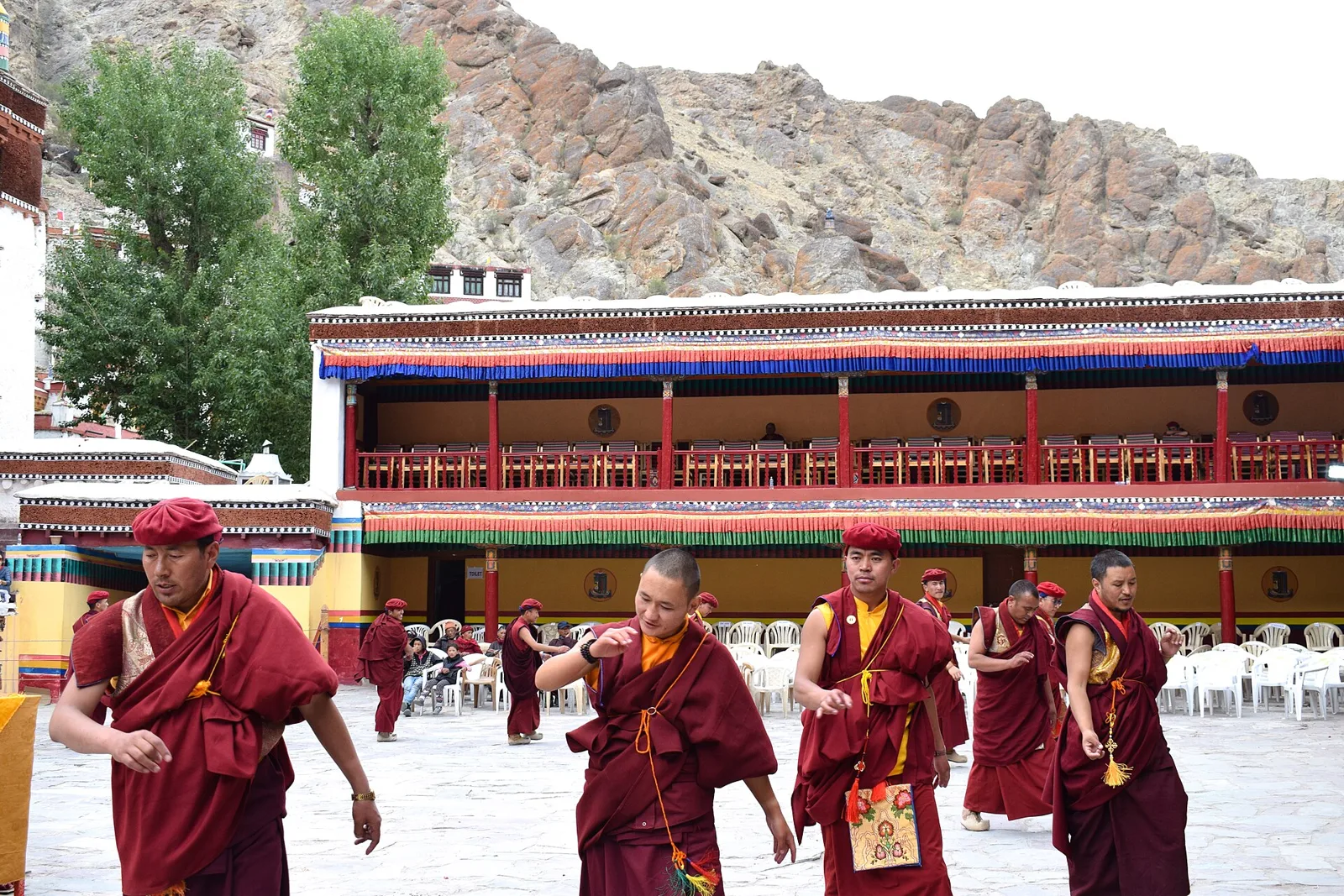
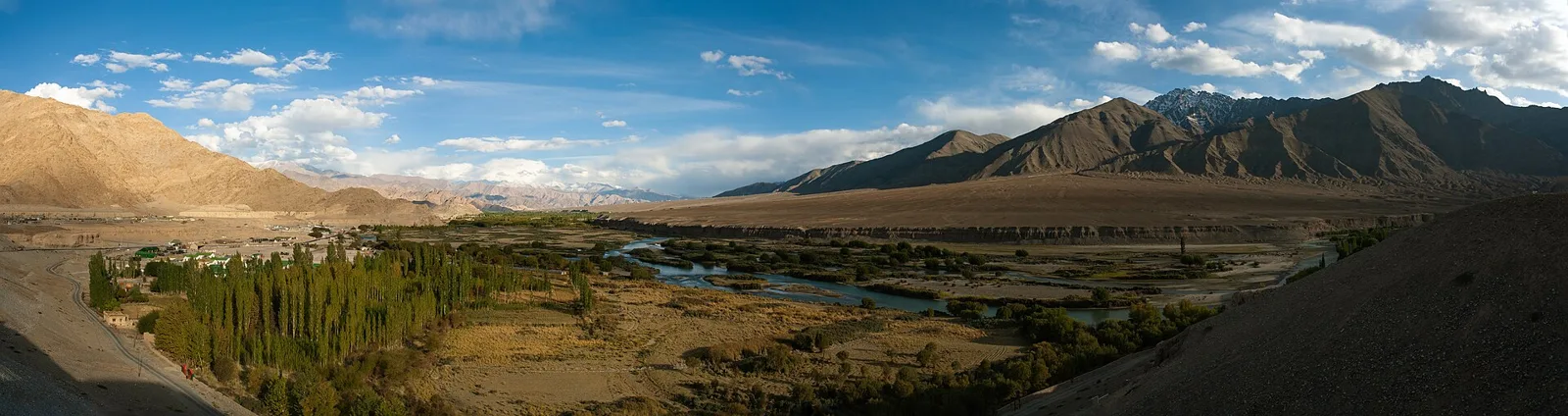
On a summer morning in the Indus valley, drums and long horns echo from a monastery tucked into a narrow side gorge. Inside the courtyard, monks in elaborate brocade costumes and fierce masks spin and leap to a slow, hypnotic rhythm, while Ladakhi families in their finest clothes watch from the balconies and around the edges of the square. This is the Hemis Tsechu, the largest and best-known monastic festival in Ladakh.

For Buddhists, the festival is a sacred teaching in motion, in which each dance re-enacts the victory of wisdom over ignorance. For visitors, it is an extraordinary spectacle of colour and sound at over 3,200 metres above sea level. For Ladakhis, it is also a summer social event, with relatives from distant villages meeting, trading and picnicking.
Origins and legend

Guru Padmasambhava, an eighth-century Indian Buddhist master, is revered in Tibetan Buddhism as the "Second Buddha" for bringing Buddhism to Tibet and for subduing hostile spirits. The Tsechu (literally "tenth day") celebrates his birth anniversary, which tradition places on the tenth day of the lunar month. The dances show his eight manifestations, each a different form that defeated the enemies of Buddhism.

Hemis Monastery is one of Ladakh's oldest and wealthiest monasteries. Records say it was founded in the early 1630s by Stagsang Raspa Ngawang Gyatso, a Drukpa master, and re-established in 1672 under the patronage of King Sengge Namgyal, a ruler of Ladakh. Tucked into a hidden valley, the monastery is not visible from the Indus road, and local tradition says that this protected it from raiders. Today it belongs to the Drukpa Kagyu school, and is one of the major religious centres of Ladakh.

The 12-year unfurling of the giant thangka of Padmasambhava, known as the Thongdrol ("liberation on sight"), is held in the Year of the Monkey, and it draws huge crowds. It is a rare opportunity, as the painting is otherwise kept rolled up.

How it is celebrated

The festival unfolds over several days, with a clear structure.

  • Preparations: Monks purify the courtyard and perform rituals in the days before. The sacred masks and costumes are taken out of storage and blessed.
  • Opening procession: On the first morning, senior lamas and monks in ceremonial robes enter the courtyard with long horns (dungchen), cymbals, drums and oboes (gyaling), accompanied by incense.
  • Cham dances: The main events are the masked dances, called Cham. Monks in huge, colourful masks and silk robes perform in slow circles, often representing deities, protectors and demons. The dances include the Black Hat dance, the dance of the Lords of the Cemetery (skeleton figures) and the dance of the Eight Manifestations of Guru Padmasambhava.
  • The stag dance and the ritual of the effigy: In some dances, a ritual figure representing evil or ignorance is symbolically destroyed, to the sound of drums and horns.
  • Blessings: Lamas bless the crowd, and families offer white scarves (khatas), butter lamps and money.
  • Second day: The programme continues with further dances and the closing rites. In a Year of the Monkey, the thangka is unfurled for public viewing.

The courtyard is surrounded by balconies and benches, and the audience sits on carpets, sharing food and tea.

Food and flavours

Ladakhi food is warming and hearty, made for the cold and the altitude. During the festival, local families and stalls serve:

  • Butter tea (gur gur cha): tea churned with salt and butter, offered everywhere.
  • Chang: a traditional barley beer, offered to guests at festivals.
  • Momos and thukpa: steamed dumplings and noodle soup.
  • Skyu and paba: traditional Ladakhi stews and barley dishes.
  • Khambir and tagi: local breads, eaten with butter, jam or curries.
  • Apricots and dried fruit: sold from stalls, and Ladakh's famed apricot products.

At festivals, families picnic in the courtyards and bring packed lunches, which they often share with neighbours and visitors.

Music, dance, art and dress

The sound of the Hemis festival is distinctive: the deep, droning notes of the long Tibetan horns, the clash of cymbals, the beat of big drums and the shrill call of oboes. The masks, made of papier-mâché and painted with fierce expressions, are works of art that represent deities and protectors, and the silk brocade costumes are heavy with embroidery. Local women wear the perak, a headdress covered in turquoise stones, with long woollen gowns (goncha) and shawls, while men wear the goncha and a wool hat. The festival also has stalls selling Ladakhi crafts: pashmina shawls, silver and turquoise jewellery, prayer wheels, thangkas and woollen items.

Where to experience it

  • Hemis Monastery: the main venue, with a museum of old thangkas, statues and relics.
  • Hemis National Park: nearby, famous for snow leopards, most visible in winter.
  • Shey Palace and Monastery: a short drive from Hemis, with a large Buddha statue.
  • Thiksey Monastery: a monastery on a hilltop, about 20 km from Leh.
  • Stok Palace and Museum: the royal family's residence.
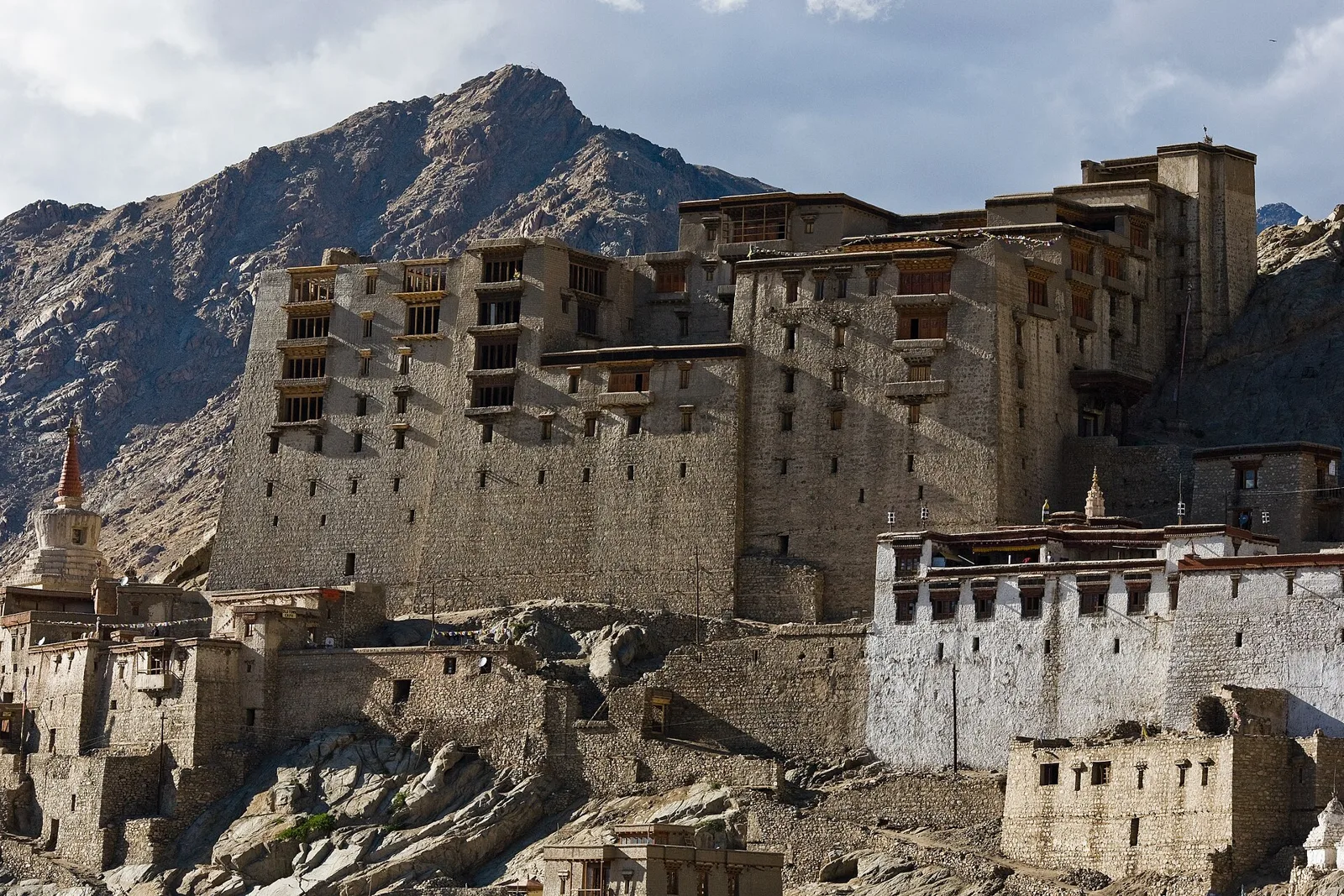
  • Leh: the main base, with markets, cafes and the Leh Palace.

Visitor guide

  • Altitude and health. Leh is at 3,500 m, and Hemis is slightly lower. Altitude sickness can affect anyone, so plan to spend at least two to three days in Leh before attending, drink plenty of water, avoid alcohol and strenuous activity at first, and carry any prescribed medicines.
  • Getting there. Leh has an airport (Kushok Bakula Rimpochee Airport) with flights from Delhi, Srinagar and Chandigarh. The road from Leh to Hemis along the Indus Valley takes about 1.5 hours. The roads from Manali and Srinagar to Leh are open only in summer, usually May to September or October.
  • Booking. Leh fills up during the festival, so book rooms and transport at least two to three months ahead.
  • What to wear. Dress in layers, as the mornings are cold even in summer and the sun is strong at midday. Carry sunscreen, sunglasses, a hat and a warm jacket.
  • Etiquette. Remove your hat and shoes in monastery halls, do not walk in front of dancers or touch the masks and costumes, avoid pointing your feet at religious objects, and walk clockwise around stupas and prayer wheels. Ask before photographing monks and elders, and follow the monastery's rules on flash and tripods.
  • Tickets. A small fee may apply for entry to the courtyard seating; check current arrangements.

Today and tomorrow

The Hemis festival is now one of Ladakh's most important tourism events, supporting hotels, taxi drivers, guides and craft sellers. The monastery and local administration work to balance the sacred character of the festival with visitor numbers, setting aside areas for pilgrims and local families and limiting disruption. Younger Ladakhis are increasingly returning for the festival from cities, and monastic schools are training new generations of dancers and musicians. Concerns include altitude-related emergencies, waste and over-crowding, and the sustainability of Ladakh's fragile environment and scarce water as tourism grows.

Nearby

Places to see around the festival