
Basgo Monastery
Basgo Monastery, also called Basgo or Bazgo Gompa, is a Buddhist complex in Ladakh. Visitors come to see its Buddha image, murals and temples above the remains of the old town.
Key facts · verified by Ghumoopedia editors
- Type of place
- Temple / pilgrimage site
- Best time to visit
- June to September; October for clear skies with colder nights; January–February only for winter trips such as the Chadar trek
- Nearest railway station
- Srinagar (Nowgam) · about 229 km (straight line)
- Verified
- 21 Nov 2026
Plan a trip from Basgo Monastery — a day-by-day route through places nearby.
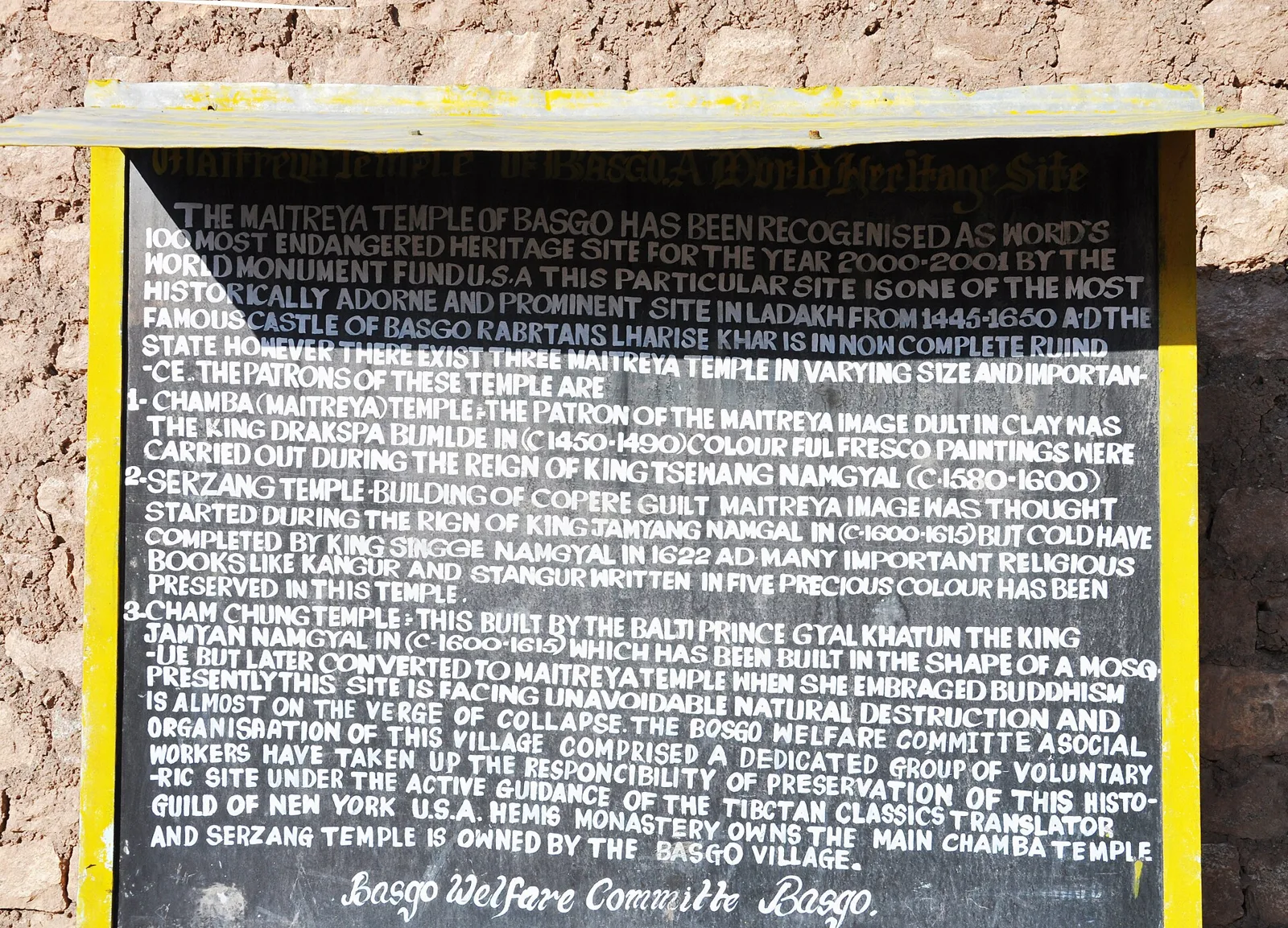
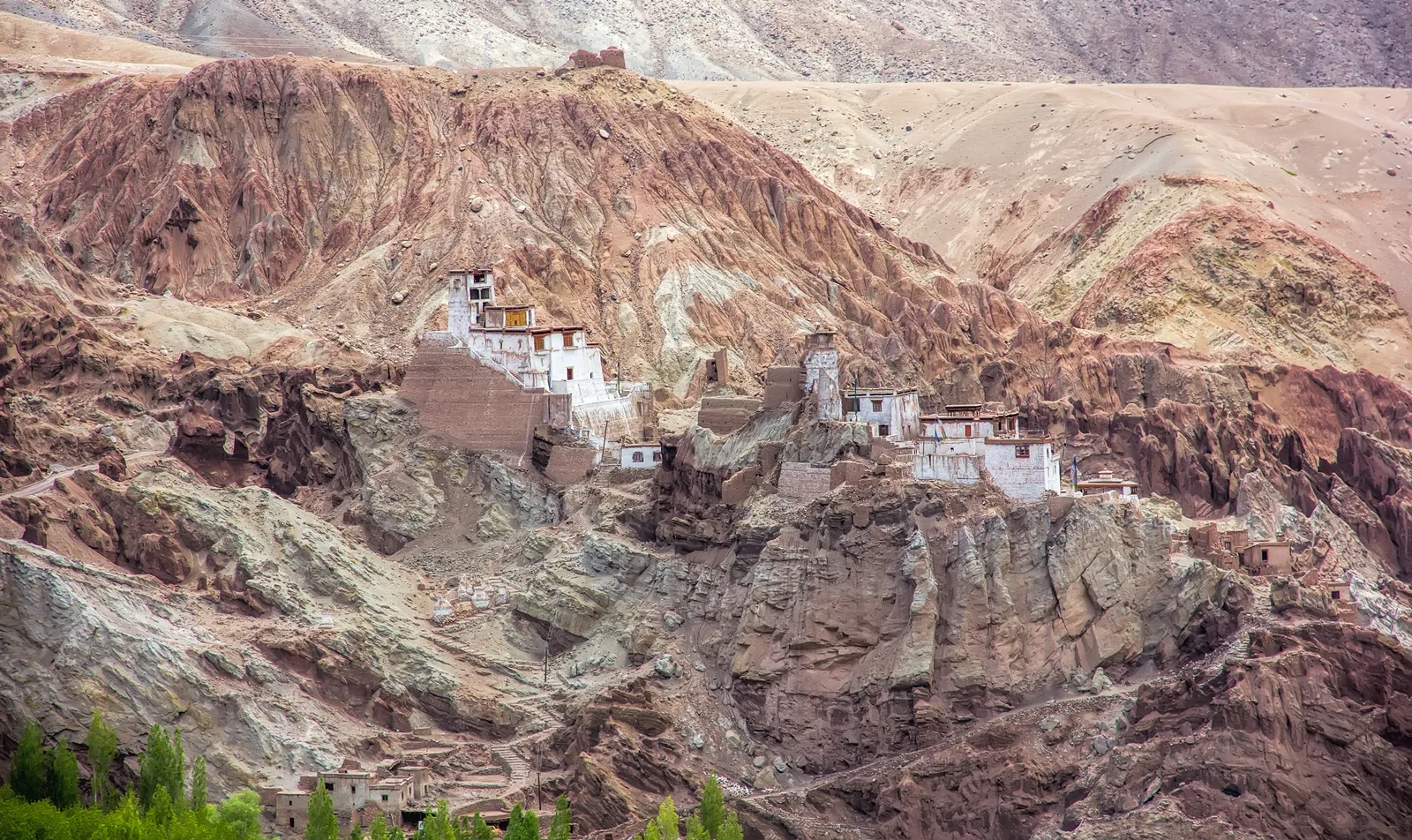
In Basgo, in Ladakh’s Leh district, the monastery stands beside the Indus River. The settlement lies about five kilometres west of Nimoo and 40 kilometres east of Leh. The monastery is also known as Basgo or Bazgo Gompa. The monastery was built for the Namgyal rulers in 1680, but Basgo had a significant role much earlier. The Ladakhi Chronicles describe it as a political and cultural centre. A palace was built in the settlement in the fifteenth century. The monastery occupies a hill above the ruins of the ancient town. Its Buddha statue and murals are notable features. The complex contains three temples—Chamchung, Chamba Lakhang and Serzang—which are dedicated to Maitreya Buddha. Ladakh is a high-altitude desert between the Karakoram and the Great Himalaya, with Tibetan Buddhist monasteries such as Hemis, Thiksey, Diskit and Lamayuru, the Shia and Balti culture of Kargil and Turtuk, the Brokpa villages of Dha-Hanu, the turquoise lakes Pangong Tso and Tso Moriri, and some of the world's highest motorable passes. Summers (June to September) are sunny and dry, with warm days and cold nights; winters are long and severe, often far below −15 °C, and the high passes close with snow. The sun is intense at this altitude, and weather on the passes can change within an hour. The usual best time to visit is June to September; October for clear skies with colder nights; January–February only for winter trips such as the Chadar trek. Timings, fees and access arrangements must be confirmed locally. For official information, see Ladakh Tourism at https://tourism.ladakh.gov.in.
Why it matters
Basgo Monastery is a Buddhist pilgrimage and heritage site in Basgo, in Ladakh’s Leh district. Its importance is both religious and historical: the hilltop complex includes temples dedicated to Maitreya, the Buddha expected in the future, and stands above the remains of a settlement that was once a political and cultural centre. Ladakhi chronicles refer to Basgo in connection with the region’s early history. For visitors, the site offers a chance to encounter Ladakhi Buddhist art and worship in a setting closely linked to the Indus valley. No UNESCO or Archaeological Survey of India protection status is asserted here; visitors seeking formal designation details should check with the relevant authorities.
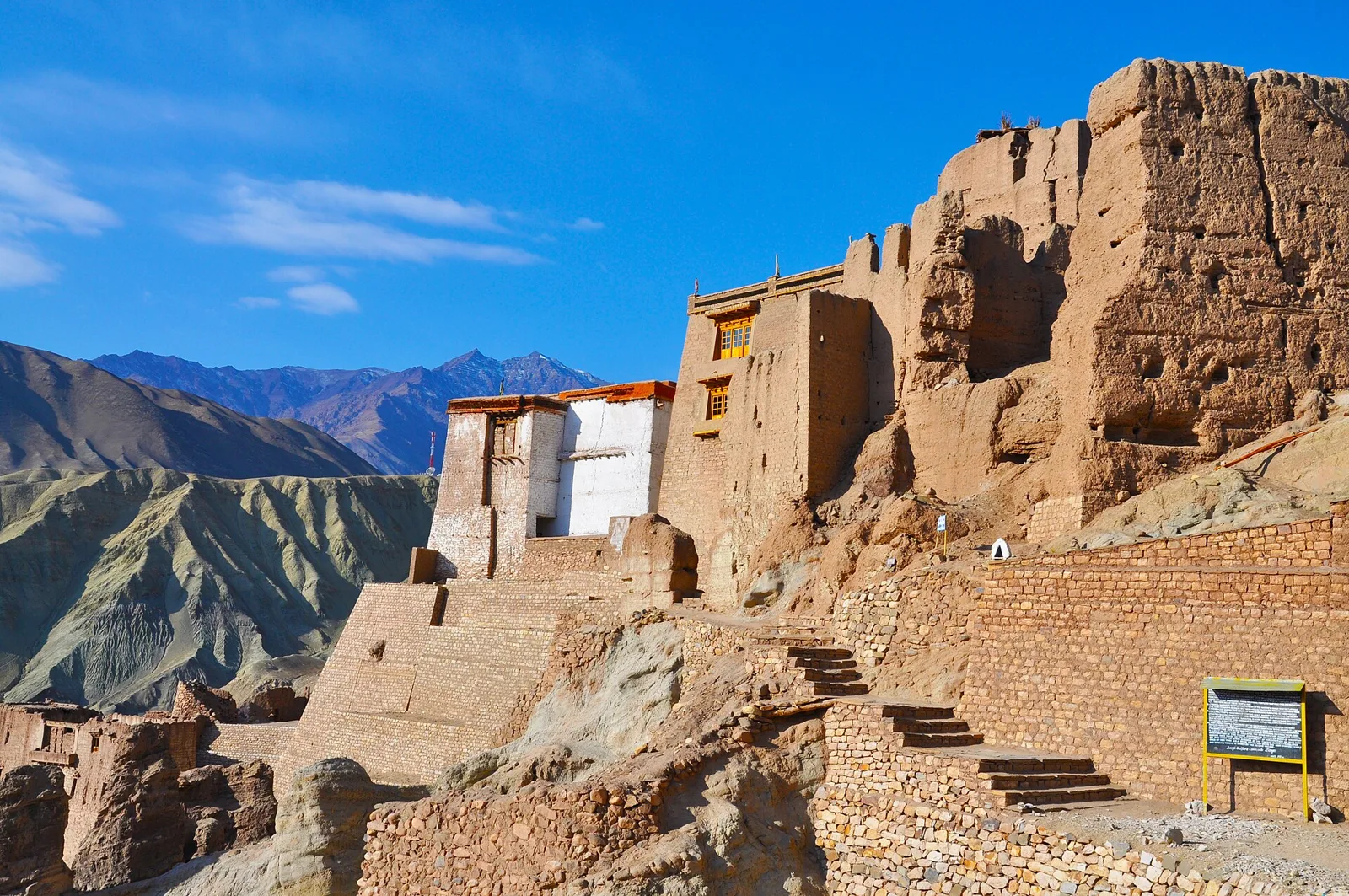
Basgo, also called Bazgo, was an important political and cultural centre in early Ladakh and is frequently mentioned in the Ladakhi Chronicles. A palace was built here in the 15th century, before the monastery complex took its later form. The monastery is traditionally dated to 1680 and is described as having been built for the Namgyal rulers. Its location above the old settlement reflects Basgo’s former prominence as well as the practical use of a defensible hilltop site. The complex developed around three temples: Chamchung, Chamba Lakhang and Serzang. They are associated with Maitreya Buddha and preserve sculptures and wall paintings that make the monastery notable among Ladakh’s historic religious sites. The surrounding town declined, leaving ruins beneath the monastery. As with many working monasteries, buildings and sacred objects require ongoing care, but specific restoration dates or programmes should not be assumed without confirmation from the monastery or heritage authorities. The site remains a place of worship as well as a destination for visitors interested in Ladakh’s history.
Origin stories & folklore
Local stories and religious explanations may be shared by residents or monastery attendants, and visitors can ask respectfully whether a guide knows a tradition specific to the site. The complex’s Maitreya images connect it with a wider Buddhist belief: Maitreya is understood as the Buddha who will appear in the future, when the teachings of the present Buddha have faded. This is a religious belief rather than a claim about the monastery’s founding. The historical account places Basgo’s importance in its role as a political and cultural centre and dates the monastery to the Namgyal period.
Architecture & design
Basgo Monastery rises on a rocky hill above the ruins of the old town, with its temples arranged across the slope rather than on a broad, level courtyard. The complex comprises Chamchung, Chamba Lakhang and Serzang, all associated with Maitreya Buddha. Its elevated position gives views across the settlement and the Indus valley, while the approach involves walking over uneven ground. The buildings belong to Ladakh’s Himalayan Buddhist architectural tradition. Local construction commonly uses stone, earth and timber, though the precise materials and later repairs can vary from building to building. Inside, painted walls and religious images contrast with the spare, rugged setting outside. The temples are valued for their murals and Buddha sculptures, not for monumental exterior ornament. As this is a historic, living religious complex, visitors should avoid touching painted surfaces, supports or carved details and should follow any access restrictions in place.
Important objects & sculptures
The most notable sacred images at Basgo are sculptures of Maitreya Buddha in the complex’s temples. Chamba Lakhang and Serzang are particularly associated with Maitreya, while the complex also includes Chamchung. Visitors may see painted religious imagery and murals on interior walls; their condition and visibility can vary, and some rooms may not be open during every visit. Look carefully rather than approaching or touching the objects. These are devotional images, not simply museum exhibits, so maintain a respectful distance and follow local instructions. For details about a sculpture’s date, materials or maker, ask a knowledgeable local guide or monastery representative rather than relying on unverified claims.
Religious significance
Basgo is a Buddhist monastery in Ladakh’s Tibetan Buddhist cultural region. Its three temples—Chamchung, Chamba Lakhang and Serzang—are dedicated to Maitreya Buddha, whose future appearance is an important belief in Buddhist traditions. For worshippers, the monastery is a place for prayer, offerings and religious observance, as well as a setting for preserving sacred images and teachings. Visitors may encounter prayers or rituals during a visit, but these are devotional activities and should not be treated as performances. The exact pattern of worship can vary. Enter prayer halls quietly, follow any guidance from monks or attendants, and give people space to pray without interruption.
Visit Basgo Monastery with time to observe daily prayers and rituals respectfully. Walk clockwise around stupas, prayer wheels and chortens, remove shoes and hats before entering prayer halls, never point your feet at the altar, and ask before photographing monks or the interior; the morning prayer is the most atmospheric time to visit. A comfortable itinerary is one main visit in the morning, a local meal at midday and a short nearby stop before an afternoon return. Start early: high passes are clearer and safer in the morning, and wind rises in the afternoon at lakes such as Pangong. Use the district list on this site to find other places in Leh, but check the route and its condition before combining stops. If a festival is on — such as Hemis Tsechu in summer, Losar in winter, the Ladakh Festival in September or a monastery masked-dance festival — transport and stays can be busy, and the experience can be unforgettable. Ladakh's water is scarce and its waste is hard to remove — refill bottles at water points, use dry toilets as instructed and carry your rubbish back to Leh.
Suggested itineraries
Half day: Drive from Leh to Basgo; spend about 1–2 hours exploring the monastery and nearby ruins; pause for views before returning. Full day: Visit Basgo in the morning; take a meal break in the area or back toward Leh; add Nimoo and the Indus–Zanskar confluence if road and weather conditions allow; return to Leh. Gentler option: Arrange a vehicle drop-off as close as locally permitted, visit only the most accessible areas with frequent rests, and skip the steeper walk to the ruins.
Basgo’s living culture is part of the wider Ladakhi Buddhist tradition, shaped by local communities, monasteries and the region’s high-altitude environment. Ladakhi and Tibetan Buddhist customs are visible in prayer, offerings, circumambulation and the use of prayer wheels and chortens. Ladakhi is widely used in the region, alongside other languages spoken by residents and visitors. Monastic chanting may be heard when prayers are taking place, but visitors should not expect a scheduled demonstration. Dress is generally practical for the mountain climate; local clothing and customs vary. Ask before photographing residents, monks or religious activity, and accept a refusal without argument.
Festivals & events
Losar, the Ladakhi and Tibetan New Year, is observed in winter, though customs and schedules vary between communities. Monasteries across Ladakh also hold Buddhist observances and masked-dance festivals at different points in the religious calendar. Do not assume that a major annual festival takes place at Basgo on a particular date; confirm locally with the monastery or tourism authorities. Festival periods can bring more visitors and affect transport or accommodation, while some ceremonies may be intended primarily for worshippers. Observe from the areas indicated and avoid blocking processions or photographing restricted rituals.
Local food in Ladakh includes thukpa and skyu noodle soups, steamed momos, tingmo bread, paba and tsampa (roasted barley), chhurpi cheese, butter tea (gur gur cha), apricot jam and dried apricots from Kargil and Turtuk, seabuckthorn juice and, in Kargil and Drass, Balti and Kashmiri dishes. Ask what is fresh that day; many small eateries cook a limited daily menu. Leh's Main Bazaar and Changspa road have cafés for every taste, but outside Leh menus are short and simple. Eat light for the first two days while you acclimatise, avoid alcohol, and drink plenty of warm water and soups. Remote sites may have no restaurant at all. Carry water and snacks, eat a proper breakfast before long journeys, and ask your accommodation for a packed lunch if you are heading out early. If prasad or a blessing is offered, accept it according to local custom. Choose busy, clean places, drink sealed or filtered water, and carry your packaging back with you.
Shopping & local experiences
There may be few or no dependable shops beside the monastery, so buy essentials in Leh before setting out. In Leh, visitors can look for locally made woollen goods, traditional textiles, prayer items and small handicrafts, while checking that religious objects are sold respectfully and legally. Ask about the maker and origin of crafts rather than assuming an item is locally produced. A meal featuring Ladakhi dishes in Leh or another larger settlement can be a good addition to the visit. Carry reusable water bottles and avoid buying disposable plastic where possible.
June to September; October for clear skies with colder nights; January–February only for winter trips such as the Chadar trek
The nearest principal railway station by straight-line distance is Srinagar (Nowgam), roughly 229 km away. The nearest operating airport by straight-line distance is Kushok Bakula Rimpochee Airport, Leh, roughly 26 km away. These figures are calculated from map coordinates — actual road distance is longer, and mountain roads and checkposts mean even short distances can take hours. Leh airport has year-round flights from Delhi and other cities. By road, the Srinagar–Kargil–Leh highway over Zoji La usually opens from about April–May to November, and the Manali–Leh highway from about June to October; both close in winter. The nearest railheads are Srinagar and Jammu Tawi, a long road journey away. From Leh, hire a union-rate taxi from the Leh taxi stand or through your guesthouse, or join a shared taxi; local buses run on a few routes, but schedules are limited. When comparing train, bus and flight, count the complete door-to-door time: a flight saves the most time only if the onward transfer is short, while an overnight train can save a hotel night. For Ladakh, flying into Leh saves the most time, but you must rest for two full days on arrival because you go straight to 3,500 m. Arriving by road from Manali or Srinagar takes two days but helps your body adjust to the altitude. Book your return before you leave, because seats fill quickly on weekends, festivals and holidays. Current train numbers, timings, return services, ferry departures and fares are not listed here; check IRCTC and NTES for trains, the airline's own schedule for flights and the official operator for ships and ferries. Permit rules for Ladakh have changed several times, so check the current requirement on the Leh district administration's permit portal (lahdclehpermit.in) before you travel. Indian visitors to protected areas such as Nubra, Turtuk, Pangong, Tso Moriri, Hanle and Dha-Hanu are usually asked to register online and pay environment and wildlife fees; foreign nationals need a Protected Area Permit arranged through a registered Leh travel agent, and should carry several photocopies for checkposts. Prepaid mobile SIMs from outside Jammu & Kashmir and Ladakh do not work here — bring a postpaid connection.
Confirm onward and return timings on IRCTC / NTES, the state bus operator or your airline before travel. A dash means current timings or fares have not been verified.
Getting around
From Leh, visitors commonly arrange a taxi through the Leh taxi stand or their guesthouse for the drive to Basgo. The monastery is above the settlement, so the final approach includes a walk uphill on uneven ground. Shared or local transport along the main route may be possible, but services can be limited or change seasonally; check before relying on them. Parking and drop-off arrangements should be confirmed locally, especially during busy periods. Walking between the ruins and monastery requires suitable footwear. There are no boats or urban-style auto-rickshaw services to rely on for reaching the hilltop site.
Hours, tickets & permissions
Entry arrangements can depend on worship, ceremonies, maintenance and which temple rooms are open. There may be an entry charge or separate camera rules, but these can change; confirm current hours and fees with the monastery’s managing authority or a local tourism office before travelling. Ask whether visitors need to register or follow any additional entry procedure. No special permit requirement is asserted here. Be prepared for some areas to be closed during prayer or to remain accessible only with an attendant’s permission.
Facilities
Facilities at the monastery may be limited. Toilets, drinking water, food stalls, shops and guided interpretation are not guaranteed on site, so check locally and carry water and snacks from Leh. Food and basic services are more likely to be found in larger settlements or back in Leh. Parking or a vehicle drop-off may be available near the approach, but arrangements can vary. Do not assume there is an ATM at Basgo; carry what you need before leaving Leh. Ask locally about guides and any rooms currently open to visitors.
Accessibility
The monastery stands on a hill above the old settlement, and reaching its temples involves uphill walking on uneven ground. Steps, narrow passages and irregular surfaces may occur, and there may be little shade. Wheelchair access, ramps and lifts should not be assumed; the site is likely to be difficult for wheelchair users and many visitors using strollers. Older visitors or anyone with balance, heart or breathing concerns should take the climb slowly, rest as needed and consider visiting only areas reachable from the vehicle drop-off. Ladakh’s altitude can make exertion harder, even for otherwise fit travellers.
Permit rules for Ladakh have changed several times, so check the current requirement on the Leh district administration's permit portal (lahdclehpermit.in) before you travel. Indian visitors to protected areas such as Nubra, Turtuk, Pangong, Tso Moriri, Hanle and Dha-Hanu are usually asked to register online and pay environment and wildlife fees; foreign nationals need a Protected Area Permit arranged through a registered Leh travel agent, and should carry several photocopies for checkposts. Prepaid mobile SIMs from outside Jammu & Kashmir and Ladakh do not work here — bring a postpaid connection. Carry a photo ID at all times and save the emergency number 112 and your accommodation's contact offline. Altitude sickness (acute mountain sickness) is the main risk everywhere in Ladakh: rest completely for the first 36–48 hours in Leh, climb gradually, avoid alcohol and smoking, drink water, and descend or seek medical help at once if you develop a severe headache, breathlessness at rest, vomiting or confusion. People with heart or lung conditions, young children and pregnant women should consult a doctor before going. Watch your belongings in crowds and on public transport, and follow posted instructions.
Visitor rules
Dress modestly and remove shoes and hats before entering prayer halls when requested. Walk clockwise around stupas, chortens and prayer wheels, and do not point your feet toward an altar. Keep voices low, do not touch statues, murals or offerings, and stay out of rooms marked as restricted. Follow local instructions about photography and footwear. Avoid single-use plastic where possible, carry rubbish back with you and use toilets as directed. Do not interrupt prayers or handle religious objects, even if they appear unattended.
Photography
Morning light is often pleasant for views of the hillside and surrounding valley, though conditions change with weather. Photography may be possible in some outdoor areas, while prayer halls, murals or ceremonies may have restrictions; ask before taking a picture and obey signs or attendants. Never photograph monks or worshippers at close range without permission. Avoid flash near paintings and sacred objects. Drone use may be restricted by local rules or security considerations, so do not fly one without confirming permission from the relevant authorities and monastery.
Choose a stay by the full journey to Basgo Monastery, not just the district name. Leh has the widest choice, from family guesthouses in Changspa and Karzoo to hotels near the Main Bazaar; Nubra, Pangong, Tso Moriri and Hanle have homestays and seasonal camps, and Kargil and Padum have simple hotels and guesthouses. Nights are cold even in summer — check heating, hot water and extra blankets, and expect power cuts and limited mobile signal outside Leh and Kargil. Book in advance for weekends, festivals and the peak season (June to September; October for clear skies with colder nights; January–February only for winter trips such as the Chadar trek). Confirm the exact location, meals included, check-in time and cancellation terms in writing. Avoid sending money to unverified contacts or touts at stations, airports and jetties. Carry some cash, as card and digital payments can be unreliable in remote areas.
Nimoo, a nearby settlement, is a practical stop on the route between Basgo and Leh. The Indus–Zanskar confluence near Nimoo is a well-known regional viewpoint; check road and site conditions before adding it to the day. Leh offers major services and other historic and religious sites, including Leh Palace and Thiksey Monastery. Alchi Monastery is another established heritage site in Leh district, but visiting it requires a separate route plan. Distances and travel times vary with road conditions, so check the route locally rather than assuming several stops will fit comfortably into one outing.
For couples, Basgo Monastery rewards a slow pace: arrive early for soft light and fewer crowds, share a local meal and keep the evening free. Sunset from Shanti Stupa, a night under the stars at Hanle or Tso Moriri, a camel ride on the Hunder dunes or a quiet morning at Pangong makes the trip memorable. Public displays of affection can be frowned upon in conservative communities and at religious sites, so be discreet. Keep a buffer in your itinerary, because weather and transport can delay plans.
Q: How much time should I allow for Basgo Monastery? A: Allow roughly one to two hours for the temples, views and nearby ruins, with extra time for the drive and acclimatisation. Q: When is a good season to visit? A: June to September is the usual travel season; October can bring clear skies but colder nights. Check road and weather conditions. Q: Is there an entry fee or a permit? A: Entry arrangements and any fees can change. Confirm with the monastery or local tourism office; no special permit requirement is asserted here. Q: Can children and elderly visitors go? A: They can visit if comfortable with altitude and uneven uphill walking. Take breaks, supervise children and consider limiting the climb. Q: Where should I stay nearby? A: Leh has the broadest choice of accommodation and services. Confirm availability there before travel, especially in busy seasons.
Be the first to share photos, stories, advice or a helpful contact for Basgo Monastery.
Loading…