Ghumoopedia — Explore, Discover, Experience
Sign in

Religious · Ladakh

Ladakhi Losar & Galdan Namchot

Leh and Kargil districts

Dates

Last verified 17 November 2026. Confirmed: announced by organisers or government. Provisional: from a published almanac, not yet announced. Seasonal: no date announced.

The complete guide

Ladakhi Losar & Galdan Namchot: everything to know before you go

Also known as
Losar, Ladakhi New Year, Gyalpo Losar; Galdan Namchot (the festival of lamps) comes first
Where
Across Leh and Kargil districts, in homes, villages and monasteries
When
The first day of the 11th Tibetan lunar month, usually December or January.
Duration
About two weeks, with the main days at the beginning
Faith and community
Buddhist; also a cultural festival for Ladakhi communities
Type
New year festival
Best for
Winter travellers who want a quiet, family-centred experience of Ladakh

Overview

While most of the Tibetan world celebrates Losar in February or March, Ladakh has its own new year, observed two months earlier, in the depths of winter. Snow covers the valleys, roads over the passes are closed, and tourists are few. Inside, families clean their houses, light butter lamps, bake festive bread and gather for days of eating, singing and visiting.

The festival begins with Galdan Namchot, a night when thousands of lamps are lit on rooftops and monastery walls in memory of the great teacher Tsongkhapa. By the time Losar itself arrives a week or so later, the mood is celebratory and family-focused.
Origins and legend

Losar means "new year" in Tibetan. The Tibetan new year is traditionally linked with the agricultural calendar and with Buddhist rituals to renew good fortune and to purify the old year.

The reason for Ladakh's early Losar is a well-known local tradition. According to this account, in the seventeenth century the Ladakhi king Jamyang Namgyal (or in some tellings, the later king Sengge Namgyal) had to leave for a military campaign in early winter, and he asked that Losar be celebrated early, before his departure, so that the festival could be held with the royal family. The custom stuck and became the Ladakhi new year. The Ladakhi tradition is sometimes called Gyalpo Losar (the King's Losar). Historians may differ on details and dates, but the story is widely told in Ladakh.

Galdan Namchot (often written Ganden Ngamchoe) commemorates the passing into nirvana of Je Tsongkhapa, the fourteenth-century founder of the Gelug school, on the 25th day of the tenth Tibetan month. Lamps are lit in his memory, and the festival is observed by Buddhists across the Tibetan world.

How it is celebrated

  • Galdan Namchot (about a week before Losar): At dusk, butter lamps and electric lights are placed on rooftops, windowsills, monasteries, and in the old city of Leh. Families pray, chant and eat festive food.
  • Cleaning and preparation: Homes are cleaned thoroughly, old items are discarded, and new clothes are prepared. Households make festive bread and fried pastries.
  • Losar eve: Families gather, share a special dinner and pray for the coming year. Shrines in the kitchen and prayer room are decorated with offerings.
  • New Year's morning: Families offer prayers, and younger members greet elders with respectful bows and blessings. Greetings of Losar Tashi Delek ("Happy new year") are exchanged.
  • Visits and feasts: For several days, relatives and neighbours visit one another, sharing food, tea and chang. Gifts are exchanged and children receive small presents.
  • Monastery rituals: Monks hold prayer ceremonies, and some monasteries perform masked dances. The communal spirit continues for about two weeks, and the farming year is then prepared for.

Food and flavours

Festive food is central to Losar.

  • Khapse: a crisp, fried pastry in various shapes, the signature Losar treat.
  • Butter tea, chang and kahwa: drinks served to guests at every house.
  • Thukpa, momos and skyu: hot noodle soup, dumplings and stews.
  • Paba: a dough made from roasted barley and pea flour, a Ladakhi staple.
  • Mutton dishes and dried meats: popular in winter.
  • Sweet rice (dresil): rice cooked with butter, sugar and raisins, often served at celebrations.

A decorative offering called a bhumpa or tray of grains, with dough sculptures, is placed in the prayer room in some households.

Music, dance, art and dress

Families put on their best traditional clothing: women wear the goncha, the perak with turquoise and a fresh scarf, and men wear the goncha with a waistcoat and hat. There is singing and dancing, both in the home and in village squares. Ladakhi folk songs and dances such as the Jabro and the Shondol may be performed, with the surna (oboe) and daman (drum). The lamp-lit roofs of Galdan Namchot create a striking sight, and photographers who brave the cold are rewarded with images of the glowing old town and the snowy hills.

Where to experience it

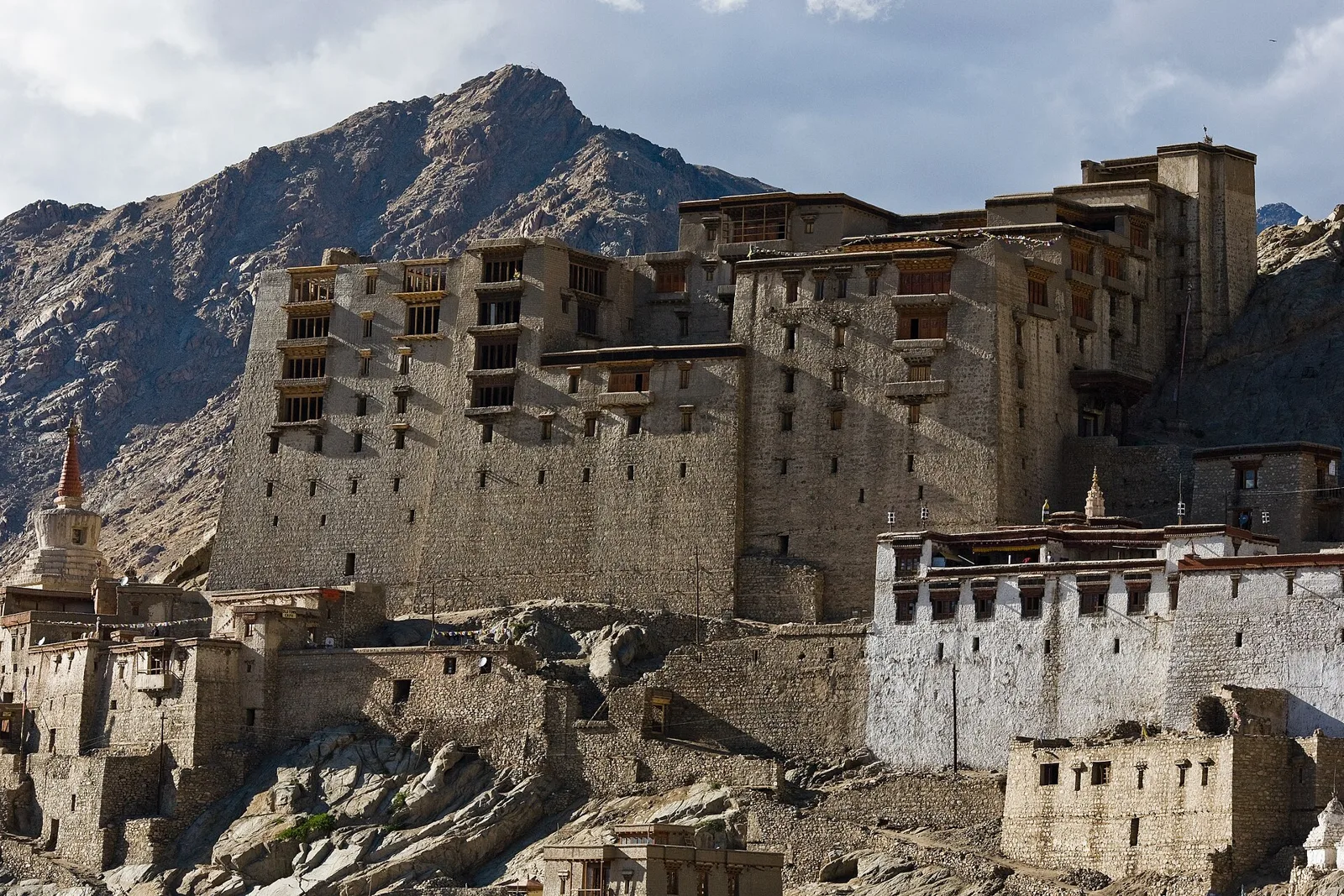
  • Leh old town and the Leh Palace: lamps and festive lighting during Galdan Namchot.
  • Monasteries such as Thiksey, Spituk and Hemis: special prayer ceremonies.
  • Villages in the Indus and Nubra valleys: where the new year is celebrated most traditionally, in family homes.
  • Kargil district: where Buddhist communities in Zanskar and Drass observe Losar alongside the district's Muslim majority.
  • Zanskar: a remote valley where winter traditions are particularly well preserved.

Visitor guide

  • Winter travel. Losar falls in some of the coldest weeks of the year, with night temperatures well below freezing. The Manali–Leh and Srinagar–Leh roads are usually closed, so most visitors fly to Leh. Flights can be delayed by weather.
  • Altitude and health. Spend at least two days acclimatising in Leh, and choose accommodation with reliable heating. Carry warm clothing, thermal layers, gloves, a cap and good boots.
  • Accommodation. Many hotels close for winter, but homestays and some hotels stay open. Book well in advance and check heating and water arrangements.
  • Being invited. Losar is a family festival, and visitors are often invited into homes by local friends or hosts. Bring a small gift such as sweets or dry fruit, accept tea and food, and remove shoes at the door.
  • Respect. Ask before photographing prayers and family rituals, and avoid disturbing monastic rites.

Today and tomorrow

Losar remains a strongly family-centred festival, even as younger Ladakhis study and work in cities such as Delhi, Chandigarh and Bengaluru and come home for the new year. Winter tourism initiatives have started to introduce visitors to Losar and the snow leopard season, while local communities emphasise that the festival is primarily for families and religious practice. Climate change, shorter winters and changing patterns of snowfall are major concerns for the region, and many Ladakhi families link the festival's prayers for a good year with worries about water, farming and the future of the glaciers.

Nearby

Places to see around the festival