

District · Ladakh
Drass
Drass is a high-altitude valley in Ladakh’s western mountain region, on the Srinagar–Kargil–Leh highway just east of Zoji La.
Drass lies in a high, mountain-ringed valley on the Srinagar–Kargil–Leh highway, east of Zoji La. Its landscape combines stark slopes, riverside settlements and small cultivated plots, with long, severe winters shaping everyday life. Drass town, also written as Dras, is the valley’s main service centre and a familiar halt for travellers crossing between Kashmir and Ladakh. Local life reflects connections with both regions, including Shina-speaking communities and wider Balti cultural influences. The valley also holds an important place in modern Indian history: the Kargil War Memorial commemorates the 1999 conflict. Beyond this sombre landmark, Drass rewards an unhurried appreciation of mountain scenery and village life.
Drass is a high-altitude valley in Ladakh’s western mountain region, on the Srinagar–Kargil–Leh highway just east of Zoji La. Travellers come for its stark mountain scenery, glimpses of village life and its role as a natural stopping point between Kashmir and Kargil. The town is best known beyond the region for the Kargil War Memorial, which commemorates the 1999 conflict. Drass also offers a window into local Shina-speaking communities and cultural ties linking Ladakh with Kashmir. Its severe winters and exposed terrain are central to the character of the place, so a visit is as much about understanding the landscape as seeing individual sights.
Drass lies on a western Himalayan route connecting Kashmir with the highlands of Ladakh and, historically, wider networks of trade and travel across the mountains. The region’s history reflects changing links with neighbouring Kashmir and Ladakh, as well as the influence of local communities and rulers; the written record for Drass itself is less extensive than for larger centres. In the nineteenth century, the Dogra expansion under Gulab Singh brought the wider region into the princely state of Jammu and Kashmir. After the 1947 Partition and the conflict that followed, Drass remained part of the state’s Kargil region. The area gained national attention during the 1999 Kargil War, when fighting took place in the surrounding mountains; the Kargil War Memorial in Drass commemorates Indian soldiers who died in the conflict. Following the creation of the Union Territory of Ladakh in 2019, Drass continued to be administered within Kargil district. Ladakh announced Drass as one of five proposed new districts in 2024, as part of a continuing administrative reorganisation.
2 destination guides
Drass
Drass is a town and hill station in Ladakh, known for trekking routes and nearby places of interest. It also serves as the administrative centre of its tehsil and community development block.
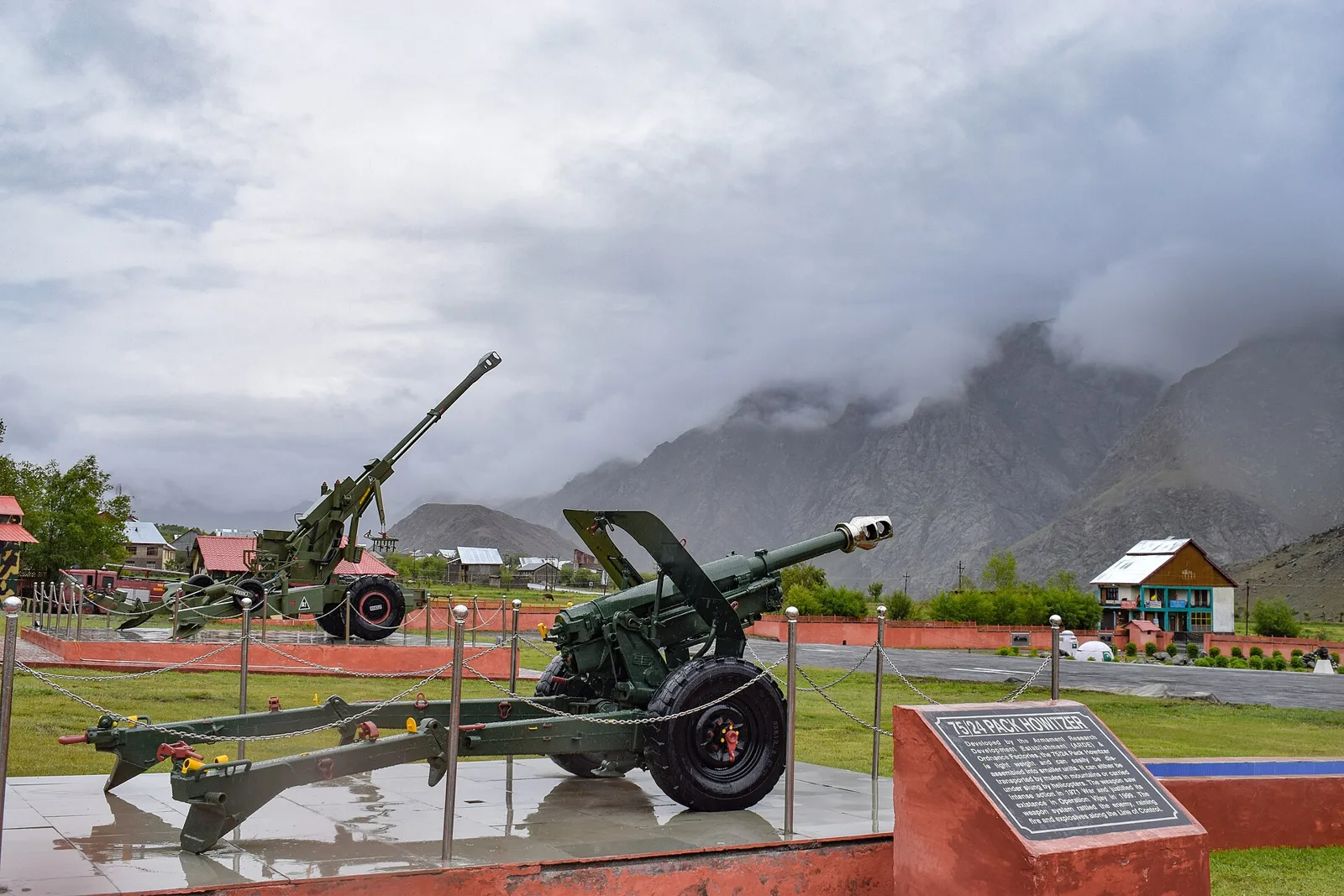
Kargil War Memorial
The Kargil War Memorial, also known as the Dras War Memorial, honours the 1999 conflict between India and Pakistan. Visitors come to remember the war at this Indian Army-built site in Ladakh.
Food in Drass draws on Kashmiri, Balti and wider Ladakhi traditions rather than a single district-specific cuisine. Small eateries generally offer short menus, so asking what has been freshly prepared is more useful than expecting every regional speciality. Across Ladakh, familiar foods include thukpa noodle soup, skyu made with pieces of dough, steamed momos and tingmo bread. Roasted barley preparations such as tsampa, chhurpi cheese and salty butter tea also belong to the wider region’s food culture. Dried apricots and apricot preserves are associated particularly with Kargil and other apricot-growing valleys. Warm, simple meals suit Drass’s cold conditions.
Drass is better approached as part of Ladakh’s broader textile and craft landscape than as a centre for a single documented signature craft. Across the region, wool spinning, knitting and weaving have traditionally supplied practical clothing, blankets and other household textiles suited to mountain winters. Pashmina is associated especially with eastern Ladakh’s Changthang pastoral communities, not specifically with Drass. Kashmiri and Balti connections also shape the wider region’s material culture. When shopping, ask where an item was made and whether it is handmade; goods sold locally are not necessarily produced in the valley.
Eid al-Fitr and Eid al-Adha are important celebrations for Muslim communities in Drass, with prayers, family visits and shared meals. Muharram is observed by Muslim communities in the wider Kargil region, though customs vary locally. Dates follow the Islamic lunar calendar and therefore shift each year. Losar and other Buddhist festivals are celebrated in parts of Ladakh, but their prominence varies by locality and they are not a reason to expect district-wide events in Drass. Summer is the busiest travel season, particularly for highway travellers and visitors to the war memorial; accommodation can be more sought after then, while local religious gatherings are generally community-focused.
Drass occupies a high, mountain-ringed valley east of Zoji La, with steep, often bare slopes, rocky ridges and small settlements along the valley floor. The Drass River and its tributary streams run past cultivated plots and villages, where short growing seasons shape farming. Trees and vegetation are relatively sparse compared with wetter parts of Kashmir. The Srinagar–Kargil–Leh highway follows the valley and is the main route between settlements and sights. Mountain weather, snow and exposed stretches can slow travel or close the approach over Zoji La, so journeys depend on road and weather conditions.
Drass has a cold mountain climate and a long, severe winter, when snow and icy conditions can disrupt road travel and everyday services. Summer is brief and generally the most practical season for a visit; late spring and early autumn can bring changeable weather and chilly nights. The monsoon is less pronounced here than in many parts of India, but showers and unsettled conditions are still possible. June to September is usually the most suitable period for travel, subject to current road conditions. Pack warm layers even in summer, plus a windproof outer layer, sturdy footwear, sun protection and any regular medicines. Winter visits need careful planning and flexible arrangements.
Drass is reached by the Srinagar–Kargil–Leh highway. Srinagar Airport is a practical air gateway for the approach through Kashmir and Zoji La; Leh Airport offers another option, followed by a longer road journey through Kargil. Srinagar railway station, also called Nowgam, is a rail option for the Kashmir-side approach, with onward travel by road. Snow, weather and traffic controls can disrupt mountain routes, especially around Zoji La. Taxis and shared vehicles provide onward connections, while local taxis are useful for visiting the Kargil War Memorial and nearby settlements. Check current services locally.
The highway is the principal road link through Drass, connecting its town and nearby settlements with Kargil to the east and the Kashmir-side route over Zoji La to the west. Local buses and shared vehicles may serve the corridor, but frequency and availability can vary by season and road conditions. Taxis are a practical option for the Kargil War Memorial and nearby villages; arrange local travel in Drass or Kargil and confirm the return plan. There is no need for boats or urban transit for the usual visits. Snow, traffic controls or road closures can interrupt journeys, so allow flexibility and check locally before setting out.
2 days: Drass → Kargil War Memorial; sleep in Drass on night 1. 3 days: Drass → Kargil War Memorial; sleep in Drass on nights 1 and 2, leaving the extra day for an unhurried visit to the town and nearby settlements.
Drass town is the most convenient base for the memorial and nearby valley settlements, and a useful overnight stop on the highway. Accommodation is limited compared with larger Ladakh centres; visitors may find small hotels, guesthouses and homestays, with facilities varying by season. Basic lodges or other community accommodation may be available, but should not be assumed. Kargil can serve as a wider regional base if Drass options are full, though it is outside the district and requires road travel. Reserve ahead in the summer travel season and confirm that your chosen stay is operating.
Drass is at high altitude, so take it slowly on arrival, stay hydrated and seek medical advice if you feel seriously unwell. Cold, wind, snow and rapidly changing mountain conditions call for warm clothing and flexible plans. Highway driving can be affected by narrow roads, traffic controls, landslides or snow, especially around Zoji La; use experienced local drivers and check conditions before travel. Treat or reliably purify drinking water. Mobile coverage can be patchy, so do not rely on continuous connectivity. Follow instructions at the war memorial and avoid photographing restricted installations. Check current official rules before travelling to any restricted areas beyond the usual Drass route; permit requirements can vary by itinerary.
- Sankooabout 23 km
- Kargilabout 50 km
- Anantnag · Jammu and Kashmirabout 76 km
- Ganderbal · Jammu and Kashmirabout 77 km
- Pulwama · Jammu and Kashmirabout 90 km
- Srinagar · Jammu and Kashmirabout 93 km
- Kishtwar · Jammu and Kashmirabout 94 km
- Bandipora · Jammu and Kashmirabout 100 km
Straight-line distance between the centres of each district's destinations; road distance is longer.
Q: How many days should I spend in Drass? A: Two days cover the town and Kargil War Memorial at an unhurried pace; allow a third day for nearby settlements or weather flexibility. Q: What is the best time to visit? A: June to September is generally the most practical season, though mountain road conditions can change. Q: Where is the best base? A: Drass town is convenient for the memorial and valley; Kargil is an alternative if you need a wider choice of services. Q: How do I get to Drass? A: Travel by road on the Srinagar–Kargil–Leh highway. Srinagar and Leh are air gateways, followed by a road journey; confirm current route conditions. Q: Is Drass suitable for families or elderly travellers? A: It can suit travellers who are comfortable with high altitude and long mountain drives. Plan a gradual arrival, warm clothing, rest breaks and flexible travel days.
This page draws on our 2 destination guides for Drass and is updated as our team checks it.
Be the first to share photos, stories, advice or a helpful contact for Drass.
Loading…