
District · Jammu and Kashmir
Pulwama
Pulwama lies in the Kashmir Valley south of Srinagar and offers a quieter way to explore the valley’s agricultural landscape and early medieval heritage.
Pulwama district lies in the Kashmir Valley, south of Srinagar, with settled lowlands, waterways and foothills rising towards the Pir Panjal range. Its towns and villages are known for farming, orchards and, especially around Pampore, saffron cultivation. The district also holds important traces of Kashmir’s early medieval past: the ruined Avantiswami Temple at Awantipora is associated with King Avantivarman, who founded the Utpala dynasty in the ninth century. Pulwama’s character brings together agricultural life, Kashmiri language and customs, and historic sites within reach of the valley’s larger towns. Pampore and Awantipora are useful points from which to explore different parts of the district.
Pulwama lies in the Kashmir Valley south of Srinagar and offers a quieter way to explore the valley’s agricultural landscape and early medieval heritage. The district is best known for Pampore’s saffron fields and for the ruins of Avantiswami Temple at Awantipora, linked to the ninth-century Utpala ruler Avantivarman. Orchards, farming communities and Kashmiri language and customs are part of everyday life here. Pulwama also makes a practical stop between Srinagar and the southern valley: Pampore and Awantipora give visitors different starting points for seeing its fields, towns and historic remains.
Pulwama’s history is part of the wider history of the Kashmir Valley, whose settlements and kingdoms changed over many centuries. In the ninth century, the Utpala ruler Avantivarman established his capital at Avantipura, now Awantipora. The town’s surviving temple ruins, including Avantiswami Temple, are important remains of that period. Later, the valley came under successive Kashmiri and regional rulers before the Mughal, Afghan and Sikh periods. In 1846, after the First Anglo-Sikh War, Kashmir became a princely state under the Dogra dynasty, with British paramountcy; it was not governed as a directly administered British province. The princely state’s political status changed during the events of 1947, when its ruler acceded to India. Pulwama district was created in 1979 from parts of Anantnag district. Its boundaries later changed when Shopian district was formed in 2007. The district’s present identity combines this layered political history with long-standing cultivation, including saffron growing around Pampore.
2 destination guides
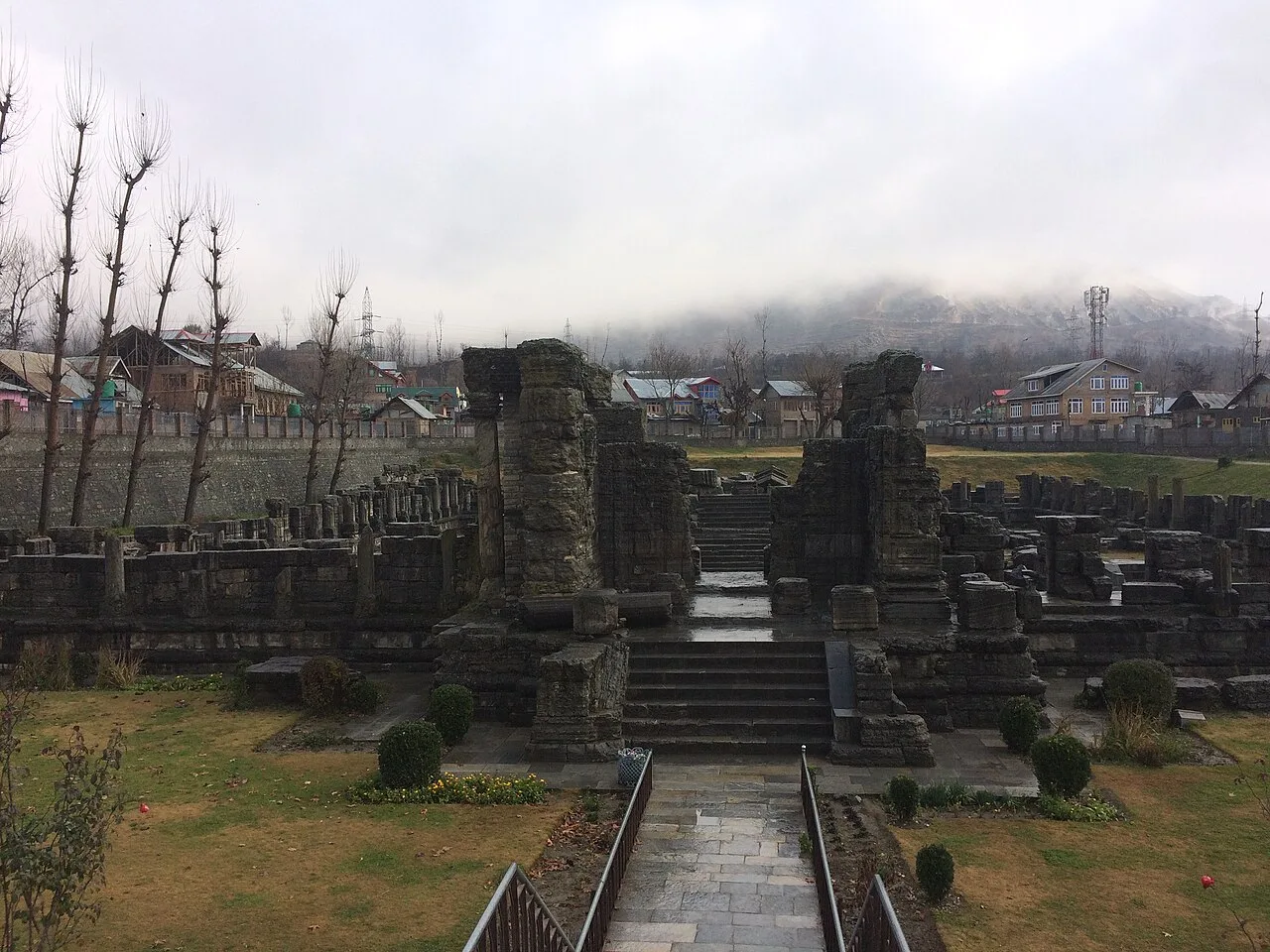
Avantiswami Temple
At Awantipora in Pulwama district, Avantiswami is a ruined Hindu temple complex beside the Jhelum. Visitors come to see its two shrines, dedicated to Shiva and Vishnu, dating to Avantivarman’s ninth-century rule.
Pampore
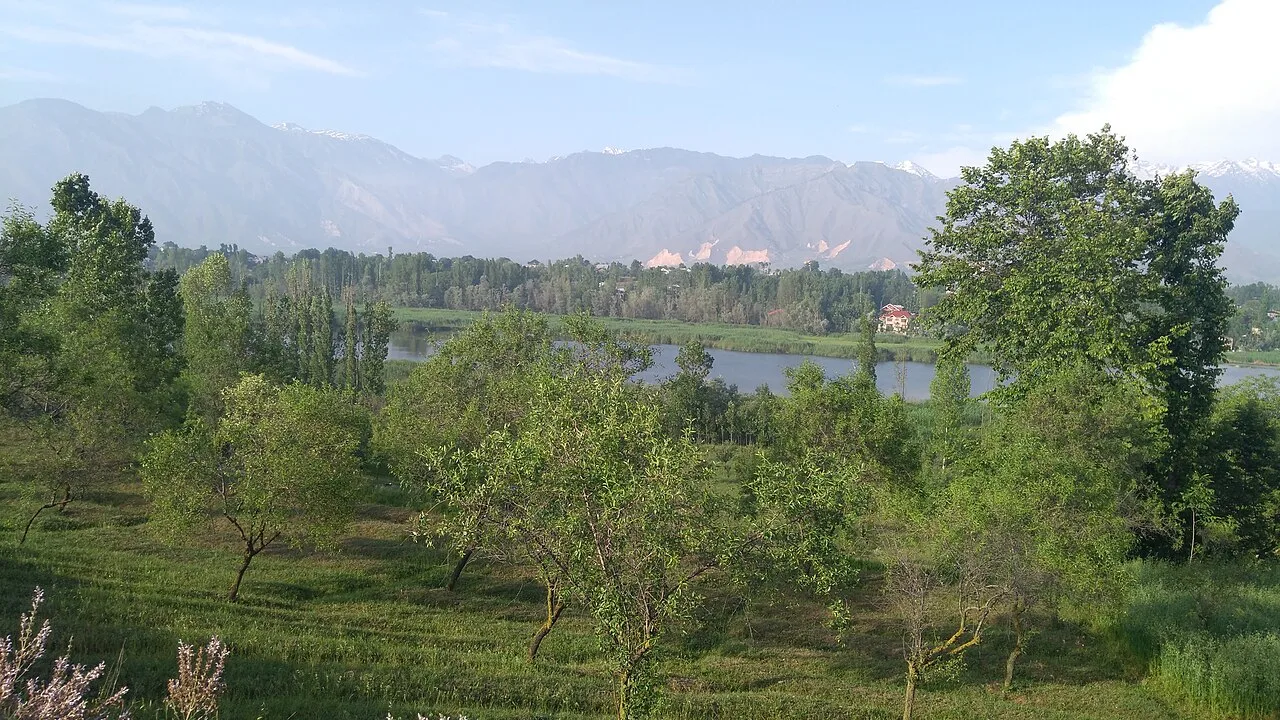
Pampore is a historic town in Pulwama district, Jammu and Kashmir, best known for saffron and its identity as Kashmir’s Saffron Town.
Food in Pulwama reflects wider Kashmiri traditions. Wazwan is the region’s celebrated multi-course feast, with dishes such as rogan josh, yakhni, rista and gushtaba. Everyday and seasonal cooking may include haak saag, nadru (lotus stem) and dum aloo. Kahwa, a spiced tea, and salty noon chai are also part of local food culture. Pampore is particularly associated with saffron, which is used in cooking and drinks. Menus at small eateries can be limited and depend on what is prepared that day; ask what is fresh. Vegetarian food is available alongside meat dishes.
Pulwama’s best-known local product is Pampore saffron, an agricultural speciality rather than a craft. Across Kashmir, established craft traditions include handwoven carpets and shawls, kani weaving, papier-mâché, and carved walnut wood. Embroidery is also used to decorate garments and household textiles. These regional arts may be found in shops and workshops around the valley, but they should not all be treated as crafts specific to Pulwama. When buying, ask about the material, how the item was made and whether it is handmade; locally produced goods and quality can vary.
Eid al-Fitr and Eid al-Adha are widely observed by Muslim communities in Pulwama, with family visits and busy markets around the festival periods. Ramadan brings changes to daily routines and evening activity. Navreh, the Kashmiri New Year, is observed in spring by Kashmiri Pandit communities, while Baisakhi is marked by some residents in the wider region. These are regional observances rather than large district-wide visitor festivals. Crowds may increase around prayer spaces, markets and family gathering places during major holidays; accommodation can be busier, so visitors should check availability in advance.
Elsewhere in Jammu and Kashmir
- Shri Amarnath YatraDates to be announced · Seasonal
- Kheer Bhawani Mela (Zyeth Atham)Dates to be announced · Seasonal
- Herath (Kashmiri Shivaratri)Dates to be announced · Seasonal
- Navreh (Kashmiri New Year)Dates to be announced · Seasonal
- Eid & the Shrine Festivals of KashmirDates to be announced · Seasonal
- Bahu MelaDates to be announced · Seasonal
- Jhiri Mela23 Nov 2026 – 3 Dec 2026 · Confirmed
- Lohri & Baisakhi in JammuDates to be announced · Seasonal
- Tulip Festival, SrinagarDates to be announced · Seasonal
Pulwama occupies settled parts of the Kashmir Valley, with cultivated lowlands, orchards and saffron-growing areas around Pampore. The Jhelum River passes near Awantipora, while the landscape rises southward and eastward towards foothills of the Pir Panjal range. Fields and settlements are linked by valley roads, but routes towards hillier areas may be slower and more affected by weather. The district’s agricultural setting is most apparent in the changing fields and orchards; visitors should respect private farmland and local access arrangements.
Pulwama has a temperate valley climate with four distinct seasons. Spring brings blossoms and fresh growth, while summer is generally mild to warm and suits town visits and road travel. The main monsoon influence is less pronounced than in many parts of India, but rain can occur, and wet roads may slow journeys. Autumn is notable for harvest activity and the saffron season around Pampore. Winters are cold, with frost and snow possible, particularly towards higher ground. Spring and autumn are comfortable periods for most visitors. Pack layers, a waterproof outer layer and sturdy shoes; bring warm clothing for winter and check local forecasts before travelling.
Sheikh ul-Alam International Airport in Srinagar is the nearest major airport for most visits to Pulwama. Srinagar (Nowgam) is a principal railway station, while the Kashmir Valley rail line also has stations serving parts of the district; check which station best suits your destination. By road, Pulwama is connected with Srinagar and other towns in the valley, and the Jammu–Srinagar highway provides a wider approach from Jammu. Buses and shared taxis link towns, while local taxis are useful for reaching sites such as Awantipora or Pampore. Services and road conditions can change, so check current services locally.
Road is the practical way to move between Pampore, Pulwama town and Awantipora. Local buses and shared vehicles connect many settlements, though routes and service levels vary; taxis are more flexible for visiting several places in one day. Auto-rickshaws may be useful for short trips in towns, but availability can vary. The Kashmir Valley rail line serves parts of the district, though the most suitable station depends on the itinerary and current services. There are no routine visitor boat links between the listed sights. Confirm road conditions and transport locally, especially in winter or during disruptions.
2 days: Pampore -> Avantiswami Temple; sleep in Pampore. 3 days: Pampore -> Avantiswami Temple -> Pampore; sleep in Pampore on both nights.
Pampore is a convenient base for saffron-country visits, while Pulwama town can suit travellers wanting access to the district’s central settlements. Awantipora is useful for a visit focused on Avantiswami Temple, though accommodation choices may be more limited than in larger towns. Expect a modest selection of hotels and guesthouses, with homestays or government accommodation varying by location and availability. Check facilities and seasonal access before booking; visitors needing a wider choice of services can consider staying in Srinagar and making day trips.
Check current official travel advice and local conditions before setting out, as security-related restrictions or road disruptions can change. Valley roads are generally accessible, but winter weather, rain, traffic and occasional closures can delay travel; use local advice for foothill routes. Wear suitable footwear around uneven temple ruins and avoid entering unstable structures. Use treated or bottled drinking water, and take usual precautions around stray animals and farmland. Mobile coverage and connectivity can vary outside towns. Ordinary visits to the listed sights generally do not require a special permit, but confirm requirements with official sources before travel in case rules change.
- Srinagarabout 18 km
- Budgamabout 23 km
- Anantnagabout 31 km
- Ganderbalabout 40 km
- Kulgamabout 40 km
- Baramullaabout 55 km
- Shopianabout 56 km
- Bandiporaabout 64 km
Straight-line distance between the centres of each district's destinations; road distance is longer.
Q: How many days should I spend in Pulwama? A: Two days can cover Pampore and Avantiswami Temple at a relaxed pace; allow a third day for slower travel or local exploration. Q: When is the best time to visit? A: Spring and autumn are comfortable seasons; autumn is also the saffron season around Pampore. Q: Where is the best base? A: Pampore is convenient for the listed sights, while Pulwama town offers another central base; Srinagar has a wider choice of services. Q: How do I get to Pulwama? A: Travel via Srinagar by road, or check current Kashmir Valley rail services and choose the station nearest your destination. Q: Is Pulwama suitable for families or elderly travellers? A: Yes, with planning. Arrange road transport, allow extra time, and note that uneven ruins and winter conditions may be difficult for some visitors.
This page draws on our 2 destination guides for Pulwama and is updated as our team checks it.
Be the first to share photos, stories, advice or a helpful contact for Pulwama.
Loading…