Ghumoopedia — Explore, Discover, Experience
Sign in

Cultural · Jammu & Kashmir

Tulip Festival, Srinagar

Indira Gandhi Memorial Tulip Garden, Srinagar

Dates

Last verified 17 November 2026. Confirmed: announced by organisers or government. Provisional: from a published almanac, not yet announced. Seasonal: no date announced.

The complete guide

Tulip Festival, Srinagar: everything to know before you go

Also known as
Kashmir Tulip Festival, Tulip Show; the Indira Gandhi Memorial Tulip Garden, formerly Siraj Bagh
Where
Zabarwan foothills overlooking the Dal Lake, Srinagar
When
Spring, usually late March to mid-April.
Duration
About four weeks, depending on the weather
Started
2007; the garden began with about 50,000 bulbs imported from the Netherlands
Type
Spring flower festival and tourism event
Best for
Families, photographers, couples, flower lovers

Overview

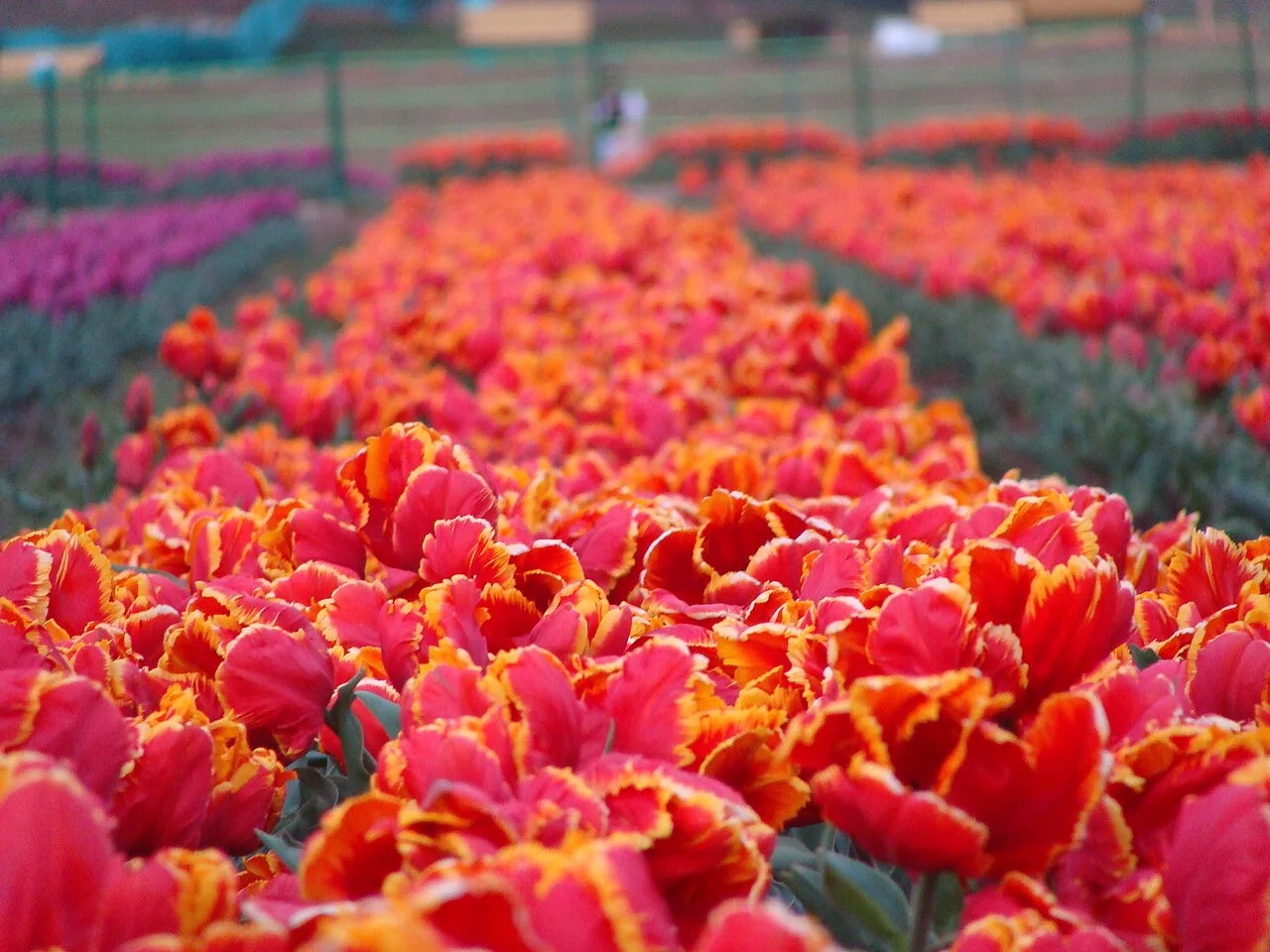
When the snows retreat and the almond blossoms fade, Srinagar's hillside garden bursts into colour. Tens of lakhs of tulips bloom in terraced beds, in red, yellow, orange, pink, purple, white and shades in between, with Dal Lake and the snow-capped Pir Panjal range behind them. The Indira Gandhi Memorial Tulip Garden is described as Asia's largest tulip garden, and its opening marks the start of Kashmir's spring tourism season.

The festival is not a religious one but a seasonal celebration of nature, and it has become one of the Valley's best-known events.

Origins and legend

There is no myth behind the tulip show; its origin is modern and practical. Before 2007, Kashmir's tourism was mostly seasonal, with summer and winter peaks. The state government, then led by Chief Minister Ghulam Nabi Azad, set up the garden in 2007 on the slopes above Dal Lake to extend the tourist season into spring. It started with about 50,000 tulip bulbs imported from the Netherlands, and was initially named Siraj Bagh. It was later renamed the Indira Gandhi Memorial Tulip Garden.

The garden has grown steadily in size and variety, adding thousands of bulbs and several varieties each year. It is often compared with the Keukenhof gardens of the Netherlands. The festival is also linked with a long Kashmiri tradition of garden-making: the Mughal gardens of Nishat, Shalimar and Chashme Shahi, a few kilometres away, were built in the seventeenth century and set the pattern for terraced gardens in the Valley.

How it is celebrated

  • Opening ceremony: The garden is formally opened by the Chief Minister or a senior official, with floriculture department staff presenting the year's theme and colour scheme.
  • Walking the terraces: Visitors stroll along terraced paths, taking photographs and picnicking on the lawns.
  • Cultural programmes: Local music, dance and craft events are often organised in the garden or nearby venues.
  • Food and handicraft stalls: Stalls sell Kashmiri food, kahwa, handicrafts, shawls and dry fruit.
  • Blossom season: The tulip show follows the Almond Blossom Festival (Badamwari) and is followed by apple and cherry blossoms across the Valley.
  • Nearby attractions: Many visitors combine the garden with shikara rides on Dal Lake, a visit to Nishat Bagh, or a drive around the lake.

Food and flavours

The food scene at the festival reflects Kashmiri tastes.

  • Kahwa: green tea with saffron, cardamom and almonds, the Valley's signature drink.
  • Noon chai: pink salted tea, served with bakery breads such as girda and lavasa.
  • Street snacks: nadru monje (lotus-stem fritters), chaat, and roasted corn.
  • Wazwan dishes: at nearby restaurants, rogan josh, yakhni, tabak maaz, goshtaba and haakh are available.
  • Dry fruit and saffron: sold in nearby markets, along with walnuts, almonds and apricots.

Music, dance, art and dress

The celebration is visual first. Photographers and families dress in bright colours to match the flowers, and many visitors wear traditional Kashmiri pheran for photographs. Cultural events feature Kashmiri folk music, Rouf (a women's group dance) and Sufiana music. The garden itself is a living artwork, planned by the floriculture department with colour schemes and patterns that change every year. The nearby handicraft emporia sell papier-mâché goods, pashmina shawls, carpets and walnut-wood carvings.

Where to experience it

  • Indira Gandhi Memorial Tulip Garden: on the Zabarwan foothills, near Nishat Bagh, overlooking Dal Lake.
  • Nishat Bagh, Shalimar Bagh and Chashme Shahi: Mughal gardens nearby, often visited the same day.
  • Dal Lake: shikara rides, floating markets and houseboats.
  • Badamwari (Almond Garden): at its best in March and early April.
  • Hazratbal Shrine and Pari Mahal: other major sights close to the garden.
  • Dachigam National Park: near the garden, a wildlife area in the Zabarwan Range.

Visitor guide

  • When to go. The bloom depends on the weather, and warm spells can bring the peak forward. Check the floriculture department's announcements. Peak bloom usually lasts two to three weeks.
  • Tickets and timings. Tickets are charged; check current rates and timings officially. Weekends and holidays are very crowded, so go on a weekday morning.
  • Getting there. The garden is about 8–10 km from the centre of Srinagar. Taxis, autos and local buses run there, and traffic can be heavy during the festival. Srinagar has an airport with good connections to Delhi and other cities.
  • What to wear. Late March and early April can be cool, with morning chill and sudden showers. Carry layers, an umbrella and comfortable shoes.
  • Garden etiquette. Stay on marked paths and do not pick flowers or walk on the beds. Keep to the rules on drones, tripods and commercial photography, and avoid littering.
  • Safety and advisories. Keep emergency contacts handy and travel in groups, especially in the evening. Check current travel advisories and security arrangements before you travel.

Today and tomorrow

The Tulip Festival is now a major part of Kashmir's tourism economy, supporting hotels, houseboat owners, shikara operators, taxi drivers, artisans and shopkeepers in the spring season. The government has emphasised the need to reduce dependence on bulbs imported from Europe, and has encouraged efforts to cultivate tulips locally in Kashmir. Environmental groups and the floriculture department are looking at water use, waste management and sustainable visitor numbers as the festival grows.

Nearby

Places to see around the festival