
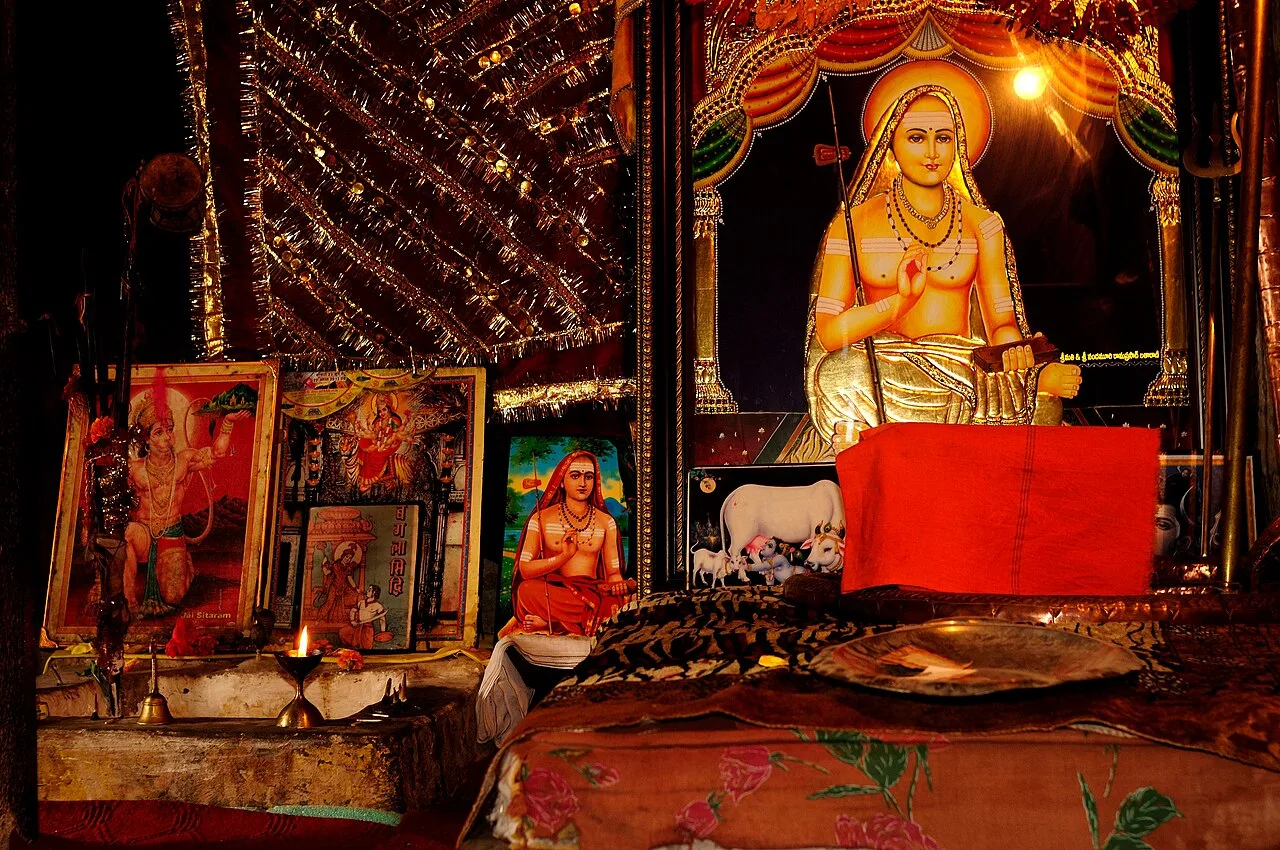
Shankaracharya Temple
Known also as Jyeshteshwara, this hilltop Hindu shrine in Srinagar is dedicated to Shiva. Kashmiri Hindus visit during Herath, and its position on the Zabarwan Range overlooks the city.
Key facts · verified by Ghumoopedia editors
- Type of place
- Temple / pilgrimage site
- Best time to visit
- April to October for the Kashmir Valley and meadows; December to February for snow at Gulmarg; October to March for Jammu and the plains
- Nearest railway station
- Srinagar (Nowgam) · about 5 km (straight line)
- Verified
- 21 Nov 2026
Plan a trip from Shankaracharya Temple — a day-by-day route through places nearby.
Also called Jyeshteshwara, this Hindu shrine is devoted to Shiva and occupies a rise in the Zabarwan Range above Srinagar, in Jammu and Kashmir’s Kashmir Valley. It stands around 1,000 feet (300 metres) higher than the valley floor, looking out over the city. The site lies in Srinagar district, within the Indian union territory of Jammu and Kashmir. A road leading from Boulevard Road, close to Gagribal, provides access. On Herath, the local name for Maha Shivaratri, Kashmiri Hindus visit the shrine. Both the temple and its adjoining land are recognised as a Monument of National Importance, with central protection provided by the Archaeological Survey of India. Management has been with the Dharmarth Trust since the nineteenth century; the trust also oversees other temples in the region. Karan Singh serves as its sole chairperson trustee. Kashmir is known for its Sufi shrines, Mughal gardens, houseboats and crafts such as pashmina, papier-mâché and carpets, while the Jammu region is the land of Dogra heritage and major Hindu pilgrimages. The Kashmir Valley has mild summers, colourful autumns and snowy winters, with Chillai Kalan (late December to January) the coldest spell; meadows such as Gulmarg and Sonamarg get heavy snow. Jammu and the plains are hot from April to June. Snow and landslides can close the Jammu–Srinagar highway and mountain roads. The usual best time to visit is April to October for the Kashmir Valley and meadows; December to February for snow at Gulmarg; October to March for Jammu and the plains. Timings, fees and access arrangements must be confirmed locally. For official information, see Jammu and Kashmir Tourism at https://jktourism.jk.gov.in.
Why it matters
Shankaracharya Temple, also known as Jyeshteshwara Temple, is a Hindu shrine dedicated to Shiva on a hill in Srinagar’s Zabarwan Range. Its elevated setting overlooks the city and Kashmir Valley, making it both a place of worship and a landmark in Srinagar’s landscape. Kashmiri Hindu devotees visit throughout the year, with particular significance attached to Herath, the regional name for Maha Shivaratri. The Archaeological Survey of India identifies the temple and adjacent land as a centrally protected Monument of National Importance. The Dharmarth Trust has managed the temple since the nineteenth century, alongside other regional shrines. It is a protected heritage site, not a UNESCO World Heritage Site.
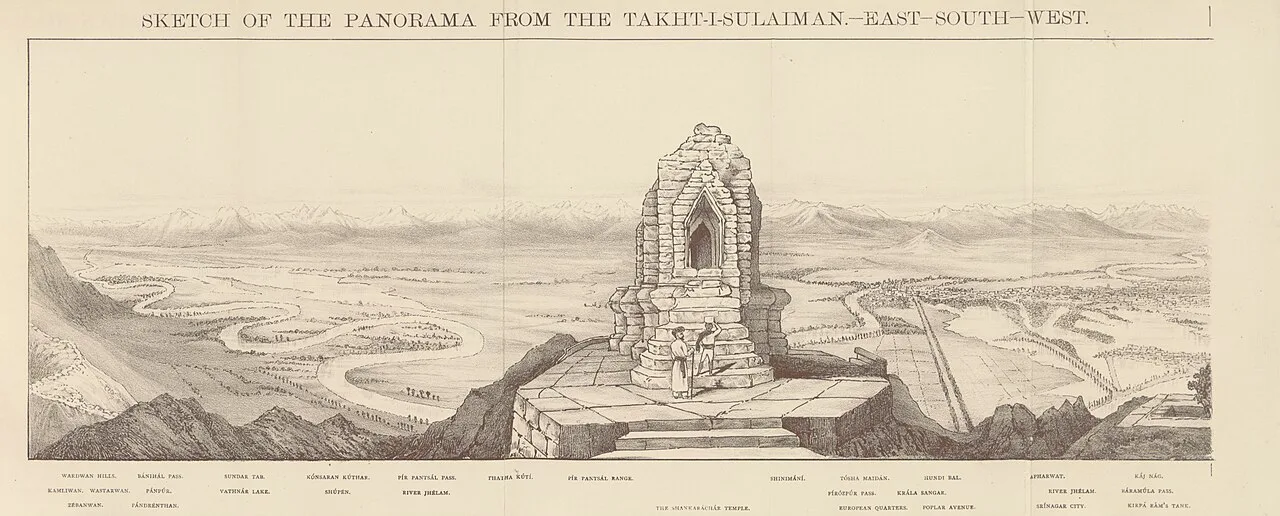
The shrine is commonly called Shankaracharya Temple, but Jyeshteshwara is an older name associated with the site. Its precise origins and the dates of its surviving structure are not firmly established. Historical and local accounts connect the hilltop sanctuary with Kashmir’s long tradition of Shaiva worship; some accounts traditionally attribute an early temple to a ruler named Gopaditya, but the building’s chronology remains debated. The present stone structure has been altered or repaired over time, and its age should not be inferred from a single traditional date. The name Shankaracharya reflects a longstanding association with the Hindu philosopher Adi Shankaracharya, who is traditionally believed to have visited Kashmir. The hill is also known as Takht-i-Suleiman in Persian usage. The temple continued as a Hindu place of worship through successive periods of Kashmir’s history. Since the nineteenth century, the Dharmarth Trust has managed it. Today, the Archaeological Survey of India centrally protects the temple and adjacent land as a Monument of National Importance. Visitors should distinguish documented protection and ongoing worship from origin stories, which are not all independently verifiable.
Origin stories & folklore
According to local tradition, Adi Shankaracharya visited Kashmir and worshipped at this hilltop shrine; the temple’s present name preserves that association. The historicity of the visit is not conclusively established, so it is best understood as a religious tradition rather than a confirmed event. Another name for the hill, Takht-i-Suleiman, means Solomon’s Throne in Persian. Stories link the name with the biblical king Solomon, but this is a local and historical naming tradition, not evidence that Solomon built the temple. Such accounts form part of the layered cultural memory of Srinagar, where Hindu, Persian and other historical associations coexist.
Architecture & design
The temple stands on a rocky hilltop and is reached by a road followed by a steep approach and a flight of stone steps. Its compact stone sanctuary has a square inner shrine, set within a distinctive polygonal outer structure. The building’s simple, solid massing contrasts with the broad views from its elevated setting. The sanctum houses a Shiva lingam, the central focus of worship. The stonework and layout reflect the shrine’s long history, although the exact date and phases of construction are not settled. The hill itself forms an important part of the setting: the ascent, enclosed approach and sudden opening to the summit shape the experience of arrival. The temple and surrounding protected land are under central archaeological protection. Visitors should not climb on masonry or enter areas marked as restricted.
Important objects & sculptures
The principal sacred object is the Shiva lingam in the inner shrine, approached as an object of worship rather than a museum exhibit. Visitors may notice the stone sanctuary’s compact plan, its polygonal outer form and the masonry of the approach. These architectural features are among the most visible historic details. Any inscriptions or marks on the building should be viewed without touching or rubbing them; their interpretation and date require specialist knowledge. The temple is an active place of worship, and access to the sanctum or particular objects may depend on ritual practice and current rules. Ask caretakers before approaching, photographing or discussing sacred objects, and do not assume that every feature is open for close inspection.
Religious significance
Shankaracharya Temple is dedicated to Shiva and remains an active Hindu place of worship. Devotees visit the sanctum to offer prayers and observe rituals, while the Shiva lingam is the central focus of devotion. For Kashmiri Hindus, the shrine has particular importance during Herath, the regional celebration of Maha Shivaratri. Some visitors also understand the temple through its traditional association with Adi Shankaracharya. Practices and access within the shrine may vary with the occasion and the directions of temple staff. Visitors who are not participating in worship are welcome to observe respectfully where permitted: keep a quiet manner, follow instructions about footwear and photography, and avoid interrupting prayers or blocking worshippers.
Visit Shankaracharya Temple with time to observe daily prayers and rituals respectfully. Follow the posted rules on footwear, photography, head covering and dress, and avoid interrupting worshippers. Ask caretakers which areas are open to visitors, and beware of unofficial 'guides' asking for donations. A comfortable itinerary is one main visit in the morning, a local meal at midday and a short nearby stop before an afternoon return. Use the district list on this site to find other places in Srinagar, but check the route and its condition before combining stops. If a festival or fair is on, roads and stays can be busy — and the experience can be unforgettable. Leave no litter: many sites are protected by the communities around them.
Suggested itineraries
Half day: Allow about 2–3 hours for the hilltop approach, temple visit and time to take in the views; then return towards Dal Lake for a short lakeside stop. Full day: Spend the morning at the temple, take a midday meal in Srinagar, then visit Chashme Shahi and Pari Mahal, checking road access and opening arrangements. Gentler option: Enjoy the temple’s views from an accessible point on the approach road if permitted, then choose a nearby lakeside stop that requires less walking.
The temple belongs to Srinagar’s living religious landscape, where Kashmiri Hindu practice continues alongside the city’s diverse communities and heritage. Kashmiri is widely spoken locally, and visitors may also hear Urdu, Hindi and English. Herath traditions are especially meaningful to Kashmiri Pandit families, including those living away from the Valley. At the shrine, customs such as removing footwear, offering prayers and maintaining a quiet demeanour should be followed according to posted guidance. The site is primarily a place of worship, not a performance venue; visitors should not expect regular music or dance programmes. Everyday culture is most evident in devotional visits, family observances and the respectful conduct expected in the temple precinct.
Festivals & events
Herath, the Kashmiri name for Maha Shivaratri, is the temple’s most significant annual festival for many Kashmiri Hindus and usually falls in winter. Devotees visit for prayers and observances, and the shrine may be busier than on an ordinary day. Maha Shivaratri is observed more widely by Shiva devotees, though local customs differ. Other Hindu festivals or family observances may bring additional worshippers, but schedules and public access can vary. Check with the managing authority before planning a festival visit, and allow extra time for security checks, road access and crowds. Be prepared for changes to visitor arrangements and keep worshippers’ space clear.
Local food in Jammu and Kashmir includes Kashmiri Wazwan dishes such as rogan josh, yakhni, gushtaba and rista, nadru (lotus stem), haak saag, dum aloo, kahwa and salty noon chai; in the Jammu region, rajma-chawal, kalari cheese and Dogra dishes such as ambal and auria. Ask what is fresh that day; many small eateries cook a limited daily menu. Vegetarian travellers eat very well across this region, and most towns also have non-vegetarian options. Remote sites may have no restaurant at all. Carry water and snacks, eat a proper breakfast before long drives, and ask your accommodation for a packed lunch if you are heading out early. If prasad or langar is offered, accept it according to local custom. Choose busy, clean places and carry your packaging back with you.
Shopping & local experiences
Srinagar is known for Kashmiri crafts, including pashmina, papier-mâché work, carpets, woodwork and embroidered textiles. Look for these in established Srinagar markets and shops rather than expecting a large shopping area at the temple. Ask for clear information about materials and workmanship, especially for high-value purchases, and retain receipts. Local food experiences may include Kashmiri breads, tea and regional dishes in the city; availability varies by venue and season. Keep shopping separate from worship, avoid litter and do not buy objects presented as temple relics without reliable provenance.
April to October for the Kashmir Valley and meadows; December to February for snow at Gulmarg; October to March for Jammu and the plains
The nearest principal railway station by straight-line distance is Srinagar (Nowgam), roughly 5 km away. The nearest operating airport by straight-line distance is Sheikh ul-Alam International Airport, Srinagar, roughly 10 km away. These figures are calculated from map coordinates — mountain roads wind a lot, so actual road distance and travel time are usually much longer. Jammu Tawi and Shri Mata Vaishno Devi Katra are the main long-distance rail gateways, and the line through the Chenab bridge now continues into the Kashmir Valley — check current services to Srinagar. Srinagar and Jammu airports have the most flights. For the final leg, J&K Road Transport Corporation (JKRTC) buses, private minibuses and shared Sumo taxis link district towns; shared taxis usually leave early in the morning. A private taxi gives more flexibility for remote sites. When comparing train, bus and flight, count the complete door-to-door time: a flight saves the most time only if the onward road transfer is short, while an overnight train can save a hotel night. Book your return before you leave, because seats fill quickly on weekends, festivals and holidays. Current train numbers, timings, return services and fares are not listed here; check IRCTC and NTES for trains and the airline's own schedule for flights. Indian visitors do not need a permit for the main destinations in Jammu and Kashmir. Areas close to the Line of Control, such as Gurez, Bangus, Keran and Machil, may require registration at police or army check posts, and foreign nationals face extra restrictions in some areas. Prepaid mobile SIM cards issued outside Jammu and Kashmir do not work here, so carry a postpaid connection. The Amarnath Yatra needs advance registration and a compulsory health certificate, and Vaishno Devi pilgrims need a yatra registration (RFID) card. Read your government's travel advisory and current local advisories before you go.
Confirm onward and return timings on IRCTC / NTES, the state bus operator or your airline before travel. A dash means current timings or fares have not been verified.
Getting around
The temple road branches from Boulevard Road near Gagribal and climbs towards the hilltop. Visitors can reach the approach by taxi or local auto-rickshaw from parts of Srinagar, subject to road and security arrangements. Ask the driver where vehicles may currently stop; access to the upper road or parking can be restricted. The final approach involves walking and steps, so allow time for the climb. Local buses serve parts of Srinagar, but may not provide a direct stop at the temple entrance. Walking from the lakeside is possible for some visitors, though the uphill route and traffic make it demanding. Confirm the route locally before combining stops.
Hours, tickets & permissions
Entry arrangements can change because this is both an active temple and a centrally protected monument. Security screening, restrictions on items, photography rules, visitor eligibility and access to particular areas may apply. Tickets, permits or camera charges, if any, should be confirmed rather than assumed. The temple’s managing authority and local officials are the appropriate sources for current information. Confirm opening hours, fees and access arrangements before setting out, especially on festival days or when security conditions affect movement. Follow signs and instructions from temple staff and security personnel.
Facilities
Facilities on the hill may be limited. Toilets, drinking water, seating and food options are not guaranteed at the temple itself, so check locally and plan to carry water where permitted. Srinagar has restaurants, shops, ATMs and broader visitor services, but these may not be close to the hilltop. Parking or vehicle access can depend on security arrangements. Official interpretation or guide services may not always be available; ask temple staff for basic visitor guidance and avoid unsolicited approaches. Do not leave litter, and take any waste back to an appropriate disposal point.
Accessibility
The hilltop setting involves a rising road and a substantial flight of steps to reach the temple, with uneven surfaces possible. The final climb can be strenuous, and shade or resting places may be limited along parts of the approach. No wheelchair lift or step-free route should be assumed. Wheelchair users and visitors with strollers may find access to the shrine itself impractical; confirm current vehicle access and any assistance with the managing authority before travelling. Older visitors or anyone with reduced mobility may prefer to visit with a companion, take frequent rests or enjoy views from a permitted point lower on the approach. Conditions can vary with weather and security controls.
Indian visitors do not need a permit for the main destinations in Jammu and Kashmir. Areas close to the Line of Control, such as Gurez, Bangus, Keran and Machil, may require registration at police or army check posts, and foreign nationals face extra restrictions in some areas. Prepaid mobile SIM cards issued outside Jammu and Kashmir do not work here, so carry a postpaid connection. The Amarnath Yatra needs advance registration and a compulsory health certificate, and Vaishno Devi pilgrims need a yatra registration (RFID) card. Read your government's travel advisory and current local advisories before you go. Carry a photo ID at all times and save the emergency number 112 and your accommodation's contact offline. Heat in summer and fog in winter are the main weather risks; carry water and allow extra travel time on foggy December–January mornings. Respect community rules, private property and posted instructions. Follow local guidance if access changes.
Visitor rules
Follow posted instructions from temple staff, caretakers and security personnel. Remove footwear where required, dress respectfully and keep a quiet manner near worshippers. Ask before entering areas beyond the visitor route, and do not touch sacred objects, carvings or protected masonry. Photography may be restricted inside the shrine or during worship; check before taking pictures. Do not use plastic carelessly or leave litter. Avoid blocking entrances, steps or prayer areas, and do not offer money to unofficial guides or intermediaries. Rules can change during festivals or security operations, so check notices on arrival.
Photography
The elevated setting offers views across Srinagar and the Kashmir Valley, particularly when visibility is clear. Morning or late-afternoon light can give the city and surrounding hills softer definition, though weather and haze affect conditions. Photography may be limited inside the shrine, near worshippers or in security-controlled areas; ask before taking pictures and follow signs. Do not photograph people during prayer without their consent. Drone use should not be assumed to be permitted: the temple is a protected religious site and security-sensitive location, so check applicable permissions and restrictions before bringing or operating a drone.
Choose a stay by the full journey to Shankaracharya Temple, not just the district name. Srinagar houseboats, Jammu and Katra hotels and resort towns such as Gulmarg and Pahalgam offer the widest choice; book houseboats only through registered owners. In summer, check air-conditioning or coolers; in December and January, check heating and hot water. Book in advance for weekends, festivals and the peak season (April to October for the Kashmir Valley and meadows; December to February for snow at Gulmarg; October to March for Jammu and the plains). Confirm the exact location, meals included, check-in time and cancellation terms in writing. Avoid sending money to unverified contacts or touts at stations. Carry some cash, as card and digital payments can be unreliable in remote areas.
Dal Lake is a nearby Srinagar landmark and can be combined with a temple visit if road and security arrangements allow. Srinagar’s Mughal gardens include Nishat Bagh, Shalimar Bagh and Chashme Shahi; these are separate visits, so check access and leave adequate travel time. Pari Mahal, a historic garden and monument on the Zabarwan hillside, is another possible stop. Hazratbal Shrine, on the western shore of Dal Lake, is an important Muslim place of worship; visit respectfully and check its own visitor rules. These attractions are all in Srinagar, but traffic and hill roads can make travel between them slower than map distances suggest.
For couples, Shankaracharya Temple rewards a slow pace: arrive early for soft light and fewer crowds, share a local meal and keep the evening free. A shikara ride or a houseboat night in Srinagar is a classic addition. Public displays of affection can be frowned upon in conservative communities and at religious sites, so be discreet. Keep a buffer in your itinerary, because weather and traffic can delay plans.
Q: How much time should I allow for a visit? A: Allow a few hours for the uphill approach, temple visit and views; the climb and any security checks affect the time needed. Q: When is a good season to visit? A: April to October is generally a comfortable period for visiting the Kashmir Valley, while winter can bring snow or difficult road conditions. Check locally before travelling. Q: Is entry free, and do I need permission? A: Entry rules, fees and any permit requirements can change. Confirm current arrangements with the temple’s managing authority before your visit. Q: Is the temple suitable for children and older visitors? A: Families can visit, but the uphill approach and steps may be tiring. Older visitors or anyone with limited mobility should assess the climb and consider a lower viewpoint if permitted. Q: Where should I stay nearby? A: Srinagar has a range of accommodation, including options around Dal Lake and elsewhere in the city. Choose based on current road access and transport needs.
Be the first to share photos, stories, advice or a helpful contact for Shankaracharya Temple.
Loading…