
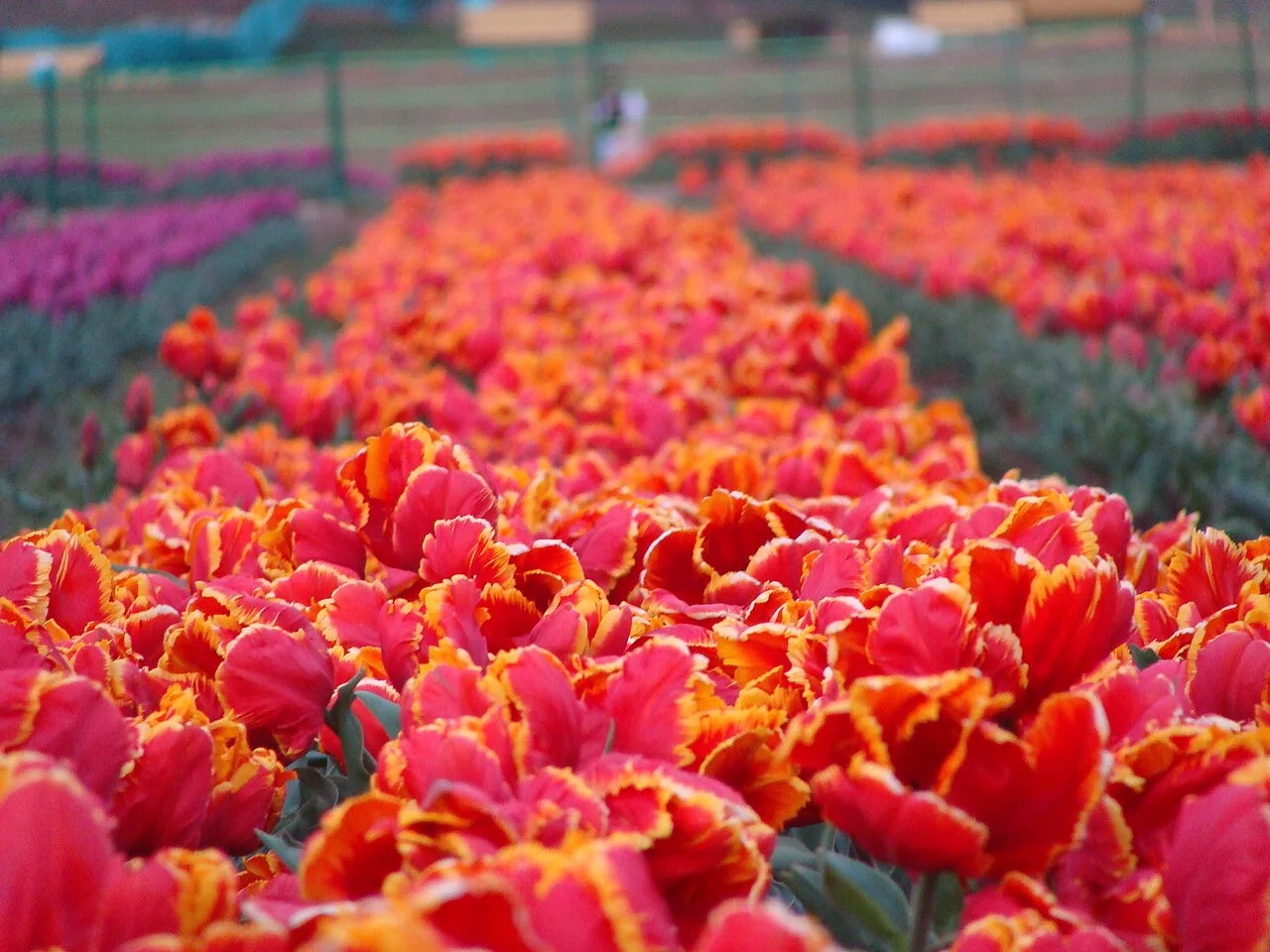
Indira Gandhi Memorial Tulip Garden
Indira Gandhi Memorial Tulip Garden is a large flower garden in Srinagar, Jammu and Kashmir, formerly known as the Model Floriculture Center. Visitors come to see its tulips and other flowers.
Key facts · verified by Ghumoopedia editors
- Type of place
- Heritage monument
- Best time to visit
- April to October for the Kashmir Valley and meadows; December to February for snow at Gulmarg; October to March for Jammu and the plains
- Nearest railway station
- Srinagar (Nowgam) · about 10 km (straight line)
- Verified
- 21 Nov 2026
Plan a trip from Indira Gandhi Memorial Tulip Garden — a day-by-day route through places nearby.
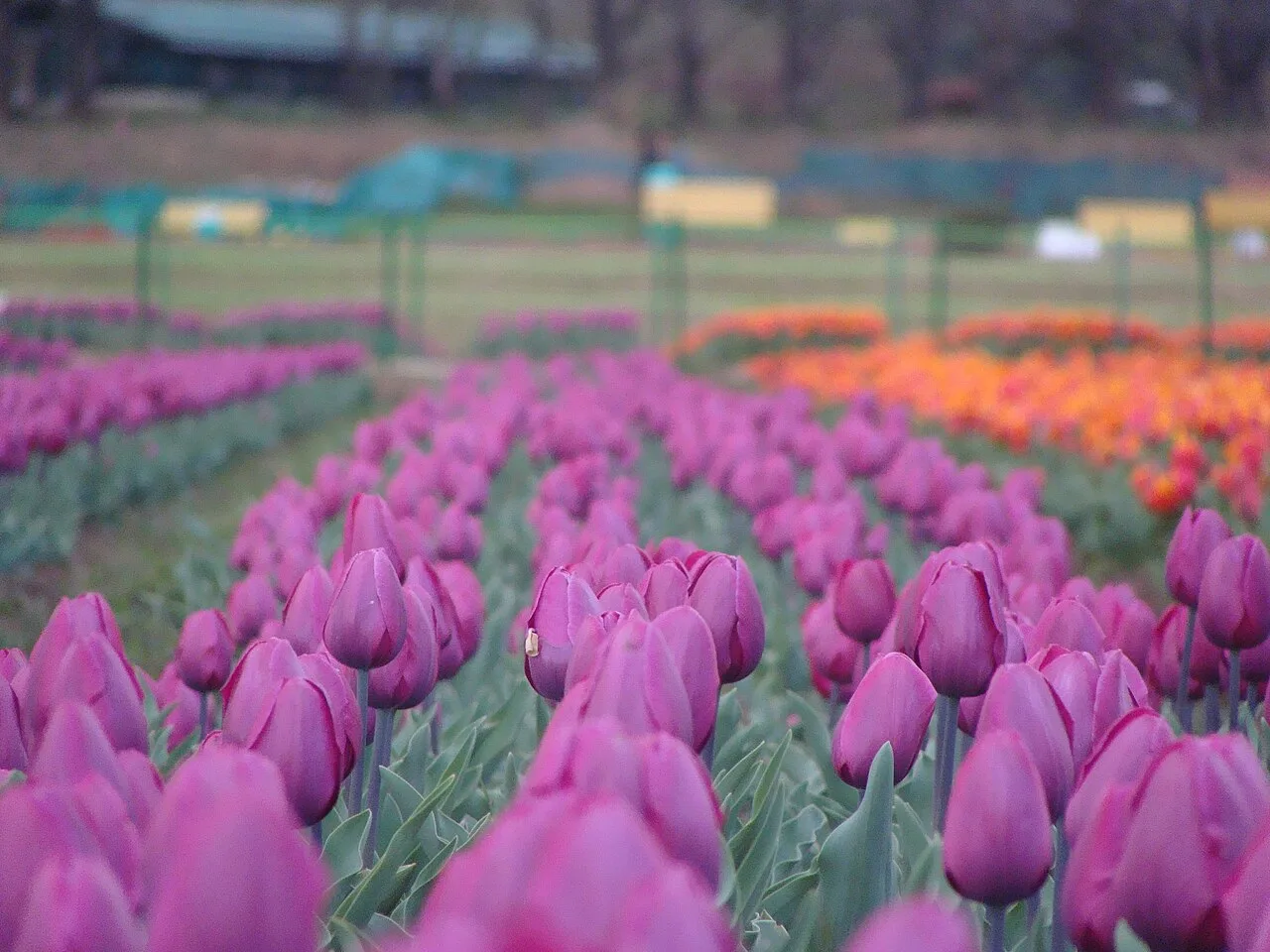
Located in Srinagar district, Jammu and Kashmir, the garden was formerly called Model Floriculture Center. It covers about 30 hectares (74 acres), making it Asia’s largest tulip garden. The garden occupies sloping ground beneath the Zabarwan range. Its seven terraces follow the hillside and provide views across Dal Lake. Approximately 70–75 varieties of tulip grow here. The planting also features 46 varieties of other flowers, including hyacinths, daffodils and ranunculus. These additional flowers were brought from Holland, adding to the garden’s range of blooms alongside its tulips. Kashmir is known for its Sufi shrines, Mughal gardens, houseboats and crafts such as pashmina, papier-mâché and carpets, while the Jammu region is the land of Dogra heritage and major Hindu pilgrimages. The Kashmir Valley has mild summers, colourful autumns and snowy winters, with Chillai Kalan (late December to January) the coldest spell; meadows such as Gulmarg and Sonamarg get heavy snow. Jammu and the plains are hot from April to June. Snow and landslides can close the Jammu–Srinagar highway and mountain roads. The usual best time to visit is April to October for the Kashmir Valley and meadows; December to February for snow at Gulmarg; October to March for Jammu and the plains. Timings, fees and access arrangements must be confirmed locally. For official information, see Jammu and Kashmir Tourism at https://jktourism.jk.gov.in.
Why it matters
Indira Gandhi Memorial Tulip Garden is a major spring attraction in Srinagar and an important public horticultural space in the Kashmir Valley. Jammu and Kashmir tourism descriptions identify it as Asia’s largest tulip garden; the garden covers about 30 hectares and displays tulips alongside other spring flowers. Its terraced setting below the Zabarwan range, with views towards Dal Lake, connects the cultivated landscape with Srinagar’s wider garden heritage. The annual bloom also draws visitors and supports seasonal tourism. Despite the “heritage monument” category used here, this is a modern garden rather than an ancient monument. It is not known as a UNESCO World Heritage Site or an Archaeological Survey of India-protected monument.
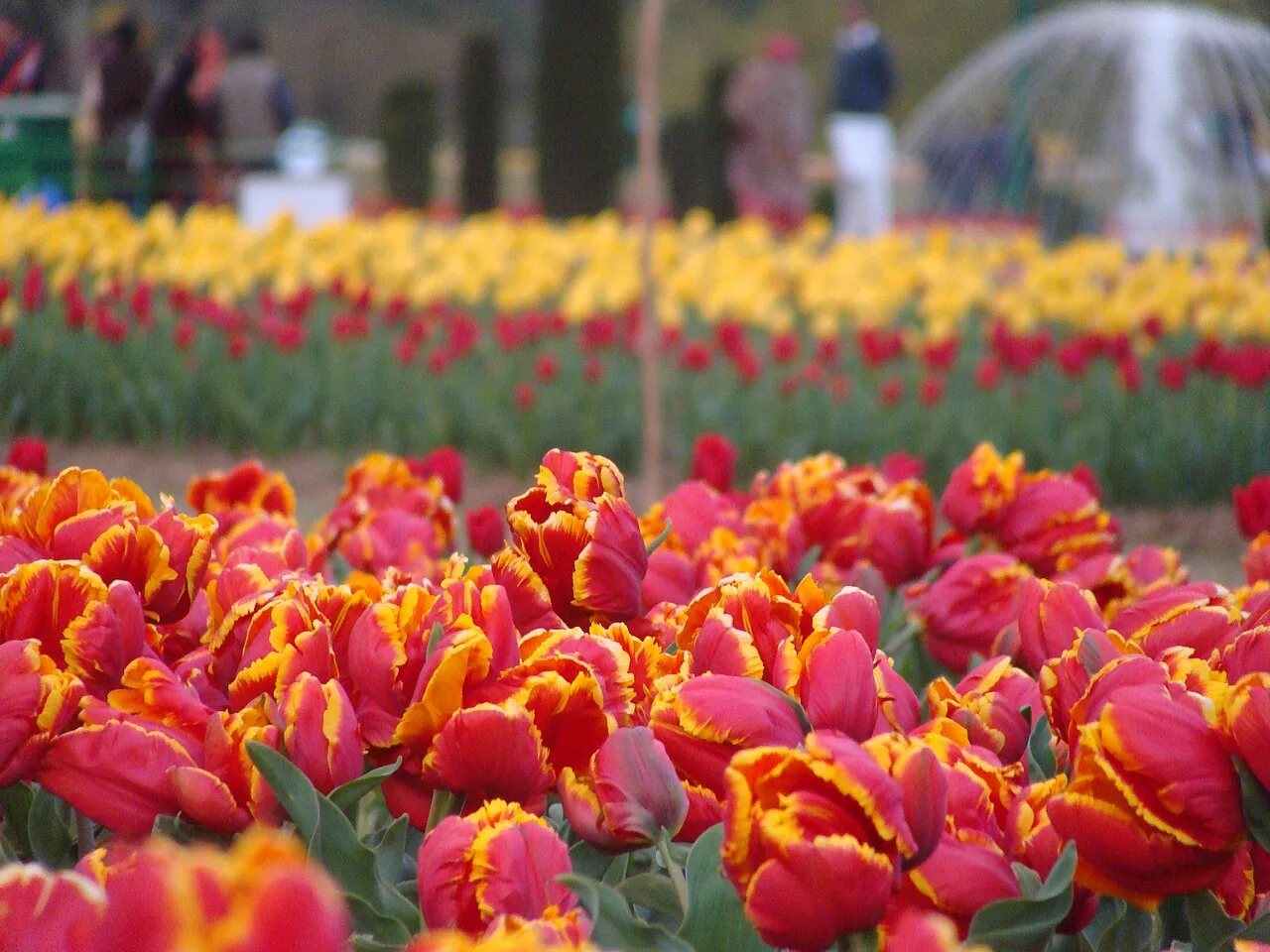
The garden was developed by the Jammu and Kashmir government as a modern floriculture project at the foothills of the Zabarwan range in Srinagar. It was previously known as the Model Floriculture Center and was later named Indira Gandhi Memorial Tulip Garden. Public accounts commonly date its opening to 2007. The project aimed to establish a large seasonal flower display and promote tourism during spring, when the Kashmir Valley’s gardens and landscapes begin to bloom. The garden occupies sloping ground above Dal Lake and was laid out in seven terraces to make use of the hillside. Tulip bulbs and other flower varieties were brought from Holland, according to the garden’s published descriptions. The display has expanded to include numerous tulip varieties as well as flowers such as hyacinths, daffodils and ranunculus. Its planting changes from season to season, so the garden is better understood as a maintained horticultural attraction than as a fixed historic structure. The annual Tulip Festival has become a prominent part of Srinagar’s spring visitor season. For current details about management, planting and access, consult Jammu and Kashmir Tourism or local notices.
Origin stories & folklore
No well-established origin legend is specifically associated with the Indira Gandhi Memorial Tulip Garden. It is a modern horticultural attraction, rather than a site known for an ancient foundation story or shrine tradition. Visitors may hear broader local stories about Srinagar’s lakes, gardens and the Zabarwan hills, but these should not be presented as the garden’s own history. The setting does invite reflection on Kashmir’s long tradition of shaping and enjoying gardens, especially the historic Mughal gardens around Dal Lake. Treat any tale offered by a guide as local storytelling unless it is clearly supported by a reliable historical source.
Architecture & design
The garden’s design responds to a natural slope at the base of the Zabarwan range. Seven terraces step down the hillside, creating distinct planting levels and views towards Dal Lake and Srinagar. Rather than a monumental building, its principal features are landscaped beds, planted borders, paths and the arrangement of seasonal flowers. The garden covers about 30 hectares, according to published descriptions, and is planted with many tulip varieties as well as other spring flowers, including hyacinths, daffodils and ranunculus. The terraced layout helps visitors move through the display and makes the changing colours visible across the slope. Paths and planted areas are maintained for seasonal public use; the exact route and condition can vary. The setting, planting pattern and outlook are the main design features to notice. It is a working garden, so beds may be replanted or closed for maintenance, and visitors should follow signs and staff instructions rather than stepping into planted areas.
Important objects & sculptures
There is no major collection of historic sculptures, idols, carvings or inscriptions for visitors to seek out here. The garden’s principal displays are living plants: tulips in a range of colours and varieties, together with seasonal flowers such as hyacinths, daffodils and ranunculus. Their selection and arrangement can change between seasons and years. Look for interpretive boards, if available, to learn about the planting and varieties on display. The terraced beds and views towards Dal Lake are also central to the visitor experience, but they are landscape features rather than historic artefacts. Avoid touching or picking flowers, and follow any restrictions around newly planted beds.
Explore Indira Gandhi Memorial Tulip Garden slowly and read the interpretation boards, use the official audio guide where available or hire an authorised guide to understand its history. Check opening days, ticket counters and camera rules in advance; many monuments and museums close on one weekday and on some public holidays. Gardens are at their best in the morning and, in Kashmir, during the spring bloom. A comfortable itinerary is one main visit in the morning, a local meal at midday and a short nearby stop before an afternoon return. Use the district list on this site to find other places in Srinagar, but check the route and its condition before combining stops. If a festival or fair is on, roads and stays can be busy — and the experience can be unforgettable. Leave no litter: many sites are protected by the communities around them.
Suggested itineraries
Half day: Spend 2–3 hours exploring the garden terraces at an unhurried pace; have a nearby meal; add a short stop at Nishat Bagh if road conditions and energy allow. Full day: Visit the tulip garden in the morning for 2–3 hours; take a lunch break; explore Chashme Shahi and Pari Mahal in the afternoon, allowing time for travel and rest. Gentler option: Visit the lower accessible areas for about an hour, pause often, and choose one nearby garden or lakeside stop rather than attempting several sites.
The garden is part of contemporary Srinagar’s seasonal outdoor life, particularly during the spring bloom, when residents and visitors come to see the flowers and enjoy the hillside setting. The surrounding region has rich traditions of Kashmiri music, crafts and hospitality, but the garden itself is not a venue for a particular historic dance or ritual. Kashmiri and Urdu are widely used locally, alongside Hindi and English in visitor-facing settings. Modest, weather-appropriate clothing is practical for a garden visit; respect local customs and ask before photographing people. Food and craft traditions are best explored in Srinagar’s neighbourhoods and markets rather than assumed to be part of the garden display.
Festivals & events
The annual Tulip Festival is the main event associated with the garden. Organised during the spring bloom, it celebrates the seasonal flower display and may include cultural programming or visitor activities; offerings can vary from year to year. The bloom period is brief and weather-dependent, so the garden can be especially busy during the festival and on weekends. Srinagar also observes religious and cultural occasions across the year, but visitors should check locally before assuming that a particular event is held at the garden. Allow extra time for road congestion and queues when a festival is underway.
Local food in Jammu and Kashmir includes Kashmiri Wazwan dishes such as rogan josh, yakhni, gushtaba and rista, nadru (lotus stem), haak saag, dum aloo, kahwa and salty noon chai; in the Jammu region, rajma-chawal, kalari cheese and Dogra dishes such as ambal and auria. Ask what is fresh that day; many small eateries cook a limited daily menu. Vegetarian travellers eat very well across this region, and most towns also have non-vegetarian options. Remote sites may have no restaurant at all. Carry water and snacks, eat a proper breakfast before long drives, and ask your accommodation for a packed lunch if you are heading out early. Try a home-cooked or dhaba meal when you can — it is often the best food on the route. Choose busy, clean places and carry your packaging back with you.
Shopping & local experiences
The garden is primarily a flower attraction, so do not assume it has a permanent craft market or extensive shopping facilities. In Srinagar, visitors can look for Kashmiri pashmina, papier-mâché work, carpets and other regional handicrafts, while taking care to ask about materials and provenance. City markets also offer local food and seasonal produce. For a meal, explore Srinagar restaurants for Kashmiri dishes rather than relying on garden refreshments. Buy plants, bulbs or souvenirs only from permitted vendors, and check any rules that apply to carrying plant material across borders or through airports.
April to October for the Kashmir Valley and meadows; December to February for snow at Gulmarg; October to March for Jammu and the plains
The nearest principal railway station by straight-line distance is Srinagar (Nowgam), roughly 10 km away. The nearest operating airport by straight-line distance is Sheikh ul-Alam International Airport, Srinagar, roughly 15 km away. These figures are calculated from map coordinates — mountain roads wind a lot, so actual road distance and travel time are usually much longer. Jammu Tawi and Shri Mata Vaishno Devi Katra are the main long-distance rail gateways, and the line through the Chenab bridge now continues into the Kashmir Valley — check current services to Srinagar. Srinagar and Jammu airports have the most flights. For the final leg, J&K Road Transport Corporation (JKRTC) buses, private minibuses and shared Sumo taxis link district towns; shared taxis usually leave early in the morning. A private taxi gives more flexibility for remote sites. When comparing train, bus and flight, count the complete door-to-door time: a flight saves the most time only if the onward road transfer is short, while an overnight train can save a hotel night. Book your return before you leave, because seats fill quickly on weekends, festivals and holidays. Current train numbers, timings, return services and fares are not listed here; check IRCTC and NTES for trains and the airline's own schedule for flights. Indian visitors do not need a permit for the main destinations in Jammu and Kashmir. Areas close to the Line of Control, such as Gurez, Bangus, Keran and Machil, may require registration at police or army check posts, and foreign nationals face extra restrictions in some areas. Prepaid mobile SIM cards issued outside Jammu and Kashmir do not work here, so carry a postpaid connection. The Amarnath Yatra needs advance registration and a compulsory health certificate, and Vaishno Devi pilgrims need a yatra registration (RFID) card. Read your government's travel advisory and current local advisories before you go.
Confirm onward and return timings on IRCTC / NTES, the state bus operator or your airline before travel. A dash means current timings or fares have not been verified.
Getting around
The garden is in Srinagar, and visitors commonly reach it by taxi, hired car or local public transport followed by a short walk, depending on the drop-off point and current arrangements. Auto-rickshaws may be available in the city, but confirm that a driver can take you to the garden and agree the return plan before setting out. Local buses and shared transport serve parts of Srinagar, though routes may not stop at the entrance. Walking inside involves sloping paths and terraces. Parking and traffic management can be constrained during the spring bloom, so check locally and allow extra time.
Hours, tickets & permissions
Entry is generally managed seasonally, with access arrangements linked to the flowering period and garden operations. Visitors may need to buy an entry ticket, follow designated routes and observe restrictions on bringing items or entering planted areas. Camera or other permissions may be subject to current rules. Dress and identification requirements can change with local security arrangements. Confirm current opening days, hours, fees, ticketing and camera rules with Jammu and Kashmir Tourism or the garden’s managing authority before travelling; do not rely on older listings.
Facilities
Facilities can vary with the season and visitor numbers. Toilets, drinking water, food stalls or refreshments, parking and staff assistance may be available during the main bloom period, but visitors should check locally rather than depend on any one service. Carry water and any medication you need, especially on busy days. Guides or interpretation may be available at times; ask whether a guide is authorised. ATMs and a wider choice of shops and restaurants are more reliably sought in Srinagar rather than assumed to be inside the garden.
Accessibility
The garden is built on a hillside in seven terraces, so visiting can involve sloping paths, uneven ground and steps. Moving between levels may require sustained walking; the distance and route depend on which areas are open. Shade may be limited in exposed sections, and spring weather can change quickly. Wheelchair and stroller access should not be assumed throughout the garden, and visitors with limited mobility may find upper terraces difficult. Older visitors may prefer a shorter visit, frequent rests and assistance from a companion. Confirm current accessible entry routes and facilities with the managing authority before arrival.
Indian visitors do not need a permit for the main destinations in Jammu and Kashmir. Areas close to the Line of Control, such as Gurez, Bangus, Keran and Machil, may require registration at police or army check posts, and foreign nationals face extra restrictions in some areas. Prepaid mobile SIM cards issued outside Jammu and Kashmir do not work here, so carry a postpaid connection. The Amarnath Yatra needs advance registration and a compulsory health certificate, and Vaishno Devi pilgrims need a yatra registration (RFID) card. Read your government's travel advisory and current local advisories before you go. Carry a photo ID at all times and save the emergency number 112 and your accommodation's contact offline. Heat in summer and fog in winter are the main weather risks; carry water and allow extra travel time on foggy December–January mornings. Respect community rules, private property and posted instructions. Follow local guidance if access changes.
Photography
Spring flowers and the terraces are popular subjects, with softer light often available earlier in the day or later in the afternoon. Views towards Dal Lake and the Zabarwan range provide a wider setting, while close-ups can show the variety of blooms. Follow posted rules on photography, tripods and any camera fees, which may change. Do not enter beds or pick flowers to improve a shot. Drone use may be restricted by garden rules or local security regulations; obtain explicit permission before flying. Ask people before taking close portraits and be considerate in crowded areas.
Choose a stay by the full journey to Indira Gandhi Memorial Tulip Garden, not just the district name. Srinagar houseboats, Jammu and Katra hotels and resort towns such as Gulmarg and Pahalgam offer the widest choice; book houseboats only through registered owners. In summer, check air-conditioning or coolers; in December and January, check heating and hot water. Book in advance for weekends, festivals and the peak season (April to October for the Kashmir Valley and meadows; December to February for snow at Gulmarg; October to March for Jammu and the plains). Confirm the exact location, meals included, check-in time and cancellation terms in writing. Avoid sending money to unverified contacts or touts at stations. Carry some cash, as card and digital payments can be unreliable in remote areas.
Other Srinagar attractions that can be combined, subject to road conditions and opening arrangements, include Nishat Bagh, the terraced Mughal garden beside Dal Lake, and Shalimar Bagh. Chashme Shahi is another garden in the Zabarwan foothills, while Pari Mahal offers a historic garden setting above the lake. Dal Lake itself is a defining part of the city and can be explored from its public promenades or through locally arranged boat experiences. These stops are in Srinagar, but road routes and access can take longer than map distance suggests, particularly during the tulip season.
For couples, Indira Gandhi Memorial Tulip Garden rewards a slow pace: arrive early for soft light and fewer crowds, share a local meal and keep the evening free. A shikara ride or a houseboat night in Srinagar is a classic addition. Public displays of affection can be frowned upon in conservative communities and at religious sites, so be discreet. Keep a buffer in your itinerary, because weather and traffic can delay plans.
Q: How much time should I allow for a visit? A: Allow a few hours to explore the terraces without rushing; add time for queues and travel during the spring bloom. Q: What is the best season to visit? A: Spring is the season for the tulip display, but bloom timing varies with weather. Check current reports before travelling. Q: Is there an entry ticket, and are hours fixed? A: Entry rules and opening arrangements are seasonal and can change. Confirm current hours, fees and ticketing with the managing authority. Q: Is the garden suitable for children and elderly visitors? A: Children can enjoy the flower displays, but the sloping terraces need supervision. Visitors with limited mobility may prefer a shorter route and frequent rests. Q: Where should I stay nearby? A: Srinagar has accommodation options across the city. Choose a location based on your transport needs and confirm availability, especially during the spring festival period.
Be the first to share photos, stories, advice or a helpful contact for Indira Gandhi Memorial Tulip Garden.
Loading…