
Ghumoopedia — Explore, Discover, Experience
Sign in

Religious · Jammu & Kashmir

Kheer Bhawani Mela (Zyeth Atham)

Tulmulla, Ganderbal

Dates

Last verified 17 November 2026. Confirmed: announced by organisers or government. Provisional: from a published almanac, not yet announced. Seasonal: no date announced.

The complete guide

Kheer Bhawani Mela (Zyeth Atham): everything to know before you go

Also known as
Kheer Bhawani Mela, Zyeth Atham, Jyeshtha Ashtami festival, Ragnya Devi festival
Where
Tulmulla (Tulamula) village, Ganderbal district, about 25 km from Srinagar
When
Jyeshtha Ashtami, the eighth day of the bright half of the month of Jyeshtha, around May–June. The date is fixed each year by the Kashmiri Pandit calendar
Duration
One main day, with pilgrims arriving over several days
Faith and community
Kashmiri Pandits (Hindu), with strong support from neighbouring Muslim villages
Type
Annual pilgrimage and community reunion
Best for
Pilgrims, cultural travellers, those seeking Kashmir's shared heritage

Overview

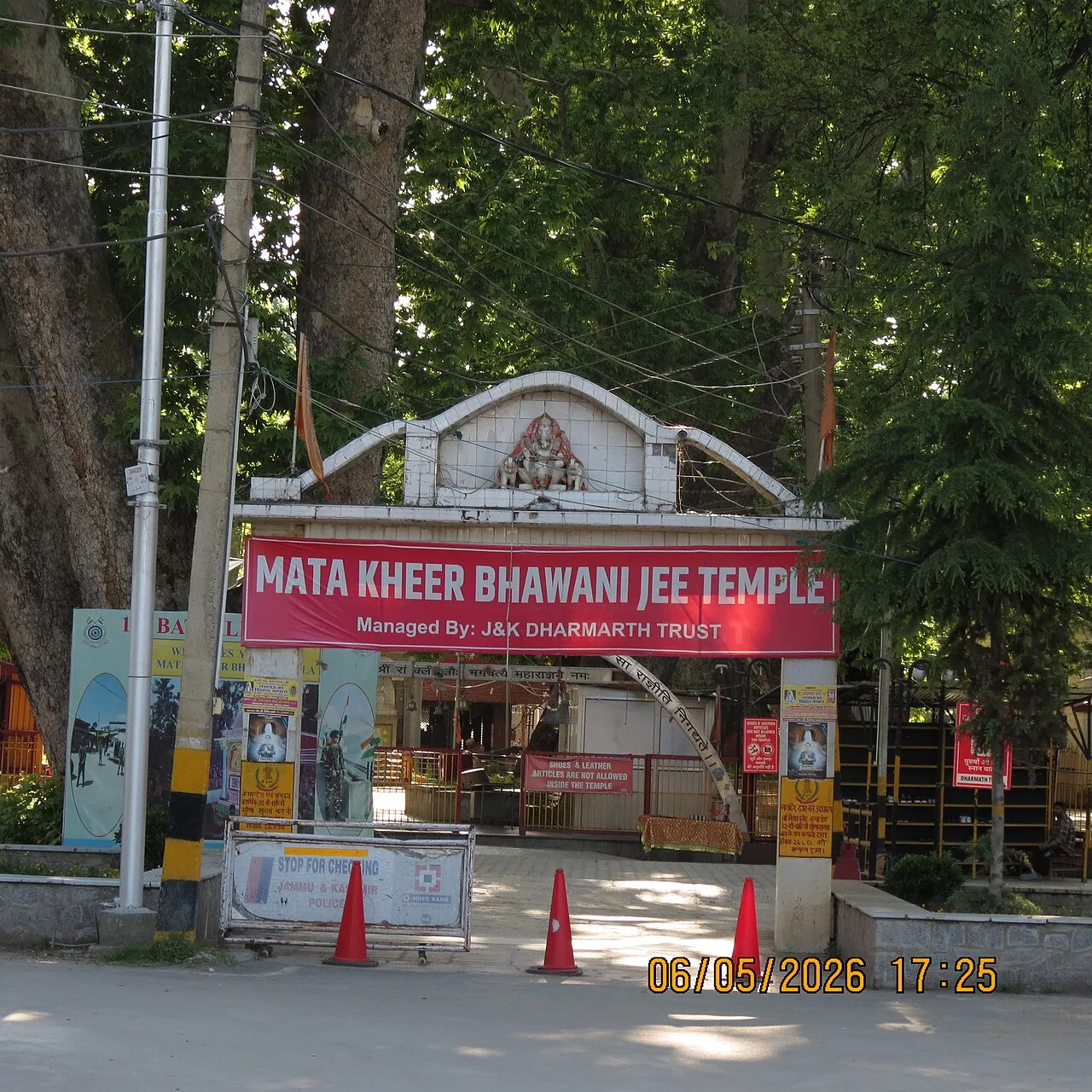
In a grove of chinar trees, at the edge of a village near Wular Lake, stands a small marble temple built around a sacred spring. For most of the year the spring is a quiet pilgrimage site. On Jyeshtha Ashtami, thousands of Kashmiri Pandits gather here to worship the goddess Ragnya Devi (Maharagya Devi), offer her kheer (rice pudding), and look into the waters for omens. The place and the day have become the most important annual gathering of the community.

The Mela is also something more personal. Since the late 1980s and early 1990s, when large numbers of Kashmiri Pandits left the Valley, the festival has been a rare chance to return to their ancestral land, meet old neighbours and visit family places. Many families make this journey from Jammu, Delhi and cities across India and the world.
Origins and legend

The goddess is also known as Ragnya, a form of Durga. According to tradition, the demon-king Ravana worshipped her in Lanka, but she grew displeased when he began to disregard dharma. She instructed Hanuman to carry her to a pure place and move her to Kashmir, where she was installed at Sati-Sar (the old name for the Kashmir Valley's ancient lake region) and later at the spring of Tulmulla. Devotees say that the spring's six-sided shape and the abundance of milk and kheer offered there reflect her love for pure food.

The temple was built, destroyed and rebuilt several times over the centuries, and the present shrine was renovated in the nineteenth and twentieth centuries. A well-known belief holds that the colour of the spring's water changes with the fortunes of the Valley: light colours such as white, pink and pale blue are seen as auspicious, and dark or black waters are taken as a bad omen.

How it is celebrated

  • The fast: Many devotees observe a fast on the eve and the morning of the festival.
  • Gathering at Tulmulla: From before dawn, families arrive by bus and car. Queues stretch along the road to the temple complex.
  • The offering: Devotees walk around the spring, offering milk, kheer, flowers, and rose petals to the water. Some release lamps. The kheer is later shared as prasad.
  • Prayers and bhajans: Priests recite hymns and sing devotional songs. Families sit on the grounds under the chinar trees, performing individual prayers.
  • Reading the water: Many pilgrims scan the colour of the spring for a sign of the year to come.
  • Social reunion: The temple grounds become a meeting place. Old friends greet each other, family news is exchanged, and strangers share stories of their villages.

Similar smaller gatherings are held at related shrines of the goddess in Manzgam (Anantnag), Tikkar (Kupwara), Devibal (Anantnag district) and Khrew (Pulwama district), and festivals at these sites follow the same date.

Food and flavours

The central offering is kheer, a sweet dish of rice, milk, sugar, cardamom and saffron. Devotees also bring milk, flowers, fruit and sugar. The community shares traditional Kashmiri Pandit dishes at home and at reunions, including dum aloo, haakh (collard greens), nadru yakhni (lotus-stem curry in yoghurt), rajma and rice. Visitors can drink kahwa (saffron and almond tea) and buy local walnuts, almonds and dry fruit. During the day, local vendors from the surrounding villages, most of them Muslim, sell flowers, milk, coconuts and refreshments, and many have done so for generations.

Music, dance, art and dress

The festival is devotional rather than performative. The atmosphere is quiet, with bhajans, the chanting of Sanskrit hymns, bells and the murmur of the spring. Women often wear the traditional pheran with the distinctive taranga headdress on special occasions, though many today wear saris, salwar suits or festive clothing. Men may wear kurta-pyjamas or the pheran. The setting is as striking as the rituals: the white temple, the dark chinars, the clear spring and the mountains behind.

Where to experience it

  • Tulmulla (Ganderbal district): the main shrine.
  • Srinagar: a base for most visitors, with transport arranged by the administration for pilgrims.
  • Manzgam, Devibal, Tikkar and Khrew: the other Ragnya Devi shrines.
  • Wular Lake and Ganderbal: nearby places to visit, including the Mansbal Lake and the Sindh river.
  • Jammu (Jagti and Purkhoo): migrant townships where the community also gathers and prepares for the journey.

Visitor guide

  • Reaching Tulmulla. Srinagar is the main base, about 25 km away, and special buses and taxis run on the festival day. The nearest airport is Srinagar and the nearest railhead is Jammu/Udhampur (with a link to Srinagar under development in parts), so most visitors fly or drive.
  • Registration and arrangements. The J&K administration and community organisations coordinate transport, medical aid and security for the day. Check official announcements and local travel advisories before you plan, as arrangements change each year.
  • What to wear. Dress modestly, with shoes you can remove easily. Mornings can be cool, but crowds and sun can make the afternoon warm. Carry water and a hat.
  • Etiquette. Remove footwear at the temple. Avoid photography at the spring without permission and follow instructions from priests and volunteers. Visitors of other faiths are welcome, but should treat the occasion as a deeply personal and emotional one for the community.
  • Crowds and timing. Arrive early to avoid long queues, and be ready for long waiting times in the middle of the day.

Today and tomorrow

The Mela has grown into a symbol of memory, return and Kashmiri coexistence. Large numbers of pilgrims now travel each year, supported by government arrangements and local volunteers. Neighbouring Muslim families have often welcomed pilgrims, and the shared reliance on the festival economy has become a theme in stories of Kashmir. At the same time, the community's return is still a work in progress, and for many families the day is bittersweet. Efforts to restore the shrine, improve the village and encourage cultural tourism continue, with a focus on preserving the grove and the spring.

Nearby

Places to see around the festival