
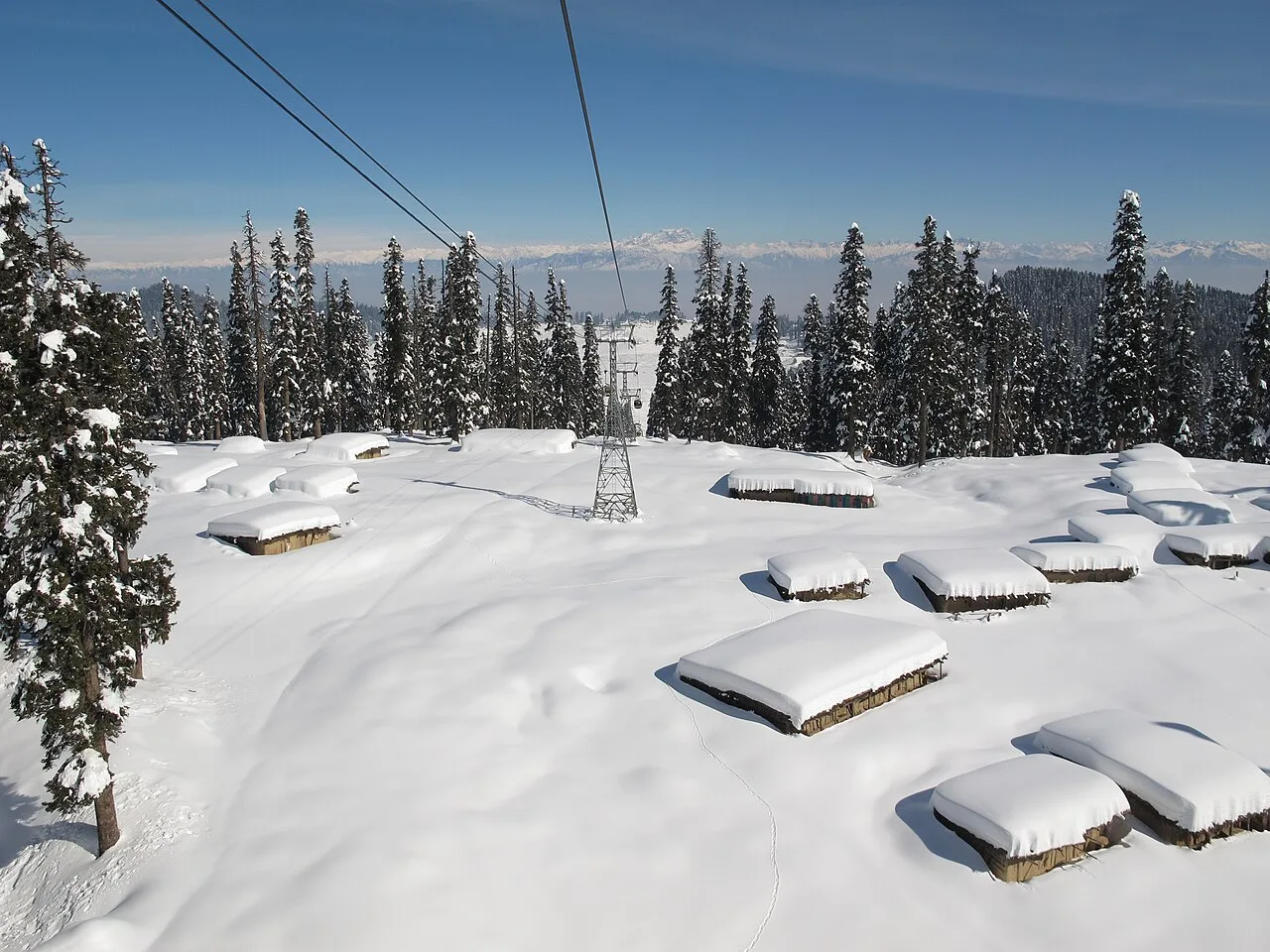
District · Jammu and Kashmir
Baramulla
Baramulla offers a view of northwestern Kashmir that combines the Jhelum corridor, working valley towns and forested mountain country.
Baramulla district lies in the northwestern Kashmir Valley, where the Jhelum River, cultivated valley land and forested mountain slopes shape a varied landscape. Baramulla town has long been a gateway to the valley along the Jhelum route, giving the district a history of movement, trade and cultural exchange. Its character extends beyond the town to rural settlements and upland resorts. Tangmarg is an important approach to Gulmarg, the district’s best-known hill station, associated with summer meadows and winter snow sports. The Gulmarg Gondola provides access to higher mountain terrain when conditions permit. Together, these places offer contrasting experiences of everyday valley life and mountain tourism, with weather strongly influencing travel.
Baramulla offers a view of northwestern Kashmir that combines the Jhelum corridor, working valley towns and forested mountain country. Baramulla town has long been a western gateway into the Kashmir Valley, while Tangmarg is the usual road approach to Gulmarg. The district is best known to many visitors for Gulmarg’s open meadows, winter snow activities and the Gulmarg Gondola, which reaches higher mountain terrain when operating conditions allow. Away from the resort, travellers can encounter everyday town and village life shaped by agriculture, the river and seasonal weather. It suits visitors seeking both a mountain stay and a sense of the wider valley.
Baramulla occupies a historic route at the northwestern exit of the Kashmir Valley, linking the valley with regions beyond its mountain rim. The town’s position beside the Jhelum made it a point of passage for travellers, traders and armies, although the details of its earliest settlement are not consistently recorded. The wider Kashmir region passed through Hindu and Buddhist periods before the establishment of Muslim rule under the Kashmir Sultanate in the fourteenth century. Mughal authority followed in the sixteenth century, and the valley later came under Afghan and then Sikh rule. In 1846, the Treaty of Amritsar established Dogra rule over Jammu and Kashmir; the region remained part of the princely state until 1947. The partition-era conflict and the accession of the princely state to India shaped the modern political history of the area. Baramulla developed as an administrative district within Jammu and Kashmir; subsequent administrative changes have altered the wider state framework, and it is now in the union territory of Jammu and Kashmir.
3 destination guides
Gulmarg
Gulmarg is a settlement and notified area committee in Jammu and Kashmir, known for skiing and winter sports. Visitors also come to ride its gondola towards Apharwat Peak.
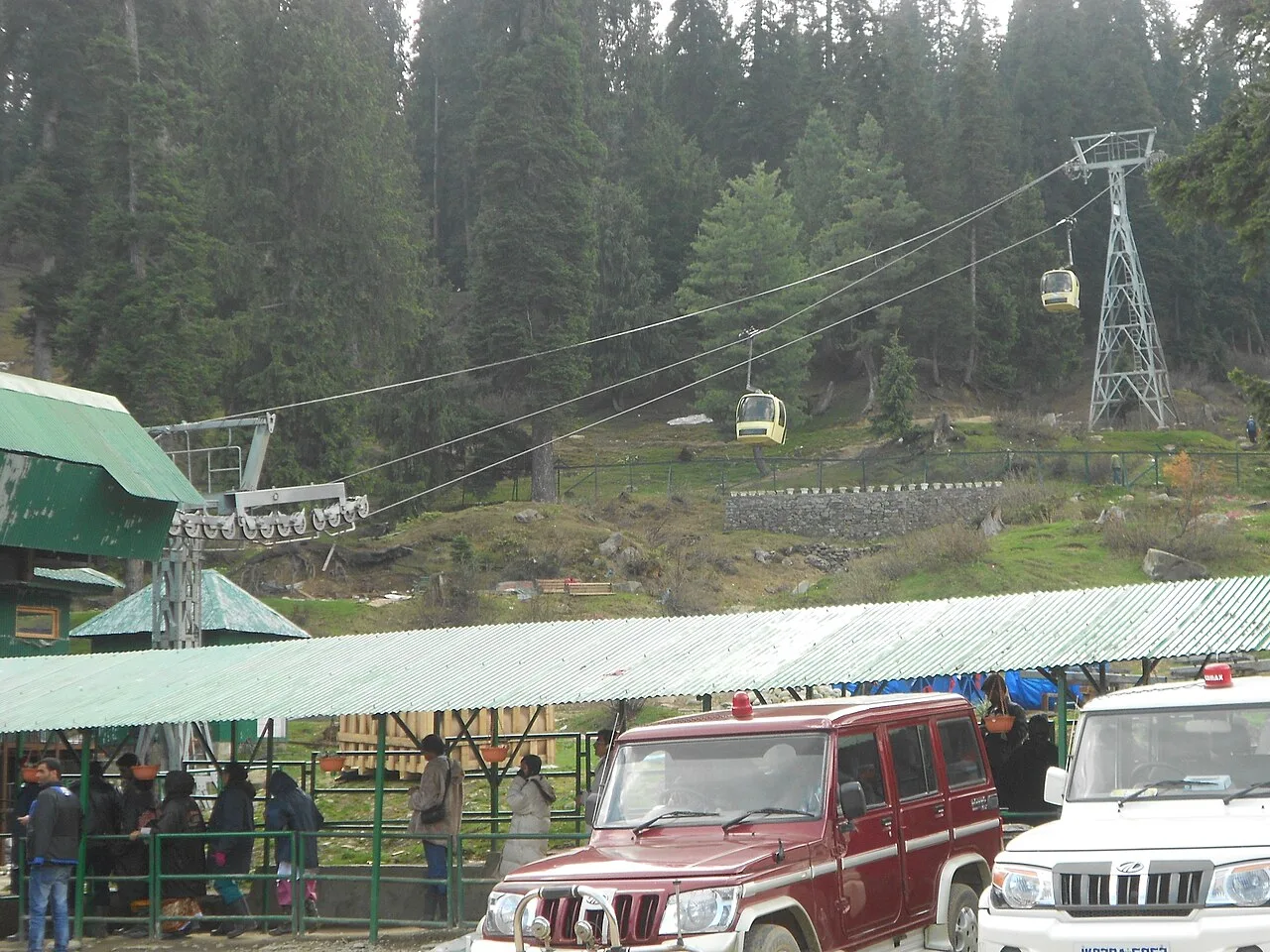
Gulmarg Gondola
The Gulmarg Gondola is a cable-car system in Gulmarg, Jammu and Kashmir, ranked second worldwide for length and height. Visitors come to travel on the gondola.
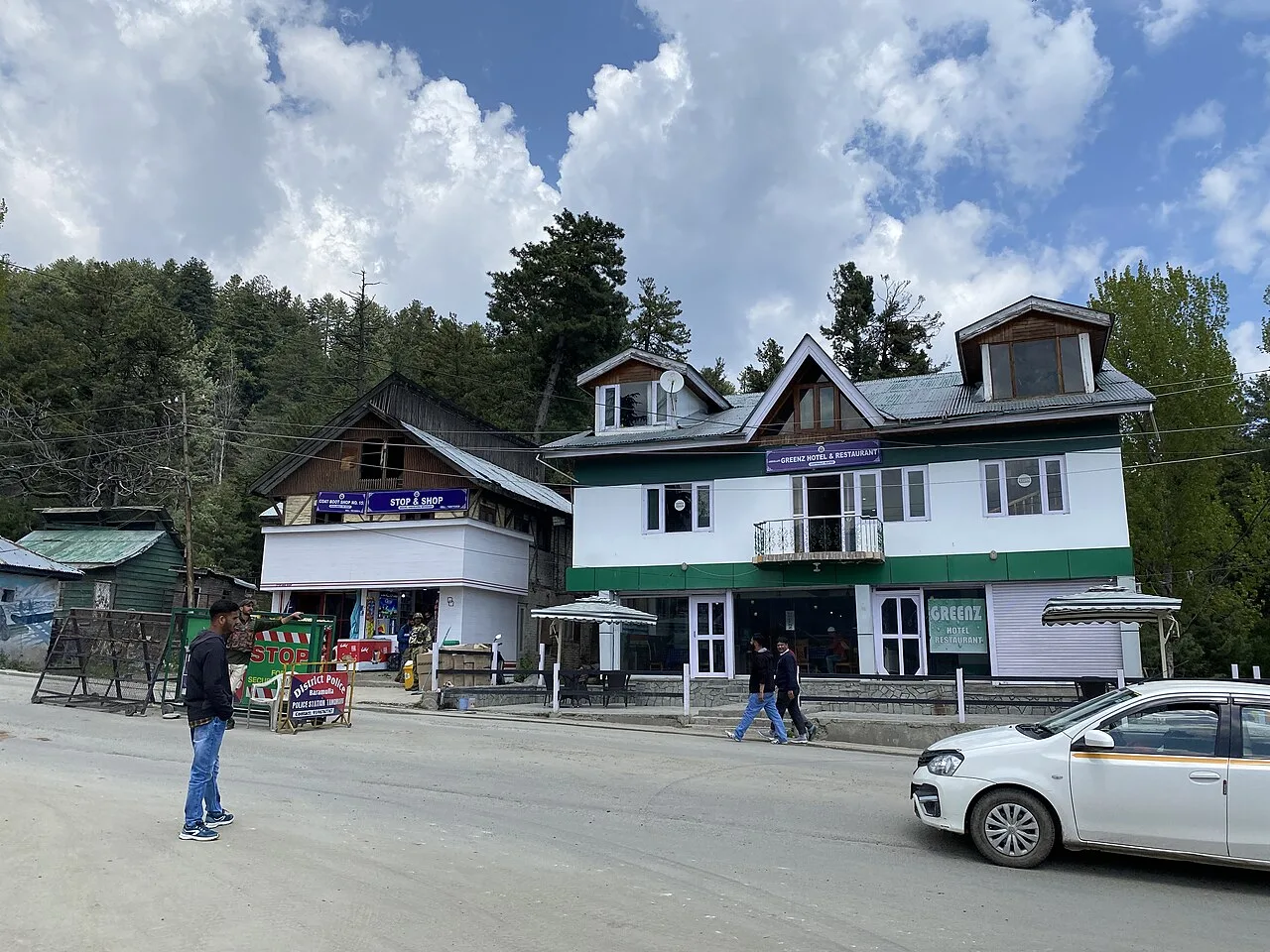
Tangmarg
Tangmarg is a town and tehsil in Baramulla district, Jammu and Kashmir, serving nearby villages and providing access to Gulmarg. Visitors come for Drung waterfall, other local sights and trout fish.
Food in Baramulla belongs to the wider Kashmiri culinary tradition rather than a separate district cuisine. Wazwan, the elaborate celebratory meal, is associated with meat dishes such as rogan josh, rista and gushtaba; yakhni is another familiar preparation. Vegetarian choices include haak greens, nadru or lotus stem, and Kashmiri dum aloo, commonly eaten with rice. Kahwa, a fragrant tea, and salty noon chai are important parts of regional hospitality. Small eateries may prepare only a few dishes each day, so ask what is available and freshly cooked. Carry drinking water and snacks for mountain outings.
Baramulla shares in Kashmir’s wider traditions of weaving, embroidery and decorative woodwork. Regional crafts include hand-knotted carpets, woollen shawls, fine pashmina textiles, embroidered garments and crewel-work furnishings. Walnut wood carving and painted papier-mache are also closely associated with Kashmir, though not exclusive to this district. Shops serving visitors may stock work made elsewhere in the valley. When buying, ask about the place of production, fibre content and whether an item is handmade or machine-made. For expensive textiles, seek credible certification where applicable and a detailed receipt.
Eid al-Fitr and Eid al-Adha are widely observed in the district, with prayers, family visits and busy markets. Ramadan brings a distinct evening rhythm to towns and villages. Navreh, the Kashmiri New Year, is celebrated in spring, while Urs gatherings at regional shrines draw devotees at different times of year. These observances are part of the wider Kashmir Valley’s cultural calendar, rather than events exclusive to Baramulla. Visitor numbers can rise around holidays and during Gulmarg’s summer and winter travel seasons, so booking accommodation ahead is sensible at those times.
Elsewhere in Jammu and Kashmir
- Shri Amarnath YatraDates to be announced · Seasonal
- Kheer Bhawani Mela (Zyeth Atham)Dates to be announced · Seasonal
- Herath (Kashmiri Shivaratri)Dates to be announced · Seasonal
- Navreh (Kashmiri New Year)Dates to be announced · Seasonal
- Eid & the Shrine Festivals of KashmirDates to be announced · Seasonal
- Bahu MelaDates to be announced · Seasonal
- Jhiri Mela23 Nov 2026 – 3 Dec 2026 · Confirmed
- Lohri & Baisakhi in JammuDates to be announced · Seasonal
- Tulip Festival, SrinagarDates to be announced · Seasonal
The district spans cultivated sections of the Kashmir Valley and forested uplands rising towards the Pir Panjal range. The Jhelum runs through the valley corridor near Baramulla town, while streams, orchards and fields mark the settled landscape. Around Tangmarg and Gulmarg, slopes climb to meadows and higher mountain terrain. These changes in elevation make road journeys more weather-sensitive as travellers move from valley towns to hill resorts. Snow, rain or fog can affect access, and conditions at higher elevations may differ from those in Baramulla town.
Summer is generally the most comfortable season for exploring the valley and upland scenery, though conditions can change quickly in the mountains. Spring brings greener landscapes and a mix of mild and cool days. The monsoon influence is less pronounced than in many parts of India, but rain can still affect roads and visibility. Autumn is often crisp, while winter brings cold conditions and snowfall, especially around Gulmarg; road access and outdoor activities may be affected. Late spring through early autumn suits many general visits, while winter appeals to snow-sport visitors prepared for disruptions. Pack layers, waterproof outerwear and sturdy footwear; bring warmer clothing for evenings and high elevations.
Sheikh ul-Alam International Airport in Srinagar is the main air gateway for visiting Baramulla district. Baramulla railway station serves the district on the Kashmir rail network; confirm available connections before planning a rail journey. Road links from Srinagar lead towards Baramulla town, while Tangmarg is the usual approach to Gulmarg. Buses and shared taxis connect major settlements, with hired taxis useful for hill destinations and less frequent routes. Allow extra time on mountain roads, particularly during snowfall or poor weather, when access restrictions and vehicle requirements may change. Check current services locally.
Road is the main way to move between Baramulla town, other valley settlements, Tangmarg and Gulmarg. Local buses and shared taxis serve major routes, while private taxis are useful for hill travel and places with less frequent public transport. Auto-rickshaws may be available for shorter trips in towns, but should not be assumed for every route. The road from Tangmarg climbs towards Gulmarg and can be affected by snow, rain or traffic controls. The Jhelum is a defining feature of the district, but boats are not a usual means of getting between its visitor sights. Confirm local transport conditions before setting out.
2 days: Tangmarg → Gulmarg; sleep in Gulmarg. 3 days: Tangmarg → Gulmarg → Gulmarg Gondola; sleep in Tangmarg on the first night and Gulmarg on the second.
Gulmarg is the most convenient base for visitors focused on the meadows, mountain scenery and gondola, while Tangmarg works well for a quieter or road-oriented overnight stop on the approach. Baramulla town is a practical base for exploring the district’s valley-side settlements and transport links. Accommodation options generally include hotels and guesthouses, with homestays available in some places; availability varies by season. Government lodges or dharamshalas may be options where present, but visitors should verify current access and booking arrangements locally. Reserve ahead during busy holiday and snow seasons.
Mountain weather can change rapidly; check road and gondola operating conditions locally, and avoid setting out on snowy or foggy routes without suitable transport and advice. Follow local guidance around forests and be alert to wildlife, including bears, rather than approaching or feeding animals. Use safe drinking water and take usual precautions with food. Crowds and road delays can build during holiday and snow seasons. Carry personal medicines and allow extra time for travel. Check official guidance for any restricted areas or permit requirements before visiting; requirements can change.
- Budgamabout 42 km
- Srinagarabout 44 km
- Kupwaraabout 45 km
- Shopianabout 48 km
- Poonchabout 49 km
- Pulwamaabout 55 km
- Bandiporaabout 58 km
- Kulgamabout 58 km
Straight-line distance between the centres of each district's destinations; road distance is longer.
Q: How many days should I spend in Baramulla district? A: Two days can cover Tangmarg and Gulmarg at a relaxed pace; allow three days for more time in the hills and flexibility for weather. Q: When is the best time to visit? A: Late spring through early autumn is suitable for general sightseeing, while winter is popular for snow, subject to access and conditions. Q: Where is the best base? A: Choose Gulmarg for a hill-focused stay, Tangmarg for the approach, or Baramulla town for valley-side travel. Q: How do I get to the district? A: Srinagar airport is the main air gateway, and Baramulla railway station serves the Kashmir rail network; road connections and services should be checked before travel. Q: Is Baramulla suitable for families or elderly travellers? A: Yes, with route choices matched to mobility and weather; steep terrain, cold, road conditions and altitude around Gulmarg may require extra care.
This page draws on our 3 destination guides for Baramulla and is updated as our team checks it.
Be the first to share photos, stories, advice or a helpful contact for Baramulla.
Loading…