
District · Ladakh
Nubra
Nubra lies north of Leh, linking the Shyok and Nubra river valleys in a high-altitude corner of Ladakh.
Nubra lies north of Leh in Ladakh, where the Shyok and Nubra river valleys bring cultivated villages and groves into a stark landscape of mountains, gravel plains and cold-desert sand dunes. Historically connected with caravan routes between Ladakh and Central Asia, the region carries traces of trade alongside Buddhist and Balti cultural traditions. Diskit Monastery, also called Deskit Gompa, is the valley’s oldest and largest Buddhist monastery. Nearby Hunder is known for its dunes and double-humped Bactrian camels, while Panamik draws visitors to its hot springs. Farther along the Shyok, Turtuk offers a different cultural setting shaped by its Balti heritage. Nubra rewards unhurried travel, with village life and seasonal agriculture as important to its character as its celebrated sights.
Nubra lies north of Leh, linking the Shyok and Nubra river valleys in a high-altitude corner of Ladakh. Travellers come for the contrast between cultivated villages and stark mountain terrain, and for a sense of the region’s historic connections with caravan routes across the Karakoram. Diskit Monastery is a major centre of Buddhist heritage; nearby Hunder is known for its cold-desert dunes and Bactrian camels. Panamik is associated with hot springs, while Turtuk’s Balti heritage gives the valley a distinct cultural character. Nubra is best explored at a measured pace, allowing time for village landscapes as well as headline sights.
Nubra, also known as Dumra, is a historic region of Ladakh whose valleys formed part of routes linking Ladakh with Yarkand and other Central Asian trading centres. Caravans carried goods across high passes, and the region’s monasteries and villages reflect its place within Ladakh’s Buddhist cultural world, alongside the Balti traditions of settlements such as Turtuk. Nubra was part of the wider Ladakhi kingdom, ruled by the Namgyal dynasty before Dogra expansion into Ladakh in the 19th century. Under Dogra rule it became part of the princely state of Jammu and Kashmir, which remained under British paramountcy during the colonial period. Over time, political changes and the closure of international trade routes reduced the importance of caravan commerce. Turtuk came under Indian administration during the 1971 war, separating local communities across a new boundary. After Ladakh became a Union Territory in 2019, Nubra was among the new districts announced by the Government of India in 2024; administrative arrangements may continue to develop.
5 destination guides
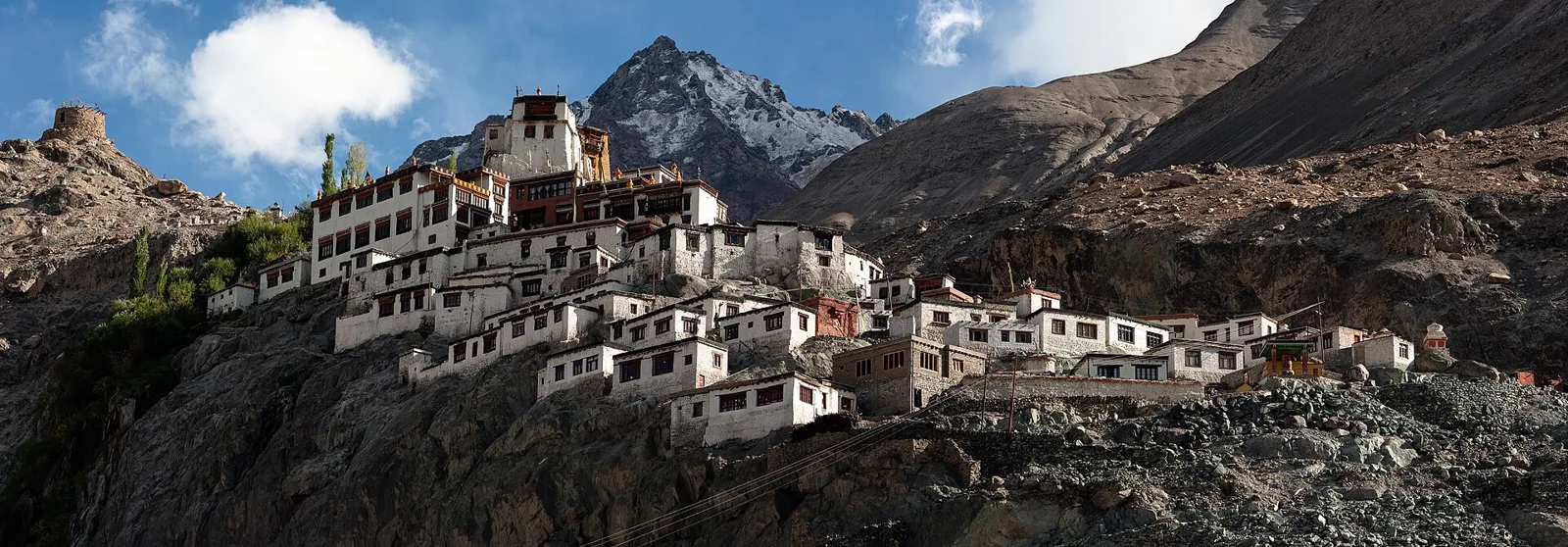
Diskit Monastery
Diskit Monastery is an important Gelugpa Buddhist centre in Ladakh’s Nubra Valley. Visitors come to see its religious art and attend Dosmoche, the monastery’s February festival.
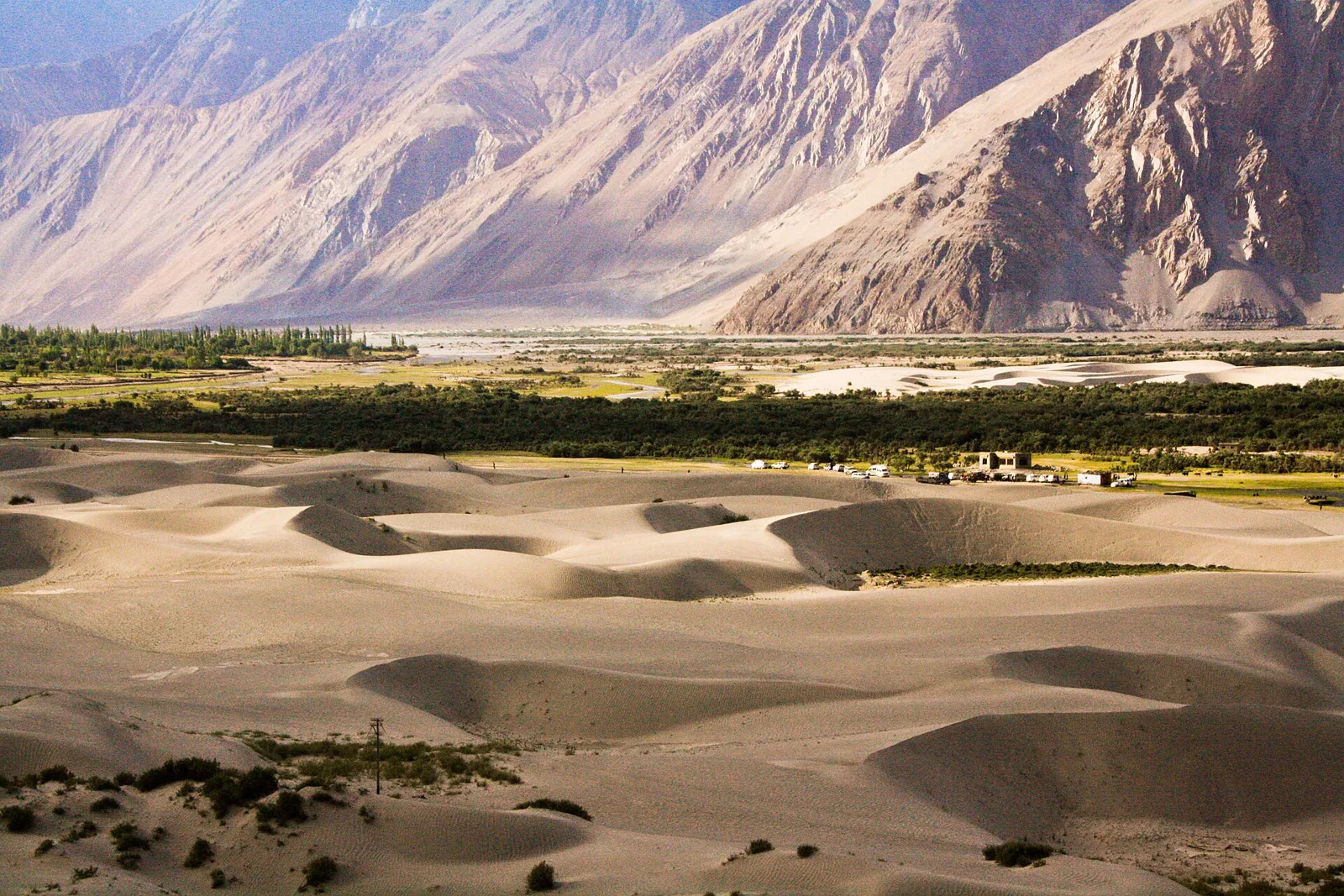
Hunder Sand Dunes
Hunder Sand Dunes are dunes near the village of Hundar in Ladakh’s Nubra district. Visitors come for the sandy landscape and the area’s Bactrian camels.
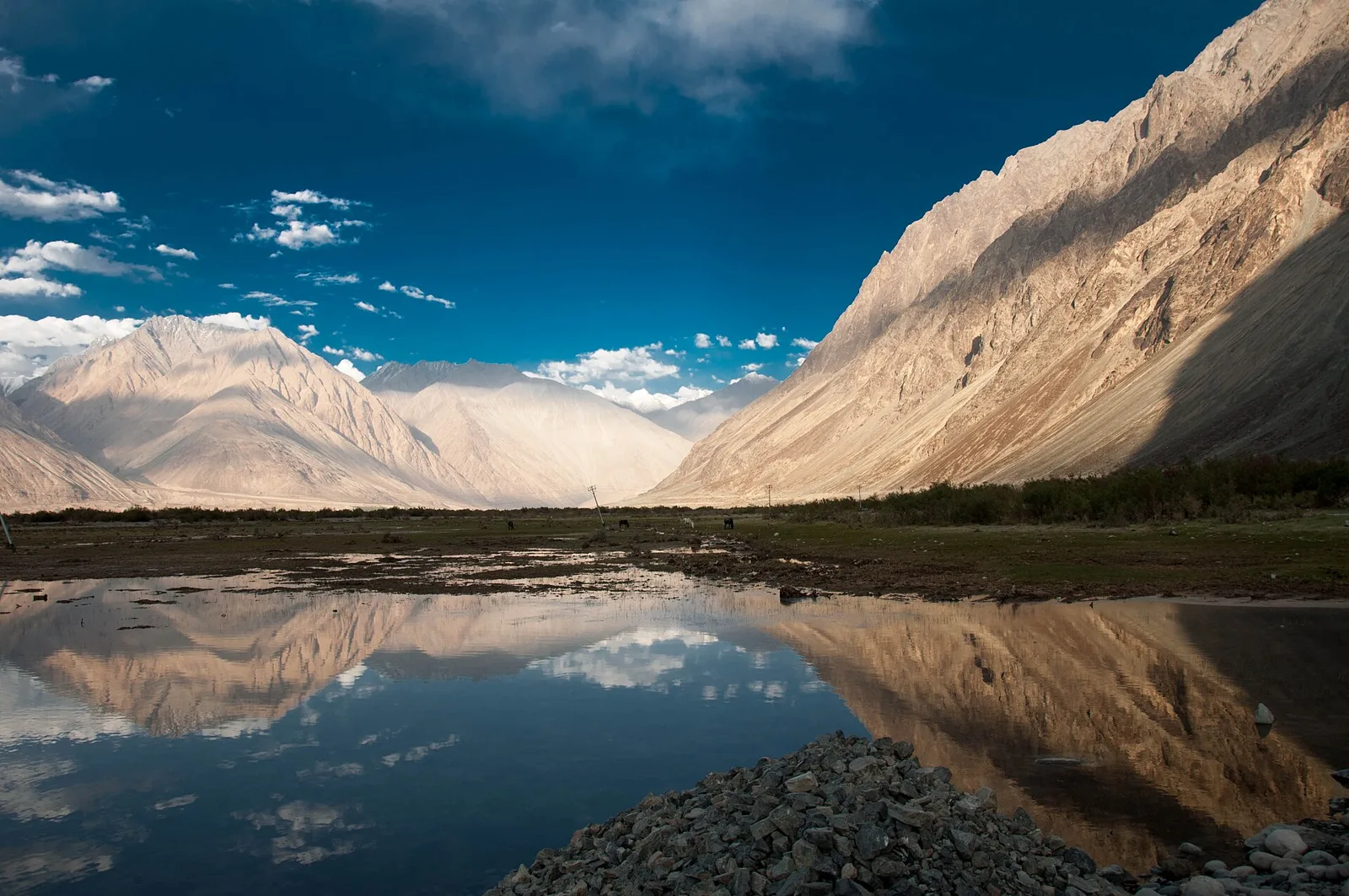
Nubra Valley
Nubra Valley is a historic Ladakhi region of high-altitude river valleys and inhabited settlements, drawing visitors who travel from Leh over Khardung La.
Panamik Hot Springs
Panamik Hot Springs are a thermal-spring attraction in Panamik, a town in Ladakh’s Nubra Valley. Visitors come for the springs; the town also serves as the administrative centre of its tehsil and community development block.
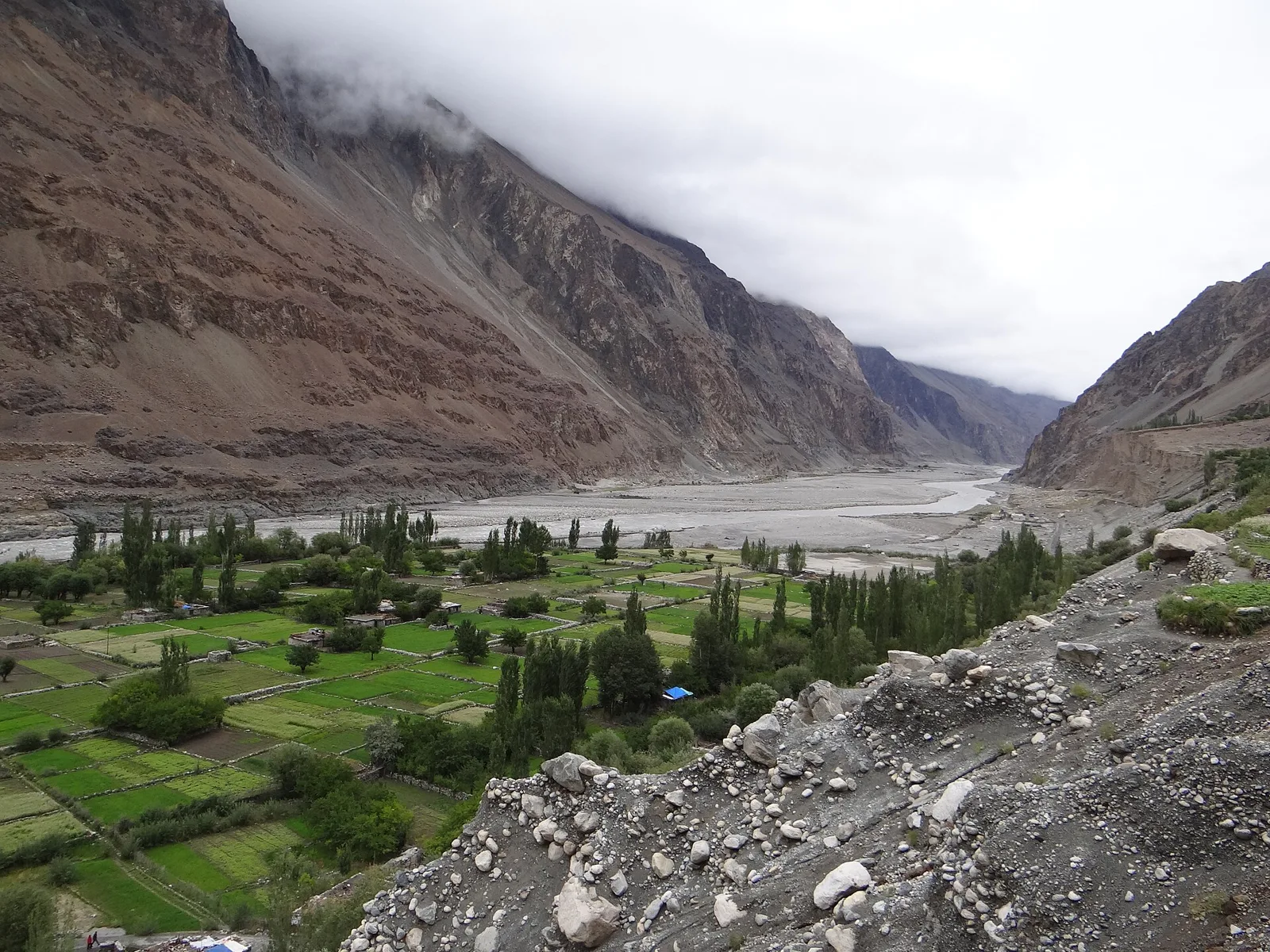
Turtuk
Turtuk is a town in Ladakh’s Nubra district, drawing interest for its Balti population and apricots, as well as its position as a gateway to the Siachen Glacier.
Food in Nubra draws on the wider Ladakhi repertoire: thukpa noodle soup, skyu made with small pieces of dough, steamed momos and tingmo bread. Roasted barley flour, known as tsampa, and butter tea reflect the region’s high-altitude food traditions. Chhurpi cheese and apricot products also appear, though availability varies by village and season. Turtuk is associated with apricot growing and Balti food traditions; ask hosts what local dishes they are preparing rather than expecting a fixed restaurant menu. Small eateries often cook a limited daily selection, making freshly prepared meals a better guide than a long list of advertised dishes.
Nubra’s craft context is best understood within wider Ladakhi traditions rather than as a separate, uniform school. Wool spinning, weaving and knitting produce practical textiles suited to the cold climate. Ladakh is also associated with pashmina, whose raw fibre is especially linked to the Changthang plateau, not specifically to Nubra. Buddhist artistic traditions include thangka painting, monastery murals and carved or painted woodwork; monasteries offer opportunities to appreciate these forms in their religious setting. When buying textiles or souvenirs, ask who made them and where, since goods sold locally are not necessarily locally produced.
Monastic festivals are a highlight of Nubra’s cultural calendar. Diskit Monastery holds its Gustor festival, generally in autumn or winter according to the Tibetan lunar calendar, with masked dances and religious ceremonies. Losar, the Tibetan New Year, is observed in winter by many Ladakhi communities, while other monastery celebrations take place across the wider region at varying times. Dates shift from year to year, so visitors should check locally. Festival periods can bring more visitors to villages and monasteries, and accommodation choices in the valley are limited, making it sensible to arrange stays ahead during busy travel periods.
Nubra’s terrain is shaped by the Shyok and Nubra rivers, which flow through broad valleys beneath the Karakoram ranges. Gravel plains, rocky slopes and cold-desert dunes sit alongside irrigated fields, poplar groves and small settlements. Sand dunes are especially associated with Hunder, while routes farther along the Shyok reach Turtuk and the road toward Panamik follows the Nubra valley. There is little extensive forest, though planted trees and cultivated patches soften some village settings. Distances between settlements and high, exposed roads mean that travel is best planned around road conditions and time for stops.
Nubra has a high-altitude cold-desert climate, with long, very cold winters and a short summer that brings the most accessible road conditions. Summer days are generally more suitable for sightseeing, though evenings can still be chilly and weather can change quickly at high passes. The monsoon has limited influence compared with many parts of India, but rain or snow can still affect roads. Late spring through early autumn is the usual travel season, subject to pass and road access. Pack warm layers, a windproof outer layer, sun protection, sunglasses and sturdy footwear. Winter travel requires preparation for severe cold and possible disruption.
Kushok Bakula Rimpochee Airport in Leh is the usual air gateway for Nubra. There is no railway station in Nubra; rail journeys require a substantial onward road connection to Ladakh. Leh is reached by road through Srinagar and Kargil or from Manali, subject to seasonal conditions. From Leh, the established road approach to Nubra crosses Khardung La, with onward roads serving Diskit, Hunder, Turtuk and Panamik. Taxis, arranged vehicles and locally available shared transport are options, but departures and connections should not be assumed. Acclimatise before crossing high passes, confirm applicable permit requirements, and check current services locally.
Road is the practical way to move around Nubra. The main approach from Leh crosses Khardung La to Diskit, from which roads connect to Hunder, Panamik and settlements along the Shyok toward Turtuk. Taxis and pre-arranged vehicles are commonly used for valley circuits. Local buses and shared vehicles may operate, but services can be limited, change seasonally or fail to connect conveniently with sightseeing plans. Do not assume an onward ride will be available in a village. Confirm road conditions and transport locally, and allow flexibility for delays at high passes.
2 days: Diskit Monastery, Hunder Sand Dunes; sleep in Diskit both nights. 3 days: Diskit Monastery, Hunder Sand Dunes, Turtuk; sleep in Diskit on night one and Turtuk on night two. 4 days: Nubra Valley, Diskit Monastery, Hunder Sand Dunes, Panamik Hot Springs, Turtuk; sleep in Diskit on nights one and two, and Turtuk on night three.
Diskit is the most practical base for a short visit, with access to the monastery, Hunder and onward valley roads. Hunder offers a quieter base near the dunes, while Turtuk suits travellers spending more time in the Shyok valley. Panamik can be visited as an excursion, though overnight choices may be fewer. Accommodation commonly includes guesthouses, hotels, homestays and seasonal camps, with availability varying by village and season. Public or government accommodation may be available in some places but should not be relied on without checking ahead.
Nubra’s high altitude makes gradual acclimatisation in Leh important before crossing Khardung La. Roads can be steep, exposed and affected by snow, rain, landslides or maintenance; check conditions and avoid rushing. Cold, strong sun and dehydration are risks, so layer clothing, use sun protection and drink safe water. Connectivity and medical services are limited outside larger settlements. Keep a respectful distance from Bactrian camels and other animals, and take care around crowds at monasteries and festivals. Access rules can change, particularly for foreign visitors and border areas; confirm current permit requirements through official sources before travel.
- Lehabout 59 km
- Shamabout 60 km
- Kargilabout 131 km
- Zanskarabout 135 km
- Sankooabout 148 km
- Kishtwar · Jammu and Kashmirabout 180 km
- Changthangabout 203 km
Straight-line distance between the centres of each district's destinations; road distance is longer.
Q: How many days should I spend in Nubra? A: Two days can cover Diskit and Hunder, while three or four days allow a more relaxed visit and time for Turtuk or Panamik. Q: When is the best time to visit? A: The usual travel season is late spring through early autumn, when roads are generally more accessible; check current conditions before setting out. Q: Where is the best base in Nubra? A: Diskit is a convenient base for a short circuit. Turtuk is useful for exploring the Shyok valley at a slower pace. Q: How do I get to Nubra? A: Travel first to Leh, then continue by road over Khardung La, usually in a taxi or arranged vehicle; local transport connections can be limited. Q: Is Nubra suitable for families or elderly travellers? A: It can suit travellers who are comfortable with high altitude and long road journeys. Allow time to acclimatise, plan rest breaks and seek medical advice if health conditions make altitude a concern.
This page draws on our 5 destination guides for Nubra and is updated as our team checks it.
Be the first to share photos, stories, advice or a helpful contact for Nubra.
Loading…