
Ghumoopedia — Explore, Discover, Experience
Sign in

Cultural · Uttarakhand

Hilljatra

Pithoragarh, Kumaon

Dates

Last verified 17 November 2026. Confirmed: announced by organisers or government. Provisional: from a published almanac, not yet announced. Seasonal: no date announced.

The complete guide

Hilljatra: everything to know before you go

Also known as
Hill Jatra, Lakhiya Bhoot Festival, Pastoral Pageant of Sor Valley
State & District
Uttarakhand, Pithoragarh District (Sor Valley, Kumour Village)
When
August–September (Bhadrapada month, post-paddy sowing season)
Duration
1 Day (with surrounding 3–4 days of village festivities)
Faith & Community
Kumaoni Agrarian & Pastoral Society (Sor Valley Villagers, Chandel/Palu Dynastic Legacy)
Type
Agricultural Mask Theatre, Pastoral Ritual & Deific Pageant
Entry
Free open-air village square seating for all devotees and visitors
Best for
Folk Mask Theatre, Agrarian Rituals, Cultural Anthropology & Himalayan Heritage

Overview

Hilljatra is one of the most distinctive and visually arresting folk mask theatre festivals of the Kumaon Himalayas, celebrated in the Sor Valley of Pithoragarh district, Uttarakhand. Occurring in August or September following the arduous paddy transplanting season, Hilljatra serves as both an agrarian thanksgiving ritual and an open-air theatrical pageant that honours the hard work of farmers and bullock drivers. The festival's crowning glory is the dramatic appearance of Lakhiya Bhoot, a fierce and revered energetic manifestation of Lord Shiva, who arrives surrounded by wooden-masked performers depicting bullocks, plowers, fishermen, and mythical creatures. Celebrated with intense devotion and community exuberance in Kumour and neighbouring villages, Hilljatra bridges ancient pastoral traditions with living Himalayan folk performance art.

The festival reflects the deep-rooted ecological harmony between mountain agricultural communities and their natural environment. Through mime, satire, and sacred mask performance, Hilljatra commemorates the grueling labor involved in terrace farming while seeking divine protection against crop blights, floods, and wildlife incursions. It is a time when the entire village gathers in the open square, putting aside caste and economic differences to celebrate their shared agrarian identity.
Origins and legend

The origin of Hilljatra is rooted in historical military alliances and regional folk mythology. According to local lore, Kumaoni warriors from the Sor Valley assisted the King of Jumla (in present-day Western Nepal) during a fierce military campaign. Pleased with their valor, the Nepalese monarch offered them royal gifts. Instead of accepting gold or land, four brave brothers of the Mahar clan requested four sacred agricultural masks: the Mahakali mask, the Lakhiya Bhoot mask, the Halya (plower) mask, and the Saanrh (bullock) mask. Upon returning to Pithoragarh, the Mahar brothers instituted the festival of Hilljatra in Kumour village to express gratitude for bountiful harvests and to seek divine protection for their cattle and crops. Over centuries, Lakhiya Bhoot evolved into a guardian deity believed to bless the land with fertility and protect the valley from natural calamities.

Another popular folk belief asserts that Lakhiya Bhoot is a fierce attendant (*Gana*) of Lord Shiva. When Shiva was in deep meditation on Mount Kailash, Lakhiya Bhoot was sent down to the fertile valleys to protect agriculturalists from evil spirits and harsh weather. His fierce appearance represents the raw, untamed power of nature that must be propitiated through devotion and community solidarity.

How it is celebrated

Hilljatra is celebrated in an open village square (*Khala*) packed with thousands of spectators from surrounding Himalayan hamlets. The performance begins with a ceremonial procession of wooden and papier-mâché masked dancers representing every aspect of mountain rural life. Actors wear hand-carved masks portraying traditional plowers (*Halya*), bullocks (*Bail*), fishermen casting nets (*Machhi-mar*), milkmaids, and forest spirits. The climax occurs when Lakhiya Bhoot enters the arena, bound by thick ropes held by sturdy young men. The performer depicting Lakhiya Bhoot undergoes intense spiritual transformation, thrashing violently as he blesses the crowd with sacred grain (*Akshata*) and green shoots (*Jamara*). Spectators bow reverently to receive his divine grace, believing his fierce energy banishes evil forces and guarantees agricultural prosperity.

The Cultural Days

The cultural highlights of Hilljatra showcase the comedic and satirical storytelling of Kumaoni mountain life. Performers enact humorous skits demonstrating the daily struggles of farming in rugged terrain, stubborn bullocks refusing to plow, lazy farmhands being chided, and water disputes resolved with witty banter. Traditional brass instruments including the *Ransingha* (S-shaped horn), *Turi*, *Dhol-Damau*, and *Bhakora* resound through the valley, setting a pulsing rhythm for the masked dancers. Local folk troupes perform *Jhora* and *Chhapteli* community circle dances before and after the main theatrical act, uniting villagers in joyous rhythmic song.

The Pilgrimage Days

While Hilljatra is primarily an agrarian ritual, its sacred pilgrimage aspect centres on the worship of Mahakali and Lakhiya Bhoot. Devotees perform elaborate *Puja* at the village shrine of Kumour early in the morning, offering holy water, bel leaves, raw rice, and seasonal fruits. Farmers bring their prize bullocks adorned with garlands and vermilion to receive blessings. Special prayers are offered for the safety of cattle from wild predators and diseases. Devotees travel from across Pithoragarh, Champawat, and Nepal to witness Lakhiya Bhoot's appearance and collect the sacred grains thrown by him as potent amulets for their homes and granaries.

Food and flavours

Hilljatra is accompanied by wholesome Kumaoni festive cuisine that highlights organic mountain grains and seasonal harvest produce. Families prepare *Dubuk* (a savory mash made from ground local lentils like *Gahat* or *Bhatt*), paired with steaming *Bhaat* (rice) and *Bhang ki Chutney* (hemp seed chutney flavored with lemon and green chilies). Sweet delicacies include *Singal* (spiral deep-fried rice flour fritters made with curd and banana), *Kheer* cooked with fresh cow's milk and mountain cardamoms, and *Arsa* (sweet rice flour jaggery cakes). Community feast distribution (*Prasad*) of boiled chana, fruits, and consecrated sweets nourishes the thousands gathered in the village square.

Music, dance, art and dress

The visual and acoustic tapestry of Hilljatra is deeply evocative of Kumaoni folk art. Masks used in the performance are traditional heirlooms, hand-carved from light Himalayan wood, painted in vivid red, black, and white pigments, and adorned with yak hair beards and wild flower crowns. Actors dress in traditional hemp fiber garments, coarse woolens, and cloth wraps reflecting historical mountain attire. Women attending the event wear colorful Kumaoni *Pichora* (traditional yellow and red printed veils) and large gold *Nath* (nose rings). The music relies entirely on acoustic Kumaoni percussion—*Dhol*, *Damau*, and *Hurka*—driving the feverish tempo of Lakhiya Bhoot's entry.

Where to experience it

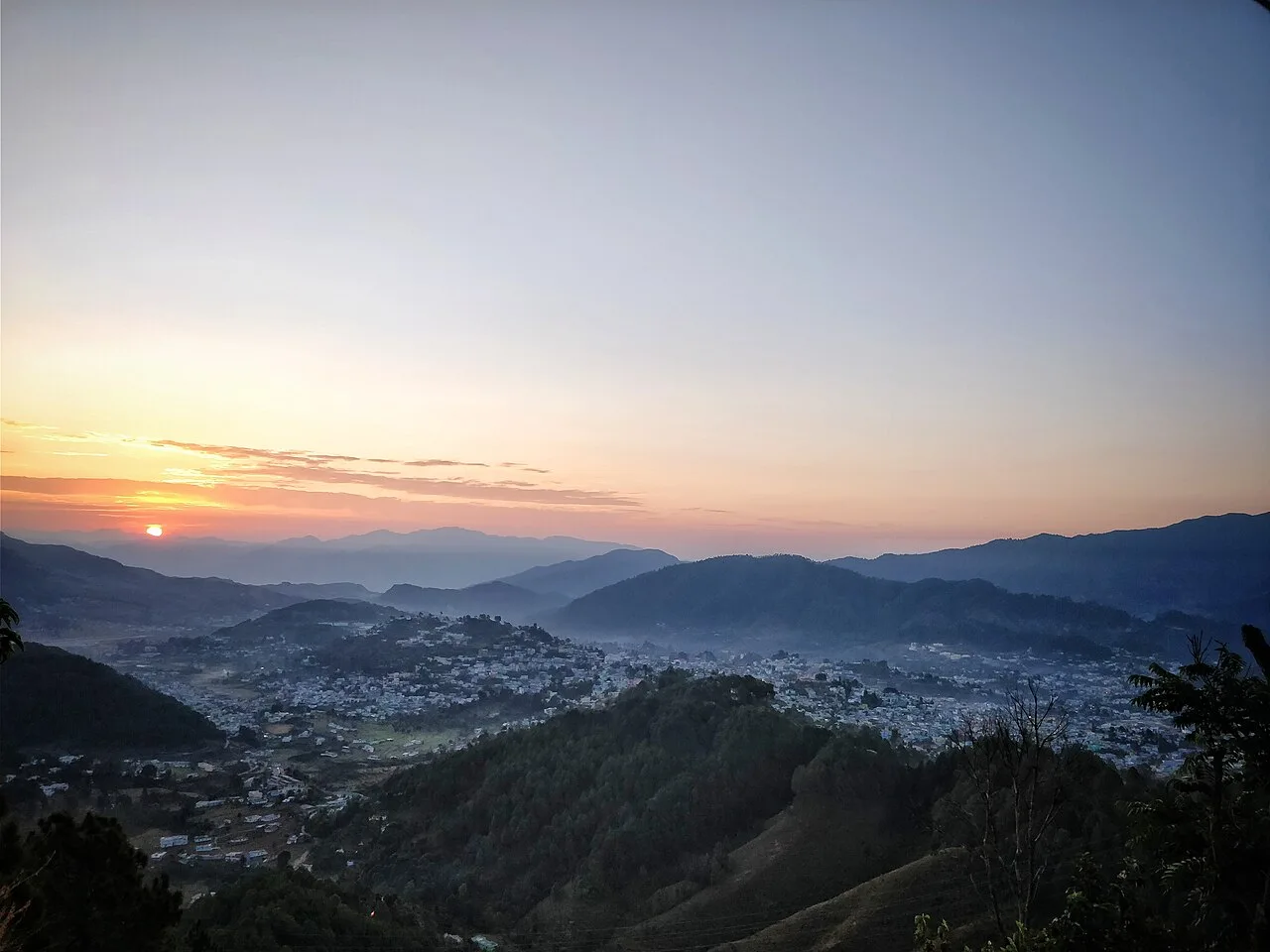
The most authentic and grand venue to experience Hilljatra is Kumour Village, located just 2 kilometres from the main town of Pithoragarh in East Kumaon. Additional authentic celebrations take place in nearby villages across the Sor Valley such as Bisaaj, Bajeti, and Lakhneshwar.

Visitor guide

  • • Getting there: Pantnagar Airport is ~210 km away. Nearest railway station is Kathgodam (~212 km). Shared taxis and buses connect Kathgodam/Haldwani to Pithoragarh (7–8 hours drive through scenic mountain roads).• Where to stay: Kumaon Mandal Vikas Nigam (KMVN) tourist rest houses, private hotels, and homestays are available in Pithoragarh town.• What to wear & pack: Light woolens and waterproof jackets, as late monsoon showers are common in August–September. Sturdy walking shoes are essential for navigating village stone paths.• Etiquette: Respect the sanctity of Lakhiya Bhoot's performance; maintain a respectful distance when he enters the arena, as he moves unpredictably under intense trance states. Seek permission before filming villagers closely.• Safety & comfort: Stay hydrated and be prepared for large crowds in tight village squares. Arrive at Kumour village square by noon to secure a good viewing spot.

Today and tomorrow

In modern times, Hilljatra has gained recognition as a vital living archive of Himalayan folk theatre and indigenous ecological wisdom. Cultural organizations and the Uttarakhand Tourism Development Board have supported local youth clubs in preserving ancient mask-making techniques and documenting traditional scripts. While modern entertainment options proliferate, Hilljatra continues to command complete community participation, standing as a proud symbol of Kumaoni agrarian identity and spiritual resilience.

Nearby

Places to see around the festival