Ghumoopedia — Explore, Discover, Experience
Sign in

Harvest · Uttar Pradesh

Holi

Across India; best known in Mathura, Vrindavan, Barsana and Nandgaon

Dates

Last verified 17 November 2026. Confirmed: announced by organisers or government. Provisional: from a published almanac, not yet announced. Seasonal: no date announced.

The complete guide

Holi: everything to know before you go

Also known as
Festival of Colours, Rangwali Holi, Dhulivandan, Phagwah, Basanta Utsav / Dol Jatra (Bengal), Yaoshang (Manipur)
Where
Across India; most famous in Mathura and Vrindavan, Barsana and Nandgaon (Mathura district), Santiniketan (Birbhum), Jaipur and Udaipur, Anandpur Sahib (Rupnagar) and Imphal
When
Full-moon night of Phalguna (February–March), with colours on the following day.
Duration
Two days nationally; up to a week or more in parts of Braj
Faith and community
Hindu in origin; celebrated by people of many backgrounds
Type
Spring and harvest festival
Best for
Social groups, photographers, adventurous travellers

Overview

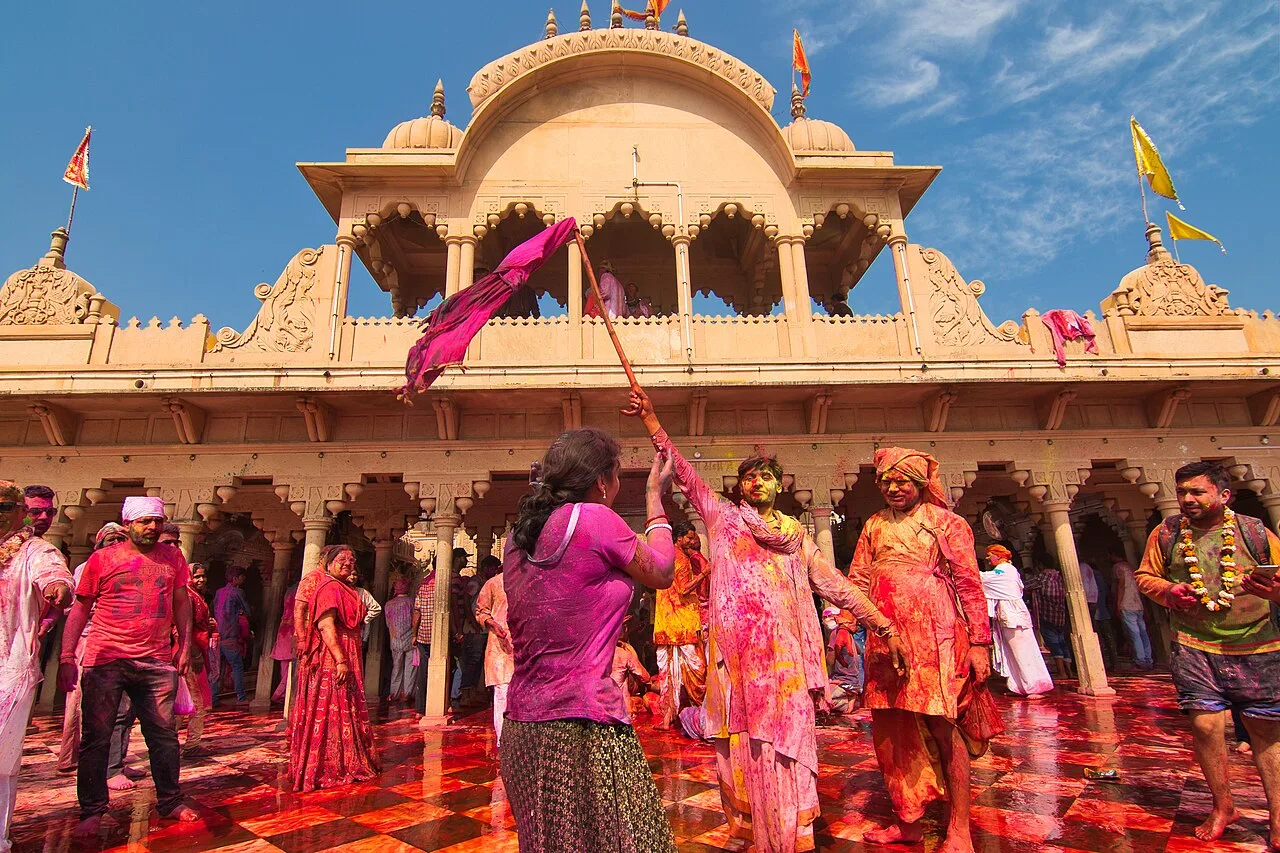
Holi is a riot of colour, music and good humour. On the main day, people throw coloured powder (gulal) and water at friends, family and strangers, dance to drum beats, drink thandai and eat sweets. Social barriers fade, at least for a few hours, and "Bura na mano, Holi hai!" ("Don't mind, it's Holi!") is the festival's catchphrase. The night before, communities gather around a bonfire, Holika Dahan, to mark the victory of good over evil.

Holi is also a welcome to spring and the new agricultural season. Fields are ripening, flowers are blooming and the winter chill is lifting. The mood is playful and open, and the festival is a favourite with young people.
Origins and legend

The best-known legend is that of Prahlada and Holika. The demon king Hiranyakashipu demanded that all worship him, but his son Prahlada remained devoted to Vishnu. After several failed attempts to kill the boy, the king asked his sister Holika, who was immune to fire, to sit with Prahlada on a pyre. By Vishnu's grace, Prahlada emerged unharmed and Holika burned. The bonfire of Holika Dahan recalls this story.

The colours are linked to the Radha-Krishna tradition. According to the story, the young Krishna worried that fair-skinned Radha and her friends would not accept him because of his dark skin, and his mother suggested he colour Radha's face. The playful tradition spread through Braj, the region around Mathura and Vrindavan.

In the south and in some eastern traditions, the festival also remembers Kamadeva, the god of love, whom Shiva burned with his third eye; his wife Rati's prayers are said to have led to his revival. Holi is also a spring-harvest festival, with older agrarian roots than any single story.

How it is celebrated

Holika Dahan (the night before). Communities build bonfires in streets, parks and temple grounds. People gather in the evening, perform a short puja, walk around the fire and throw offerings such as grains and coconut into it. Children and families watch from a safe distance.

Rangwali Holi (the morning after). From morning, people apply gulal on each other's faces, begin with a respectful touch on elders' feet and then spill into the streets. Water guns (pichkaris) and balloons are used, and groups of friends go door to door. Music and dance carry on all day. By afternoon, people clean up, bathe, change and visit family and neighbours to exchange sweets and greetings.

Regional variations.

  • Lathmar Holi (Barsana and Nandgaon, Mathura district): Women playfully beat men with sticks (lathis), who protect themselves with shields, recalling Krishna's visit from Nandgaon to Radha's village Barsana.
  • Phoolon ki Holi (Vrindavan): Priests throw flower petals instead of colours at the Banke Bihari temple.
  • Hola Mohalla (Anandpur Sahib, Punjab): A Sikh festival that falls a day after Holi, with processions, martial arts and mock battles.
  • Royal Holi (Jaipur, Udaipur): Heritage palaces host elaborate evening events with folk music and bonfires.
  • Basanta Utsav (Santiniketan, West Bengal): Students in yellow dance and sing Tagore's songs, a gentle cultural version of the festival.
  • Yaoshang (Imphal, Manipur): A five-day festival with thabal chongba (a communal folk dance) and sports.
  • Shigmo (Goa): Parades with floats and folk dances.
  • Kumaoni Baithaki Holi (Uttarakhand): Classical music gatherings that begin weeks before the main day.

Food and flavours

Holi is a feast of sweets and savouries.

  • Gujiya: deep-fried pastry parcels filled with khoya and dry fruit, the festival's signature sweet.
  • Thandai: a cooling milk drink with almonds, fennel, cardamom and rose; sometimes made with bhang (cannabis), which should be consumed with great caution.
  • Malpua, puran poli, dahi bhalle, papdi chaat, kanji vada and mathri: regional specialties.
  • Dahi vada and kachori with aloo sabzi: popular morning-after dishes.

Families prepare large batches ahead of time and serve them to visitors who arrive, coloured and cheerful, throughout the day.

Music, dance, art and dress

Holi songs are an important tradition, from the Braj folk songs (Holi, Hori and Dhamar) to Bollywood hits. Dhol and nagara drums set the rhythm in many places. People wear white or old clothes that they do not mind staining, and by the end of the day the outfits are a canvas of colour. Women often wear traditional clothes such as kurtas and salwars, while in Bengal's Basanta Utsav, yellow is the colour of the season. Artisans sell pichkaris, masks, caps and powders in street markets in the weeks before the festival.

Where to experience it

  • Mathura and Vrindavan (Uttar Pradesh): the festival begins days before the main date, with temple events across the town.
  • Barsana and Nandgaon (Mathura district): the famous Lathmar Holi.
  • Anandpur Sahib (Rupnagar, Punjab): Hola Mohalla.
  • Jaipur and Udaipur (Rajasthan): heritage-palace celebrations.
  • Santiniketan (Birbhum, West Bengal): the Basanta Utsav.
  • Varanasi (Uttar Pradesh): Rang Bhari Ekadashi and street Holi in the ghats area.
  • Delhi and Mumbai: large organised events, including community Holi parties.

Visitor guide

  • Planning. Holi is a public holiday in most states. Big festival towns like Mathura and Vrindavan are crowded, and hotels book out early. Expect traffic restrictions and limited transport on the day.
  • What to wear. Wear clothes you do not mind ruining, preferably full-sleeved, along with old shoes or sandals. Apply coconut or mustard oil on your skin and hair beforehand so that colours wash out more easily. Protect your eyes with sunglasses and keep your phone in a waterproof pouch.
  • Colours and health. Choose herbal or skin-safe colours, as some commercial powders contain harsh chemicals. Avoid colour in the eyes, nose and mouth, and wash immediately if it gets there.
  • Consent and conduct. The festival's spirit is playful, but consent matters. Do not throw colours at people who do not want to take part, and respect women's boundaries. Bhang and alcohol can cause problems in crowds, so go with trusted companions.
  • Water. Many cities encourage dry Holi or reduced water use. Use only what you need.

Today and tomorrow

Holi has become a global brand, with colour runs and festivals held in many countries. Within India, there is growing attention to organic colours made from flowers, turmeric and beetroot, and to saving water, protecting stray animals and preventing harassment. Community groups run safe-Holi campaigns, and some temples and neighbourhoods hold gentler flower-petal or dry-colour celebrations. At its best, the festival still does what it has always done: break routine, mend quarrels and bring people together.

Nearby

Places to see around the festival