Ghumoopedia — Explore, Discover, Experience
Sign in

Tribal · Nagaland

Hornbill Festival

Naga Heritage Village, Kisama, near Kohima

Dates

Last verified 17 November 2026. Confirmed: announced by organisers or government. Provisional: from a published almanac, not yet announced. Seasonal: no date announced.

The complete guide

Hornbill Festival: everything to know before you go

Also known as
The "Festival of Festivals"
State and district
Nagaland, Kohima district (Kisama Heritage Village, about 12 km from Kohima)
Duration
10 days
Faith and community
Showcase of the Naga tribes of Nagaland; Nagaland is largely Christian today, while the festival celebrates shared tribal heritage
Type
State cultural festival
Started
2000
Best for
Culture and music lovers, food explorers, photographers

Overview

Nagaland is home to many tribes, each with its own language, dress, songs and customs. The Hornbill Festival brings them together for ten days in December on a forested hillside near Kohima. Warriors in feathered headdresses and beaded necklaces perform war dances; singers sing in a dozen languages; cooks serve smoked pork, fiery chillies and sticky rice; and rock bands play under pine trees at night. The festival is named after the hornbill, a forest bird that features in Naga folklore and whose feathers decorate ceremonial headgear.

For many visitors, it is the best single introduction to the cultures of the north-east. For Nagas, it is a living classroom where young people learn from elders and a place to meet kin from other tribes.
Origins and legend

Traditional Naga life was organised around agricultural calendars, and each tribe had its own festivals marking sowing, harvest and renewal, such as Sekrenyi among the Angami, Moatsu among the Ao and Aoleang among the Konyak. Missionary influence from the late nineteenth century and the changes of the twentieth century reshaped these practices, and many younger Nagas had less contact with older traditions.

The Government of Nagaland launched the Hornbill Festival in December 2000, organised by the state tourism and art and culture departments, to revive and protect Naga heritage, encourage meetings between tribes, and showcase the state's culture to India and the world. The hornbill was chosen as a symbol because it is admired across Naga communities for its beauty and its place in traditional stories. The festival started modestly and has grown into one of India's best-known cultural events, with partner countries and states taking part in recent years.

How it is celebrated

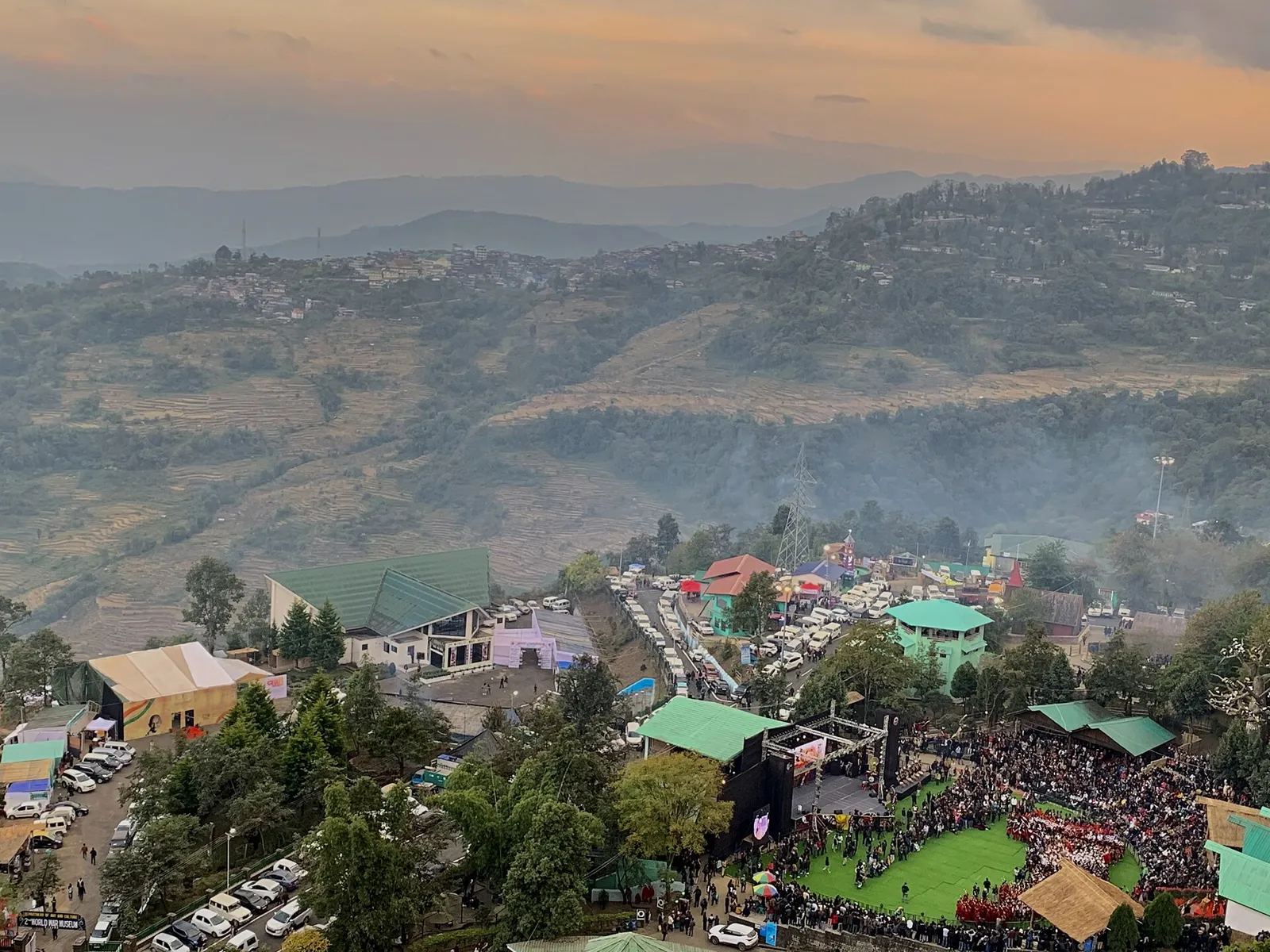
The heart of the festival is the Naga Heritage Village at Kisama, where each major tribe has a traditional house called a morung, a communal hall that historically served as a youth dormitory and meeting space. The morungs are built in the architecture and decoration of each tribe, with carved posts, thatched roofs and tools on display.

A typical day runs like this:

  • Morning: Performers gather in the main arena (Naga Heritage Village arena) for tribal dances, war cries, folk songs and parades. Each tribe presents its signature performance in turn.
  • Daytime: Visitors move between morungs, meet elders, watch craft demonstrations, taste traditional dishes and join sports displays such as indigenous wrestling, archery, and tug-of-war.
  • Evening: The festival turns to music. The Hornbill National Rock Contest is a popular highlight, and concerts and cultural shows follow. A night bazaar in Kohima keeps the city lively after dark.

Other events include food contests (the Naga chilli-eating challenge is a crowd favourite), a Hornbill Carnival in Dimapur, a Hornbill Ball, vintage car rallies, art exhibitions, literature events and sessions on fashion, film and photography. The programme changes from year to year, so check the official schedule.

Food and flavours

Naga cuisine is bold, smoky and mostly simple, built from local ingredients, fermented foods and hot chillies. Look for:

  • Smoked pork with bamboo shoot: the signature Naga dish, often slow-cooked with fermented ingredients.
  • Axone (fermented soybean): pungent and loved, used in chutneys and stews.
  • Naga king chilli (bhut jolokia): among the hottest chillies in the world; try it with caution.
  • Sticky rice cooked in banana leaf, and boiled vegetables with fresh herbs.
  • Rice beer: a traditional drink in many Naga communities, served at the festival; follow local advice on where and how to drink it.

Vegetarian travellers should ask in advance, as meat is central to many dishes, though vegetable and rice options are available.

Music, dance, art and dress

The festival is a visual feast. Men wear headdresses of hornbill and other feathers, boar tusks, brass and cane, with spears, shields and daos (traditional blades). Women wear colourful hand-woven shawls with tribe-specific patterns, along with beaded necklaces and bracelets. Dances range from the energetic war dances of the Konyak to the graceful harvest songs of the Ao and Angami. Many songs are sung in call-and-response style, often unaccompanied or with bamboo mouth organs and log drums. The crafts on sale include hand-woven shawls, cane and bamboo baskets, wood carvings, beaded jewellery and bamboo mugs.

Where to experience it

  • Kisama Heritage Village: the main venue, in the hills about 12 km from Kohima.
  • Kohima: the capital, with its night bazaar, local markets, the Kohima War Cemetery (commemorating the 1944 Battle of Kohima) and the State Museum.
  • Dimapur: the commercial hub and main gateway, with Hornbill Carnival events.
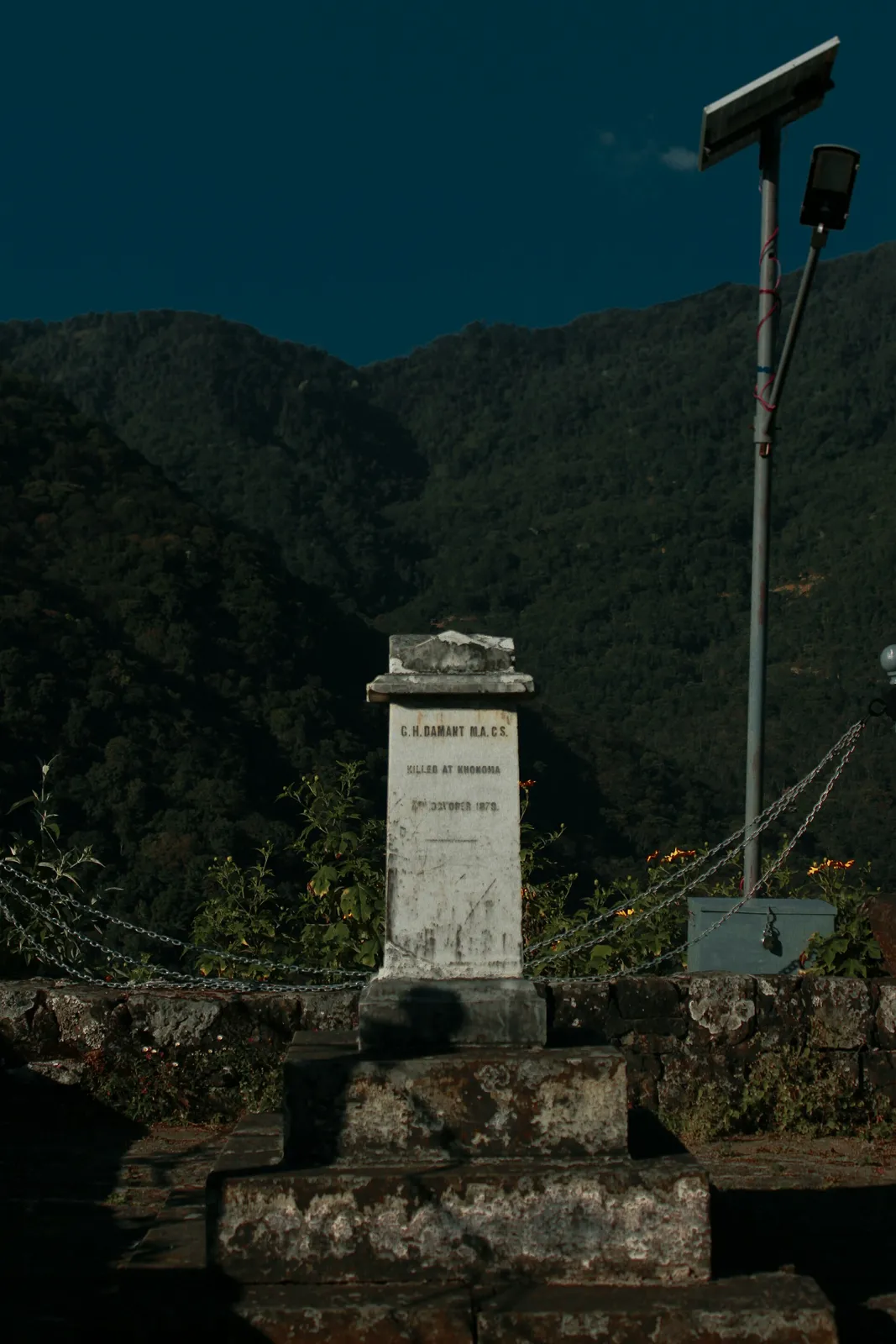
  • Khonoma village (about 20 km from Kohima): an Angami village known for its terraced fields, its history and its community conservation efforts.
  • Mon, Wokha, Zunheboto and other districts: host events or extensions in some years.

Visitor guide

  • Getting there. Dimapur has the state's only railway station and airport, about 70–75 km from Kohima, and shared taxis and buses cover the drive in around three hours. Kisama is a further short drive from Kohima.
  • Permits. Indian visitors from outside Nagaland generally need an Inner Line Permit (ILP), which can be obtained online or at designated points. Foreign visitors have their own registration requirements. Rules change, so check the official Nagaland government website before you travel.
  • Where to stay. Rooms in Kohima and Kisama fill up months in advance. Homestays in nearby villages are an excellent way to meet local families. Book early and be ready for simple facilities.
  • Weather. December in Kohima is cold and dry, with days of about 10–20°C and nights near freezing in some years. Pack layers, a warm jacket, gloves and sturdy shoes.
  • Tickets and rules. The festival has a modest entry fee, and some camera permits or passes may be charged. Kisama is a declared plastic-free zone, so bring a reusable bottle and avoid single-use plastic.
  • Etiquette. Always ask before photographing performers and elders, and accept a polite no. Do not touch ceremonial items. Dress modestly, and treat the morungs as living cultural spaces rather than stage sets. Respect that the state is largely Christian, with church-going an important part of life.

Today and tomorrow

The Hornbill Festival has become the engine of Nagaland's tourism and has helped inspire a wider revival of tribal arts. Younger Nagas increasingly learn dances, songs and crafts for the festival, and artists, designers and chefs use it as a platform. The state has moved to make it greener, with a plastic-free policy, and is adding new experiences such as astro-tourism and homestay circuits. Challenges include crowd management, accommodation shortages and balancing commercial interests with cultural authenticity. Visitors can support the festival by buying directly from artisans, staying in community homestays and travelling beyond Kohima to see everyday Naga life.

Nearby

Places to see around the festival