
Ghumoopedia — Explore, Discover, Experience
Sign in

Religious · Uttar Pradesh

Lathmar Holi

Barsana and Nandgaon, Mathura district

Dates

Last verified 17 November 2026. Confirmed: announced by organisers or government. Provisional: from a published almanac, not yet announced. Seasonal: no date announced.

The complete guide

Lathmar Holi: everything to know before you go

Also known as
Barsana Lathmar Holi, Stick-Striking Holi of Braj
State & District
Uttar Pradesh, Mathura District (Barsana & Nandgaon Villages)
When
February–March (Navami tithi of Phalguna Shukla Paksha, 4–5 days before main Holi)
Duration
2 Days (Day 1 in Barsana, Day 2 in Nandgaon)
Faith & Community
Hinduism (Vaishnavism, Gopa & Gopi Lineage, Braj Community)
Type
Folk Reenactment, Playful Martial Tradition & Color Festival
Entry
Free public viewing in village streets and temple courtyards
Best for
Stick-and-Shield Holi Battle, Radha Rani Temple Celebrations, Gulal Powder Showers & Braj Folk Songs

Overview

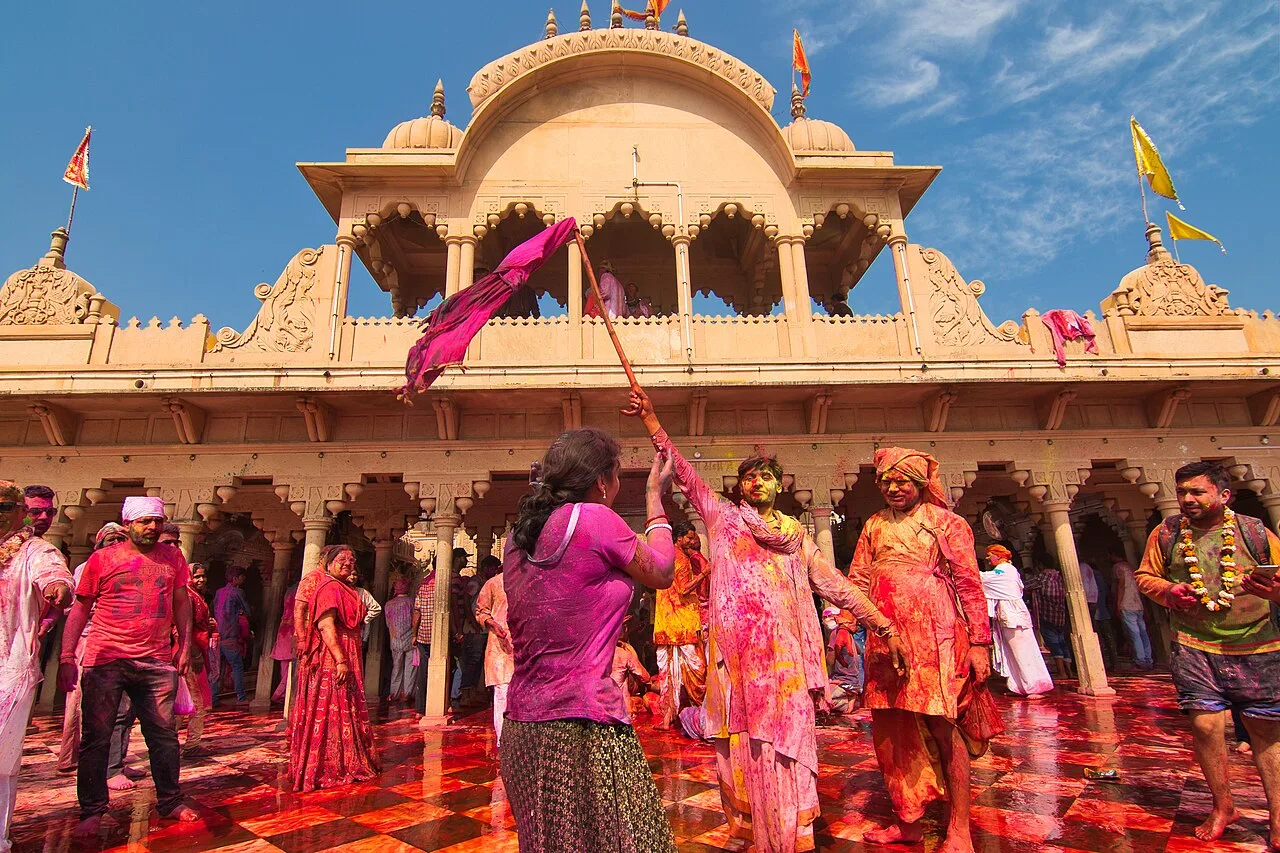
Lathmar Holi ('Stick-striking Holi') is one of the most famous, vibrant, and unique cultural celebrations of India, celebrated in the twin towns of Barsana (the birthplace of Radha) and Nandgaon (the childhood home of Lord Krishna) in the Braj region of Mathura district, Uttar Pradesh. Occurring several days prior to the main festival of Holi, Lathmar Holi is a playful, high-energy reenactment of a divine mythological episode: men from Nandgaon (*Huriyares*) travel to Barsana to playfully tease the women (*Huriyarins*), who retaliate by beating the men with thick wooden sticks (*Lathis*), while the men defend themselves with leather shields. Filled with showers of herbal red and yellow colors (*Gulal*), traditional *Rasiya* folk singing, and ecstatic devotional joy, Lathmar Holi attracts photographers and cultural enthusiasts from across the globe.

The festival reflects the unique ethos of Braj culture, where divine devotion is expressed through *Madhurya Bhava* (sweet, intimate love). Unlike conventional celebrations where social hierarchies dominate, Lathmar Holi empowers women as the dominant, playful aggressors who playfully beat men with wooden sticks, while men humbly bow and shield themselves, celebrating the supremacy of Radha's divine grace.
Origins and legend

The legend behind Lathmar Holi traces back to the divine love of Lord Krishna and Radha in the Dwapara Yuga. According to popular Braj lore, Krishna, who lived in Nandgaon, visited his beloved Radha's village of Barsana along with his cowherd friends (*Gopas*) during spring. Krishna playfully teased Radha and her friends (*Gopis*). Taking friendly offense, Radha and the women of Barsana took up wooden sticks to chase Krishna and his friends out of the village. The young men held up wooden or leather shields to protect themselves. This playful romantic skirmish became an enduring annual ritual, celebrating the sweet, fearless, and egalitarian spirit of divine love in Braj.

Traditional songs sung during Lathmar Holi recount every detail of this celestial prank, celebrating how Radha's sakhis outwitted Krishna and made him dress in a woman's sari before allowing him to leave. This legendary victory of the gopis is reenacted with immense pride by the women of Barsana every year.

How it is celebrated

Lathmar Holi unfolds over two intense days. On Day 1, men from Nandgaon march to Barsana, where they are welcomed with gulal colors and sweets at the hilltop Radha Rani Temple (Shriji Temple). As the men enter the narrow stone lanes of Barsana singing teasing *Hori* songs, women dressed in bright traditional saris with veiled faces emerge holding thick wooden sticks. The men kneel and hold heavy shields above their heads while the women strike the shields forcefully with sticks. The atmosphere is loud, energetic, and joyous, with no anger or malice—men who are hit consider it a sign of good fortune and Radha's blessing. On Day 2, the roles reverse: men from Barsana travel to Nandgaon, where the women of Nandgaon beat them with sticks in the courtyard of the Nand Bhavan Temple.

The Cultural Days

The cultural ambiance of Lathmar Holi is infused with centuries-old *Braj Rasiya* music and folk poetry. Dholak players and brass bands lead the processions through narrow village alleys. Before the stick battle begins, participants consume *Thandai*—a refreshing cold milk beverage flavored with almonds, pistachios, saffron, rose petals, and traditional spices. Intricate color powders made from organic flower extracts like marigold (*Genda*) and flame-of-the-forest (*Tesu*) rain down from rooftops, turning the sky into a kaleidoscope of red, orange, pink, and yellow.

The Pilgrimage Days

For Vaishnava devotees, participating in Lathmar Holi is a profound pilgrimage act of surrendering to *Radha-Krishna Bhakti*. Devotees climb the 250 stone steps to the Radha Rani Temple in Barsana to seek blessings. Standing in the temple courtyard as priests shower blessed *Prasadi Gulal* and flower petals onto the crowd is believed to cleanse the heart of ego and fill the soul with divine love.

Food and flavours

Food during Lathmar Holi highlights the rich dairy traditions of Braj. Visitors enjoy cold *Thandai*, piping hot *Gujiya* (crispy sweet dumplings filled with khoya and dry fruits), *Malpua* dipped in sugar syrup, *Bedmi Puri* with spicy potato curry, and fresh *Imarti*. Halwais in Barsana prepare huge cauldrons of rabri and saffron milk to energize the crowds.

Music, dance, art and dress

The attire for Lathmar Holi is striking. Women wear traditional heavy *Ghagra-Choli* or colorful saris with protective head coverings, while men wear traditional white turbans, dhotis, and padded jackets to absorb the force of the wooden sticks. Music is non-stop, featuring *Daph* tambours, *Cymbals*, *Dholak*, and energetic choruses singing *Aaj Biraj Mein Holi Re Rasiya*.

Where to experience it

The key locations are Barsana (Radha Rani Temple courtyard & main village lanes) on Day 1, and Nandgaon (Nand Bhavan Temple premises) on Day 2, located in Mathura District, Uttar Pradesh.

Visitor guide

  • • Getting there: Nearest airport is Agra (~100 km) or New Delhi (~150 km). Mathura Junction is the nearest major railway station (~45 km from Barsana).• Where to stay: Hotels and guest houses in Mathura or Vrindavan (40–45 km away); basic ashrams exist in Barsana.• What to wear & pack: Wear old white cotton clothes you don't mind staining permanently. Protect cameras and phones with waterproof plastic covers. Apply coconut oil to hair and skin for easy color removal.• Etiquette: Expect dense, intense crowds and heavy color spraying. Respect local women and performers; maintain polite boundaries.• Safety & comfort: Wear protective eyewear or sunglasses to shield eyes from flying gulal powder.

Today and tomorrow

Today, Lathmar Holi is celebrated as a global cultural icon of Uttar Pradesh Tourism. Efforts are underway to promote 100% natural flower-based colors and preserve the authentic traditional folk music of Braj for future generations.

Nearby

Places to see around the festival