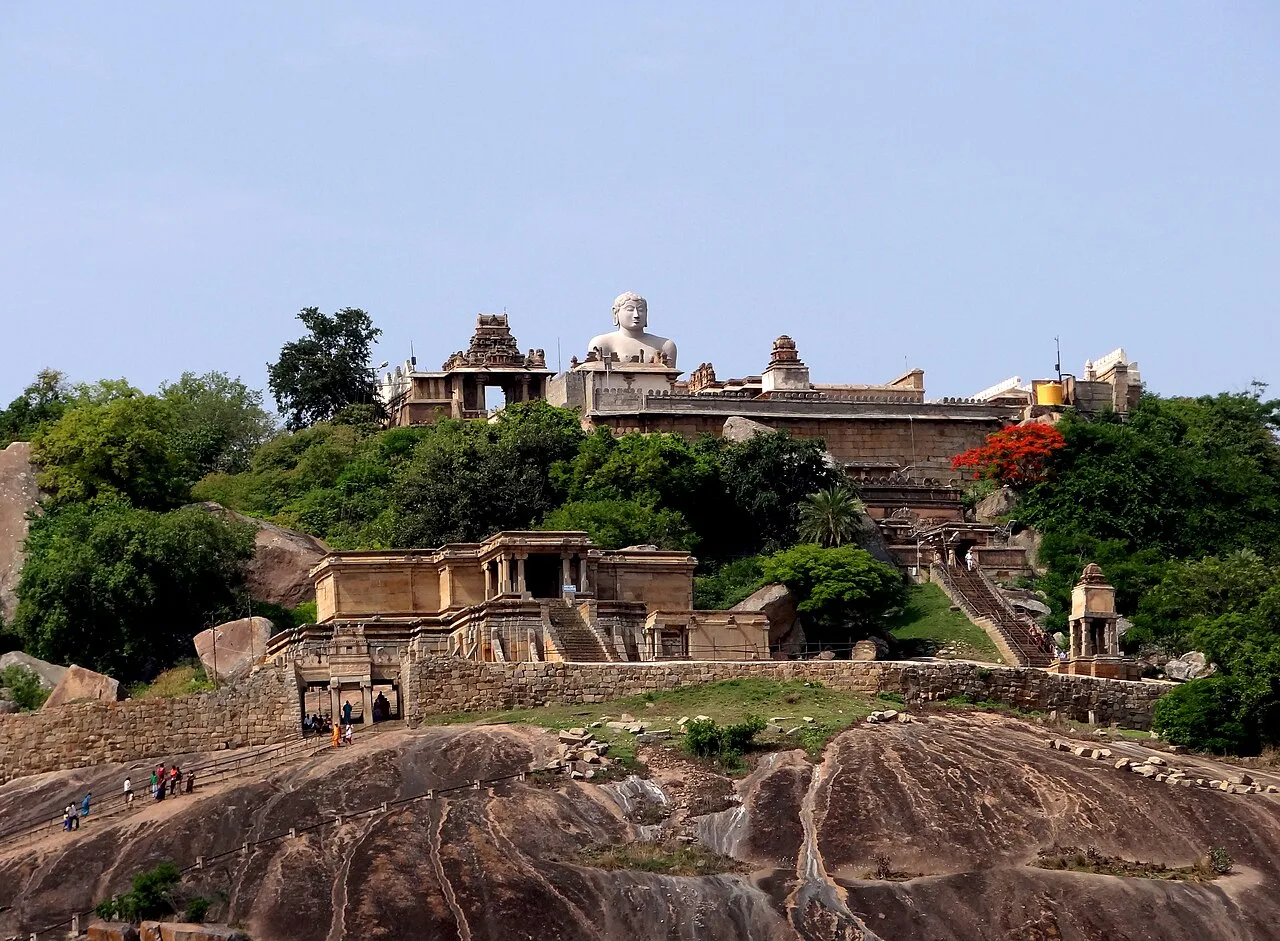
Preparations for Mahamastakabhisheka begin nearly two years in advance. A massive temporary township featuring hundreds of eco-friendly pilgrim colonies (*Jain Nagar*), mega kitchens (*Bhojanashalas*), medical centers, and transportation networks is established at the foot of Vindhyagiri and Chandragiri hills. German ring-lock scaffolding capable of supporting thousands of tons is engineered behind the 57-foot statue without touching or damaging the granite monolith.
The festival opens with holy *Panchakalyana* rituals and discourse by senior Digambara Acharyas. The core anointing event spans multiple days. Devotees who have secured sacred *Kalashas* through ceremonial bidding or holy lotteries ascend the scaffolding carrying brass, silver, and gold pots filled with consecrated liquids. To the chanting of sacred Jain mantras (*Namokar Mantra*) and blowing of conch shells, the anointing begins: first with pure holy water, followed by streams of rich milk (*Ksheerabhisheka*), golden sugarcane juice, coconut water, paste of yellow turmeric (*Haridrabhisheka*), red sandalwood paste (*Chandanabhisheka*), saffron infusion, and finally a shower of 1008 silver coins and fresh flower petals. The changing colors of the statue under cascading fluids create an unforgettable visual transformation.
The Cultural Days
Beyond the central ritual atop Vindhyagiri, Shravanabelagola transforms into a vibrant hub of international Jain culture and scholarly exchange throughout the 10-day event. Daily schedules feature national seminars on Ahimsa (non-violence), peace studies, and ancient Prakrit and Kannada literature. Cultural pavilions showcase classic Jain art, palm-leaf manuscript preservation, bronze icon casting, and traditional *Yatra* plays depicting the life of Lord Bahubali.
Every evening, the entire Vindhyagiri Hill and the colossal statue are illuminated with state-of-the-art architectural lighting and 3D projection mapping, telling the story of Bahubali's renunciation. Classical music concerts featuring renowned Carnatic and Hindustani vocalists, instrumental veena, and devotional *Bhajan* groups perform at the foothill auditoriums, while street pageants celebrate ancient Jain history.
The Pilgrimage Days
For Jain pilgrims, climbing the 620 stone steps carved directly into the bare granite face of Vindhyagiri Hill during Mahamastakabhisheka is a profound act of penance and devotion. Barefoot pilgrims, including elderly devotees and young families, climb the steps early in the morning while chanting 'Bhagwan Bahubali Ki Jai' and 'Ahimsa Paramo Dharma'.
Pilgrims also visit the adjacent Chandragiri Hill, which houses 14 ancient Jain *Basadis* (temples) dating from the 3rd century BC to the 12th century AD, including the memorial shrine of Emperor Chandragupta Maurya, who spent his final years here practicing *Sallekhana* under the guidance of Acharya Bhadrabahu. Visiting the sacred foot-impressions (*Padukas*) of Acharya Bhadrabahu and paying respects to Digambara monks (*Muni Sanghs*) who walk barefoot across India to reach Shravanabelagola form an integral part of the pilgrimage.