Ghumoopedia — Explore, Discover, Experience
Sign in

Harvest · Andhra Pradesh

Sankranti (Bhogi, Sankranti, Kanuma)

Godavari districts and Konaseema

Dates

Last verified 17 November 2026. Confirmed: announced by organisers or government. Provisional: from a published almanac, not yet announced. Seasonal: no date announced.

The complete guide

Sankranti (Bhogi, Sankranti, Kanuma): everything to know before you go

Also known as
Pedda Panduga (The Big Festival), Makara Sankranti, Bhogi, Kanuma, Mukkanuma
State & District
Statewide with grandest scale in Konaseema, East Godavari, West Godavari, Kakinada, Krishna
When
Mid-January (January 13 to 16 every year; fixed solar calendar)
Duration
3 to 4 Days (Bhogi, Makara Sankranti, Kanuma, Mukkanuma)
Faith & Community
Agrarian & Telugu Hindu Community
Type
Grand Harvest, Solar & Ecological Thanksgiving Festival
Entry
Free village fairs, street events, and open-air Prabhala Teertham; minor ticket fees for local carnivals
Best for
Rural heritage tours, traditional bullock decorations, kite flying, folk dances, agricultural feasts

Overview

Makar Sankranti—known affectionally across Andhra Pradesh as 'Pedda Panduga' (The Great Festival)—is the undisputed king of Telugu agricultural and cultural celebrations. Spanning four glorious days in mid-January, Sankranti marks the precise astronomical transition (Sankramana) of the Sun into the zodiac sign of Makara (Capricorn). This celestial shift heralds the start of 'Uttarayana'—the sacred six-month northern movement of the sun, bringing warmer days, golden harvests, and spiritual rejuvenation.

While Sankranti is observed across India, nowhere is it celebrated with such dazzling color, deep agrarian gratitude, and lavish hospitality as in the lush Godavari delta districts—Konaseema, East Godavari, West Godavari, and Kakinada. Surrounded by vast paddy fields, swaying coconut groves, and crisscrossing river channels, villages transform into vibrant festive arenas. Across four dedicated days—Bhogi (cleansing and renewal), Makara Sankranti (sun worship and ancestral reverence), Kanuma (gratitude to cattle and agrarian tools), and Mukkanuma (community feasting)—Andhra Pradesh showcases its rich folk arts, traditional gastronomy, and eternal bond with Mother Earth.

Origins and legend

Astronomically, Sankranti is one of the few Hindu festivals anchored strictly to the solar calendar. The festival honors Surya Bhagavan (the Sun God), whose radiant energy enables agricultural growth and sustains terrestrial life. Ancient Puranas declare that taking a holy dip in sacred rivers during the Uttarayana transition bestows freedom from disease and grants spiritual liberation.

Mythologically, each of the four days holds distinct scriptural significance. The first day, Bhogi, is dedicated to Lord Indra, the deity of rain and clouds. Farmers offer gratitude to Indra for timely monsoon rains that nurtured their crops. Legend also associates Bhogi with the burning of old mental baggage and ego, symbolized by the dawn bonfire.

The third day, Kanuma, is rooted in the Bhagavata Purana legend of Lord Krishna and Govardhan Hill. When the villagers of Vrindavan prepared a grand sacrifice for Lord Indra, young Krishna persuaded them instead to worship Govardhan Hill and their cattle, which directly sustained their livelihoods. Enraged, Indra unleashed torrential downpours to drown the village. Krishna effortlessly lifted the entire Govardhan Mountain on his little finger for seven days, providing shelter to all villagers and cattle. Realizing Krishna's supreme divinity, Indra conceded defeat. Kanuma commemorates this divine protection and celebrates cattle as sacred partners of humanity.

How it is celebrated

Sankranti celebrations are meticulously structured across four distinct days:

• Day 1: Bhogi – Pre-dawn bonfires ('Bhogi Mantalu') are lit at village crossroads and outside homes. Families toss discarded wooden items, old mats, and dried cow-dung cakes into the flames, symbolizing the destruction of past negativity and welcoming fresh beginnings. In the evening, elders perform 'Bhogi Pallu' for young children: a mixture of regi fruits (Indian jujube), flower petals, sugarcane bits, and coins is showered over children's heads to protect them from the evil eye.

• Day 2: Makara Sankranti (Pedda Panduga) – The main festival day begins with ritual morning baths, wearing new silk clothes, and preparing fresh harvest offerings. Women draw breathtaking, multi-colored Muggulu framed with 'Gobbemmalu'—spherical balls of fresh cow dung adorned with yellow marigold flowers, turmeric, and kumkum. Freshly harvested rice cooked with jaggery, milk, and cardamom ('Pongali') is boiled outdoors in decorated clay pots until it overflows, accompanied by joyous shouts of 'Sankranti Pongalo Pongal!' symbolizing overflowing abundance.

• Day 3: Kanuma – Dedicated entirely to cattle. Farmers bathe their bulls and cows in local rivers, paint their horns with bright crimson and emerald paints, tie metallic bells and brass trinkets around their necks, and feed them sweet Pongal. In the Godavari district of Konaseema, villages host the world-famous 'Jaggannathota Prabhala Teertham'—a 400-year-old tradition where towering, 40-foot bamboo structures ('Prabhala') embellished with peacock feathers and religious icons are carried on shoulders across paddy fields and river streams.

• Day 4: Mukkanuma – A day of joyful family gatherings, rural sports, and lavish non-vegetarian feasting across non-vegetarian communities, marking the conclusion of the harvest festival.

The Cultural Days

During Sankranti, rural Andhra Pradesh comes alive with iconic folk figures:

1. Haridasu – Mystical Vaishnavite mendicants dressed in saffron robes, wearing brass ankle bells, playing 'Chidatalu' cymbals, and balancing a decorated copper bowl ('Akshaya Patra') on their heads. They move from house to house singing Annamacharya keertanas without stopping or lowering their bowl, receiving rice and jaggery donations from reverent homemakers.

2. Gangireddulu – Decorated, trained bulls led by traditional folk musicians playing the Nadaswaram and Sannai. The bulls perform charming dancing steps, bow before household elders, and receive blessings and old clothes.

3. Patang Utsav – The skies over cities and villages fill with thousands of colorful paper kites, creating thrilling aerial battles among youth.

The Pilgrimage Days

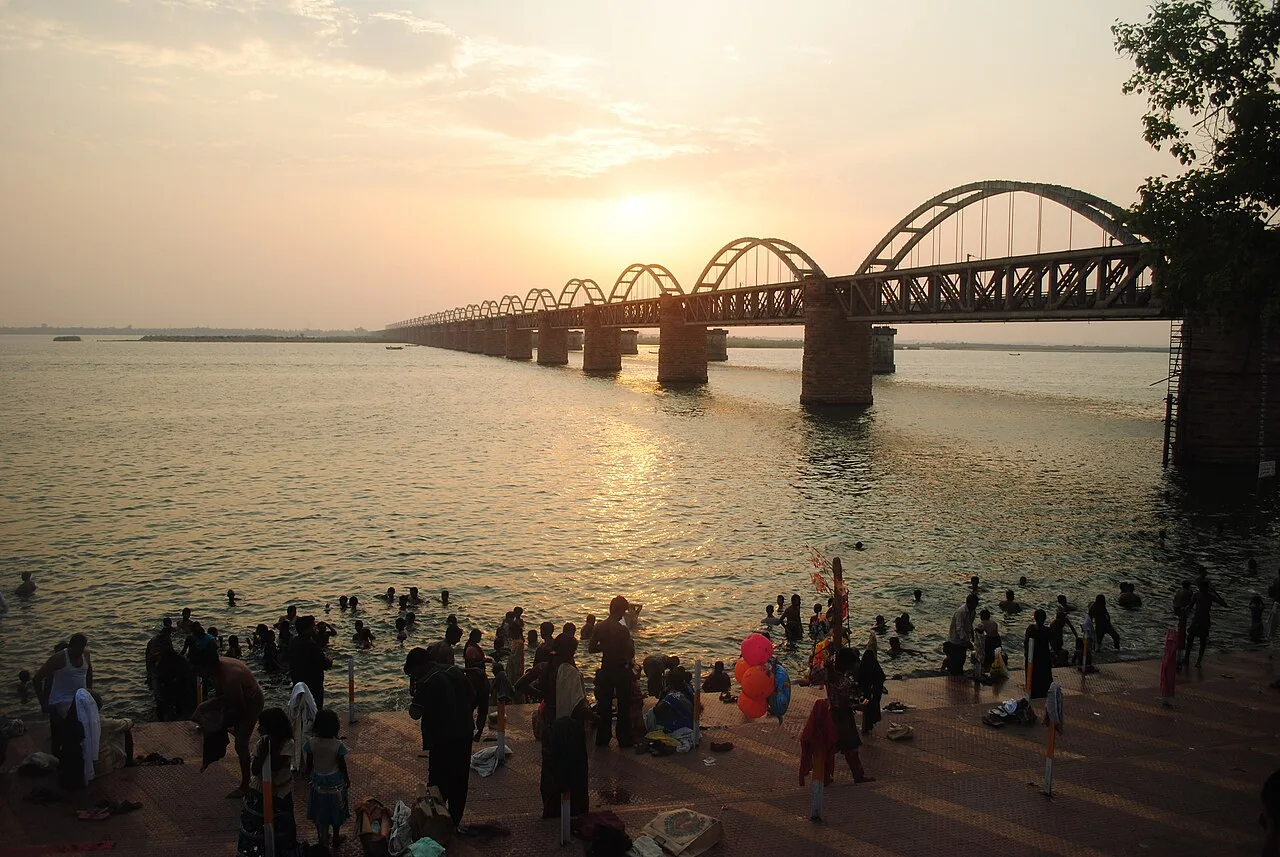
Devotees undertake holy river dips ('Pushkara Snanam') at the sacred confluences of the Godavari and Krishna rivers. Renowned pilgrimage points include the Pushkar Ghat in Rajamahendravaram, Kovvur, Antarvedi (where the Vashishta Godavari meets the Bay of Bengal), and Draksharamam. Ancestral homage rituals ('Pitru Tarpanam') are performed on riverbanks to seek blessings from departed forebears.

Food and flavours

Sankranti features the most elaborate sweet and savory culinary spread of the Telugu calendar:

• Ariselu – Deep-fried golden discs made from freshly ground raw rice flour and melted organic jaggery, coated with sesame seeds or poppy seeds, pressed in pure ghee.• Bellam Gavvalu – Shell-shaped crispy dough morsels dipped in rich cardamom-scented jaggery syrup.• Sunnundalu – Traditional melt-in-the-mouth roasted urad dal spheres bound with ghee and jaggery.• Bobbatlu – Thin wheat flatbreads stuffed with sweet chana dal paste.• Janthikalu & Chegodilu – Crunchy, savory rice-flour spirals and ring snacks flavored with ajwain and sesame.• Kanuma Feast – Rich country chicken curry (Kodi Kura), mutton fry, and Garelu (crispy lentil donuts) served on banana leaves.

Music, dance, art and dress

Sankranti is a visual symphony of textile heritage and floor art. Women wear rich Handloom Kanchipuram, Uppada, and Mangalagiri silk sarees. Courtyards feature 'Ratha Muggulu' (chariot Rangolis), where string lines connect drawn chariots from house to house across entire village streets. Folk music resounds through Nadaswaram tunes, Dappu drumbeats, and Kolattam stick dances.

Where to experience it

The ultimate destination for Sankranti is the Konaseema district (Amalapuram, Ambajipeta, Jaggannathota, Kothapeta). Witnessing the towering Prabhala procession wading through palm-fringed canals in Ambajipeta on Kanuma day is a bucket-list cultural spectacle.

Visitor guide

Getting There

Fly to Rajahmundry (RJA) or Vijayawada (VGA). Regular buses and trains connect Rajahmundry and Kakinada to Konaseema towns like Amalapuram.

Where to Stay

Book heritage riverside resorts in Konaseema, or stay in Rajamahendravaram or Kakinada cities. Home-stays in Konaseema villages offer immersive cultural experiences.

What to Wear and Pack

Light cotton clothing for sunny daytime village walks; festive traditional wear for evening cultural events. Pack comfortable walking shoes and sunglasses.

Etiquette

Do not step on doorfront Muggulu patterns. Always seek permission before photographing village rituals or Haridasu performers.

Safety and Comfort

Be cautious near heavy crowd surges during rural Prabhala Teertham processions. Stay hydrated with fresh tender coconut water (Konaseema Kobbari Bonda).

Today and tomorrow

Sankranti in Andhra Pradesh remains extraordinarily vibrant. Despite modern urbanization, millions of non-resident Telugus return from global cities to their ancestral villages every January. The state government actively promotes Konaseema Sankranti agro-tourism circuits, preserving rural heritage while empowering local artisans and farmers.

Nearby

Places to see around the festival