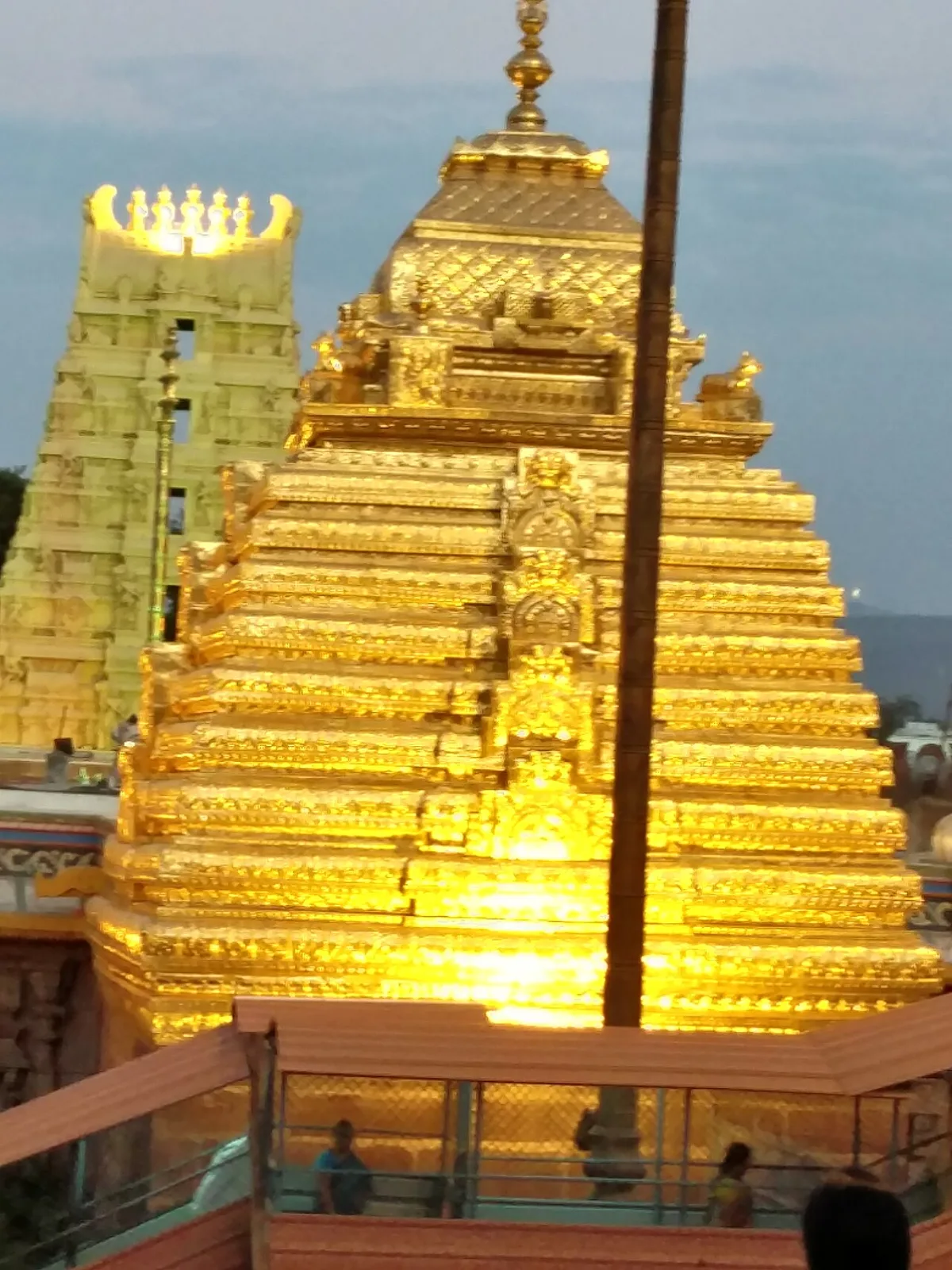
The 11-day Srisailam Shivaratri Brahmotsavams begin with the Dhwajarohanam (hoisting of the sacred Nandi flag) atop the temple flagstaff, inviting all celestial beings to the festival. Each day of the Brahmotsavams features elaborate Vahana Sevas, where the processional deities of Lord Mallikarjuna and Goddess Bhramaramba are carried around the temple Car Street on magnificent vehicles including the Bhrungi Vahanam, Peacock Vahanam, Ravana Vahanam, Nandi Vahanam, and Mount Kailasa Vahanam.
On the core day of Maha Shivaratri, the temple doors remain open continuously for 24 hours. The sanctum echoes with the chanting of Rudram, Chamakam, and Purusha Suktam as priests perform continuous Lingabhishekam using holy Krishna river water, Panchamrutam, bilva leaves, and fragrant sandalwood. At midnight (Lingodbhava Kaalam)—the precise auspicious moment when Lord Shiva manifested as an infinite column of light—the priests perform the Mahabhishekam and Lingodbhava Pooja. Hundreds of thousands of devotees sitting in open courtyards light oil lamps and maintain their night vigil through devotional singing.
The Cultural Days
The cultural dimension of Srisailam Shivaratri is a vibrant tapestry of classical and folk art traditions supported by the Andhra Pradesh Department of Language and Culture. Open-air stages set up near the Pathala Ganga and temple mandapams feature non-stop cultural performances throughout the 11-day festival.
Eminent classical musicians perform Shiva-themed Carnatic vocal and Veena concerts, while dance troupes present classical Kuchipudi, Bharatanatyam, and Perini Thandavam dance dramas depicting Shiva's cosmic dance (Ananda Thandavam). Traditional folk performances unique to the Rayalaseema and Telangana regions—such as Goravana Nruthyam (flute and drum dance by Shiva devotees), Veeragase, and Burra Katha—entertain the vast assemblies of pilgrims staying in forest shelters.
The Pilgrimage Days
Shivaratri at Srisailam is defined by intense devotional penance. A significant proportion of pilgrims undertake the arduous 'Srisailam Padayatra'—walking barefoot for 3 to 7 days through the rugged Nallamala forest trails from places like Venkatapuram, Atmakur, and Nagarkurnool. Carrying small cloth bundles containing bilva leaves, coconuts, and brass pots of water on their heads, these walking pilgrims chant 'Hara Hara Mahadeva! Shambo Shankara!' continuously.
Upon reaching Srisailam, pilgrims descend the 850 stone steps leading down to Pathala Ganga—the deep gorge of the Krishna River flowing at the base of the hill—to take a purifying holy dip before climbing up to the temple. Another essential pilgrimage custom is Sparsha Darshan—the rare privilege granted to general devotees to directly touch the sacred Jyotirlinga with their hands and place their foreheads upon the stone, a practice uniquely permitted at Srisailam.