Ghumoopedia — Explore, Discover, Experience
Sign in

Religious · Andhra Pradesh

Vinayaka Chavithi

Vijayawada, Visakhapatnam and towns across the state

Dates

Last verified 17 November 2026. Confirmed: announced by organisers or government. Provisional: from a published almanac, not yet announced. Seasonal: no date announced.

The complete guide

Vinayaka Chavithi: everything to know before you go

Attribute
Details
Also known as
Ganesh Chaturthi, Vinayaka Chaturthi, Ganeshotsav
State & District
Andhra Pradesh (Statewide; famous in Vijayawada, Vizag, Guntur, Kurnool)
When
Bhadrapada Shukla Chaturthi (August–September)
Duration
9 to 11 Days (From idol installation to Nimajjanam immersion)
Faith & Community
Hinduism (All communities across urban and rural sectors)
Type
Public Pandals & Home Household Festival
Entry
Free access to public pandals and immersion sites across all towns
Best for
Pandal hopping enthusiasts, eco-friendly clay idol crafters, cultural music lovers

Overview

Vinayaka Chavithi (known nationally as Ganesh Chaturthi), celebrated on the fourth day of the bright fortnight in the Hindu month of Bhadrapada (August–September), is one of the most widely celebrated and joyous festivals in Andhra Pradesh. Honoring Lord Ganesha—the elephant-headed deity of wisdom, prosperity, and the remover of obstacles (Vighnaharta)—the festival seamlessly blends intimate home worship with exuberant public celebrations. Across every city, town, and village in Andhra Pradesh, thousands of grandly decorated public pandals (festive marquees) are erected by youth associations, housing societies, and merchant guilds.

The festival spans nine to eleven days of continuous prayer, cultural performances, and community feasts. In Andhra Pradesh, Vinayaka Chavithi is renowned for its monumental clay idols—such as the famous multi-ton Ganesha installed in Vijayawada and Visakhapatnam—and the preparation of massive 'Laddu' sweets (weighing hundreds of kilograms) auctioned for record sums during immersion. The festival culminates in the electrifying 'Nimajjanam' (immersion) processions, where giant idols are carried on trailer trucks accompanied by dancing crowds, drum troupes, and fireworks, to be immersed in rivers, lakes, and the Bay of Bengal.

Origins and legend

The mythological origin of Vinayaka Chavithi is detailed in the Shiva Purana and Skanda Purana. According to legend, Goddess Parvati created a young boy from the turmeric paste (Pasupu) of her own body while preparing for her bath, breathing life into him and appointing him as her doorway guardian. When Lord Shiva returned to Mount Kailash and was barred from entering by the boy, a fierce battle ensued, culminating in Shiva severing the boy's head. Devastated by Parvati's grief, Shiva promised to restore the boy to life, ordering his attendants to bring the head of the first living creature they encountered facing north—which happened to be an elephant. Shiva attached the elephant head to the boy's body, naming him 'Ganesha' (Lord of the Ganas) and granting him the boon that he would be worshipped first before any other deity at the commencement of all rituals.

In Telugu cultural tradition, another famous legend associated with Vinayaka Chavithi is the story of the 'Syamantaka Mani' from the Bhagavata Purana. It is believed that anyone who looks at the Moon on the night of Vinayaka Chavithi will suffer false accusations, just as Lord Krishna was falsely accused of stealing the precious Syamantaka jewel after sighting the moon on this day. To ward off this curse, Telugu families read the 'Vinayaka Vrata Katha' on Chavithi evening and place sacred akshata (rice mixed with turmeric) on their heads.

How it is celebrated

Celebrations begin weeks in advance as clay artisans (Kumbharas) in towns like Machilipatnam, Rajahmundry, and Visakhapatnam craft thousands of eco-friendly and painted clay idols of Lord Ganesha in diverse themes. On the morning of Vinayaka Chavithi, households clean their homes, decorate doorframes with fresh mango leaves (Mavillaku) and marigold flowers, and install a clay idol on a wooden pedestal decorated with rice flour rangoli.

The core home ritual is the 'Ekavinsati Patra Pooja'—worshipping Lord Ganesha using 21 sacred leaves collected from nature (including leaf species like Arka, Bilva, Machipatram, Durva grass, and Datura), accompanied by the chanting of the 108 names of Ganesha (Ganesha Ashtottara Shatanamavali). Families cook elaborate vegetarian dishes, featuring the deity's favorite sweet dumplings ('Kudumulu' and 'Undrallu'). In public spaces, youth clubs erect massive pandals housing idols ranging from 10 feet to over 50 feet in height, illuminating entire streets with decorative LED lights.

The Cultural Days

During the 9 to 11 days of public pandal installations, public venues across Andhra Pradesh transform into bustling cultural arenas. Every evening, pandal committees organize diverse cultural activities including devotional sangeet, instrumental concerts, mimicry shows, and magic acts for children.

Traditional dance forms like Kuchipudi, Kolatam (stick dance), and Janapada Nruthyam (folk dances) are staged prominently in pandals. In cities like Vijayawada and Visakhapatnam, major cultural centers host district-level competitions in Vedic chanting, Ganesha devotional singing, and eco-friendly Ganesha idol making for school children. The evenings witness thousands of families 'pandal hopping' late into the night, enjoying street food and illuminated tableaux depicting contemporary social and environmental themes.

The Pilgrimage Days

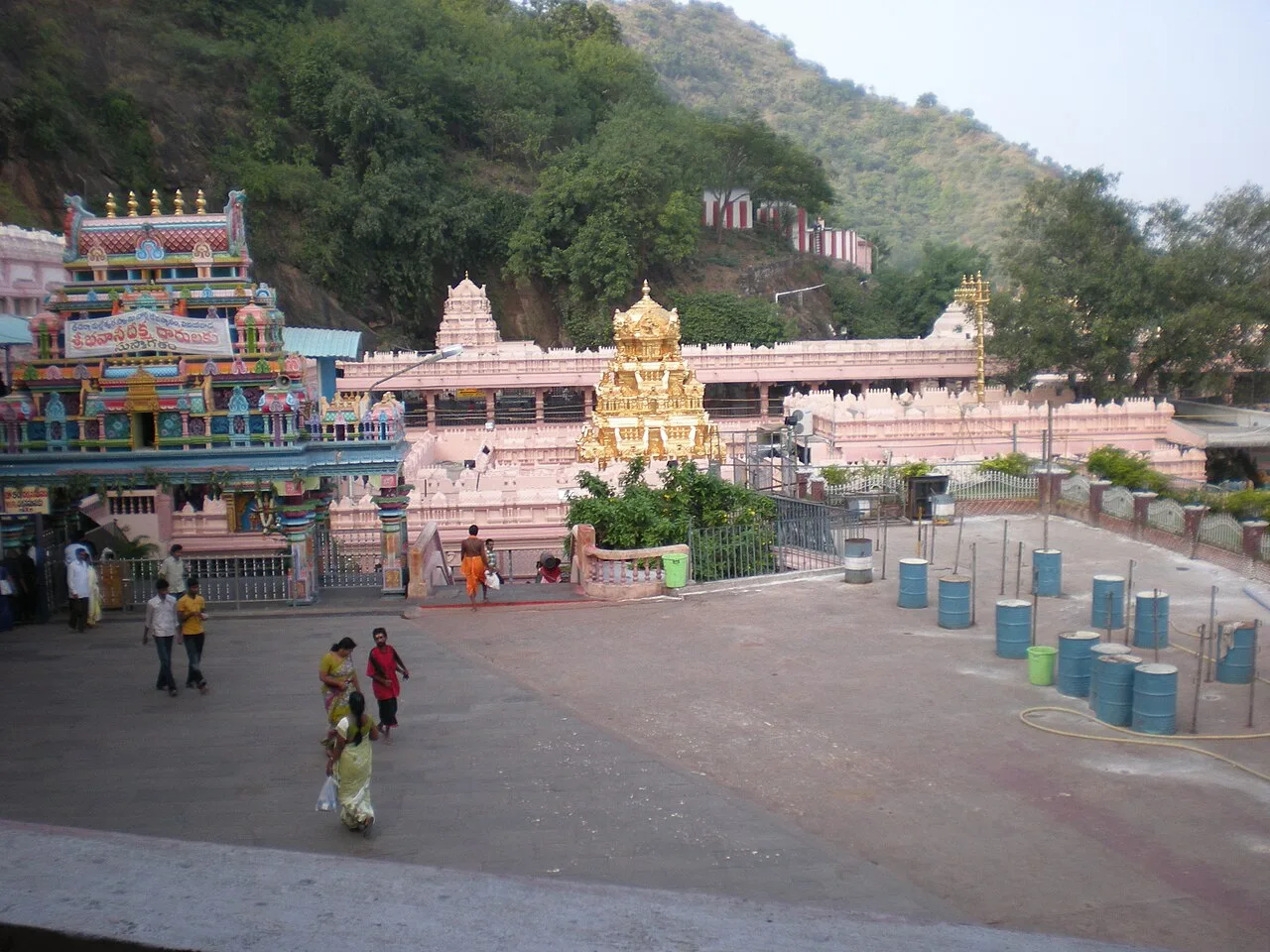
While Vinayaka Chavithi is primarily a community and household festival, major Ganesha pilgrimage temples in Andhra Pradesh experience massive surges of devotees. The famous Kanipakam Varasiddhi Vinayaka Swamy Temple in Chittoor district hosts an 21-day annual Brahmotsavam starting on Vinayaka Chavithi. At Kanipakam, the idol of Lord Ganesha resides inside a natural water well and is believed to be continuously growing in size over centuries.

Pilgrims from across Andhra Pradesh, Tamil Nadu, and Karnataka travel to Kanipakam to witness the Swayambhu (self-manifested) idol and take part in special Vahana Sevas (such as the Mooshika Vahanam, Peacock Vahanam, and Chariot procession). Other prominent Ganesha shrines—such as the Biccavolu Vinayaka Temple in East Godavari and the Ainavilli Siddhi Vinayaka Temple in Konaseema—draw tens of thousands of pilgrims who offer 108 coconuts to fulfill personal vows.

Food and flavours

The culinary heart of Vinayaka Chavithi in Andhra Pradesh is defined by traditional steamed rice dumplings and sweet delicacies offered as Naivedyam. The most iconic festival dish is 'Undrallu'—steamed round dumplings made from coarse rice rava, chana dal, cumin seeds, and coconut, served with fresh coconut chutney or ghee. Another mandatory sweet is 'Kudumulu'—steamed rice flour parcels stuffed with a sweet mixture of grated coconut and jaggery.

Other traditional offerings include 'Modakam' (sweet fried or steamed dumplings), 'Chakkarapongali', 'Pulihora' (tamarind rice), and 'Garelu' (savory vada made from black gram). In Andhra Pradesh, public pandals are also famous for the 'Tapeshwaram Maha Laddu' tradition—where giant bundi laddus weighing anywhere from 500 kg to 5,000 kg are placed on the hands of giant Ganesha idols. On the immersion day, these giant laddus are auctioned in a high-spirited public auction, with winning bids often reaching millions of rupees!

Music, dance, art and dress

The music of Vinayaka Chavithi is an energetic blend of traditional folk percussion and high-tempo devotional songs. Public processions are led by professional 'Teen Maar' drum troupes, 'Dappu' dancers, and 'Nasik Dhol' ensembles whose thunderous beats inspire spontaneous street dancing among youth.

Artistic creativity reaches its peak in the design of pandals and idols. Pandals are constructed as elaborate replicas of famous global monuments, ancient temples, or contemporary themes. In recent years, the 'Eco-Friendly Clay Ganesha' movement has spurred artistic innovation, with artisans using natural river clay, seeds, herbal dyes, and recycled paper pulp to create zero-pollution idols. Devotees dress in festive traditional clothes; men wear festive dhotis or linen kurtas, while women wear vibrant silk sarees or lehengas adorned with gold jewelry.

Where to experience it

Vinayaka Chavithi can be experienced across every neighborhood in Andhra Pradesh. Prime locations for witnessing grand celebrations include:

• Vijayawada (Prakasham Barrage & Bund): Famous for massive public Ganesha idols and grand immersion processions along the Krishna River.• Visakhapatnam (RK Beach & Submarine Museum Road): The primary coastal site where hundreds of giant idols are immersed in the Bay of Bengal.• Kanipakam Temple (Chittoor District): For traditional 21-day temple Brahmotsavams and Swayambhu Ganesha Darshan.• Guntur & Kurnool City Centers: Known for competitive laddu auctions, illuminated street arches, and vibrant Teen Maar drum processions.

Visitor guide

Getting there

All major Andhra cities (Vijayawada, Visakhapatnam, Tirupati, Rajahmundry, Kurnool) have excellent air, rail, and bus connectivity. During the Nimajjanam (immersion) days (5th, 9th, and 11th days), city traffic authorities implement major road diversions near riverbanks and beaches, so traveling via public transport or walking is recommended.

Where to stay

Hotels, guest houses, and lodges are abundantly available in Vijayawada, Visakhapatnam, and Tirupati. Advance booking is recommended if visiting during peak immersion weekend days.

What to wear & pack

  • Wear light, comfortable cotton clothing. If participating in immersion processions, wear clothes that you do not mind getting wet or stained with eco-friendly gulal powder. Pack an umbrella, camera/smartphone protective covers against rain or powder, and comfortable footwear.

Etiquette

Remove footwear before stepping onto the raised wooden platform of any public pandal. Accept Prasadam (sweet undrallu or laddu) with your right hand. Follow police guidelines around water immersion zones and avoid swimming into deep waters during ocean/river immersions.

Safety & comfort

Immersion days witness immense crowd gatherings along riverfronts and ocean beaches. Keep young children by the hand and note emergency medical booths set up by municipal corporations. Strictly adhere to designated safe immersion zones managed by NDRF teams and expert divers.

Today and tomorrow

Today, Vinayaka Chavithi in Andhra Pradesh is undergoing a major green transformation. The Andhra Pradesh Pollution Control Board (APPCB) and civic bodies distribute hundreds of thousands of small clay Ganesha idols containing plant seeds ('Seed Ganeshas') free of cost to promote eco-friendly home immersions in flowerpots. Furthermore, digital laddu auctions, live-streamed pandal Darshans, and drone-monitored immersion processions represent a modern, technologically empowered evolution of this beloved community festival.

Nearby

Places to see around the festival