
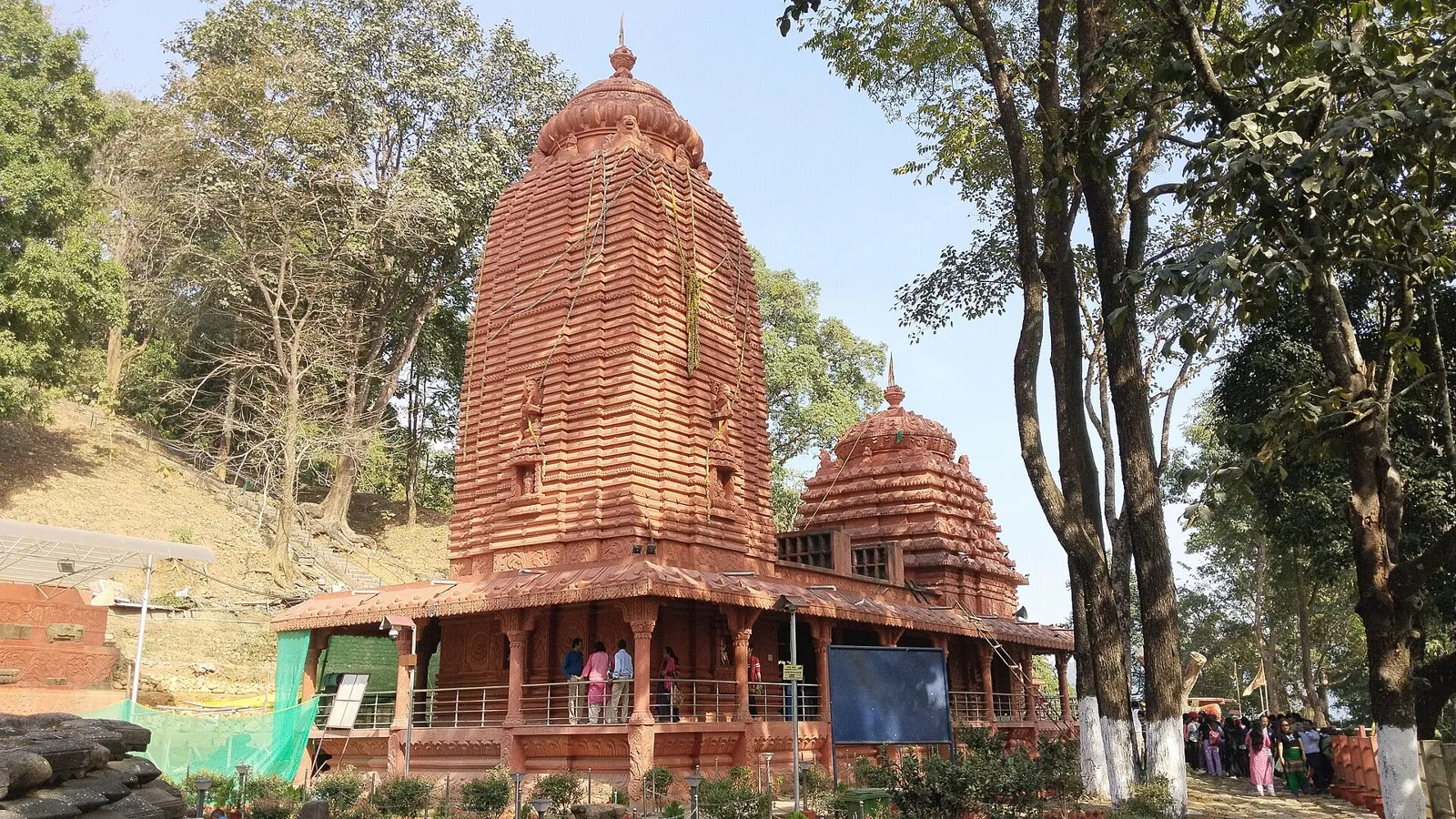
Malinithan
Malinithan is an archaeological site in Arunachal Pradesh, known for the remains of an early medieval temple. Visitors explore its ruins and the traditions surrounding the goddess worshipped there.
Key facts · verified by Ghumoopedia editors
- Type of place
- Heritage monument
- Best time to visit
- October to April for most areas; March–June and September–November for high-altitude passes
- Nearest railway station
- Dibrugarh · about 30 km (straight line)
- Nearest airport
- Dibrugarh Airport (Mohanbari) · about 35 km (straight line)
- Verified
- 21 Nov 2026
Plan a trip from Malinithan — a day-by-day route through places nearby.
In Lower Siang district, Malinithan preserves the remains of a temple believed to have been built by Chutia rulers in the thirteenth or fourteenth century. The site lies beside the Brahmaputra, on its northern side. Accounts name either Kechai-Khaiti, a tribal goddess known among Kachari communities, or Tara, a Buddhist goddess, as the temple’s principal deity. Worship of Kechaikheiti continued according to tribal practices even after Hindu influence reached the area. Deori priests cared for the goddess, whose worship was the responsibility of the Borgoya khel among the Deoris. Four Deori roles were linked with her service. The Bar Bharali and Saru Bharali gathered temple dues and provided animals for sacrifice. The Bar Deori, also called Deori Dema, and Saru Deori, also known as Deori Surba, carried out sacrifices and sang hymns. Some scholars associate Kesaikhaiti with Nang Hoo Toungh, a female deity of the Tai Khamti. Arunachal is home to more than two dozen major tribal communities, including Monpa, Apatani, Adi, Nyishi, Mishmi and Tai Khamti, each with distinct customs. Altitude changes the weather quickly: foothill towns are warm and humid, while Tawang, Sela and Mechuka can see snow and sub-zero nights in winter. The June–September monsoon frequently causes landslides and road closures. The usual best time to visit is October to April for most areas; March–June and September–November for high-altitude passes. Days are short in Northeast India: the sun can set before 5 pm in winter, so plan to reach and leave Malinithan in daylight. Timings, fees and access arrangements must be confirmed locally. For official information, see Arunachal Pradesh Tourism at https://arunachaltourism.com.
Why it matters
Malinithan is an archaeological site in Lower Siang district, Arunachal Pradesh, where visitors can see the remains of an early medieval temple on the northern bank of the Brahmaputra. Its importance lies in the evidence it offers of historic temple-building and religious life in the region, where local traditions and wider Hindu influences met. The site is traditionally attributed to the Chutia kings and is associated with worship of the goddess Kechai-Khaiti, though scholars have proposed other identifications for the deity. Malinithan is a regional heritage destination and a place of continuing cultural interest. Its precise official protection status should be checked with the relevant heritage authority.
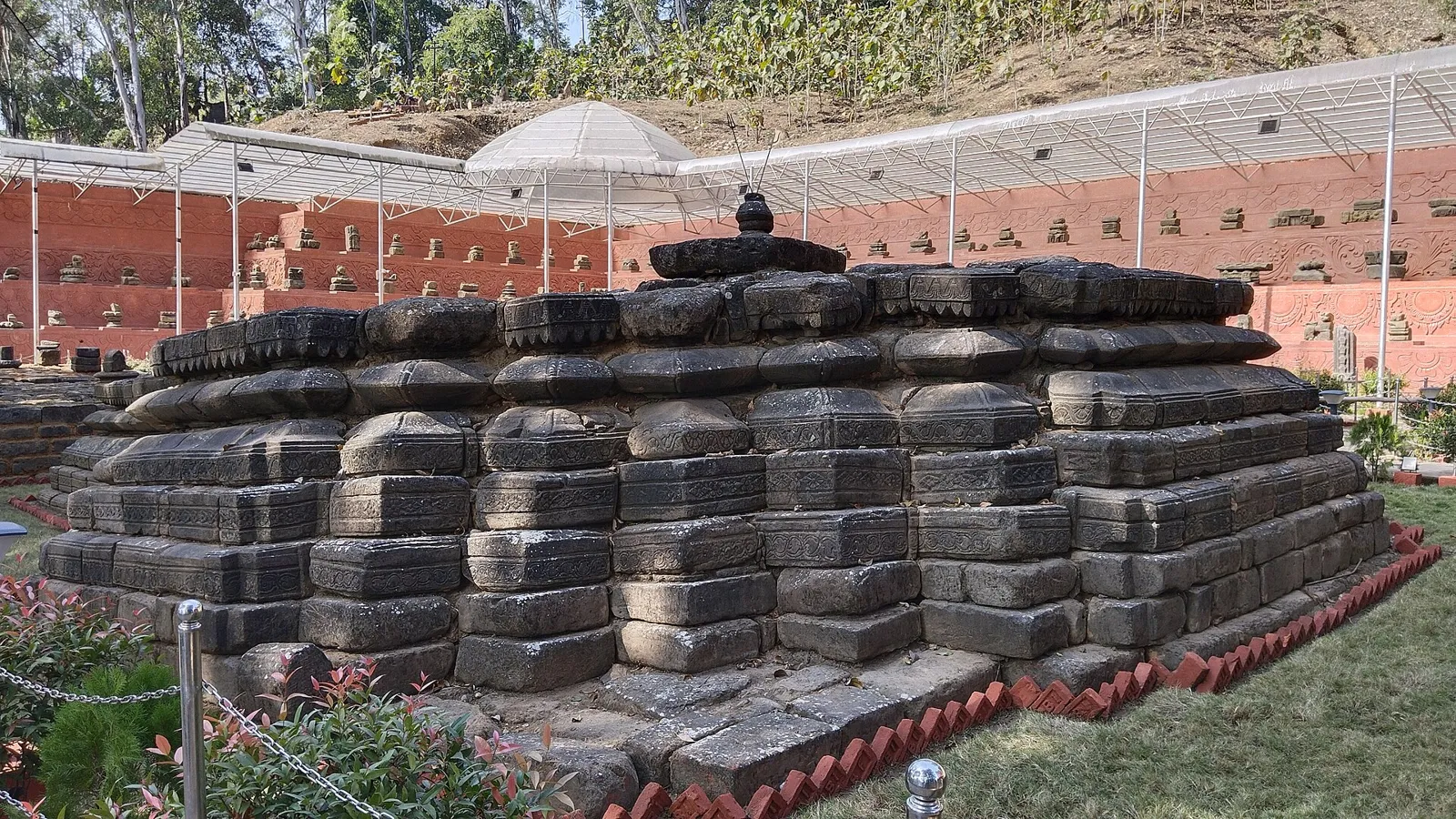
Malinithan preserves the remains of a temple traditionally dated to the 13th–14th centuries and attributed to the Chutia kings. This attribution is not a certainty, and the site’s full history remains a subject of interpretation. The temple stood in a region shaped by exchanges among communities and religious traditions. Kechai-Khaiti, a goddess worshipped among Kachari groups, is associated with the shrine; some scholars have also identified the deity with the Buddhist goddess Tara or with Nang Hoo Toungh, a female deity of the Tai Khamti. These interpretations reflect the complex religious landscape of the region rather than a single settled account. The site’s history also includes the role of Deori priests. The Borgoya khel is associated with the worship of Kechai-Khaiti, and traditional accounts describe four kinds of Deori priest with different duties: some collected temple dues and provided sacrificial animals, while others performed sacrifices and sang hymns. Worship of the goddess was said to retain older tribal customs even under Hindu influence. The temple is now in ruins; visitors encounter archaeological remains rather than an intact place of worship. For details about excavation, conservation and current management, consult local or official heritage sources.
Origin stories & folklore
According to local tradition, the name Malinithan is connected with Malini, a name associated with the goddess Parvati. One popular story tells that Krishna and Rukmini passed through this region while travelling from Rukmini’s homeland. Shiva and Parvati welcomed them, and Parvati is said to have offered Rukmini flowers or a garland. The story is one explanation for the place-name, not a verified account of the temple’s construction. Other traditions connect the ruined shrine with Kechai-Khaiti, whose worship is associated with Deori customs. These stories are best understood as part of the area’s living religious memory; accounts and interpretations may differ among communities.
Architecture & design
The site consists of the remains of an early medieval temple, traditionally dated to the 13th–14th centuries. Its surviving stone elements indicate a substantial structure, but visitors should not expect a complete building or an intact temple interior. Malinithan is noted for stone sculptures and carved architectural fragments that reflect a developed tradition of temple art. The arrangement of the remains can suggest the former sacred complex, though the original layout and all construction details should not be inferred from the ruins alone. The temple is often described as having an architectural style that draws on broader Indian temple forms. Stone was used for structural and sculptural work; the exact engineering methods and original finishes are not always apparent on site. Interpretation boards or a knowledgeable authorised guide can help visitors understand the fragments and their context.
Important objects & sculptures
Look for carved stone fragments and sculptural remains that give a sense of the temple’s former decoration and religious setting. The site is known for stone images associated with Hindu deities, although the identification and interpretation of individual figures may require a guide or reliable interpretation board. The identity of the principal deity is itself debated: Kechai-Khaiti, Tara and a Tai Khamti female deity have all been proposed in different accounts. As the temple survives in ruins, objects may be weathered, incomplete or displayed in a different context from their original position. Do not touch, climb on or remove any stone; ask locally before photographing close details or displayed objects.
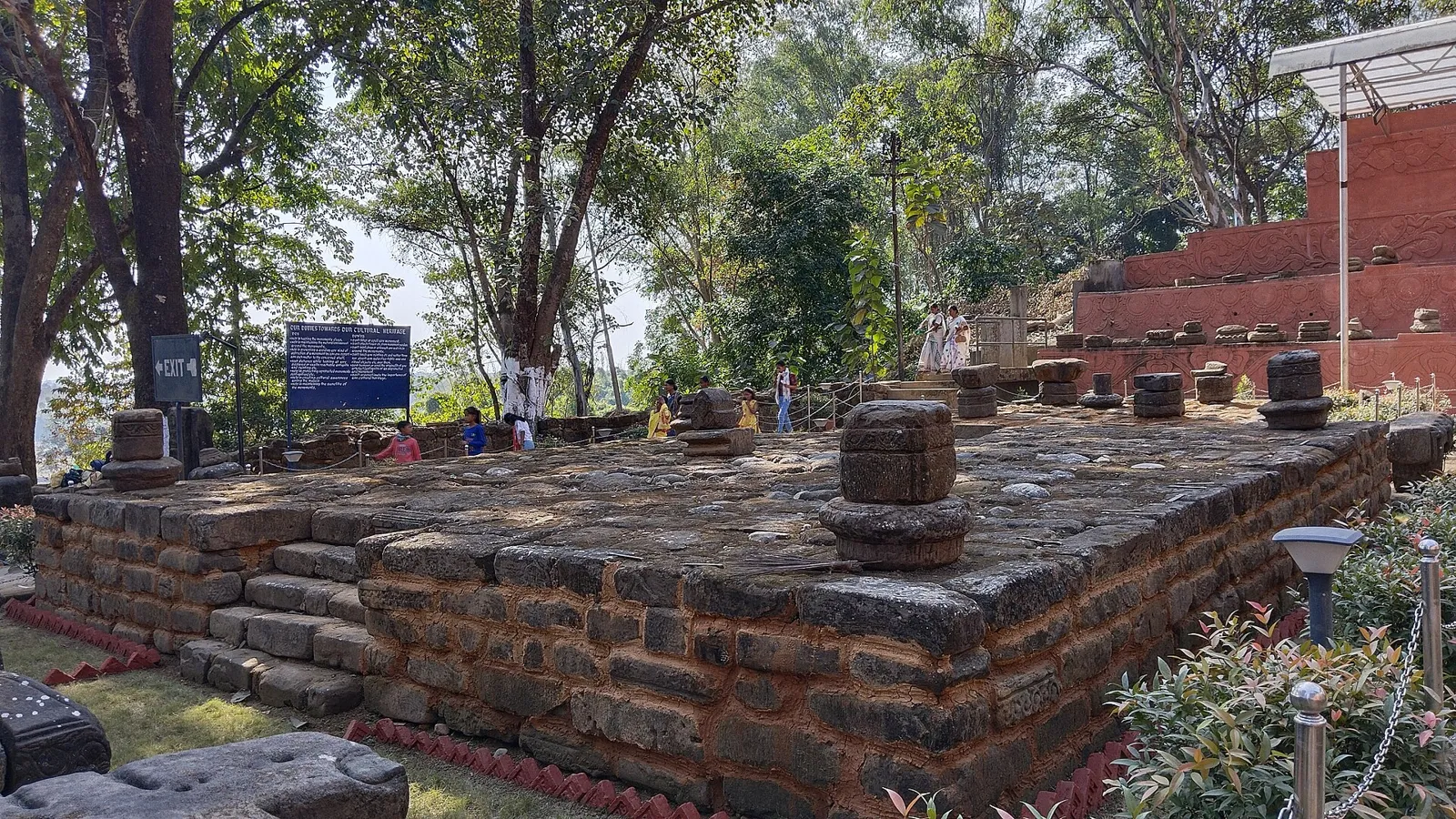
Explore Malinithan slowly and read the interpretation boards or hire an authorised guide to understand its history. Check opening days and ticket counters in advance, as many monuments and museums close on one weekday and on public holidays. A comfortable itinerary is one main visit in the morning, a local meal at midday and a short nearby stop before an afternoon return. Use the district list on this site to find other places in Lower Siang, but check the actual road route and its condition before combining stops. If a festival is on, local roads and stays can be busy — and the experience can be unforgettable. Leave no litter: many sites in Arunachal Pradesh are protected by the communities who own them.
Suggested itineraries
Half day: Reach Malinithan in the morning; spend 1–2 hours exploring the ruins and reading interpretation boards; take a short break; return to Likabali. Full day: Visit Malinithan in the morning for 1–2 hours; pause for a local meal; check road conditions and continue to Akashiganga if access is suitable; return with daylight to spare. Gentler option: Arrange a vehicle drop-off as close as locally permitted, explore the most accessible parts at an unhurried pace, and skip additional stops.
Malinithan’s cultural significance is linked to the many distinct communities of Arunachal Pradesh and to the history of religious exchange in the region. Traditional accounts associate worship of Kechai-Khaiti with the Borgoya khel of the Deori community and with Deori priests who had different ritual responsibilities. These accounts describe older tribal customs continuing alongside Hindu influence. Arunachal Pradesh is home to communities including Adi, Galo, Nyishi, Mishmi, Monpa and Tai Khamti, among many others, each with distinct languages and customs. Do not assume that a particular ritual is practised at the ruins today. Visitors should follow local guidance, ask before photographing people, and treat active worship or community observances with respect.
Festivals & events
No particular annual festival at the ruins should be assumed without checking locally. Regional celebrations may be observed in nearby communities, and their timing and public activities can vary. Mopin, associated with Galo communities, is generally celebrated in spring, while Solung is an important Adi festival usually held later in the year. These are community festivals, not necessarily events at Malinithan. If visiting during a local celebration, ask about access, photography and respectful conduct. Roads and accommodation in the wider area may be busier around major festivities, so confirm local arrangements before setting out.
Local food in Arunachal Pradesh includes thukpa, momos, bamboo-shoot preparations, smoked meat, local greens and pika pila pickle; Monpa areas serve butter tea and zan, while rice beer (apong) is part of many community festivals. Ask what is fresh that day; many small eateries cook a limited daily menu. Pork, beef, fish and fermented ingredients are common in tribal cuisines, so vegetarian travellers should explain their needs clearly — rice, dal, vegetables and eggs are usually possible in towns. Remote sites may have no restaurant at all. Carry water and snacks, eat a proper breakfast before long drives, and ask your accommodation for a packed lunch if you are heading out early. Try a homestay-cooked meal when you can — it is often the best food in the hills. Choose busy, clean places and carry your packaging back to town.
Shopping & local experiences
There may be few dedicated souvenir shops at the ruins, so do not count on finding crafts or refreshments there. Ask in Likabali about locally made textiles, handcrafts or market days, and buy directly from makers where possible. Availability varies, and visitors should not assume that a particular community craft is produced nearby. Local eateries can offer a chance to try regional food; ask about ingredients and preparation if you have dietary needs. Avoid buying antiquities, old ritual objects or anything that may have been removed from a heritage site.
October to April for most areas; March–June and September–November for high-altitude passes
The nearest principal railway station by straight-line distance is Dibrugarh, roughly 30 km away. The nearest operating airport by straight-line distance is Dibrugarh Airport (Mohanbari), roughly 35 km away. These figures are calculated from map coordinates — hill roads in Arunachal Pradesh wind a lot, so actual road distance and travel time are usually much longer. Guwahati is the main rail and air hub for the region, and most long-distance journeys connect through it. For the final leg, Arunachal Pradesh State Transport Services (APSTS) and shared Tata Sumo taxis link district towns; shared taxis usually leave early in the morning and depart only when full. A private taxi gives more flexibility for remote sites. When comparing train, bus and flight, count the complete door-to-door time: a flight saves the most time only if the onward road transfer is short, while an overnight train to Guwahati plus a road journey can save a hotel night. Book your return before you leave, because seats on shared vehicles and the few daily flights fill quickly. Current train numbers, timings, return services and fares are not listed here; check IRCTC and NTES for trains and the airline’s own schedule for flights. Indian visitors who are not residents of Arunachal Pradesh need an Inner Line Permit (ILP), available online through the state’s official e-ILP portal. Foreign nationals need a Protected Area Permit. Some border areas, such as passes near the international boundary, may also need additional army or district permissions on the day.
Confirm onward and return timings on IRCTC / NTES, the state bus operator or your airline before travel. A dash means current timings or fares have not been verified.
Getting around
Malinithan is reached from the Likabali area, but road conditions and onward transport can vary. On arrival, local taxis or shared vehicles may be available; check with your accommodation or locally about current options. Shared vehicles commonly serve district routes but may wait until full, so keep flexibility in your plan. A private taxi can make it easier to visit the ruins and nearby stops in one outing. Walk carefully around the site and use only marked visitor areas. Confirm parking and drop-off arrangements before travelling; do not assume local buses or autos run directly to the entrance.
Hours, tickets & permissions
Entry arrangements, opening days, ticketing and access to particular parts of the site may change. Some heritage sites close on a weekday or public holiday, but do not rely on a general rule for Malinithan. Confirm current opening hours, fees and any camera or visitor rules with the managing authority or locally before travelling. Ask whether identification, a permit or a guide is required, especially if combining the visit with other restricted areas in Arunachal Pradesh. Follow signs and staff instructions, and do not enter closed or protected sections.
Facilities
Facilities at the ruins may be limited. Toilets, drinking water, food stalls, interpretation and guides may not all be available on every visit, so check locally and carry water and snacks. Likabali is the practical place to ask about meals, transport and basic supplies. ATMs and reliable card payment should not be assumed at the site; arrange cash in advance where appropriate. Parking or a vehicle drop-off may be possible, but confirm conditions locally. Take all rubbish away with you and use any facilities respectfully.
Accessibility
The archaeological remains are outdoors and may involve uneven ground, exposed stones and short walks between features. Paths, surfaces and shade can vary with weather and maintenance; do not assume step-free access, handrails or wheelchair-friendly routes. Strollers may be difficult to manoeuvre over rough sections. Older visitors or anyone with limited mobility may prefer a vehicle drop-off, a companion and a slow visit focused on the easiest-to-reach areas. Wear stable footwear, avoid climbing on ruins, and take breaks in hot or wet weather. Ask locally about current path conditions before setting out.
Indian visitors who are not residents of Arunachal Pradesh need an Inner Line Permit (ILP), available online through the state’s official e-ILP portal. Foreign nationals need a Protected Area Permit. Some border areas, such as passes near the international boundary, may also need additional army or district permissions on the day. Carry a printed and digital copy of your permit and a photo ID at all times; checkpoints are common. Save the emergency number 112 and your accommodation’s contact offline. Heat, humidity and sudden downpours are the main weather risks; carry water and rain protection. Respect community rules, private property and posted instructions. Avoid hill road travel after dark and during heavy rain, when landslides are more likely. Check official advisories for the region before travel, and follow local guidance if access changes.
Photography
Soft morning or late-afternoon light can bring out the texture of the stone, while overcast conditions may help with close details. Photograph from visitor areas and avoid climbing on ruins to frame a view. Check signs or ask staff before photographing displayed objects, people or any active ritual. Drone use may be restricted by aviation rules, local authorities or heritage protections; do not fly without the required permissions. Be considerate of other visitors and nearby communities, and avoid disturbing wildlife or leaving equipment and litter behind.
Choose a stay by the full journey to Malinithan, not just the district name. Main towns in Lower Siang usually offer hotels, state tourism lodges and homestays with better transport, meals and medical access, while village homestays offer a closer connection to local life. In the plains and valleys, check fans or air-conditioning and mosquito nets in summer. Book in advance for weekends, festival dates and the peak season (October to April for most areas; March–June and September–November for high-altitude passes). Confirm the exact location, meals included, check-in time and cancellation terms in writing. Many homestays accept payment on arrival; avoid sending money to unverified contacts. Mobile network and digital payments can be unreliable in remote areas, so carry some cash.
Likabali is the nearest practical town for arranging transport, food and basic supplies. Akashiganga, a nearby pilgrimage destination associated with a sacred spring, may be combined with Malinithan if roads and access are suitable on the day. Allow extra time for the journey and confirm the route locally rather than relying on straight-line distances. Other Lower Siang stops can be considered using current district information, but road conditions and travel times may make a short-looking route slow. Avoid adding distant attractions to a half-day plan without checking the actual route.
For couples, Malinithan rewards a slow pace: arrive early for soft light and fewer crowds, share a local meal and keep the evening free. Public displays of affection can be frowned upon in conservative communities and at religious sites, so be discreet. A homestay can make the trip memorable — confirm privacy, hot water and transport back. Keep a buffer day in your itinerary, because weather and road closures can delay plans in Arunachal Pradesh.
Q: How much time should I allow for Malinithan? A: Allow around one to two hours to explore the ruins at an unhurried pace, with extra time for road travel and any nearby stop. Q: When is a good season to visit? A: October to April is generally a comfortable period for many parts of Arunachal Pradesh. Check local weather and road conditions, especially during the monsoon. Q: Is there an entry fee or do I need a permit? A: Entry rules and fees can change. Confirm current arrangements with the managing authority; check separately whether your wider travel route requires permits. Q: Is the site suitable for children and elderly visitors? A: Families can visit, but uneven ground and exposed stone may require close supervision. Visitors with limited mobility should check access conditions and plan a gentle visit. Q: Where can I stay nearby? A: Likabali is the practical nearby town to ask about accommodation. Check availability and facilities in advance, as options may be limited.
Be the first to share photos, stories, advice or a helpful contact for Malinithan.
Loading…