
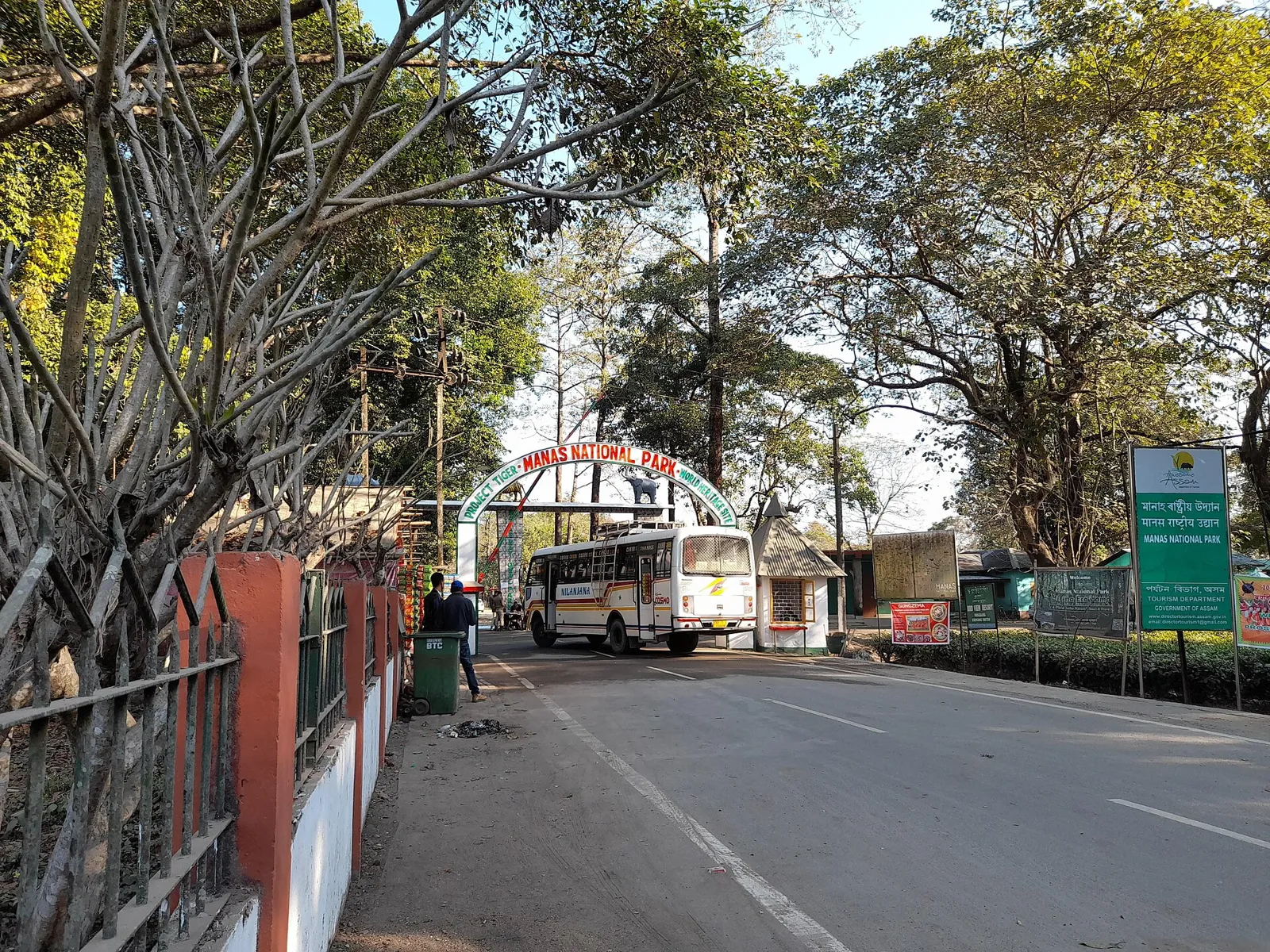
Manas National Park
In Assam’s Baksa district, Manas is known for varied habitats and rare wildlife; visitors come to see species such as the pygmy hog and golden langur.
Key facts · verified by Ghumoopedia editors
- Type of place
- National park / sanctuary
- Best time to visit
- October to April; national parks usually open around November and close for the monsoon
- Nearest railway station
- Barpeta Road · about 25 km (straight line)
- Verified
- 21 Nov 2026
Plan a trip from Manas National Park — a day-by-day route through places nearby.
Manas lies in Baksa district, Assam, on the Himalayan foothills and beside Bhutan’s Royal Manas National Park. Alongside its national-park status, it is part of Project Tiger and the elephant-reserve network. Its wildlife includes the golden langur, Assam roofed turtle, pygmy hog and hispid hare, all rare and endemic. No other pygmy hog population is known, and wild water buffalo are another notable presence. The park’s varied scenery, habitats and biological diversity are recognised through its status as a biosphere reserve and UNESCO World Heritage Site. Assam’s Vaishnavite satras, Ahom heritage, Bihu festivals and silk-weaving traditions shape everyday life well beyond the major monuments. The Brahmaputra plains are hot and humid from April to September, with heavy monsoon rain and seasonal floods. Winters are mild and pleasant, with morning fog along the river. The usual best time to visit is October to April; national parks usually open around November and close for the monsoon. Days are short in Northeast India: the sun can set before 5 pm in winter, so plan to reach and leave Manas National Park in daylight. Timings, fees and access arrangements must be confirmed locally. For official information, see Assam Tourism at https://tourism.assam.gov.in.
Why it matters
Manas National Park, in Baksa district, is a protected landscape in Assam’s Himalayan foothills, adjoining Royal Manas National Park in Bhutan. It is a national park, a Project Tiger reserve and an elephant reserve. UNESCO lists Manas as a World Heritage Site for its biodiversity and natural landscapes; it was inscribed in 1985. The park is also part of a biosphere reserve. Its conservation importance includes habitats for threatened wildlife such as the pygmy hog, hispid hare, Assam roofed turtle and golden langur, as well as wild water buffalo. These recognitions reflect the park’s national conservation role and its value within a transboundary ecosystem.
Manas’ conservation history is documented through a sequence of protected-area designations rather than a single construction or founding event. The area was declared a reserved forest in 1907 and a wildlife sanctuary in 1928. It became part of Project Tiger in 1973, was designated a biosphere reserve in 1989 and attained national-park status in 1990. UNESCO inscribed it as a World Heritage Site in 1985, recognising its natural values. The park was placed on UNESCO’s List of World Heritage in Danger in 1992 amid a period of unrest and damage to conservation infrastructure and wildlife. It was removed from that list in 2011 following restoration and conservation efforts. The work has involved government agencies and local communities, alongside efforts to protect habitats and rebuild wildlife populations. Manas also forms an ecological continuum with Royal Manas National Park across the Bhutan border. Its history is therefore tied both to changing conservation policy in India and to cooperation and stewardship across a landscape that extends beyond national boundaries.
Spend unhurried time at Manas National Park: walk the marked paths, use official viewpoints and ask locally whether a guide, entry ticket or permit is needed. Weather changes fast, so carry a rain layer even on a clear morning. Wildlife sightings are never guaranteed — patience and quiet improve your chances. A comfortable itinerary is one main visit in the morning, a local meal at midday and a short nearby stop before an afternoon return. Use the district list on this site to find other places in Baksa, but check the actual road route and its condition before combining stops. If a festival is on, local roads and stays can be busy — and the experience can be unforgettable. Leave no litter: many sites in Assam are protected by the communities who own them.
Suggested itineraries
Half day: Check in at the authorised entry point (30–45 minutes); take a guided vehicle visit on an available route (2–3 hours); have a local meal and return in daylight. Full day: Begin with a guided morning visit (2–3 hours); rest and eat locally (1–2 hours); visit an authorised viewpoint or community-led stop if open (1–2 hours); return before dusk. Gentler option: Choose a short, vehicle-based visit with minimal walking, rest between stops and confirm access and seating needs in advance.
The communities around Manas are part of Assam’s diverse cultural life. Bodo traditions are especially significant in the wider region, alongside Assamese and other community traditions. Bihu music and dance, Bodo dance and song, handloom weaving and customary village gatherings remain part of contemporary life. Assamese and Bodo are among the languages visitors may hear, alongside other regional languages. Local customs vary between communities and villages; visitors should ask before photographing people or joining an event. The park is a wildlife reserve, not a venue for staged cultural performances, so cultural experiences are best sought respectfully through local hosts and community-led initiatives.
Local communities
Bodo communities have longstanding connections with the wider Manas landscape. Bodo, Assamese, Rabha, Adivasi and other communities live in the surrounding region, with local identities and livelihoods varying from village to village. Agriculture, animal husbandry, handloom weaving, small trade and tourism-related work contribute to livelihoods. Community organisations have also taken part in ecotourism and conservation initiatives around the park. Visitors can support local businesses by using locally run stays and guides where available, while following park rules. Do not assume that forests or cultural practices are open to visitors; seek permission and respect community boundaries.
Festivals & events
Bihu, celebrated at different points in the Assamese agricultural calendar, brings music, dance and community gatherings across the region; Bohag Bihu in spring is particularly prominent. Bodo communities celebrate Bwisagu, usually in spring, with song, dance and family and village gatherings. Festival events are community-based rather than park attractions, and programmes vary by place and year. Nearby towns and villages may be busier during celebrations, affecting road traffic and accommodation availability. Ask local hosts about public events and whether visitors are welcome, and be considerate when photographing ceremonies or participants.
Local food in Assam includes masor tenga (a tangy fish curry), khar, duck with ash gourd, pitha rice cakes, aloo pitika and, of course, Assam tea. Ask what is fresh that day; many small eateries cook a limited daily menu. Pork, beef, fish and fermented ingredients are common in tribal cuisines, so vegetarian travellers should explain their needs clearly — rice, dal, vegetables and eggs are usually possible in towns. Remote sites may have no restaurant at all. Carry water and snacks, eat a proper breakfast before long drives, and ask your accommodation for a packed lunch if you are heading out early. Try a homestay-cooked meal when you can — it is often the best local food. Choose busy, clean places and carry your packaging back to town.
Shopping & local experiences
There may be small shops near access villages, but visitors should not rely on them for a full range of supplies. Look for locally made handloom textiles, including Bodo garments and woven accessories, and bamboo or cane crafts where available. Ask whether an item is locally produced and buy from community-run sellers when possible. Nearby eateries may serve Assamese or Bodo-style meals, though menus and availability vary. Carry essentials from a larger town, and avoid buying wildlife products, plants or anything made from protected species.
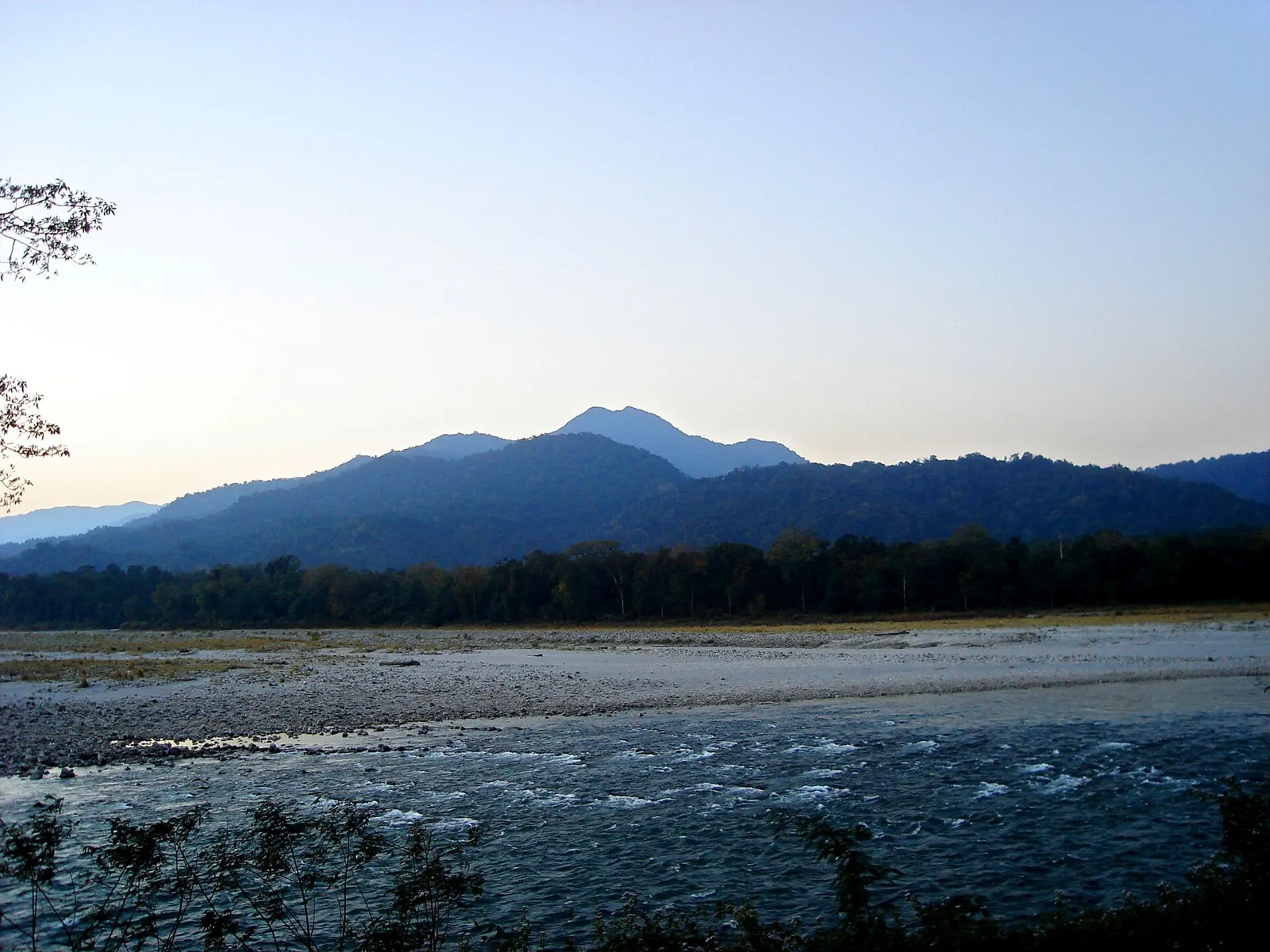
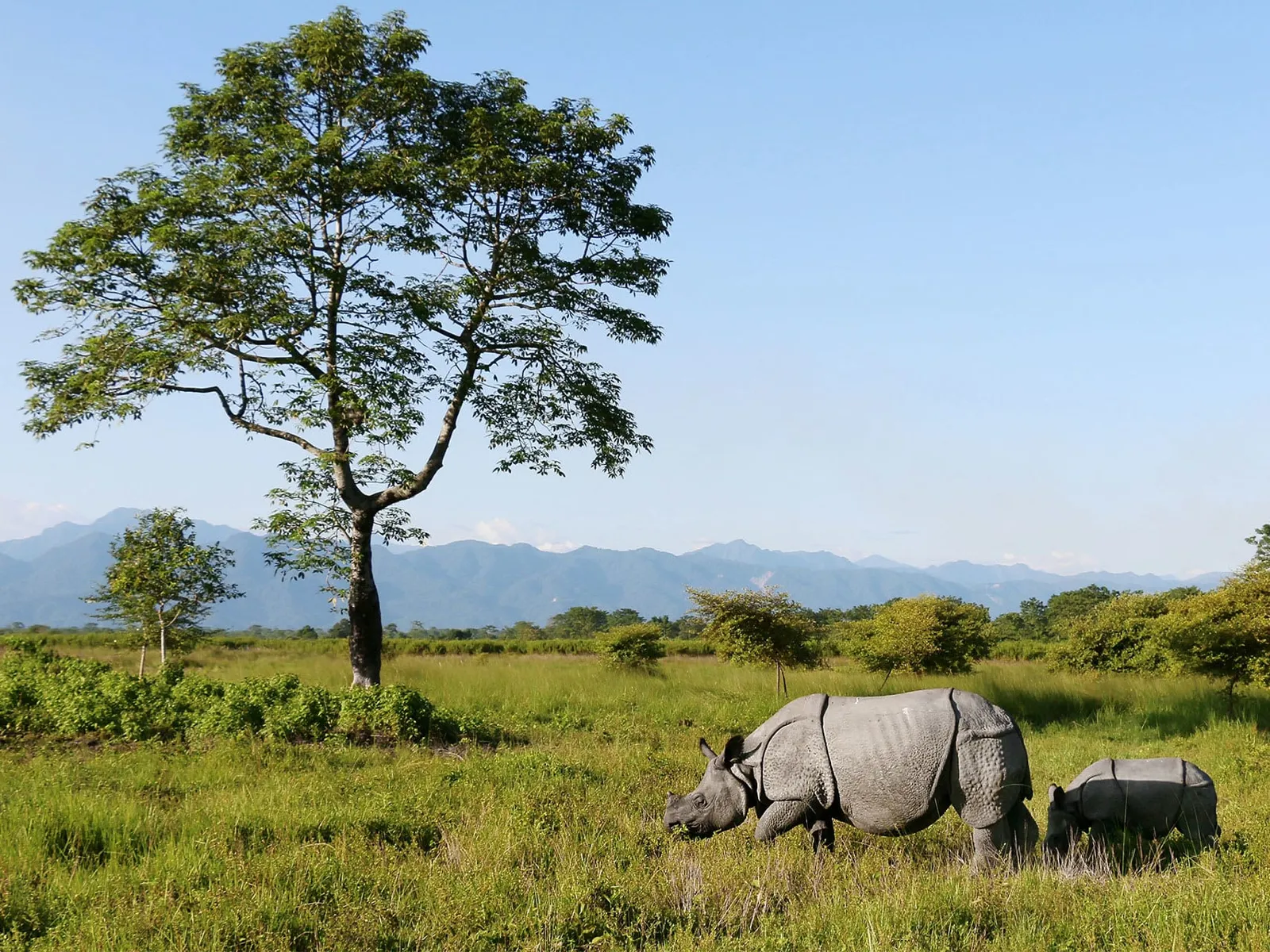
Manas lies in the Himalayan foothills, where riverine habitats, alluvial grasslands and forests meet. The Manas and Beki rivers and their seasonal channels shape the landscape; heavy monsoon rain can alter conditions and access. Forest types include tropical and subtropical formations, with grasslands and wetland areas supporting diverse wildlife. The park is known for rare and threatened species including pygmy hog, hispid hare, Assam roofed turtle and golden langur, and it also supports wild water buffalo, elephants and tigers. Its habitats are important for many resident and migratory birds. Wildlife sightings vary with season, weather and luck; quiet observation with an authorised guide is more responsible than pursuing animals.
October to April; national parks usually open around November and close for the monsoon
The nearest principal railway station by straight-line distance is Barpeta Road, roughly 25 km away. The nearest operating airport by straight-line distance is Lokpriya Gopinath Bordoloi International Airport, Guwahati, roughly 95 km away. These figures are calculated from map coordinates, so actual road distance and travel time are longer. Guwahati is the main rail and air hub for the region, and most long-distance journeys connect through it. For the final leg, Assam State Transport Corporation (ASTC) and private Volvo/sleeper coaches link district towns; shared taxis usually leave early in the morning and depart only when full. A private taxi gives more flexibility for remote sites. When comparing train, bus and flight, count the complete door-to-door time: a flight saves the most time only if the onward road transfer is short, while an overnight train to Guwahati plus a road journey can save a hotel night. Book your return before you leave, because seats on shared vehicles and the few daily flights fill quickly. Current train numbers, timings, return services and fares are not listed here; check IRCTC and NTES for trains and the airline’s own schedule for flights. No Inner Line Permit is needed to visit Assam. National parks and wildlife sanctuaries need entry tickets, and jeep safaris are booked through the official forest department counters or authorised operators.
Confirm onward and return timings on IRCTC / NTES, the state bus operator or your airline before travel. A dash means current timings or fares have not been verified.
Getting around
Visitors generally reach a park access point such as Bansbari by road and arrange onward movement locally. Taxis or private vehicles offer flexibility; local buses and shared vehicles may serve nearby towns or villages, but may not reach the park entrance or suit a tight schedule. Inside the park, use only authorised vehicles and routes, usually arranged through local operators or park authorities. Walking is limited to permitted areas and should not be treated as a way to roam through wildlife habitat. Ask about parking and road conditions on arrival. Arrange a return ride in advance, especially outside busy periods.
Hours, tickets & permissions
Entry is controlled by the park authority, and access may depend on the season, route or safari arrangements. Visitors may need an entry ticket, vehicle or guide authorisation, and separate permission or charges for cameras; requirements can change. Carry valid identification if requested and follow any zone-specific instructions. Do not assume that every route or viewpoint is open to independent visitors. Confirm current opening periods, hours, fees, permits and access conditions with the managing authority or a locally authorised operator before travelling.
Facilities
Facilities vary by entry point and season. Toilets, drinking water, food stalls or simple meals, parking and guide or vehicle arrangements may be available near commonly used access areas, but should not be assumed at every stop. Lodges and other accommodation are found around the park and in nearby settlements. Mobile connectivity and cash access can be limited; plan ahead and check locally for ATMs, card acceptance and reliable water. Carry essential medicines, snacks and drinking water, and take all waste back with you.
Accessibility
Access conditions depend on the route, vehicle and season. Park tracks can be uneven, muddy or affected by monsoon rain, and viewpoints may involve walking over natural ground rather than paved paths. Shade and resting places are not guaranteed. Wheelchair and stroller access should not be assumed, and vehicle boarding may require assistance. Older visitors or anyone with limited mobility may find a short, vehicle-based visit more manageable than extended walking. Contact the park authority or operator beforehand to discuss mobility needs, vehicle access, toilets and any permitted low-walking options.
No Inner Line Permit is needed to visit Assam. National parks and wildlife sanctuaries need entry tickets, and jeep safaris are booked through the official forest department counters or authorised operators. Carry a photo ID at all times; checkpoints are common. Save the emergency number 112 and your accommodation’s contact offline. Heat, humidity and sudden downpours are the main weather risks; carry water and rain protection. Stay on marked paths, keep away from cliff edges and fast water, and never approach wild animals. Avoid long road journeys after dark and during heavy rain. Check official advisories for the region before travel, and follow local guidance if access changes.
Visitor rules
Follow instructions from park staff and authorised guides, stay on permitted routes and never leave a vehicle unless told it is safe to do so. Wear practical, weather-appropriate clothing and closed footwear for uneven ground; modest dress is considerate in nearby communities. Do not feed, approach, call or disturb wildlife. Carry out all rubbish and follow current restrictions on single-use plastic and other materials. Keep noise low, respect restricted areas and do not collect plants, animals or natural objects. Ask locally about current camera and visitor rules.
Photography
Soft morning light can suit landscapes and wildlife observation, but sightings and conditions are never guaranteed. Use authorised routes and viewpoints, and follow staff directions about when photography is allowed. Camera permissions or additional charges may apply, so confirm before entry. Do not use flash if it could disturb wildlife, and never approach animals for a closer image. Drone use may be restricted or prohibited; do not fly one without explicit current authorisation. Ask people before photographing them, and show particular respect around homes, ceremonies and places of worship.
Choose a stay by the full journey to Manas National Park, not just the district name. Main towns in Baksa usually offer hotels, state tourism lodges and homestays with better transport, meals and medical access, while village homestays offer a closer connection to local life. In the plains and valleys, check fans or air-conditioning and mosquito nets in summer. Book in advance for weekends, festival dates and the peak season (October to April; national parks usually open around November and close for the monsoon). Confirm the exact location, meals included, check-in time and cancellation terms in writing. Many homestays accept payment on arrival; avoid sending money to unverified contacts. Mobile network and digital payments can be unreliable in remote areas, so carry some cash.
Within the park, Bansbari is a commonly used access area, while Mathanguri is a known riverside area; access to both depends on current park arrangements and conditions. Manas Maozigendri Ecotourism Society is a community-led initiative in the wider Manas area and may offer locally organised experiences; confirm what is operating before making plans. Barpeta Road is a nearby town used by some travellers for transport and services. Royal Manas National Park lies across the Bhutan border, but it is not a casual extension of an Indian park visit: international border and park arrangements must be checked separately.
For couples, Manas National Park rewards a slow pace: arrive early for soft light and fewer crowds, share a local meal and keep the evening free. Public displays of affection can be frowned upon in conservative communities and at religious sites, so be discreet. A homestay can make the trip memorable — confirm privacy, hot water and transport back. Keep a buffer day in your itinerary, because weather and road closures can delay plans in Assam.
Q: How much time should I allow for a visit? A: A half day can suit one guided visit; allow a full day if you want a slower pace or a locally organised stop. Q: When is the best season to visit? A: October to April is generally the more suitable period. Park access is seasonal, so check current conditions before travelling. Q: Do I need an entry ticket or permit? A: Entry is controlled and requirements can vary by route and activity. Confirm tickets, permits and camera rules with the park authority. Q: Can children or older visitors visit? A: Yes, but terrain and vehicle access vary. Choose a suitable guided visit, keep children supervised and discuss mobility needs in advance. Q: Where can I stay nearby? A: Lodges and other stays are available around the park and in nearby settlements. Check current operation, location and transport arrangements before booking.
Be the first to share photos, stories, advice or a helpful contact for Manas National Park.
Loading…