
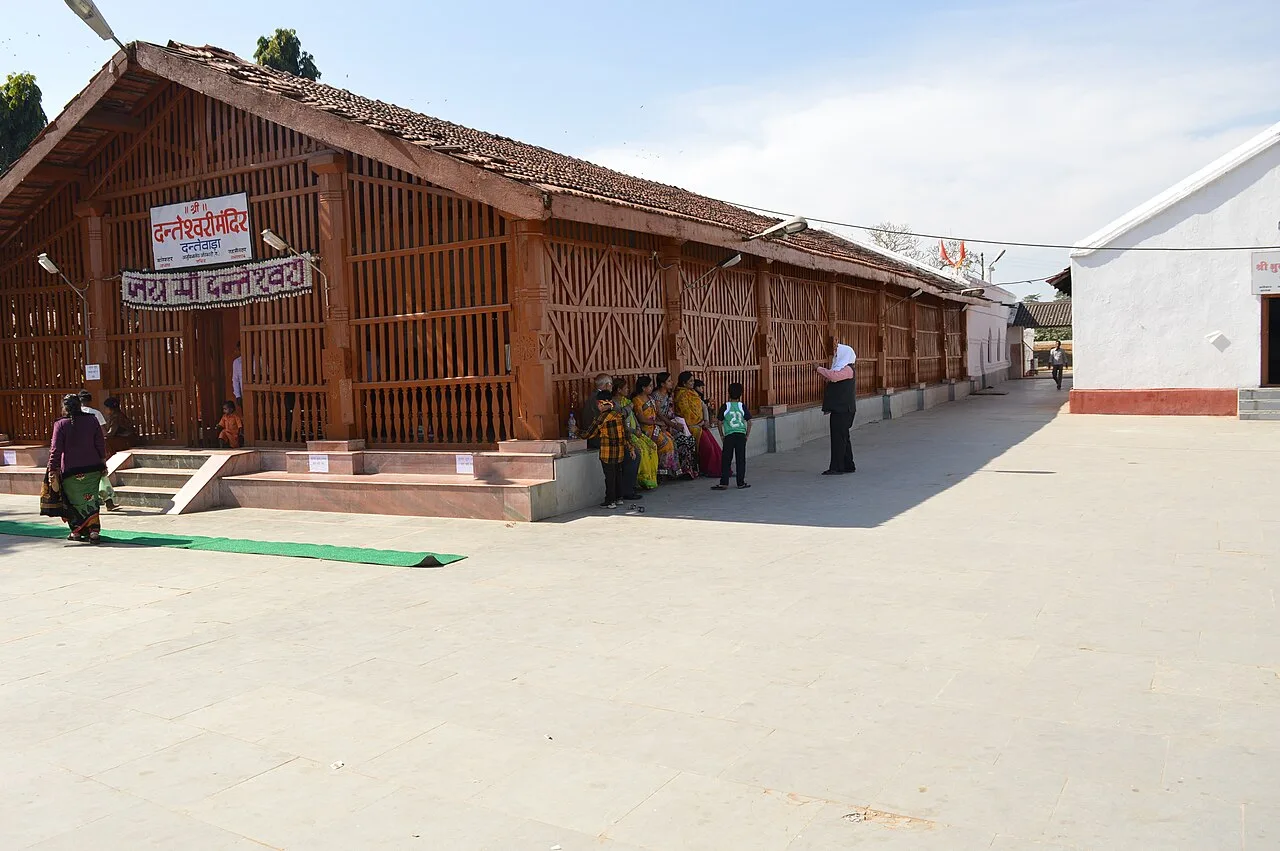
Danteshwari Temple
Danteshwari Temple is a Hindu shrine in Dantewada, Chhattisgarh, associated with the goddess regarded as Bastar’s family deity. People visit to worship and take part in Dussehra and Navaratri observances.
Key facts · verified by Ghumoopedia editors
- Type of place
- Temple / pilgrimage site
- Best time to visit
- October to February for sightseeing; July to September for the waterfalls at full flow
- Nearest railway station
- Dantewada · about 5 km (straight line)
- Verified
- 21 Nov 2026
Plan a trip from Danteshwari Temple — a day-by-day route through places nearby.
In Dantewada district of Chhattisgarh, this Hindu shrine honours the goddess Danteshwari. Built in the 14th century, it stands in Dantewada, around 80 km from Jagdalpur Tehsil. The town takes its name from the deity, who served as the Kakatiya rulers’ presiding goddess. Local tradition also regards Danteshwari as the family goddess of Bastar state. The temple is counted among India’s 52 Shakti pithas, sacred places associated with the divine feminine. According to legend, Sati’s tooth fell at this site during the events said to have established the Shakti shrines in the Satya Yuga. During Dussehra, thousands of tribal people from nearby villages and forest areas come to honour the goddess. Her idol is taken from the old temple and carried through the town in a procession, an event within Bastar Dussehra. This celebration has become a tourist attraction. During Navaratri, people also follow the custom of lighting Jyoti Kalashas at the temple. Chhattisgarh is known for its Gond, Maria and Muria tribal heritage, Bastar Dussehra, bell-metal and wrought-iron crafts, ancient temples at Sirpur and Bhoramdeo, and the wide Chitrakote Falls. Chhattisgarh has hot summers from March to June, a monsoon from June to September when Chitrakote and the other falls are at their most dramatic, and mild winters from November to February. The usual best time to visit is October to February for sightseeing; July to September for the waterfalls at full flow. Timings, fees and access arrangements must be confirmed locally. For official information, see Chhattisgarh Tourism at https://visitcg.in.
Why it matters
Danteshwari Temple is a prominent Hindu pilgrimage site in Dantewada, dedicated to Goddess Danteshwari. The temple is especially important to communities in Bastar: the goddess is traditionally regarded as the Kuldevi, or family deity, of the former Bastar rulers and remains a focus of regional worship. It is also counted among the 52 Shakta pithas, sacred places associated with the divine feminine; this status belongs to religious tradition rather than a single universally applied historical classification. The annual Bastar Dussehra procession brings worshippers from surrounding villages to the temple and links its rituals with a wider regional celebration. No UNESCO or Archaeological Survey of India protected status is asserted here.
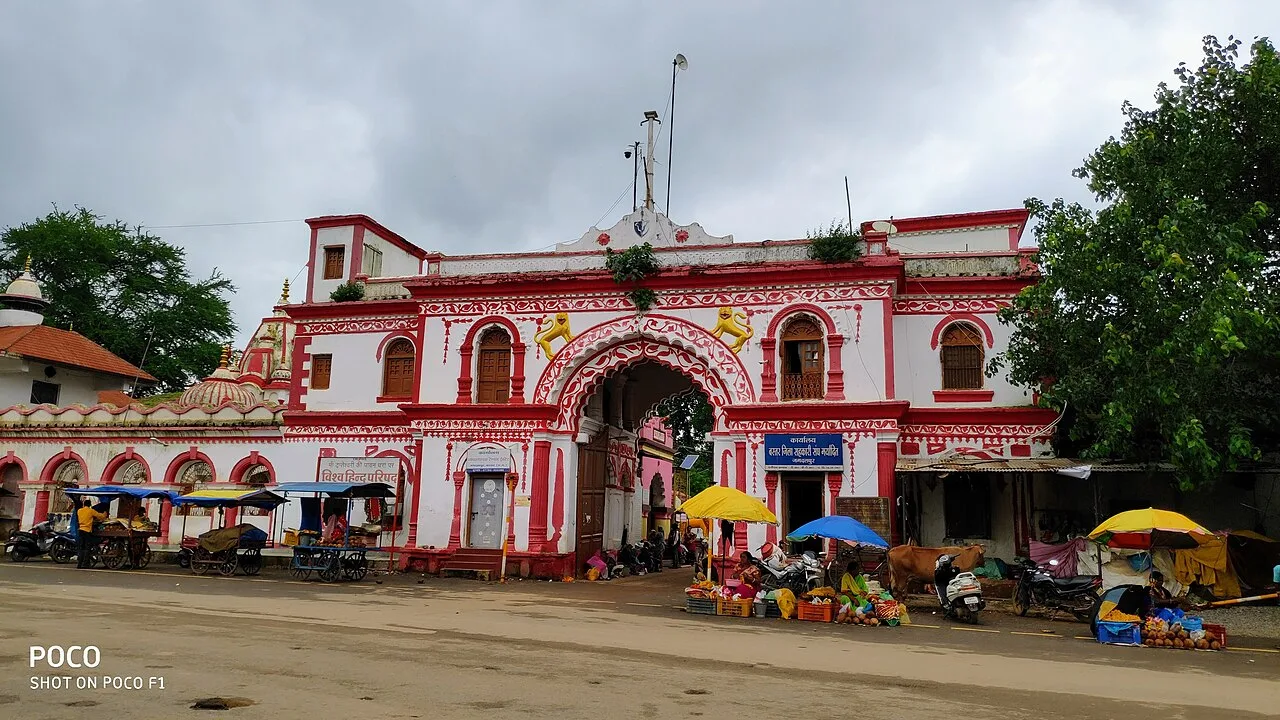
The temple is traditionally dated to the 14th century and is associated with the Kakatiya rulers, who held influence in the region. Dantewada itself takes its name from Danteshwari, the presiding deity of the earlier Bastar kingdom. Local and regional accounts describe the goddess as the royal family deity, or Kuldevi, of Bastar’s rulers. These associations place the shrine within the history of political authority and religious life in the area, although details of its earliest construction and later building phases are not consistently documented in general sources. The temple has continued as a place of worship, rather than surviving only as a historic monument. Its role is especially visible during Bastar Dussehra, when the goddess’s image is traditionally taken out in a procession. Navaratri observances, including the lighting of Jyoti Kalashas, are also part of its ritual calendar. The temple and its ceremonies have been maintained by local worshippers and temple caretakers over time. Specific dates or descriptions of major restoration campaigns should be confirmed with the managing authority; visitors should not assume that every feature visible today belongs to the original structure.
Origin stories & folklore
According to local and wider Shakta tradition, the temple stands at the place where a tooth of Sati fell. The story belongs to the account of Sati’s death and the creation of sacred Shakti pithas across the subcontinent. The name Danteshwari is associated with the tooth, or daanth, in this explanation. These accounts are religious beliefs, not claims that can be verified as historical events. The goddess is also remembered locally as the protective and ancestral deity of Bastar’s former ruling house. Worshippers may understand the shrine’s importance through these stories, through family tradition, or through personal devotion; visitors are encouraged to listen respectfully rather than treat active belief as spectacle.
Architecture & design
The temple is a functioning shrine in the town of Dantewada, and its buildings are used for worship and festival activity. The complex includes a principal sanctum for Danteshwari and spaces where devotees can gather and make offerings. Accounts commonly associate its construction with the 14th century and the Kakatiya period, but detailed architectural documentation of individual building phases is limited. It is therefore best to view the present complex as a living religious site rather than assume that every wall or fitting is medieval. Visitors should look for the transition from the outer spaces into the more restricted inner shrine, and observe how movement is shaped by worship and ritual. The temple is also traditionally associated with the meeting of the Shankini and Dankini rivers. Do not infer a particular building material, engineering system or architectural school without a reliable site source. Access to parts of the complex may change during worship or festivals, so follow caretakers’ directions and posted notices.
Important objects & sculptures
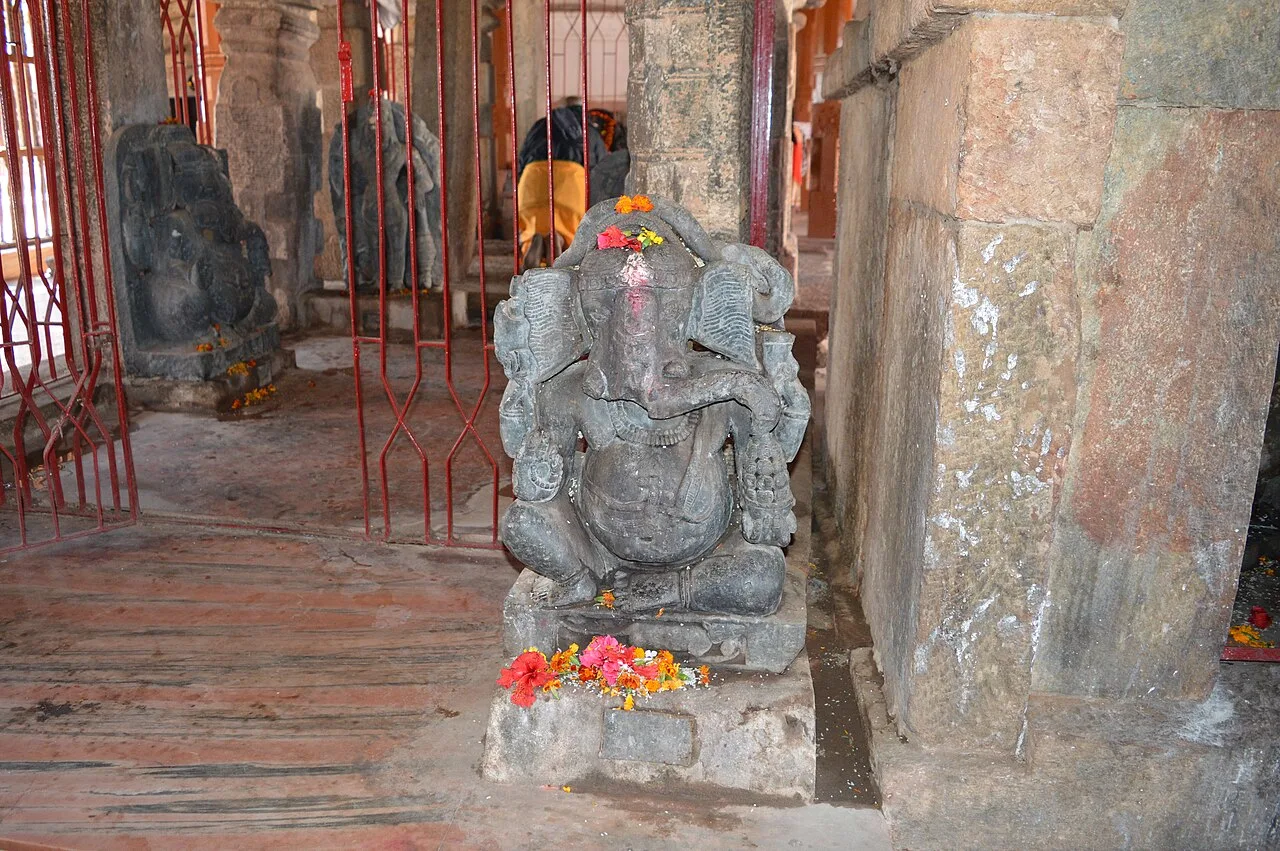
The central object of devotion is the image of Goddess Danteshwari in the sanctum. Worshippers approach it as a sacred presence, not simply as a sculpture for close inspection. The image and any ritual adornments may be difficult to view clearly when services are underway or when the shrine is crowded. Visitors can also notice the arrangement of offerings and ceremonial items in spaces where these are visible to the public. No particular inscription, museum collection or set of carvings is highlighted here as a confirmed feature. Ask temple caretakers before approaching, photographing or attempting to identify objects, and do not touch images, offerings or fittings unless invited to do so.
Religious significance
Danteshwari is a form of the Goddess worshipped in the Shakta tradition, in which the divine feminine is central. The temple is a place for prayer, offerings and participation in recurring observances; exact practices can vary with the ritual calendar and local custom. Many devotees regard the goddess as a protector and as the ancestral deity of Bastar’s former ruling family. The shrine is also associated with the Shakti pitha tradition through the story of Sati’s tooth. Navaratri worship includes the lighting of Jyoti Kalashas. Visitors who are not taking part in worship should keep a respectful distance, follow instructions about entry into inner areas and allow devotees to complete their prayers without interruption.
Visit Danteshwari Temple with time to observe daily prayers and rituals respectfully. Follow the posted rules on footwear, photography, head covering and dress, and avoid interrupting worshippers. Ask caretakers which areas are open to visitors, and beware of unofficial 'guides' asking for donations. A comfortable itinerary is one main visit in the morning, a local meal at midday and a short nearby stop before an afternoon return. Use the district list on this site to find other places in Dantewada, but check the route and its condition before combining stops. If a festival or fair is on — such as Bastar Dussehra — roads and stays can be busy, and the experience can be unforgettable. Leave no litter: many sites are protected by the communities around them.
Suggested itineraries
Half day: Spend 1–2 hours at the temple, allowing time for a respectful visit and observation of worship; have a local meal, then take a short walk around town if conditions allow. Full day: Visit the temple in the morning, pause for a meal in Dantewada, then choose one nearby destination such as Barsur after checking road conditions and return transport. Gentler option: Keep the visit to the temple and nearby streets, minimise walking, and arrange a vehicle close to the site where locally permitted.
The temple is part of the living cultural landscape of Bastar, a region known for Gond, Maria and Muria communities and their distinct traditions. During major observances, people from surrounding villages gather in Dantewada, bringing local forms of worship and community participation into the town. Bastar Dussehra is celebrated through processions and ritual activity, with the goddess’s image traditionally taken out from the temple. Languages and customs vary across the region; visitors may hear local languages alongside Hindi. The shrine is a place of active devotion, so clothing, offerings and ceremonial activity should be approached with curiosity and respect, not treated as performance arranged for visitors.
Festivals & events
Navaratri is an important period at the temple, when devotees worship the goddess and Jyoti Kalashas are traditionally lit. The temple is also closely connected with Bastar Dussehra, a major regional festival generally observed in the autumn season. As part of the celebrations, the goddess’s image is traditionally taken in a procession, and worshippers travel from surrounding villages and forest areas to pay homage. Festival activity can make roads, local transport and accommodation busier than usual, and access around the shrine may be managed differently. Check the local festival calendar and arrangements before travelling; dates vary from year to year.
Local food in Chhattisgarh includes chana sela, fara (steamed rice dumplings), muthiya, chila (rice-lentil pancake), aamat, bafauri, thethari-khurmi, pej and mahua-based preparations; Bastar is known for red ant chutney (chaprah) for the adventurous. Ask what is fresh that day; many small eateries cook a limited daily menu. Vegetarian travellers eat very well across this region, and most towns also have non-vegetarian options. Remote sites may have no restaurant at all. Carry water and snacks, eat a proper breakfast before long drives, and ask your accommodation for a packed lunch if you are heading out early. If prasad or langar is offered, accept it according to local custom. Choose busy, clean places, drink sealed or filtered water, and carry your packaging back with you.
Shopping & local experiences
In Dantewada and the wider Bastar region, look for locally made bell-metal and wrought-iron crafts, which are among Chhattisgarh’s recognised craft traditions. Availability and the makers represented can vary, so ask about the item’s origin and buy from a reputable local seller or artisan where possible. Small local markets may also offer everyday goods and seasonal produce. Food choices reflect the region and can be explored in town; ask locally about ingredients and preparation. Avoid removing anything from the temple grounds, and do not assume that religious objects sold nearby are official temple merchandise.
October to February for sightseeing; July to September for the waterfalls at full flow
The nearest principal railway station by straight-line distance is Dantewada, roughly 5 km away. The nearest operating airport by straight-line distance is Maa Danteshwari Airport, Jagdalpur, roughly 75 km away. These figures are calculated from map coordinates — actual road distance is longer, and interior roads can be slow. Raipur Junction and Bilaspur Junction are the main rail gateways, and Raipur has the busiest airport; Jagdalpur is connected by rail and has a small airport. For the final leg, Chhattisgarh State Road Transport Corporation buses, private buses and shared jeeps link district towns; shared jeeps usually leave early in the morning. A private taxi gives more flexibility for remote sites. When comparing train, bus and flight, count the complete door-to-door time: a flight saves the most time only if the onward road transfer is short, while an overnight train can save a hotel night. Book your return before you leave, because seats fill quickly on weekends, festivals and holidays. Current train numbers, timings, return services and fares are not listed here; check IRCTC and NTES for trains and the airline's own schedule for flights. No permit is needed to visit Chhattisgarh. Interior parts of Bastar, Dantewada, Sukma and Bijapur are affected by Left-wing extremism — check current advisories with the district administration, police or your host before travelling to remote areas, travel in daylight and follow instructions at check posts. Forest rest houses in the tiger reserves must be booked in advance.
Confirm onward and return timings on IRCTC / NTES, the state bus operator or your airline before travel. A dash means current timings or fares have not been verified.
Getting around
Dantewada town is the practical arrival point for the temple. Once in town, ask locally about auto-rickshaws, taxis or other local vehicles for the final approach; the temple may also be reachable on foot depending on where you are staying. Private taxis and shared vehicles can be useful for visits beyond the town, while local buses connect district towns. Availability and road conditions vary, especially for more remote sites, so check before combining destinations. Confirm parking and any festival-related traffic restrictions locally, as processions or crowds can affect vehicle access near the temple.
Hours, tickets & permissions
Entry arrangements can depend on worship services, festival activity and the areas being used by devotees. Rules may apply to footwear, photography, offerings and access to the inner shrine; do not assume that every part of the complex is open to visitors. No ticket or permit requirement is confirmed here. Ask temple caretakers or the managing authority about current entry conditions, any applicable fees, and whether special arrangements are in effect. Confirm current visiting hours locally before setting out, particularly during Navaratri or Bastar Dussehra.
Facilities
Facilities in and around the temple may include spaces for removing footwear and areas where worshippers make offerings. Toilets, drinking water and seating are more likely to be found in town than directly within the shrine complex; check locally before relying on them. Dantewada has local food options and basic services, but availability can vary. ATMs and accommodation may be available in town, though visitors should plan ahead during festival periods. Guided interpretation is not guaranteed; ask temple caretakers for site-specific information and be cautious about unsolicited requests for donations.
Accessibility
The temple is in an established town, but the condition of approaches, thresholds and interior floors may vary, and some areas may involve steps or uneven surfaces. There is no confirmed information here about wheelchair ramps, lifts or accessible toilets. A wheelchair or stroller user should check the route and entry arrangements with the temple or a local contact before travelling. Allow extra time for walking and for crowds, especially during festivals. Shade and seating may be limited within the complex, so elderly visitors and anyone with reduced mobility may prefer a quieter period and a companion to assist where needed.
No permit is needed to visit Chhattisgarh. Interior parts of Bastar, Dantewada, Sukma and Bijapur are affected by Left-wing extremism — check current advisories with the district administration, police or your host before travelling to remote areas, travel in daylight and follow instructions at check posts. Forest rest houses in the tiger reserves must be booked in advance. Carry a photo ID at all times and save the emergency number 112 and your accommodation's contact offline. Heat in summer and fog in winter are the main weather risks; carry water and allow extra travel time on foggy December–January mornings. Respect community rules, private property and posted instructions. For interior districts, travel in daylight, tell your host your route and expected return, and follow all check-post instructions.
Visitor rules
Follow notices and instructions from temple caretakers, particularly about footwear, dress, offerings and entry to the inner shrine. Dress modestly and avoid interrupting prayers or blocking worshippers. Photography may be restricted in some areas; ask before taking pictures. Do not touch the deity, ritual objects or offerings unless invited to do so. Keep the complex clean, take litter away and avoid single-use plastic where possible. Do not enter cordoned or staff-only spaces, and treat requests for donations carefully by giving only through recognised temple channels.
Photography
Ask temple caretakers whether photography is permitted before taking out a camera or phone; restrictions may apply inside the shrine or during worship. If photography is allowed, exterior views in soft morning or late-afternoon light can be less disruptive than shooting during crowded rituals. Do not photograph devotees, priests or children without their consent, and never obstruct a procession for a picture. Drone use may be restricted by aviation rules, local authorities or the temple; do not fly one without all required permissions. Respect any signs or requests to stop.
Choose a stay by the full journey to Danteshwari Temple, not just the district name. Raipur and Bilaspur offer the widest choice; in Bastar, Jagdalpur is the practical base. In summer, check air-conditioning or coolers; in December and January, check hot water. Book in advance for weekends, festivals and the peak season (October to February for sightseeing; July to September for the waterfalls at full flow). Confirm the exact location, meals included, check-in time and cancellation terms in writing. Avoid sending money to unverified contacts or touts at stations. Carry some cash, as card and digital payments can be unreliable in remote areas.
Barsur, in Dantewada district, is known for historic temple remains, including the Battisa Temple and the Mama-Bhanja Temple; check road conditions and local access before planning a combined visit. Dholkal is associated with a hilltop Ganesh image in the district and involves a more demanding approach, so seek current local advice before attempting it. Jagdalpur is a regional base for further travel and is associated with Chitrakote Falls, though the falls are outside Dantewada district. These places are not all short stops from the temple; check actual road routes and travel time rather than relying on straight-line distance.
For couples, Danteshwari Temple rewards a slow pace: arrive early for soft light and fewer crowds, share a local meal and keep the evening free. The wide curtain of Chitrakote Falls at dusk or a tribal craft market makes the trip memorable. Public displays of affection can be frowned upon in conservative communities and at religious sites, so be discreet. Keep a buffer in your itinerary, because weather and road conditions can delay plans.
Q: How much time should I allow for a visit? A: Around one to two hours is a reasonable visit, with extra time needed during worship or festivals. Q: When is a good season to visit? A: October to February is generally comfortable for sightseeing in Chhattisgarh; check conditions and festival crowds before travelling. Q: Is entry free, and do I need a permit? A: No fee or permit requirement is confirmed here. Check current entry arrangements with the temple or managing authority. Q: Can children and elderly visitors visit? A: Yes, but crowds, steps or uneven surfaces may require extra care. Choose a quieter period and check access locally. Q: Where can I stay nearby? A: Look for accommodation in Dantewada town or use a larger regional base such as Jagdalpur; confirm availability, especially during festival periods.
Be the first to share photos, stories, advice or a helpful contact for Danteshwari Temple.
Loading…