
Swaminarayan Akshardham
This Delhi Hindu temple complex combines a central shrine with exhibitions, a water show and a garden. People visit to learn about Swaminarayan and explore Hindu culture and architecture.
Key facts · verified by Ghumoopedia editors
- Type of place
- Heritage monument
- Best time to visit
- October to March (check air quality from November to January)
- Verified
- 21 Nov 2026
Plan a trip from Swaminarayan Akshardham — a day-by-day route through places nearby.
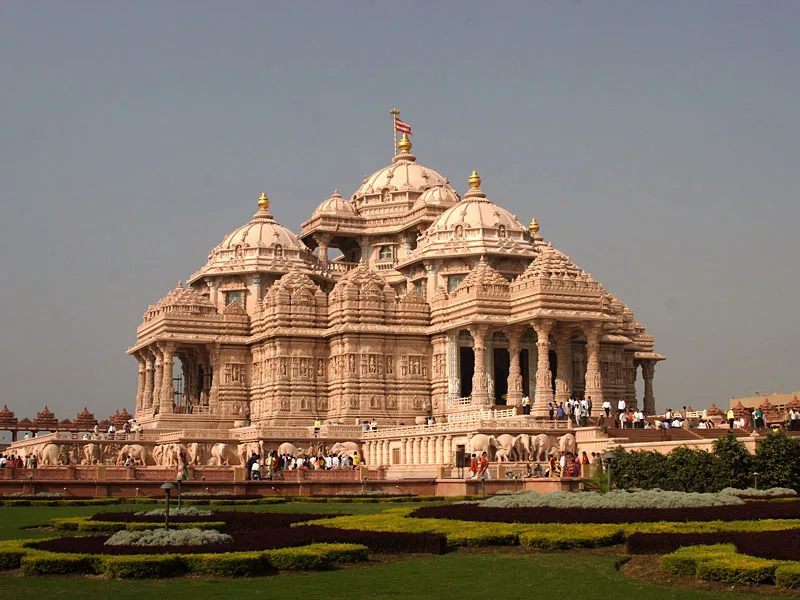
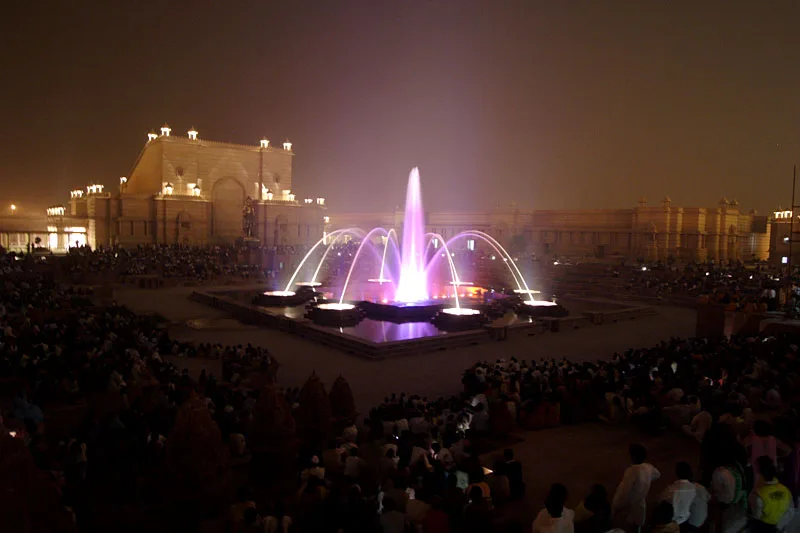
Located in Delhi’s East Delhi district, the complex is close to the Noida boundary. It is also known as Akshardham Temple or Akshardham Delhi, and combines a Hindu shrine with a campus presenting Hindu culture and architecture in traditional and contemporary forms. Inspired by Yogiji Maharaj, the project was created by Pramukh Swami Maharaj and built by BAPS. It opened on 6 November 2005, with Pramukh Swami Maharaj leading the inauguration. A. P. J. Abdul Kalam, Manmohan Singh, L. K. Advani and B. L. Joshi were present. The main temple stands at the centre and was built according to Vastu shastra and Pancharatra shastra. As at Akshardham in Gandhinagar, Gujarat, the main shrine forms the complex’s focal point. Exhibition halls cover Swaminarayan’s life and work. The grounds also include an abhishek mandap and the Sahaj Anand water show. Visitors can explore a thematic garden and three exhibitions: Sahajanand Darshan (Hall of Values), Neelkanth Darshan, and Sanskruti Darshan, a cultural boat journey. In Swaminarayan Hinduism, Akshardham means Swaminarayan’s abode; followers believe it to be God’s temporary home on earth. Among BAPS Hindu temples, it is surpassed in size only by Akshardham in New Jersey, United States. Delhi layers many historic cities — from the Delhi Sultanate and the Mughal capital to Lutyens' New Delhi — with Sufi shrines, gurdwaras, temples, busy markets and India's national monuments. Delhi has very hot summers from April to June, a humid monsoon from July to September and cold, foggy winters in December and January. Air quality is often very poor from late October to January. The usual best time to visit is October to March (check air quality from November to January). Timings, fees and access arrangements must be confirmed locally. For official information, see Delhi Tourism at https://delhitourism.gov.in.
Why it matters
Swaminarayan Akshardham is a major Hindu temple and cultural campus in East Delhi, close to the Noida border. It serves local worshippers as well as visitors seeking to learn about Swaminarayan Hinduism, Indian religious traditions and temple arts. The complex brings a contemporary religious institution into Delhi’s wider landscape of historic monuments, shrines and public landmarks. BAPS, the organisation that built it, describes it as the world’s second-largest BAPS Hindu temple, after its Akshardham in New Jersey. It is a modern complex, not an ancient monument; no UNESCO World Heritage or Archaeological Survey of India recognition is claimed here. Its exhibitions, gardens and water show add educational and visitor attractions to its role as a place of worship.
The idea for the Delhi complex is associated with Yogiji Maharaj, a spiritual leader of the Swaminarayan tradition. It was realised by BAPS under the leadership of Pramukh Swami Maharaj, with contributions from devotees, craftspeople and other workers. Construction began in the late twentieth century, and the complex opened on 6 November 2005. Pramukh Swami Maharaj inaugurated it in the presence of India’s then president A. P. J. Abdul Kalam, prime minister Manmohan Singh and other public figures. The central mandir was designed in accordance with the Vastu shastra and Pancharatra shastra, religious and architectural traditions that inform Hindu temple planning. The surrounding campus was conceived as more than a shrine: it includes exhibition halls presenting Swaminarayan’s life and teachings, a cultural boat ride, a thematic garden, an abhishek mandap and a water-show venue. The complex continues to function as a place of worship and as a destination for educational and cultural visits. It is a modern construction rather than a historic structure undergoing archaeological restoration; visitors should check with BAPS for current conservation or access information.
Origin stories & folklore
According to Swaminarayan belief, Akshardham is the divine abode of Bhagwan Swaminarayan, understood by followers as a temporal home of God on earth. The name is therefore used in a devotional sense, not simply as a description of the buildings. BAPS presents the complex as an expression of this spiritual idea through its mandir, images and exhibitions. The Neelkanth Darshan exhibition draws on the traditional account of the young Swaminarayan, known in this part of his life as Neelkanth, undertaking a long pilgrimage across India. The display recounts episodes from that journey as religious tradition and interpretation. These stories are matters of faith, and visitors can learn about them in the context of Swaminarayan teaching without treating them as independently verified historical records.
Architecture & design
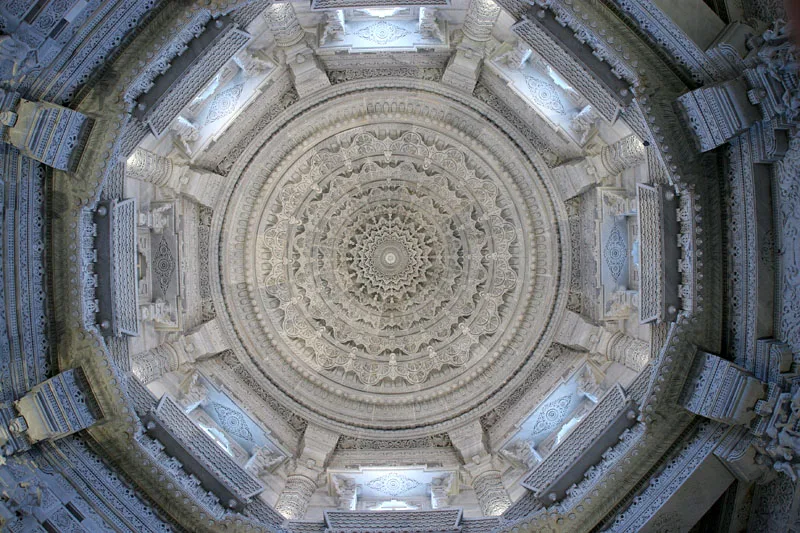
The complex is arranged around a central mandir, with exhibition buildings, gardens and visitor facilities forming a larger campus. Its design draws on traditional Hindu temple forms and follows principles associated with Vastu shastra and Pancharatra shastra. The mandir is built principally from intricately carved pink sandstone and white marble, worked into columns, domes, niches and sculpted surfaces. Its traditional stone construction and carved ornament give the building a historic visual language, although the complex itself dates from the modern period. Sculpted figures and narrative panels cover much of the exterior and interior, while the shrine provides the devotional focus. The surrounding campus includes the Hall of Values, Neelkanth Darshan, the Sanskruti cultural boat ride, a thematic garden, an abhishek mandap and a venue for the Sahaj Anand water show. These features combine religious architecture with exhibition design and visitor circulation. The scale of the grounds means that seeing the mandir and the wider campus involves appreciable walking.
Important objects & sculptures
Look for the central images of Bhagwan Swaminarayan and the deities honoured in the mandir; worshippers’ practices and the specific shrine arrangements are best observed quietly and according to posted instructions. The carved stonework includes religious figures, floral patterns, animals and scenes intended to communicate ideas from Hindu tradition. The sculpted elephant forms on the temple’s lower exterior are among the distinctive features visitors may notice. The exhibitions use displays, models and multimedia to present episodes from Swaminarayan’s life, ethical teachings and cultural history. Neelkanth Darshan focuses on the pilgrimage narrative, while the Hall of Values conveys lessons through staged presentations. These are curated displays rather than an archaeological collection. Do not touch carvings or shrine objects, and follow staff guidance about which areas are open to visitors.
Visit Swaminarayan Akshardham with time to observe daily prayers and rituals respectfully. Follow the posted rules on footwear, photography, head covering and dress, and avoid interrupting worshippers. Ask caretakers which areas are open to visitors, and beware of unofficial 'guides' asking for donations. A comfortable itinerary is one main visit in the morning, a local meal at midday and a short nearby stop before an afternoon return. Use the district list on this site to find other places in East Delhi, but check the route and its condition before combining stops. If a festival or fair is on, roads and stays can be busy — and the experience can be unforgettable. Leave no litter: many sites are protected by the communities around them.
Suggested itineraries
Half day: Allow about 3–4 hours for security and a visit to the mandir, then choose one exhibition or the garden; add the water show only if it is operating and fits your schedule. Full day: Spend about 4–5 hours at the mandir and selected exhibitions, pause for a meal, then take a relaxed outing to a Noida market or return to central Delhi for another attraction. Gentler option: Focus on the mandir and one nearby seated presentation, take regular rests, and skip the longer campus circuit; ask staff about current access and seating.
Akshardham is an active place of Hindu worship as well as a visitor complex. Daily prayer and ritual take place around the mandir; visitors should keep a respectful distance, remain quiet where appropriate and avoid disrupting worshippers. Devotional music and aarti form part of temple life, though arrangements can vary. Modest dress and removing footwear where instructed are customary. The community and exhibitions reflect the Swaminarayan tradition, with Hindi and Gujarati especially relevant to its religious and cultural life; visitor information may also be available in English. Families, pilgrims, school groups and tourists share the campus, so queues and visitor protocols are part of the experience. Ask before engaging volunteers or worshippers in conversation, and do not assume that a ritual is a performance for visitors.
Festivals & events
Diwali, Janmashtami and celebrations associated with Swaminarayan Jayanti and Ram Navami are important in the wider Swaminarayan tradition and may be marked at the complex. Programmes and public access can vary from year to year, so confirm event details with BAPS before planning around a festival. Religious occasions can bring larger congregations, longer security queues and busier roads. Seasonal events and school or group visits may also affect the feel of the campus. Nearby Delhi and Noida hold their own religious and cultural celebrations, but these are separate events and should not be assumed to be part of Akshardham’s programme.
Local food in Delhi includes chaat, stuffed parathas and jalebi in Chandni Chowk, chole bhature, kebabs and Mughlai dishes around Jama Masjid, butter chicken, momos and kulfi. Ask what is fresh that day; many small eateries cook a limited daily menu. Vegetarian travellers eat very well across this region, and most towns also have non-vegetarian options. Street food is part of the Delhi experience: pick busy stalls with fast turnover, prefer freshly cooked items and drink sealed or filtered water. If prasad or langar is offered, accept it according to local custom. Choose busy, clean places and carry your packaging back with you.
Shopping & local experiences
The complex may offer devotional books, religious keepsakes and other temple-related souvenirs; availability and access can change. Choose items from authorised outlets rather than responding to unsolicited requests for donations or purchases. Noida’s Sector 18 commercial area has shops and restaurants for a broader retail and food stop. Delhi’s markets offer handicrafts and regional goods, but many require a separate journey. Try local vegetarian food where available, and check ingredients and food-service rules before ordering. Avoid buying wildlife products or objects described as antiques without reliable provenance.
October to March (check air quality from November to January)
Within Delhi, the Delhi Metro is usually the quickest and cheapest way to reach Swaminarayan Akshardham; find the nearest station on the official DMRC website or app, and use an app-based auto, e-rickshaw or cab for the last stretch. Road traffic is heavy at peak hours, so allow extra time and avoid driving yourself in Old Delhi lanes. Long-distance trains use New Delhi, Old Delhi, Hazrat Nizamuddin and Anand Vihar terminals, and flights use Indira Gandhi International Airport. The nearest of these railway terminals is Hazrat Nizamuddin, roughly 5 km away in a straight line. Indira Gandhi International Airport, Delhi is roughly 20 km away in a straight line. When comparing train, bus and flight, count the complete door-to-door time: a flight saves the most time only if the onward road transfer is short, while an overnight train can save a hotel night. Book your return before you leave, because seats fill quickly on weekends, festivals and holidays. Current train numbers, timings, return services and fares are not listed here; check IRCTC and NTES for trains and the airline's own schedule for flights. No permit is needed to visit Delhi. Many monuments are protected by the Archaeological Survey of India and need an entry ticket, often cheaper when bought online; the Red Fort and several museums close on Mondays. Security checks are routine at metro stations and major sites.
Confirm onward and return timings on IRCTC / NTES, the state bus operator or your airline before travel. A dash means current timings or fares have not been verified.
Getting around
The Akshardham station on the Delhi Metro Blue Line is the most convenient public-transport arrival point for many visitors; check the DMRC network for current service information. Auto-rickshaws, app-based taxis and cabs can be useful for the last stretch or for onward travel, while local buses serve parts of East Delhi. Road congestion can make journeys slower at busy periods. Follow signs and staff directions between the entrance, security checks and the campus attractions; walking within the grounds can take time. Parking may be available, but confirm current arrangements and do not assume a space is guaranteed.
Hours, tickets & permissions
Entry arrangements can differ between the mandir grounds, exhibitions and special presentations. Some attractions may require a separate ticket, and security screening applies. Rules can cover footwear, modest dress, identification, bags and the deposit of prohibited belongings; photography and electronic devices are subject to restrictions. Do not rely on third-party listings for current opening arrangements or fees. Confirm the latest hours, admission conditions, exhibition availability and any event-related changes directly with the managing authority, BAPS, before travelling.
Facilities
The campus usually has visitor toilets, drinking-water points and food options, but availability and access rules can change. A food court or other dining facility may be available; check what is open and whether outside food is permitted. Security and a managed deposit or storage process for restricted belongings are commonly part of the visit, so check current rules before arrival. Parking arrangements, visitor assistance and any guided interpretation should also be confirmed locally. ATMs and additional restaurants, shops and services are more likely to be found in nearby commercial areas than within every part of the complex.
Accessibility
Expect substantial walking across a large campus, with security queues and hard paved or stone surfaces. Some areas may involve steps, and conditions can vary between the mandir, exhibitions and outdoor spaces. Shade and places to rest may not be continuous, particularly in exposed areas or during hot weather. Do not assume that every route is step-free or that a wheelchair or stroller can access every attraction. Visitors with mobility, sensory or medical needs should contact the managing authority before travelling to ask about current routes, assistance, seating and restrictions. Elderly visitors may find a focused visit more comfortable than attempting the entire campus.
No permit is needed to visit Delhi. Many monuments are protected by the Archaeological Survey of India and need an entry ticket, often cheaper when bought online; the Red Fort and several museums close on Mondays. Security checks are routine at metro stations and major sites. Carry a photo ID at all times and save the emergency number 112 and your accommodation's contact offline. Summer heat and winter smog are the main health risks: drink plenty of water, check the air-quality index and wear a good mask on poor-air days. Watch your belongings in crowded markets and metro coaches. Respect community rules, private property and posted instructions. Follow local guidance if access changes.
Photography
Photography is generally restricted within the complex, and phones, cameras or other electronic devices may be subject to security rules or required to be deposited. Confirm the current policy before bringing equipment; do not assume that exterior areas are exempt. If photography is permitted in a designated area, soft morning or late-afternoon light can bring out the stone carving. Do not photograph worshippers, children or rituals without consent, and never interrupt prayer for a picture. Drone use requires appropriate permission and should not be attempted over the temple or crowds.
Choose a stay by the full journey to Swaminarayan Akshardham, not just the district name. Central areas such as Connaught Place, Paharganj and Karol Bagh, or areas near your metro line, save time; check the exact location and how far the hotel is from the nearest metro station. In summer, check air-conditioning or coolers; in December and January, check heating and hot water. Book in advance for weekends, festivals and the peak season (October to March (check air quality from November to January)). Confirm the exact location, meals included, check-in time and cancellation terms in writing. Avoid sending money to unverified contacts or touts at stations. Carry some cash, as card and digital payments can be unreliable in remote areas.
Noida lies just across the border and offers commercial areas, including the Sector 18 market and shopping district, for a separate meal or shopping stop. These are urban destinations rather than extensions of the temple visit. Humayun’s Tomb and Purana Qila are notable Delhi monuments, but they are not immediate neighbours; treat them as a separate outing and allow for road travel. The temple’s own garden, exhibitions and water-show venue provide the most straightforward additions without leaving the campus. Check routes and traffic before combining any off-site stop.
For couples, Swaminarayan Akshardham rewards a slow pace: arrive early for soft light and fewer crowds, share a local meal and keep the evening free. Evenings at a garden, heritage site or a rooftop café near the monuments make a good end to the day. Public displays of affection can be frowned upon in conservative communities and at religious sites, so be discreet. Keep a buffer in your itinerary, because weather and traffic can delay plans.
Q: How much time should I allow for a visit? A: Set aside at least half a day if you want to see the mandir and an exhibition. The full campus and presentations can take longer, depending on queues and what is operating. Q: When is a good season to visit? A: October to March is generally more comfortable in Delhi, although winter air quality can be poor. Check local conditions before travelling. Q: Is entry free, and do I need to book? A: Access rules differ between the mandir and attractions, and some presentations may require tickets. Confirm current admission and booking requirements with BAPS. Q: Is the visit suitable for children and elderly visitors? A: Families are welcome, but the campus involves walking and security procedures. Plan rests, supervise children closely and check accessibility needs in advance. Q: Where should I stay nearby? A: Visitors can look for accommodation in East Delhi, Anand Vihar or Noida, or stay elsewhere in Delhi and travel by Metro or taxi. Choose based on your onward route and verify transport connections.
Be the first to share photos, stories, advice or a helpful contact for Swaminarayan Akshardham.
Loading…