
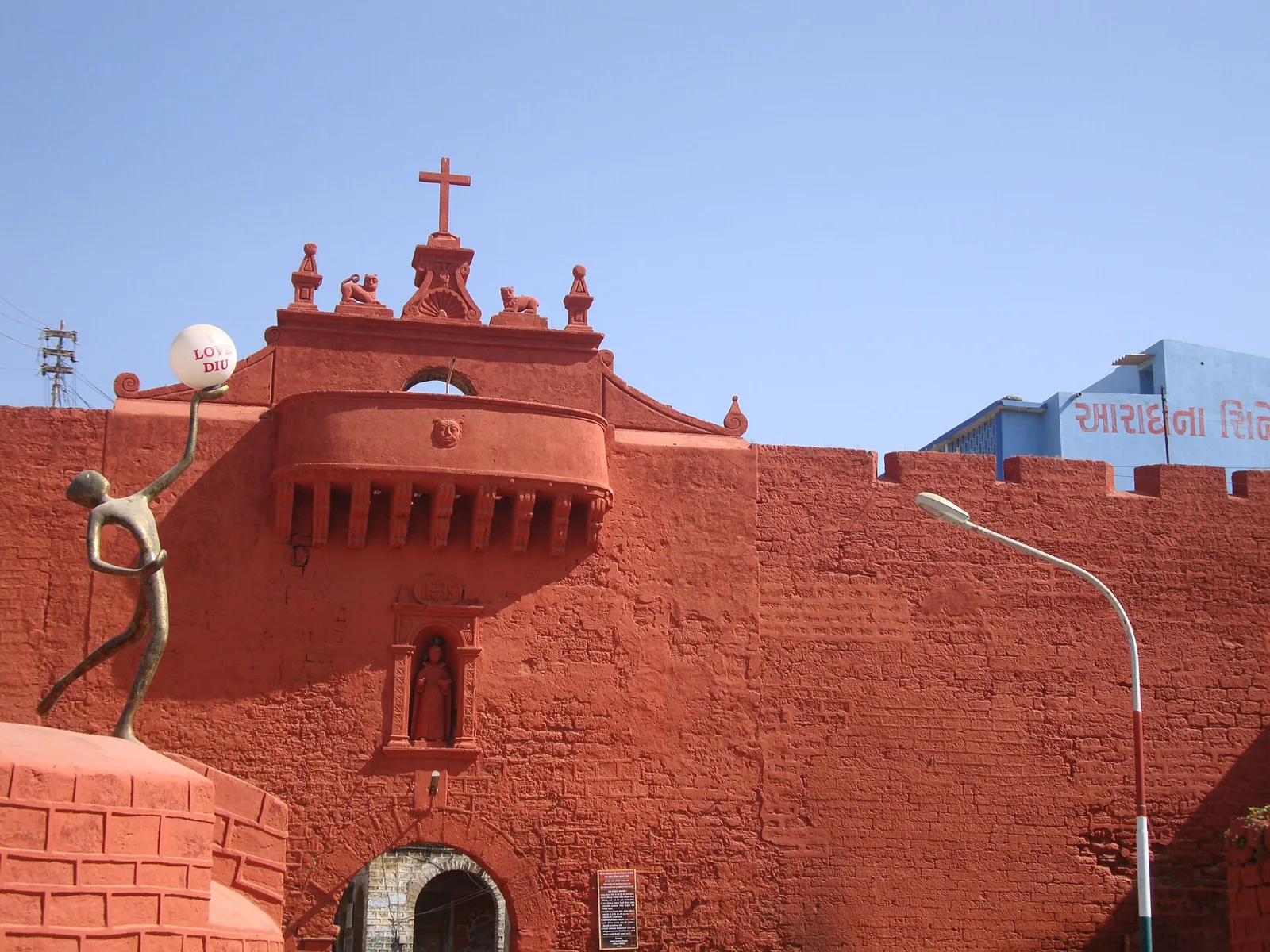
Zampa Gateway
Zampa Gateway is a heritage site associated with Diu district in Dadra and Nagar Haveli and Daman and Diu. Its heritage listing may interest visitors exploring the district’s heritage places.
Key facts · verified by Ghumoopedia editors
- Type of place
- Heritage monument
- Best time to visit
- October to March; August to October for green forests in Dadra and Nagar Haveli
- Verified
- 21 Nov 2026
The gateway appears in the Dadra and Nagar Haveli and Daman and Diu index. There, it is identified as a heritage site linked to Diu district, placing it among the heritage places recorded for the area. Zampa Gateway is associated with Diu district, which forms part of the union territory of Dadra and Nagar Haveli and Daman and Diu. Its inclusion in the territory’s index is the key information attached to the place: the listing classifies it as heritage. For visitors interested in heritage sites in Diu district, the index entry provides a reason to take note of Zampa Gateway. The available details identify its name, district and heritage status. This union territory joins three separate areas: Daman and Diu, two former Portuguese coastal enclaves with forts, churches and quiet beaches, and Dadra and Nagar Haveli, a forested inland region of Warli and Kokna tribal villages around Silvassa, the Madhuban reservoir and the Damanganga river. The coast is hot and humid from March to June; the southwest monsoon from June to September brings heavy rain and rough seas; October to February is warm, dry and pleasant. Dadra and Nagar Haveli is greenest just after the monsoon. The usual best time to visit is October to March; August to October for green forests in Dadra and Nagar Haveli. For official information, see Dadra and Nagar Haveli and Daman and Diu Tourism at https://tourism.dddgov.in.
Why it matters
Ghumoopedia lists Zampa Gateway as a heritage site in Diu district, within the union territory of Dadra and Nagar Haveli and Daman and Diu. We cannot confirm whether it has a separate national or state-level designation, or whether it is protected by the Archaeological Survey of India. Treat the listing as a starting point rather than proof of a particular legal status. Before making a special journey, confirm the site’s identity, location and access arrangements with the union territory’s tourism service or a local host.
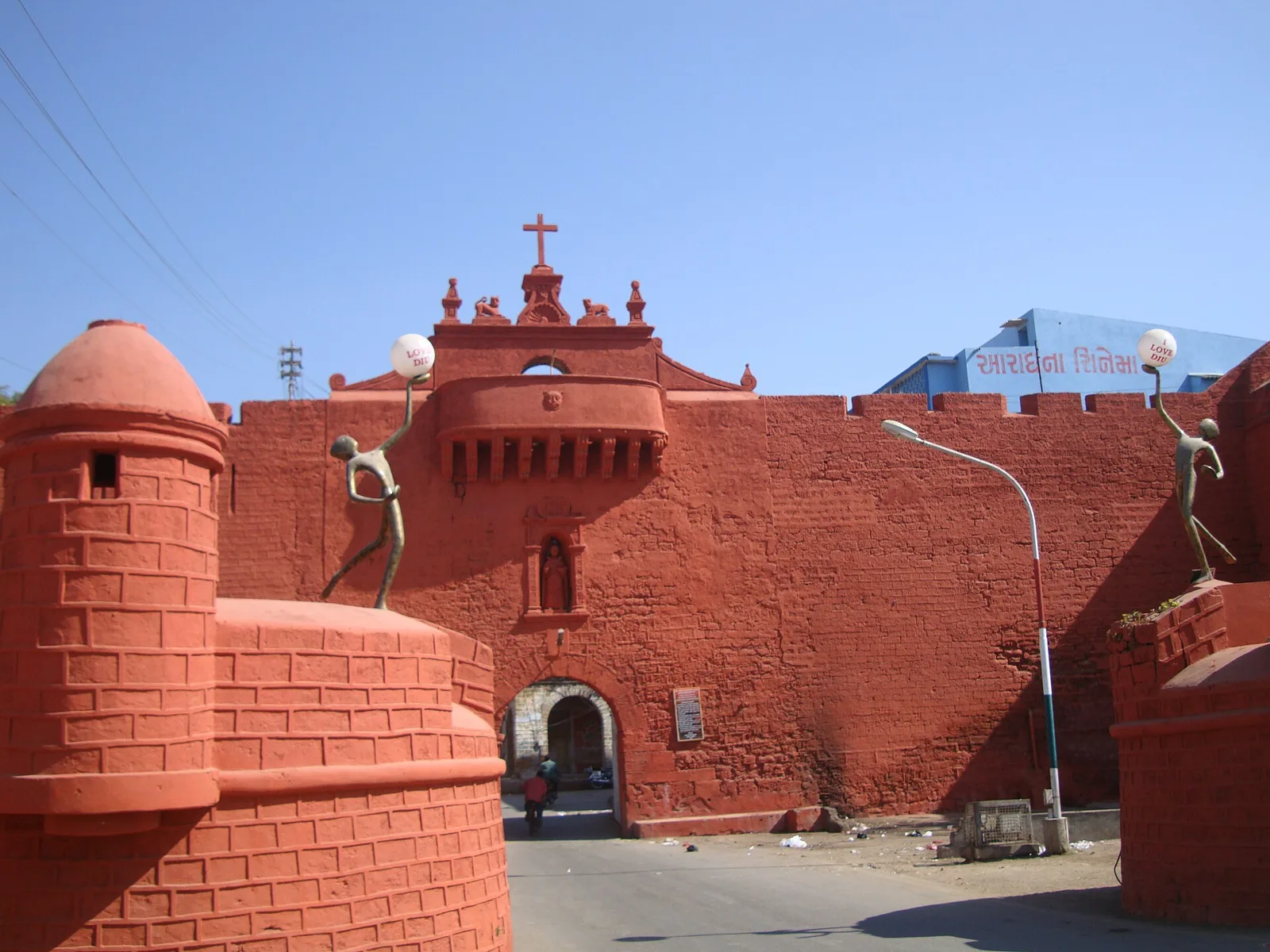
Its inclusion in Ghumoopedia’s heritage index establishes that it is listed as a heritage site in Diu district, but does not by itself confirm a construction date, patron, original purpose or conservation history. Diu has a documented broader historical setting as a former Portuguese coastal enclave, and its forts and churches reflect that past; however, that regional context should not be used to assign a Portuguese date or builder to this gateway without evidence specific to the structure. No restoration campaign, inscription or archival record has been confirmed here. Visitors interested in its history should look for on-site interpretation, ask an authorised guide or consult the tourism department. Until a dependable site-specific account is available, dates and stories about its construction should be treated as unverified rather than repeated as fact.
Origin stories & folklore
Diu has a long and culturally varied history, so stories may circulate locally about old buildings, travellers or past rulers; these should not automatically be attributed to this gateway. If a resident or guide shares a story, ask whether it is a documented historical account, a family memory or a local belief. That distinction helps preserve oral traditions without presenting them as established fact. Visitors can enquire locally, but should avoid adding unverified tales to the site’s history unless a dependable source supports the connection.
Architecture & design
The name identifies it as a gateway in Ghumoopedia’s heritage listing, but does not establish whether it is an arch, a fortified entrance or a feature of a larger historic complex. Do not assume a particular architectural style or period from Diu’s broader Portuguese-era heritage. On a visit, observe the structure from accessible public areas and look for legible interpretation or conservation notices that identify its fabric and features. Avoid touching, climbing on or leaning objects against historic masonry. If the site has restricted areas or fragile surfaces, follow local instructions and any barriers in place.
Important objects & sculptures
Visitors should not expect particular objects or interpret indistinct marks as inscriptions without confirmation. An authorised local guide or tourism representative may be able to identify features that are not explained publicly. Treat movable objects and masonry details as part of the heritage setting: do not touch, remove, chalk, rub or climb on them. Photograph any visible text only where local rules permit.
Explore Zampa Gateway slowly and read the interpretation boards, or hire an authorised guide to understand its history. Check opening days, ticket counters and camera rules in advance; many monuments and museums close on one weekday and on some public holidays. Early morning gives softer light, cooler air and smaller crowds. A comfortable itinerary is one main visit in the morning, a local meal at midday and a short nearby stop before an afternoon return. Visit forts and churches in the morning and spend sunset on a beach; in Diu, a scooter makes it easy to cover the forts, caves and beaches in a day. Use the district list on this site to find other places in Diu, but check the route and its condition before combining stops. If a festival is on — such as Christmas and the feasts of the Portuguese-era churches, the Tarpa tribal festival in Silvassa, Navratri garba or Diwali — transport and stays can be busy, and the experience can be unforgettable. Keep beaches clean and do not leave bottles or plastic behind.
Suggested itineraries
Half day: Confirm the gateway’s location and access locally; visit Zampa Gateway (allow about 30–60 minutes if open); continue to one verified Diu town heritage sight, allowing time for local travel. Full day: Confirm the gateway’s location; visit it in the morning; explore Diu Fort and St Paul’s Church; pause for a local meal; choose Naida Caves or a beach for a later stop, checking access and routes. Gentler option: Arrange a vehicle drop-off as close as permitted, spend a short time at the gateway, then choose one nearby stop with seating and minimal walking after checking conditions.
No living tradition, performance or ritual has been confirmed as specifically connected with Zampa Gateway. The wider union territory brings together distinct coastal and inland settings: Daman and Diu have Portuguese-era heritage, while Dadra and Nagar Haveli is associated with Warli and Kokna tribal communities. Those regional identities should not be treated as a single culture or assumed to be represented at this site. Gujarati and other regional languages are used across the area, but the languages visitors will encounter at the gateway are not verified. Be courteous to local residents, ask before photographing people, and follow any guidance if a community activity or religious observance is taking place nearby.
Festivals & events
No festival or fair has been confirmed as being held at Zampa Gateway itself. In Diu, Christmas and feasts associated with Portuguese-era churches can bring visitors to the area; Navratri and Diwali are also observed in the region. These occasions generally fall in their customary seasonal periods, but dates and local programmes vary. If travelling during a festival, check local notices and arrange transport and accommodation ahead, as popular places can be busier. Be respectful around worship, processions and community events, and do not assume public access to private ceremonies.
Local food in Dadra and Nagar Haveli and Daman and Diu includes fresh seafood, Portuguese-influenced dishes such as sorpotel and vindaloo, Gujarati thalis and snacks, and in Silvassa, tribal Warli and Kokna dishes made with local rice, millet and forest greens. Ask what is fresh that day; many small eateries cook a limited daily menu. Daman and Diu are known for seafood shacks near the beaches; Silvassa has Gujarati and North Indian vegetarian restaurants. Remote sites may have no restaurant at all. Carry water and snacks, eat a proper breakfast before long journeys, and ask your accommodation for a packed lunch if you are heading out early. Try a home-cooked or local meal when you can — it is often the best food on the route. Choose busy, clean places, drink sealed or filtered water, and carry your packaging back with you.
Shopping & local experiences
No shop or market has been confirmed at Zampa Gateway. In Diu, visitors can look for local markets, everyday regional goods and food, but the range and location of stalls should be checked locally. Choose locally made souvenirs where their origin is clear, and avoid buying fragments, antiques or objects claimed to have come from a monument. A meal in Diu can be a way to experience local food; ask restaurants about ingredients and preparation if you have dietary needs. Carry reusable bags and avoid leaving packaging or plastic at heritage sites and beaches.
October to March; August to October for green forests in Dadra and Nagar Haveli
These figures are calculated from map coordinates — actual road distance is longer. Vapi station on the Mumbai–Ahmedabad line is the gateway for Daman (about 12 km) and Silvassa (about 18 km); Surat and Mumbai airports have the widest choice of flights. Diu is on a separate island off the Saurashtra coast, with a small airport, the nearest railheads at Veraval and Una, and buses from Ahmedabad and Rajkot. For the final leg, local buses, autos and taxis, with rented scooters and bicycles popular in Diu cover the local area. A private taxi gives more flexibility for spread-out sights. When comparing train, bus and flight, count the complete door-to-door time: a flight saves the most time only if the onward transfer is short, while an overnight train can save a hotel night. For Daman and Silvassa, a fast train to Vapi is usually quicker than flying, since the station is a short drive away. For Diu, flying to Diu airport saves a long road journey, while trains only go as far as Veraval. Book your return before you leave, because seats fill quickly on weekends, festivals and holidays. Current train numbers, timings, return services, ferry departures and fares are not listed here; check IRCTC and NTES for trains, the airline's own schedule for flights and the official operator for ships and ferries. No permit is needed. Daman and Diu allow the sale of alcohol, unlike the surrounding state of Gujarat, which has prohibition — carrying liquor back into Gujarat is an offence, and police check vehicles at the border. Drinking on beaches and in public places is restricted.
Getting around
In Diu, autos and taxis can help visitors move between local sights; hired scooters and bicycles are also used for getting around the island. Local buses may serve some routes, but check locally whether one is useful for this stop. If the gateway is accessible on foot from your starting point, assess the route and road conditions first. Ask about a suitable drop-off and parking rather than assuming either is available at the monument.
Hours, tickets & permissions
Heritage sites may have entry controls, ticketing, camera restrictions, temporary closures or rules for guided visits, but none of these specific requirements is confirmed here. Do not rely on an assumed schedule or on information for another Diu monument. Before setting out, confirm current hours, fees, entry conditions and any closure days with Dadra and Nagar Haveli and Daman and Diu Tourism or a local host. Follow notices at the site and any instructions from its manager.
Facilities
Do not assume there are toilets, drinking-water points, seating, shade, ticket counters, guides or accessible parking on site. Carry drinking water and any essentials you need, and ask a local host about toilets, food and parking before travelling. Check whether an authorised guide is available through the tourism service rather than relying on an unsolicited offer.
Accessibility
Wheelchair users, people using strollers and visitors with limited mobility should contact a local host or tourism representative before travelling and ask for current access details. Do not assume ramps, handrails or step-free entry. If access is possible, uneven ground, traffic or limited shade may affect comfort; these conditions need checking on arrival. Older visitors may prefer a vehicle drop-off close to the site if locally permitted, a companion, and a short visit during cooler parts of the day. Keep a flexible plan in case the approach is unsuitable.
No permit is needed. Daman and Diu allow the sale of alcohol, unlike the surrounding state of Gujarat, which has prohibition — carrying liquor back into Gujarat is an offence, and police check vehicles at the border. Drinking on beaches and in public places is restricted. Carry a photo ID at all times and save the emergency number 112 and your accommodation's contact offline. The sea can be rough, especially from June to September: swim only at lifeguarded beaches and follow red-flag warnings; Daman's beaches have strong tides and dark, muddy water. Watch your belongings in crowds and on public transport, and follow posted instructions.
Photography
Early morning often gives softer light and cooler conditions in Diu, but the best viewpoint cannot be identified without a verified site location. Do not climb on masonry or block access to frame a photograph. Ask permission before photographing residents, worshippers or organised activities. Drone use may be restricted by aviation rules, local authorities or heritage protections; do not fly one without confirming all required permissions.
Choose a stay by the full journey to Zampa Gateway, not just the district name. Daman's Devka and Jampore beaches and Diu's Nagoa beach have resorts and mid-range hotels; Silvassa has business hotels and forest resorts around Khanvel and Dudhni. Weekends are busy with visitors from Gujarat and Mumbai. In the hot months, check air-conditioning; in the monsoon, check that the property is reachable if roads flood or ferries are cancelled. Book in advance for weekends, festivals and the peak season (October to March; August to October for green forests in Dadra and Nagar Haveli). Confirm the exact location, meals included, check-in time and cancellation terms in writing. Avoid sending money to unverified contacts or touts at stations, airports and jetties. Carry some cash, as card and digital payments can be unreliable in remote areas.
Diu Fort, St Paul’s Church and Naida Caves are established attractions in Diu that visitors may consider combining with a gateway visit, subject to confirming Zampa Gateway’s location and the route. Nagoa Beach is another recognised Diu destination, though it may not be close to the gateway. These sites have different access needs and should not be treated as a compact walking circuit without checking a map locally. Ask a host or the tourism department which stops make sense together and verify current access before setting out. Diu is separate from the inland Dadra and Nagar Haveli area, so Silvassa attractions are not an assumed nearby addition.
For couples, Zampa Gateway rewards a slow pace: arrive early for soft light and fewer crowds, share a local meal and keep the evening free. A sunset at Diu Fort, a walk through Moti Daman's fortified quarter, a quiet beach morning at Nagoa or boating on Dudhni lake makes the trip memorable. Public displays of affection can be frowned upon in conservative communities and at religious sites, so be discreet. Keep a buffer in your itinerary, because weather and transport can delay plans.
Q: How much time should I allow for Zampa Gateway? A: Allow time for a short visit and local travel, and confirm the location before planning a wider circuit. Q: When is the best season to visit? A: October to March is generally the most comfortable period for the coastal areas of the union territory. The monsoon can bring heavy rain and rough seas. Q: Is there an entry fee or ticket? A: Check fees, opening conditions and any camera rules with the tourism department or a local host. Q: Is the site suitable for children or elderly visitors? A: Check conditions in advance and plan a short visit with help if needed. Q: Where should I stay nearby? A: Choose lodging after confirming the site location and transport options locally.
Be the first to share photos, stories, advice or a helpful contact for Zampa Gateway.
Loading…