
Ambala
Ambala is a city in Haryana near the Punjab border and Chandigarh. Travellers use the district as a regional passage point for tourism and encounter its paired city and cantonment.
Key facts · verified by Ghumoopedia editors
- Type of place
- Destination
- Best time to visit
- October to March; November to February for birdwatching at Sultanpur
- Nearest railway station
- Ambala Cantt Junction · about 5 km (straight line)
- Verified
- 21 Nov 2026
Plan a trip from Ambala — a day-by-day route through places nearby.
Ambala is a city in Haryana’s Ambala district, near the boundary with Punjab. Chandigarh, the shared capital of Haryana and Punjab, is nearby. The city’s position at this meeting point places it within reach of several regional destinations and routes. The urban area has two distinct centres: Ambala City and Ambala Cantonment, commonly shortened to Ambala Cantt. They are about eight kilometres apart and together are called the Twin Cities. Ambala Cantt has a major Indian Army and Indian Air Force presence. Ambala lies roughly 200 kilometres north of New Delhi. It holds counter-magnet status within the National Capital Region (NCR), intended to provide another focus for regional growth. This two-part arrangement defines the city’s layout. Ambala forms a watershed between the drainage networks of the Ganges and the Indus. The Ghaggar River is to its north, while the Tangri River lies to the south. Given its strategic position, Ambala district serves as a regional connection point for tourism. Ambala is 47 km south of Chandigarh and 50 km north of Kurukshetra. Shimla is 148 km northeast of the city, New Delhi is 198 km to its north, and Amritsar is 260 km to its northwest. Haryana carries the legends of Kurukshetra and the Mahabharata, a strong wrestling (akhara) and folk tradition, and fast-growing modern cities around Gurugram and Faridabad. Haryana is hot and dry from April to June, humid in the July–September monsoon, and cool with fog in December and January. The Aravalli outcrops in the south are rocky and dry. The usual best time to visit is October to March; November to February for birdwatching at Sultanpur. Timings, fees and access arrangements must be confirmed locally. For official information, see Haryana Tourism at https://haryanatourism.gov.in.
Why it matters
Ambala is a regional centre in northern Haryana, near the Punjab border and Chandigarh. Its urban area comprises Ambala City and Ambala Cantonment, the “Twin Cities,” separated by several kilometres. The cantonment has a major Indian Army and Indian Air Force presence, though access to military facilities is restricted. Ambala is also an important road and rail transit hub for journeys between northern India’s cities and destinations such as Kurukshetra. The district’s geographic position forms part of a drainage divide between the Indus and Ganges river systems. Government planning has designated Ambala as a counter-magnet city for the National Capital Region, intended to support growth beyond Delhi. It is a working city as well as a useful base for exploring the region.
The origins of Ambala’s name and early settlement are described differently in local accounts. Some traditions connect the name with a figure called Amba, while others associate it with the Bhawani Amba temple; these explanations should be treated as traditions rather than settled historical evidence. The city and its surrounding area developed as a regional settlement and trading centre in the plains of what is now Haryana. Ambala Cantonment was established by the British in 1843, adding a military and administrative presence alongside the older city. The cantonment and Ambala City grew as distinct urban areas, with markets and neighbourhoods developing around their separate centres. Rail connections and major roads later strengthened Ambala’s role as a transport junction. The city’s strategic position also shaped its modern character, including the continuing presence of military establishments; visitors should not assume that cantonment or air-force areas are open to the public. In 1966, when Haryana was formed as a separate state from Punjab, Ambala became part of Haryana. The city remains a municipal and commercial centre within Ambala district. Local heritage sites and buildings have varied management, so confirm their history and access with the relevant authority.
Use Ambala as a base to understand local life: walk through the market area, visit community-run attractions and ask your host about nearby viewpoints and short excursions. Always ask before photographing people, homes or ceremonies. A comfortable itinerary is one main visit in the morning, a local meal at midday and a short nearby stop before an afternoon return. Use the district list on this site to find other places in Ambala, but check the actual road route and its condition before combining stops. If a festival or fair is on, local roads and stays can be busy — and the experience can be unforgettable. Leave no litter: many sites are protected by the communities around them.
Suggested itineraries
Half day: Explore a market area (1–2 hours), pause for a local meal, then visit Bhawani Amba Temple if open to visitors (allow about an hour). Full day: Visit Bhawani Amba Temple, explore Ambala City’s markets, take a break for lunch, then see Rani Ka Talab or continue to Ambala Cantonment’s public areas; allow time for travel between stops. Gentler option: Choose one nearby market or place of worship, travel by taxi between stops, and plan a seated meal and rest break.
Ambala’s everyday life reflects its position between Haryana and Punjab, with Hindi, Punjabi and Haryanvi heard in different settings. Sikh, Hindu and Jain communities contribute to the city’s religious and social life. Family gatherings, worship and market visits are part of ordinary routines, while wedding music, devotional singing and regional folk performance appear at community occasions. Clothing ranges from contemporary urban wear to traditional garments worn for ceremonies and festivals. The city’s commercial character is visible in its busy shopping areas and food businesses. Visitors should dress respectfully at places of worship, follow local instructions and ask before photographing people, homes or religious ceremonies.
Festivals & events
Diwali, Holi, Dussehra, Baisakhi and major Sikh Gurpurabs are observed by communities in Ambala, with the scale and style of celebration varying by neighbourhood and place of worship. Navratri and other Hindu observances are also part of the local calendar. Nearby Kurukshetra draws visitors for religious gatherings and events, especially around major Hindu festival periods. Festival days can bring fuller markets, worship areas and roads, and accommodation may be busier. Dates change from year to year according to religious calendars; check locally before planning a visit or expecting normal traffic and access.
Local food in Haryana includes bajra khichdi, singri ki sabzi, kachri chutney, bathua raita, fresh milk, curd and ghee, and sweets such as ghevar and rewri. Ask what is fresh that day; many small eateries cook a limited daily menu. Vegetarian travellers eat very well across this region, and most towns also have simple non-vegetarian dhabas. Remote sites may have no restaurant at all. Carry water and snacks, eat a proper breakfast before long drives, and ask your accommodation for a packed lunch if you are heading out early. Try a home-cooked or dhaba meal when you can — it is often the best food on the route. Choose busy, clean places and carry your packaging back to town.
Shopping & local experiences
Ambala’s markets serve local residents as well as visitors, with clothing, household goods, sweets and everyday Punjabi and North Indian foods among the things to browse for. The city is associated with trade in scientific and laboratory instruments, but specialist purchases are best researched and verified with vendors. Look for locally made or regionally sourced items rather than assuming every souvenir is produced nearby. Ask before photographing stalls, compare product quality and packaging, and check food ingredients if you have dietary needs. Market opening patterns can vary by neighbourhood and day, so confirm locally.
October to March; November to February for birdwatching at Sultanpur
The nearest principal railway station by straight-line distance is Ambala Cantt Junction, roughly 5 km away. The nearest operating airport by straight-line distance is Shaheed Bhagat Singh International Airport, Chandigarh, roughly 35 km away. These figures are calculated from map coordinates — actual road distance may differ. Delhi, Chandigarh and Amritsar are the main rail and air hubs, and most long-distance journeys connect through them. For the final leg, Haryana Roadways buses and private coaches on the main national highways link district towns; shared taxis usually leave early in the morning. A private taxi gives more flexibility for remote sites. When comparing train, bus and flight, count the complete door-to-door time: a flight saves the most time only if the onward road transfer is short, while an overnight train plus a road journey can save a hotel night. Book your return before you leave, because seats fill quickly on weekends and holidays. Current train numbers, timings, return services and fares are not listed here; check IRCTC and NTES for trains and the airline's own schedule for flights. No permit is needed to visit Haryana. Bird sanctuaries and heritage sites charge entry tickets, and some protected monuments close on one weekday.
Confirm onward and return timings on IRCTC / NTES, the state bus operator or your airline before travel. A dash means current timings or fares have not been verified.
Getting around
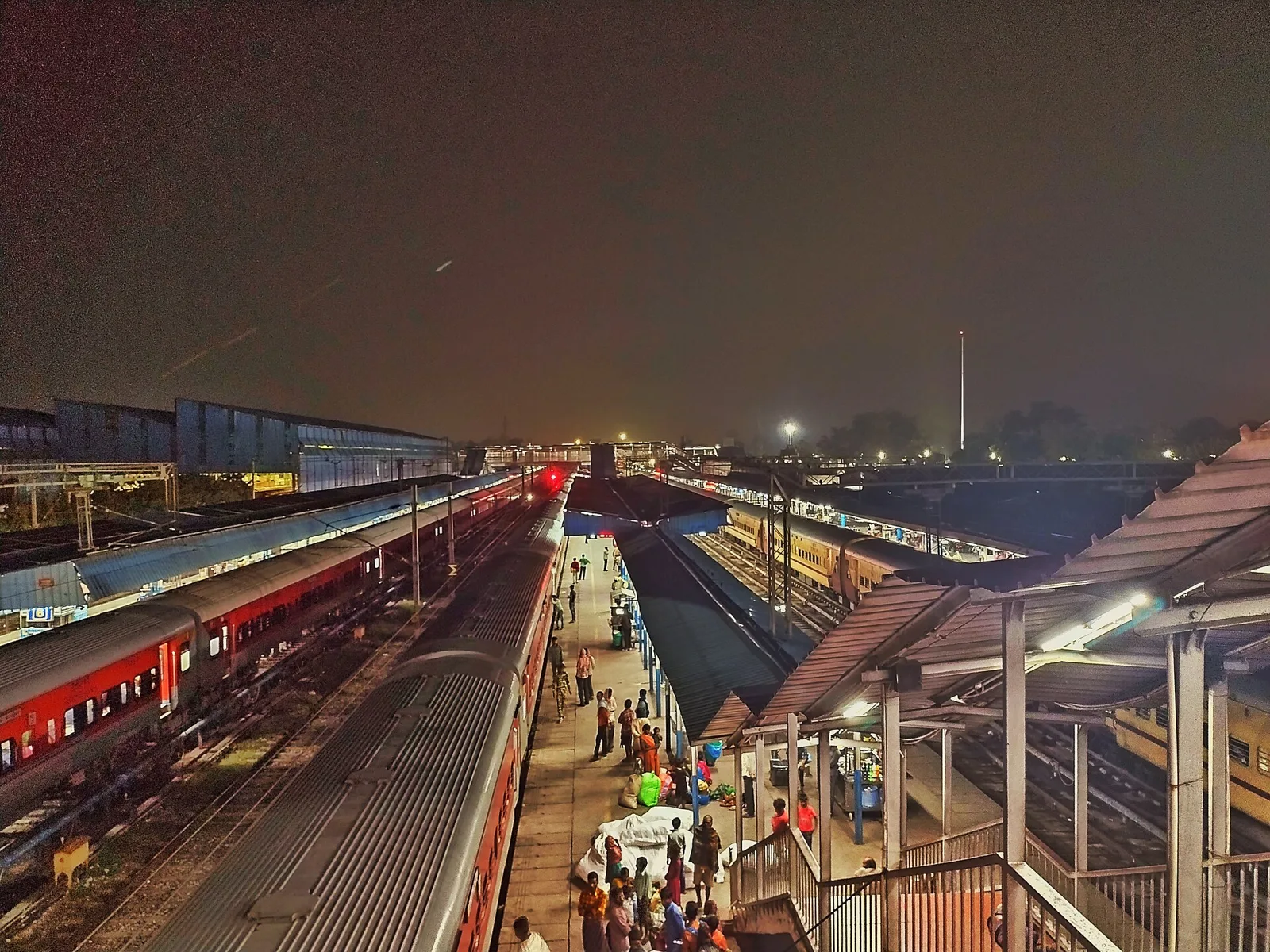
Ambala Cantt Junction is the principal rail arrival point, while Ambala City has its own station. On arrival, auto-rickshaws and taxis can help reach markets, accommodation and the other urban centre; local buses may also serve useful routes. Walking is practical for short trips in a compact market area, but traffic and crowded streets can make it less comfortable. For longer outings, arrange a taxi or other road transport and confirm the route in advance. Parking availability varies by location, and access around military facilities may be controlled. Ask your accommodation host about current local options.
Hours, tickets & permissions
Ambala is a city rather than a single ticketed attraction. Public streets and market areas generally do not require an entry ticket, but individual temples, museums or other managed sites may have their own entry rules. Places of worship may ask visitors to remove footwear, cover their heads or observe other customary practices. Military installations and some cantonment areas are restricted; carry identification where required and obey posted directions. Confirm current opening arrangements, fees, photography rules and access with the relevant managing authority before travelling.
Facilities
As a substantial city, Ambala usually has restaurants, cafés, shops, banks and ATMs, along with accommodation and medical services. Toilets and drinking water may be available at larger commercial premises or managed religious sites, but provision is not consistent across public areas; check locally and carry water. Parking is available in some areas, though busy markets can be congested. Guides are not guaranteed at city attractions, so arrange one in advance if needed. Facilities at smaller sites may be limited, and access policies can change.
Accessibility
Ambala’s terrain is generally level, but pavements, market lanes and road crossings may be uneven, crowded or obstructed. Visiting a market can involve considerable walking, and some religious or older sites may have steps; do not assume ramps, lifts or accessible toilets are available. Shade and places to sit vary by street and site. Wheelchair and stroller access is likely to be easiest in newer commercial premises, but should be checked ahead for each destination. Older visitors or anyone with limited mobility may find it more comfortable to use a taxi between stops, choose one site at a time and avoid peak market crowds.
No permit is needed to visit Haryana. Bird sanctuaries and heritage sites charge entry tickets, and some protected monuments close on one weekday. Carry a photo ID at all times and save the emergency number 112 and your accommodation's contact offline. Heat in summer and dense fog in winter are the main weather risks; carry water and allow extra travel time on foggy December–January mornings. Respect community rules, private property and posted instructions. Check official advisories for the region before travel, and follow local guidance if access changes.
Photography
Morning or late-afternoon light can be pleasant for street scenes, while market activity is often most evident during the day. Ask permission before photographing people, homes, shop interiors or ceremonies, and follow any rules at places of worship. Photography may be restricted around military installations, security checkpoints or other sensitive sites; obey signs and staff instructions. Do not use a drone without confirming applicable permissions and local restrictions, especially near cantonment or air-force areas. Be considerate in crowded streets and avoid blocking worshippers or traders.
Choose a stay by the full journey to Ambala, not just the district name. Main towns in Ambala usually offer hotels, state tourism lodges and guesthouses with better transport, meals and medical access, while village homestays offer a closer connection to local life. In the plains, check fans or air-conditioning in summer and heating in the December–January cold wave. Book in advance for weekends, festival dates and the peak season (October to March; November to February for birdwatching at Sultanpur). Confirm the exact location, meals included, check-in time and cancellation terms in writing. Many homestays accept payment on arrival; avoid sending money to unverified contacts. Mobile network and digital payments can be unreliable in remote areas, so carry some cash.
Within Ambala, visitors can look for Bhawani Amba Temple, local market areas and Rani Ka Talab, checking access and current conditions before setting out. Ambala Cantonment is another distinct part of the city, but military premises are not general visitor attractions. Kurukshetra, known for its religious and Mahabharata associations, makes a possible regional excursion; check the actual road route and allow for travel time. Chandigarh is another nearby urban destination, with its own museums, gardens and civic landmarks. Combining these places is easier with a road plan, rather than relying on straight-line distance.
For couples, Ambala rewards a slow pace: arrive early for soft light and fewer crowds, share a local meal and keep the evening free. Public displays of affection can be frowned upon in conservative communities and at religious sites, so be discreet. A homestay or a small heritage hotel can make the trip memorable — confirm privacy, hot water and transport back. Keep a buffer in your itinerary, because weather and traffic can delay plans in Haryana.
Q: How much time should I allow for Ambala? A: A half day can cover one market area and a nearby stop; a full day allows a more relaxed visit to both city areas. Q: When is a comfortable season to visit? A: October to March is generally the more comfortable period; summers can be hot, and monsoon months humid. Q: Do I need a ticket to visit the city? A: Public streets and markets generally do not require tickets, but individual sites may have entry rules or fees. Confirm locally. Q: Is Ambala suitable for children and older visitors? A: Yes, with planning. Choose short outings, allow rest breaks and use road transport where walking or crowded streets may be difficult. Q: Where should I stay nearby? A: Ambala has accommodation options, and visitors can also consider Chandigarh or Kurukshetra depending on their route. Check current availability and transport before booking.
Be the first to share photos, stories, advice or a helpful contact for Ambala.
Loading…