
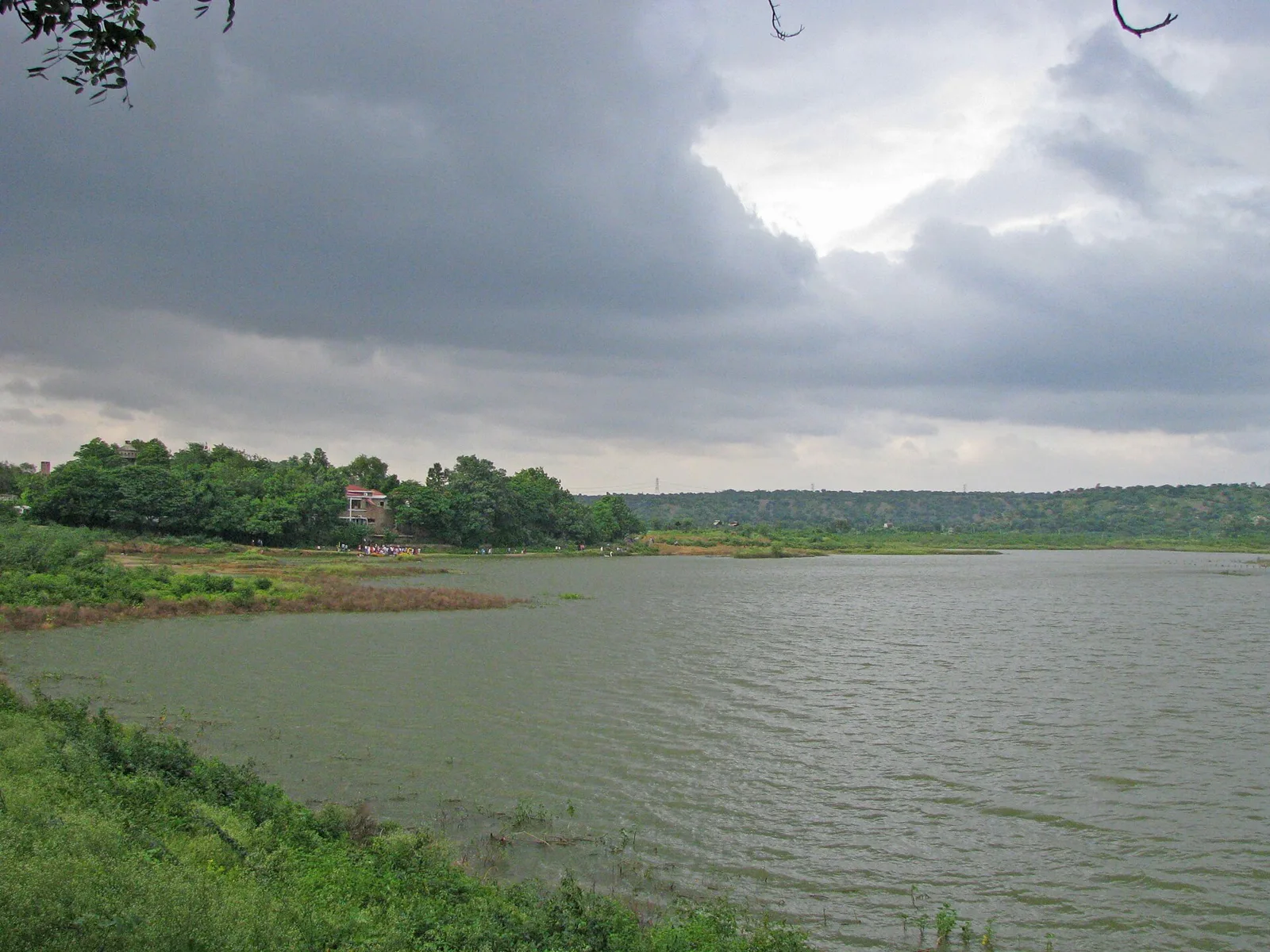
Damdama Lake
Damdama Lake is a rain-fed reservoir near Sohna in Haryana’s Gurugram district. Visitors come for its Aravalli setting and access to nearby natural areas and historical sites.
Key facts · verified by Ghumoopedia editors
- Type of place
- Natural attraction
- Best time to visit
- October to March; November to February for birdwatching at Sultanpur
- Nearest railway station
- Gurgaon · about 20 km (straight line)
- Verified
- 21 Nov 2026
Plan a trip from Damdama Lake — a day-by-day route through places nearby.
In Haryana’s Gurugram district, Damdama Lake lies near Sohna and Gurugram, among the Aravalli hills. This relatively small water body was created by a stone-and-earth barrier built under British rule. Commissioned in 1947, the structure was intended to collect rainwater. An embankment holds the reservoir, supplied mainly by monsoon runoff flowing into a hollow at the base of the Aravallis. The water level may fall to 20 ft (6.1 m); during the monsoon it can reach 50 ft (15 m) to 70 ft (21 m). The lake is part of an important natural zone in the Northern Aravalli leopard wildlife corridor, which runs between Sariska Tiger Reserve and Delhi. Nearby historical sites include Badkhal Lake, 6 km to the northeast, and the tenth-century Surajkund reservoir, 15 km north. Anangpur Dam lies 16 km north. In Delhi, Tughlaqabad Fort, the Adilabad ruins and Chhatarpur Temple are also notable sites. Damdama lies downstream of seasonal waterfalls near Faridabad, in the villages of Pali, Dhouj and Kot. The sacred Mangar Bani and Asola Bhatti Wildlife Sanctuary are also in the surrounding area. Across the region, several dozen lakes occupy abandoned open-pit mines. Damdama may dry up during summer, and a government-sponsored renewal process is awaited. Haryana carries the legends of Kurukshetra and the Mahabharata, a strong wrestling (akhara) and folk tradition, and fast-growing modern cities around Gurugram and Faridabad. Haryana is hot and dry from April to June, humid in the July–September monsoon, and cool with fog in December and January. The Aravalli outcrops in the south are rocky and dry. The usual best time to visit is October to March; November to February for birdwatching at Sultanpur. Timings, fees and access arrangements must be confirmed locally. For official information, see Haryana Tourism at https://haryanatourism.gov.in.
Why it matters
Damdama Lake is a rain-fed reservoir in Sohna, Gurugram district, at the edge of the Aravalli Hills. Its importance is both practical and ecological: the embankment was built to collect rainwater, and the lake lies within a landscape described as part of the Northern Aravalli leopard wildlife corridor. Water levels vary greatly with the monsoon, and the lake may shrink or dry during summer. It also offers a quiet outdoor visit within reach of Gurugram and nearby Faridabad. The available guide does not identify Damdama Lake as a UNESCO World Heritage Site or an ASI-protected monument; visitors should check with local authorities for current conservation or access arrangements.
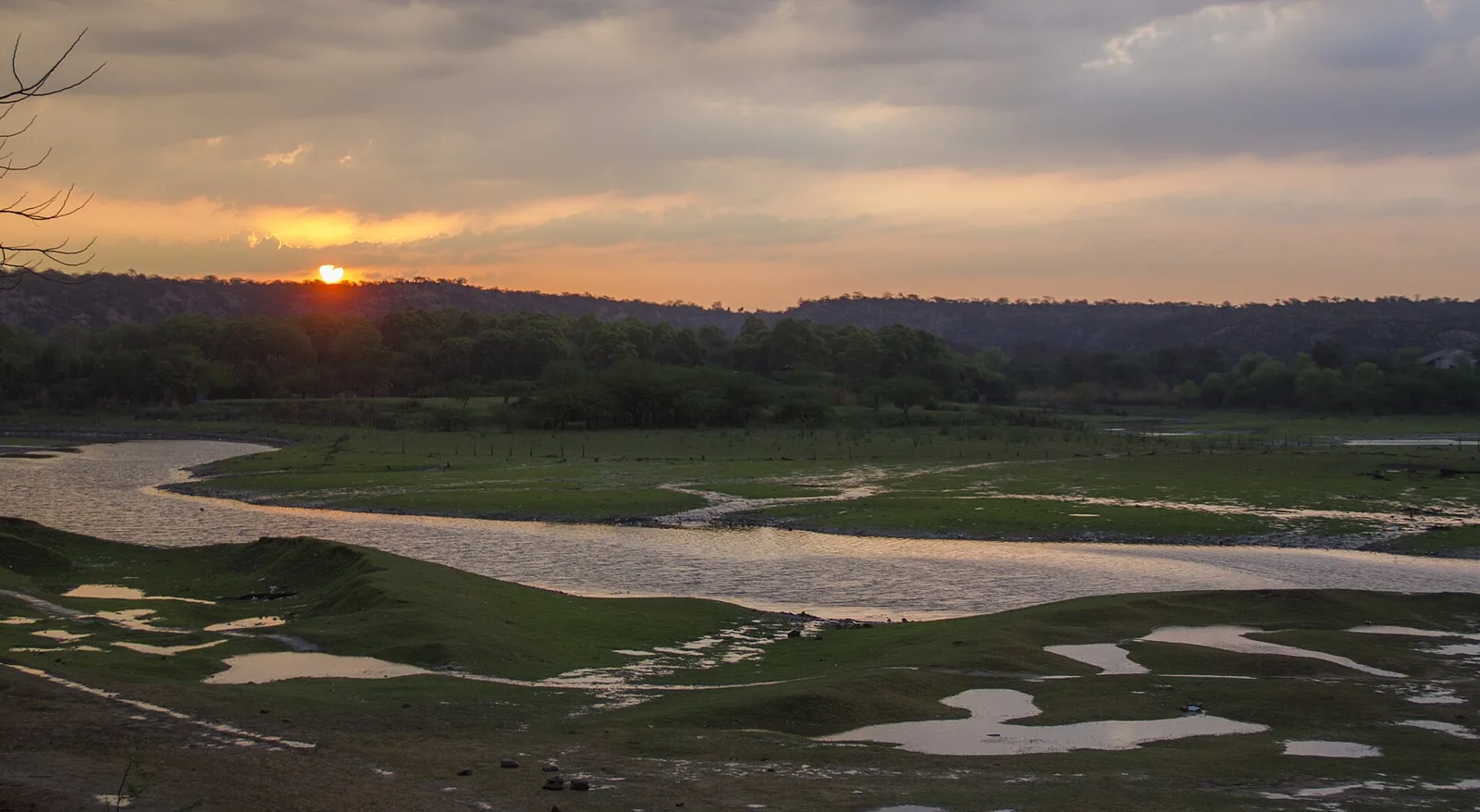
Damdama Lake is a reservoir formed by a stone-and-earthen embankment constructed under British administration. The dam was commissioned in 1947 for rainwater harvesting. Rather than a naturally enclosed lake, it holds water in a trough at the base of the Aravalli Hills, receiving much of its inflow from monsoon rain and seasonal runoff. Its level changes substantially through the year: it can be low in dry months and rise during the monsoon, depending on rainfall and catchment conditions. The lake is part of a wider landscape shaped by rocky Aravalli outcrops, seasonal streams and water-filled former quarry pits. Nearby heritage features include the old Surajkund reservoir and Anangpur Dam, while the wider region also contains historic forts and settlements. These places have distinct histories and should not be mistaken for structures belonging to Damdama itself. In recent years, seasonal water loss and summer drying have become concerns. The existing guide reports that the lake is awaiting a government-sponsored renewal process; visitors should verify the current status locally rather than assume restoration work is complete. Its story is therefore tied both to an early rainwater-harvesting project and to present-day questions of water management and landscape conservation.
Origin stories & folklore
No widely documented origin legend specific to Damdama Lake is established in the available guide. Haryana as a region is strongly associated with stories of the Mahabharata and the sacred landscape of Kurukshetra, but those traditions should not be presented as the lake’s own history. Local stories may connect nearby hills, water bodies or old structures with spirits, heroes or village memories; such accounts vary and are best understood as oral tradition rather than verified fact. Visitors can ask residents about stories they are comfortable sharing, while respecting that some beliefs or sites may be private or sacred.
Spend unhurried time at Damdama Lake: walk the marked paths, use official viewpoints and ask locally whether a guide, entry ticket or permit is needed. Admire the water from safe points rather than climbing wet rocks or entering unknown currents. Wildlife sightings are never guaranteed — patience and quiet improve your chances. A comfortable itinerary is one main visit in the morning, a local meal at midday and a short nearby stop before an afternoon return. Use the district list on this site to find other places in Gurugram, but check the actual road route and its condition before combining stops. If a festival or fair is on, local roads and stays can be busy — and the experience can be unforgettable. Leave no litter: many sites are protected by the communities around them.
Suggested itineraries
Half day: Reach the lake in the morning; spend 1–2 hours viewing the water from safe points and walking an easy section of the path; pause for a local meal in or near Sohna; return. Full day: Visit the lake in the morning; allow 2–3 hours for a relaxed shoreline visit; have lunch locally; choose one nearby stop such as Sohna or Surajkund after checking the road route; return before evening. Gentler option: Choose a vehicle-accessible viewpoint, keep the visit short, and rest at a nearby café or meal stop rather than attempting a longer walk.
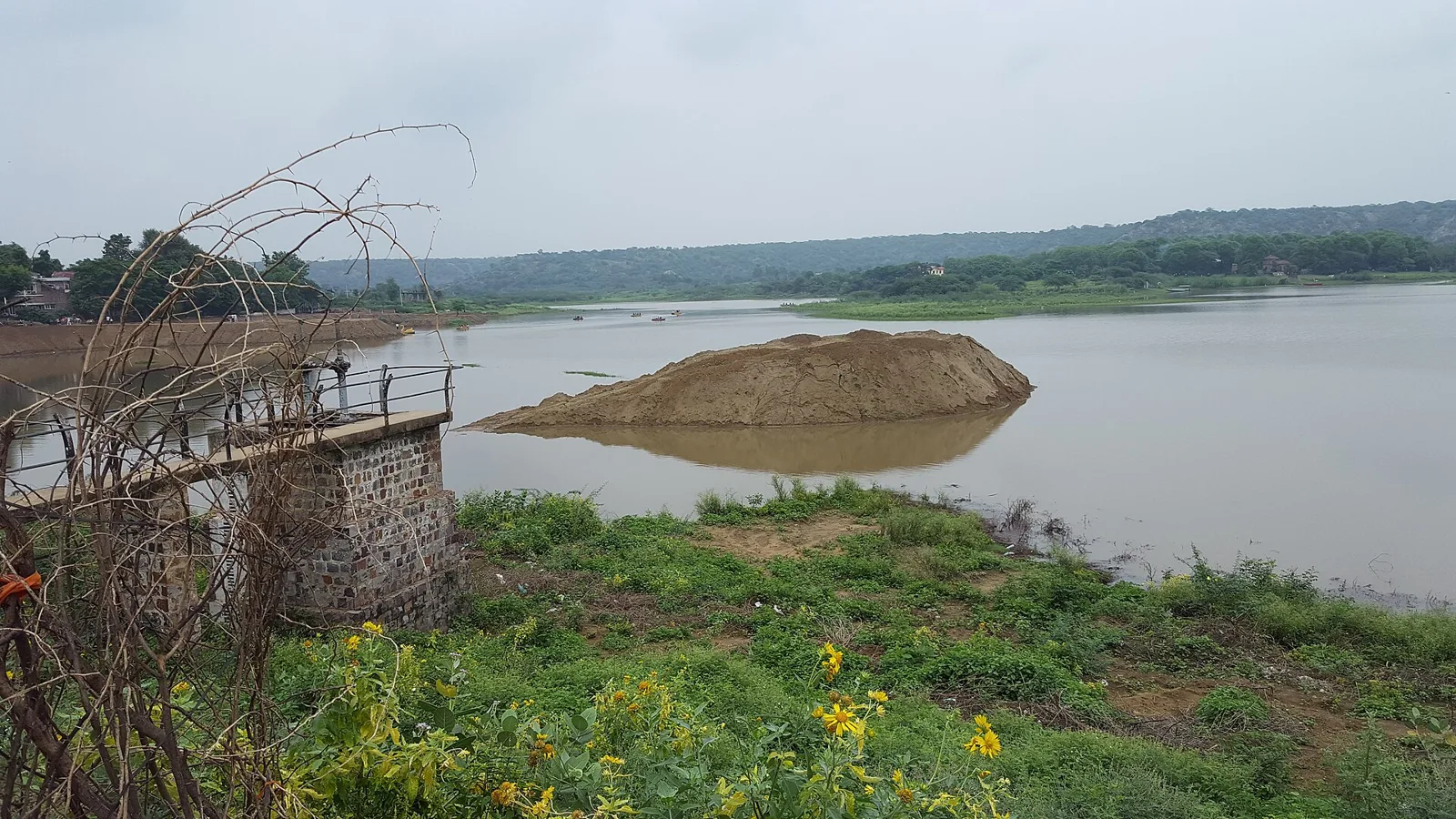
Damdama sits in a region where Haryanvi and Hindi are widely used, alongside the languages of Gurugram’s diverse population. Everyday cultural life reflects both village traditions and the rapid growth of nearby urban centres. Haryana is known for wrestling akharas, folk performance and seasonal community gatherings; local music and dance traditions may be encountered at events, though they are not scheduled attractions at the lake. Visitors should dress practically for the weather and terrain, speak courteously with residents and ask before photographing people, homes or religious activity.
Local communities
Villages around Sohna and the lake are connected to the surrounding land through farming, small businesses and services for visitors. The broader Gurugram area also includes commuters and workers drawn by the city’s expanding economy. Some local people may provide food, transport, guiding or recreation services, but availability varies by season and lake conditions. The lake and its catchment are part of a larger Aravalli landscape used by people and wildlife, so visitors should avoid littering, disturbing animals or treating village land as unrestricted public space.
Festivals & events
Haryana’s major seasonal and religious observances, including Holi, Diwali and regional harvest celebrations, may be marked in nearby towns and villages; they are not necessarily organised at Damdama Lake. Local fairs or community events can vary from year to year, so check with residents or the relevant local authority before planning around one. Monsoon-season visits may coincide with more visitors seeking the greener landscape, while winter brings pleasant conditions for outings. Roads, eateries and accommodation can be busier during holidays and festival periods.
Local food in Haryana includes bajra khichdi, singri ki sabzi, kachri chutney, bathua raita, fresh milk, curd and ghee, and sweets such as ghevar and rewri. Ask what is fresh that day; many small eateries cook a limited daily menu. Vegetarian travellers eat very well across this region, and most towns also have simple non-vegetarian dhabas. Remote sites may have no restaurant at all. Carry water and snacks, eat a proper breakfast before long drives, and ask your accommodation for a packed lunch if you are heading out early. Try a home-cooked or dhaba meal when you can — it is often the best food on the route. Choose busy, clean places and carry your packaging back to town.
Shopping & local experiences
There is no established major craft market at the lake itself. Look for everyday Haryana snacks and locally prepared food in Sohna or on the route, and buy only from vendors who are operating openly. Gurugram offers a wider range of shops and markets for crafts, clothing and souvenirs. Ask about the origin of handmade items and avoid buying products made from wildlife, plants or archaeological material. Carry reusable bags and take any litter back with you.
The lake lies in a shallow basin below rocky Aravalli outcrops, within a generally dry landscape of scrub, grass and scattered trees. It is fed mainly by monsoon rainfall and runoff, so its shoreline and water level change through the seasons; summer drying is possible. The surrounding Aravalli landscape forms part of a wider wildlife corridor, but animal sightings are never guaranteed. Waterbirds and other birdlife may be present, particularly when water and habitat conditions are suitable. Observe from a distance, keep noise low and do not enter the water or climb slippery rocks. The area also contains seasonal streams and former quarry pits that hold water, but these are not all managed visitor sites.
October to March; November to February for birdwatching at Sultanpur
The nearest principal railway station by straight-line distance is Gurgaon, roughly 20 km away. The nearest operating airport by straight-line distance is Indira Gandhi International Airport, Delhi (for southern Haryana), roughly 30 km away. These figures are calculated from map coordinates — actual road distance may differ. Delhi, Chandigarh and Amritsar are the main rail and air hubs, and most long-distance journeys connect through them. For the final leg, Haryana Roadways buses and private coaches on the main national highways link district towns; shared taxis usually leave early in the morning. A private taxi gives more flexibility for remote sites. When comparing train, bus and flight, count the complete door-to-door time: a flight saves the most time only if the onward road transfer is short, while an overnight train plus a road journey can save a hotel night. Book your return before you leave, because seats fill quickly on weekends and holidays. Current train numbers, timings, return services and fares are not listed here; check IRCTC and NTES for trains and the airline's own schedule for flights. No permit is needed to visit Haryana. Bird sanctuaries and heritage sites charge entry tickets, and some protected monuments close on one weekday.
Confirm onward and return timings on IRCTC / NTES, the state bus operator or your airline before travel. A dash means current timings or fares have not been verified.
Getting around
A taxi or private vehicle is a practical way to reach the lake from Gurugram or Sohna, especially if combining it with other stops. Local buses and shared vehicles may serve towns on the wider route, but the final approach and service availability should be checked locally. Autos may be available in nearby settlements rather than at every part of the lake. Ask where lawful parking is provided and avoid blocking village roads or access tracks. Walking is suitable for short visits from an accessible stopping point, but shoreline paths and surfaces may be uneven. Do not assume boats operate; verify whether any activity is currently authorised.
Hours, tickets & permissions
Access arrangements can change with water levels, maintenance, weather or local management. A ticket, permit, guide or separate charge for particular activities may apply, while rules for photography and other recreation can differ by operator. Do not assume that every shoreline or adjoining property is open to visitors. Confirm current entry conditions, permitted activities, hours and fees with the managing authority or a locally established operator before travelling. Follow any signs and instructions on site.
Facilities
Facilities at the lake can vary with season, water conditions and local operators. Food stalls or eateries may be available nearby, but visitors should not rely on them being open; carry drinking water and necessary supplies. Toilets, marked paths, seating, guides and visitor information are not assured throughout the site, so check locally before setting out. Parking may be available near commonly used access points, subject to local arrangements. ATMs and a broader choice of shops and services are more likely in nearby towns such as Sohna or Gurugram.
Accessibility
The natural shoreline can be uneven, dusty or rocky, and paths may become slippery after rain. Walking distances depend on where access is permitted and where a vehicle can stop. Shade may be limited, especially in the hotter months. The available information does not confirm continuous paved paths, ramps or accessible toilets, so wheelchair and stroller access should not be assumed. Older visitors or anyone with limited mobility may prefer a brief visit from a vehicle-accessible viewpoint, with a companion and suitable footwear. Check current ground conditions before travelling.
No permit is needed to visit Haryana. Bird sanctuaries and heritage sites charge entry tickets, and some protected monuments close on one weekday. Carry a photo ID at all times and save the emergency number 112 and your accommodation's contact offline. Heat in summer and dense fog in winter are the main weather risks; carry water and allow extra travel time on foggy December–January mornings. Stay on marked paths, keep away from cliff edges and fast water, and never approach wild animals. Check official advisories for the region before travel, and follow local guidance if access changes.
Photography
Morning or late-afternoon light can bring out the lake and Aravalli landscape; viewpoints depend on current access and water levels. Ordinary personal photography is often possible in open visitor areas, but check local rules before photographing facilities or taking commercial images. Do not fly a drone without confirming applicable permissions and restrictions, including any wildlife or security rules. Keep a respectful distance from residents, children and religious activity, and ask before taking close-up portraits. Avoid disturbing birds or entering unsafe areas for a photograph.
Choose a stay by the full journey to Damdama Lake, not just the district name. Main towns in Gurugram usually offer hotels, state tourism lodges and guesthouses with better transport, meals and medical access, while village homestays offer a closer connection to local life. In the plains, check fans or air-conditioning in summer and heating in the December–January cold wave. Book in advance for weekends, festival dates and the peak season (October to March; November to February for birdwatching at Sultanpur). Confirm the exact location, meals included, check-in time and cancellation terms in writing. Many homestays accept payment on arrival; avoid sending money to unverified contacts. Mobile network and digital payments can be unreliable in remote areas, so carry some cash.
Sohna is the nearest town for local services and a short visit. Other regional places include Badkhal Lake and the 10th-century Surajkund reservoir, as well as Anangpur Dam. The wider area also includes Asola Bhatti Wildlife Sanctuary and the seasonal waterfalls around Pali, Dhouj and Kot; access and seasonal conditions should be checked before setting out. Sultanpur National Park is another nature destination in Gurugram district, though it is a separate visit and requires its own access checks. Confirm road routes rather than relying on straight-line proximity.
For couples, Damdama Lake rewards a slow pace: arrive early for soft light and fewer crowds, share a local meal and keep the evening free. Public displays of affection can be frowned upon in conservative communities and at religious sites, so be discreet. A homestay or a small heritage hotel can make the trip memorable — confirm privacy, hot water and transport back. Keep a buffer in your itinerary, because weather and traffic can delay plans in Haryana.
Q: How much time should I allow for Damdama Lake? A: A relaxed visit can take a few hours; allow more time if you are combining it with another nearby stop. Q: When is the best season to visit? A: October to March is generally more comfortable. Monsoon brings seasonal greenery and higher water, while summer may be hot and the lake can shrink or dry. Q: Is there an entry fee or do I need a permit? A: Rules can change and may depend on the activity or access point. Confirm current entry requirements and fees with the managing authority or local operator. Q: Is the lake suitable for children and elderly visitors? A: It can suit a short, supervised visit, but uneven ground, heat and water edges require care. Choose a safe viewpoint and do not enter the water. Q: Can I stay near the lake? A: Accommodation options may be available around Sohna and Gurugram. Check current availability and the distance by road before booking.
Be the first to share photos, stories, advice or a helpful contact for Damdama Lake.
Loading…