
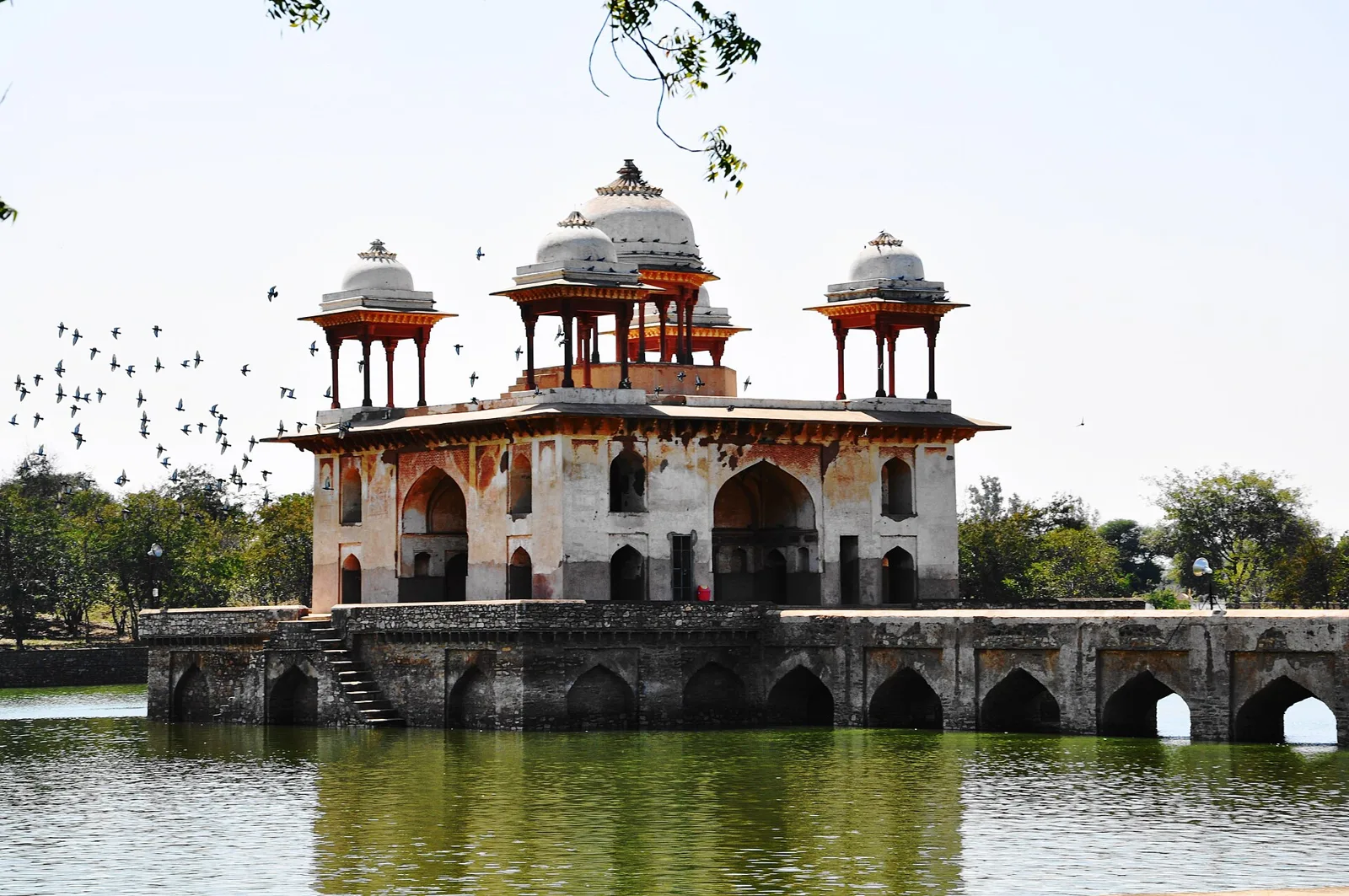
Jal Mahal
Jal Mahal is a heritage place in Mahendragarh district, Haryana. Visitors interested in heritage may include it when exploring places associated with the district.
Key facts · verified by Ghumoopedia editors
- Type of place
- Heritage monument
- Best time to visit
- October to March; November to February for birdwatching at Sultanpur
- Verified
- 21 Nov 2026
Jal Mahal is located in Haryana’s Mahendragarh district. In the Haryana index, it is grouped with heritage places, which is the main description attached to it. Its heritage classification may interest travellers looking into the heritage of Mahendragarh. The place is associated with this district and the wider state of Haryana. For visitors considering heritage places in the district, Jal Mahal is one entry to note. Its location and heritage category are the key details provided about it. Haryana carries the legends of Kurukshetra and the Mahabharata, a strong wrestling (akhara) and folk tradition, and fast-growing modern cities around Gurugram and Faridabad. Haryana is hot and dry from April to June, humid in the July–September monsoon, and cool with fog in December and January. The Aravalli outcrops in the south are rocky and dry. The usual best time to visit is October to March; November to February for birdwatching at Sultanpur. For official information, see Haryana Tourism at https://haryanatourism.gov.in.
Why it matters
Ghumoopedia lists Jal Mahal as a heritage site in Mahendragarh district, Haryana. That listing establishes its regional heritage interest, but it should not be taken as confirmation of a particular legal protection or official designation. No UNESCO status or Archaeological Survey of India protection is confirmed here. For visitors, the site is best approached as a local heritage visit whose historical interpretation should be checked on site or with Haryana Tourism, the relevant local authority, or a knowledgeable host. Confirm the monument’s identity and access arrangements before making a special journey.
The name, which means “water palace,” is used for more than one place in India; a name alone cannot confirm the builders, date, original purpose, or location of this particular monument. It would therefore be unsafe to assign it to a ruler, dynasty, or period without a reliable local or official source. No specific construction date, documented change of use, or restoration history is confirmed here. Before visiting, ask Haryana Tourism, the local administration, or the site’s managing authority whether an interpretation board, archival account, or published conservation record is available. If local accounts provide a traditional date or identify a patron, treat that as attributed information unless corroborated by a dependable record. Visitors can help preserve the site by following posted instructions, avoiding contact with fragile surfaces, and not removing fragments or other material. This cautious approach is especially useful where public documentation and exact mapping remain incomplete.
Origin stories & folklore
The phrase “water palace” may invite stories about royal bathing, lakes, or hidden chambers, but these should not be repeated as facts without a traceable local source. According to local tradition—if such a story is shared by a resident or guide—record who told it and distinguish the account from documented history. Ask whether the story is connected to this exact monument rather than to another place with the same name. Respectful curiosity is welcome; presenting an unverified tale as established history is not.
Architecture & design
Its name does not by itself verify that the building stands in a lake, has water channels, or was designed as a waterside retreat. The materials, plan, construction technique, decorative style, and current condition should be checked on site or through an authoritative heritage record. When visiting, look from public paths for the overall form, surviving openings, wall surfaces, roofline, and any relationship between the structure and nearby water or landscape, but do not assume these features are original. Read any interpretation boards and ask an authorised guide to separate visible evidence from later repairs or local accounts. Avoid climbing on walls or entering areas marked as restricted; old masonry can be vulnerable even where damage is not obvious.
Important objects & sculptures
Visitors should check for interpretation boards and observe any visible carved details, masonry marks, inscriptions, or reused architectural pieces from a respectful distance. Do not touch, rub, chalk, or make paper impressions of surfaces; these actions can damage fragile material. If an inscription is present, rely on an authorised guide or published transcription rather than guessing at its language or date. Do not assume that objects displayed elsewhere in the district belong to this monument. Report any loose or vulnerable fragment to the site manager or local authority instead of handling it.
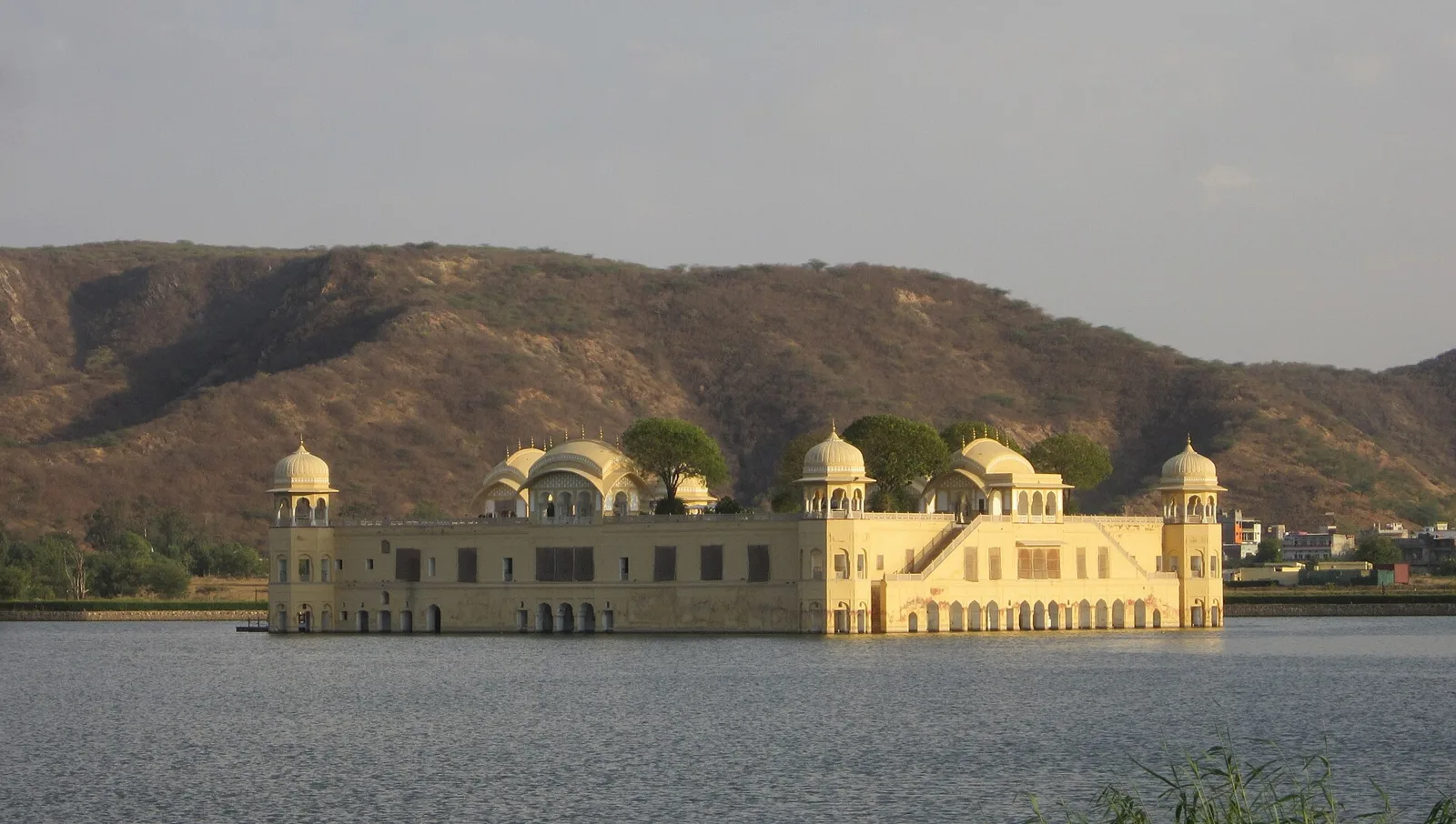
Explore Jal Mahal slowly and read the interpretation boards or hire an authorised guide to understand its history. Check opening days and ticket counters in advance, as many monuments and museums close on one weekday and on public holidays. A comfortable itinerary is one main visit in the morning, a local meal at midday and a short nearby stop before an afternoon return. Use the district list on this site to find other places in Mahendragarh, but check the actual road route and its condition before combining stops. If a festival or fair is on, local roads and stays can be busy — and the experience can be unforgettable. Leave no litter: many sites are protected by the communities around them.
Suggested itineraries
Half day: Confirm the site location and access first; spend about 1–2 hours viewing the monument and reading any interpretation; pause for a local meal; allow time for the return journey. Full day: Make a morning visit to Jal Mahal; take a relaxed lunch in a nearby town; add one other Mahendragarh-district heritage stop only after confirming its location, opening arrangements, and road route; return with daylight where practical. Gentler option: Arrange a vehicle drop-off as close as permitted, view the site from accessible public areas, take seated breaks, and skip any uneven or restricted sections.
Mahendragarh district forms part of Haryana, where Hindi and Haryanvi are commonly heard and regional life includes agricultural, family, and community traditions; this broad context should not be mistaken for a custom unique to the site. Ask locally whether residents use the grounds for gatherings or whether particular practices are associated with the monument. Visitors should dress comfortably and respectfully, seek permission before photographing people, and follow any local guidance around worship or community events. A local guide or host may be able to explain how residents understand the place today.
Festivals & events
Holi, Diwali, and Teej are observed in Haryana, but their dates, local events, and connection to this monument should be checked with residents or the local administration; do not assume a celebration takes place at the site. A district fair or community gathering may affect road access and accommodation when one is scheduled. If your visit coincides with an event, ask whether the monument remains open to visitors and follow crowd-control or photography instructions. Confirm the local calendar before travelling for a festival experience.
Local food in Haryana includes bajra khichdi, singri ki sabzi, kachri chutney, bathua raita, fresh milk, curd and ghee, and sweets such as ghevar and rewri. Ask what is fresh that day; many small eateries cook a limited daily menu. Vegetarian travellers eat very well across this region, and most towns also have simple non-vegetarian dhabas. Remote sites may have no restaurant at all. Carry water and snacks, eat a proper breakfast before long drives, and ask your accommodation for a packed lunch if you are heading out early. Try a home-cooked or dhaba meal when you can — it is often the best food on the route. Choose busy, clean places and carry your packaging back to town.
Shopping & local experiences
No souvenir stall or craft market at Jal Mahal has been confirmed. In a nearby town, ask about local markets for everyday regional goods, textiles, or locally made items, and check whether vendors are operating on the day of your visit. Haryana food traditions can be explored through a meal at a local eatery; ask residents what is available rather than expecting a particular dish at the monument. Buy from local sellers where possible, avoid purchasing alleged antiquities or archaeological objects, and carry reusable bags to reduce litter.
October to March; November to February for birdwatching at Sultanpur
These figures are calculated from map coordinates — actual road distance may differ. Delhi, Chandigarh and Amritsar are the main rail and air hubs, and most long-distance journeys connect through them. For the final leg, Haryana Roadways buses and private coaches on the main national highways link district towns; shared taxis usually leave early in the morning. A private taxi gives more flexibility for remote sites. When comparing train, bus and flight, count the complete door-to-door time: a flight saves the most time only if the onward road transfer is short, while an overnight train plus a road journey can save a hotel night. Book your return before you leave, because seats fill quickly on weekends and holidays. Current train numbers, timings, return services and fares are not listed here; check IRCTC and NTES for trains and the airline's own schedule for flights. No permit is needed to visit Haryana. Bird sanctuaries and heritage sites charge entry tickets, and some protected monuments close on one weekday.
Getting around
In district towns, autos and private taxis may be available, while local buses generally connect larger settlements; availability at a heritage site can be limited. Agree the return plan before travelling to a less-served location. If the monument is walkable from your confirmed drop-off point, use public paths and carry water. Check locally whether parking is available and whether vehicles can reach the entrance.
Hours, tickets & permissions
Entry rules may depend on the monument’s managing authority and current conservation or event arrangements. A ticket, identity document, photography permission, or restriction on certain items may apply, but none is confirmed here. Do not rely on assumed opening days or entry conditions. Confirm current hours, fees, ticketing, holiday closures, and any permit requirements with Haryana Tourism or the relevant local authority before setting out. Follow notices at the site and ask before entering closed areas.
Facilities
Toilets, drinking water, a staffed ticket point, a guide desk, and visitor parking may not be available at the monument, so check locally and plan accordingly. Carry drinking water and any needed medication, and use facilities in a nearby town before arrival if their availability is confirmed. Food outlets and ATMs are more likely to be found in district settlements than at a remote heritage site, but confirm what is open. Ask whether an authorised guide can be arranged in advance.
Accessibility
Do not assume that there are ramps, handrails, smooth paths, or accessible toilets. Ask the local authority or your host about the drop-off point, ground conditions, and any restricted areas before travelling with a wheelchair user, stroller, or visitor who has limited mobility. Historic grounds may include uneven surfaces and little shade; sturdy footwear, sun protection, and rest breaks are sensible. Elderly visitors may prefer a vehicle-assisted visit and a short, flexible stay, subject to local access rules.
No permit is needed to visit Haryana. Bird sanctuaries and heritage sites charge entry tickets, and some protected monuments close on one weekday. Carry a photo ID at all times and save the emergency number 112 and your accommodation's contact offline. Heat in summer and dense fog in winter are the main weather risks; carry water and allow extra travel time on foggy December–January mornings. Respect community rules, private property and posted instructions. Check official advisories for the region before travel, and follow local guidance if access changes.
Photography
Check for posted restrictions and ask the site manager before photographing indoors, close-up details, or people. Soft morning or late-afternoon light is often comfortable for exterior photography, but local shade and access conditions will determine the best angle. Avoid standing on masonry or entering closed areas to frame a shot. Do not fly a drone without confirming applicable permissions and local restrictions. Be considerate if a community gathering or ritual is taking place.
Choose a stay by the full journey to Jal Mahal, not just the district name. Main towns in Mahendragarh usually offer hotels, state tourism lodges and guesthouses with better transport, meals and medical access, while village homestays offer a closer connection to local life. In the plains, check fans or air-conditioning in summer and heating in the December–January cold wave. Book in advance for weekends, festival dates and the peak season (October to March; November to February for birdwatching at Sultanpur). Confirm the exact location, meals included, check-in time and cancellation terms in writing. Many homestays accept payment on arrival; avoid sending money to unverified contacts. Mobile network and digital payments can be unreliable in remote areas, so carry some cash.
Mahendragarh district includes historic sites and settlements, but a place sharing a broad district label may still require a separate road journey. Do not assume that another monument with a similar name is close by. A host or Haryana Tourism can help identify suitable stops once the Jal Mahal location is confirmed.
For couples, Jal Mahal rewards a slow pace: arrive early for soft light and fewer crowds, share a local meal and keep the evening free. Public displays of affection can be frowned upon in conservative communities and at religious sites, so be discreet. A homestay or a small heritage hotel can make the trip memorable — confirm privacy, hot water and transport back. Keep a buffer in your itinerary, because weather and traffic can delay plans in Haryana.
Q: How much time should I allow for Jal Mahal? A: Allow roughly 1–2 hours at the monument, plus travel time; confirm its location and access before setting out. Q: When is the best season to visit? A: October to March is generally more comfortable for travel in Haryana. Summer can be very hot, so check local conditions. Q: Is there an entry ticket? A: Ask the managing authority about current entry rules and fees before visiting. Q: Is the site suitable for children or elderly visitors? A: Check access conditions and plan breaks. Q: Where should I stay nearby? A: Check accommodation in the nearest verified town after confirming the site location and road route.
Be the first to share photos, stories, advice or a helpful contact for Jal Mahal.
Loading…