
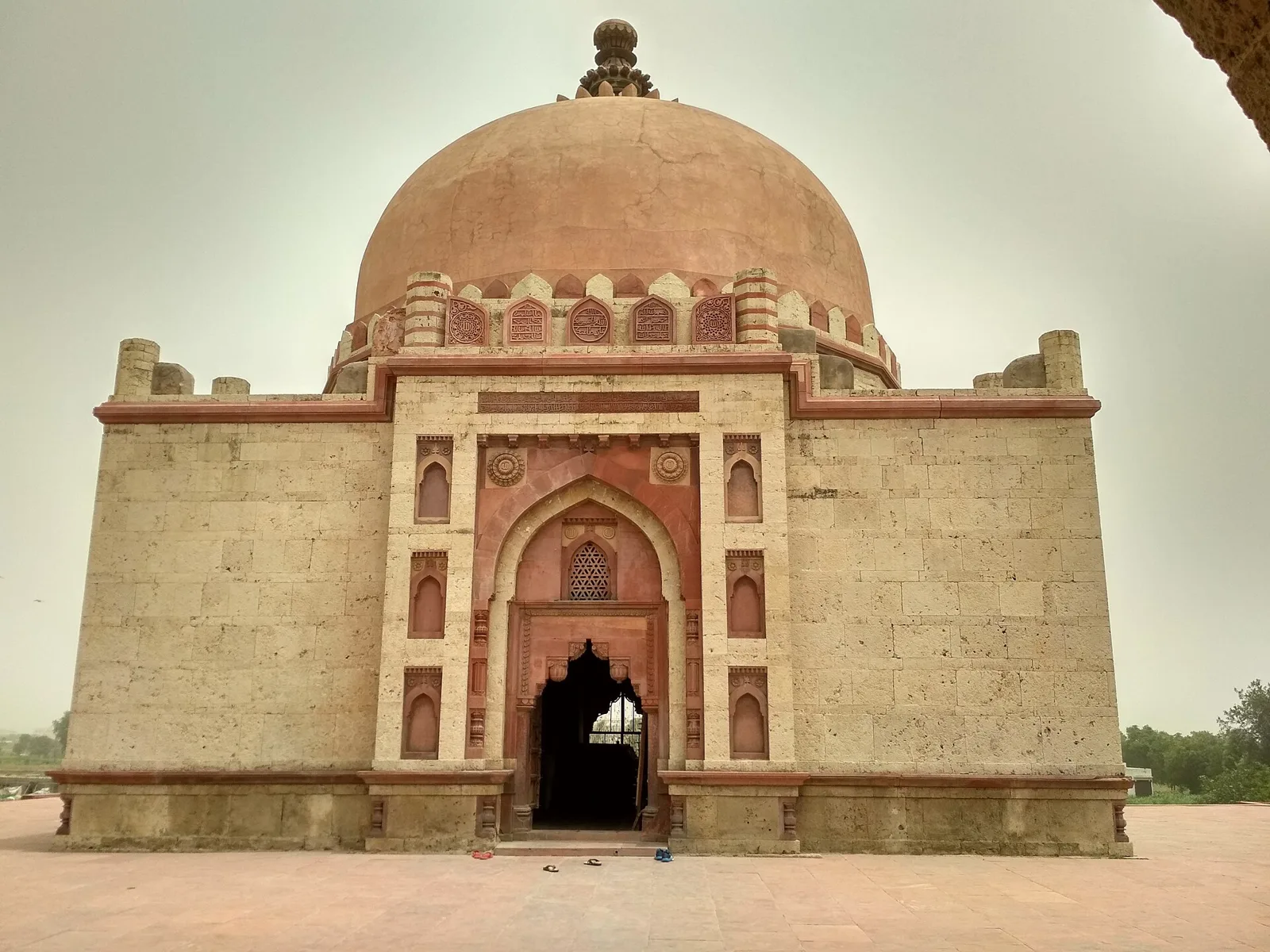
Khwaja Khizr Tomb
This historic tomb in Sonipat commemorates the Muslim saint Khwaja Khizr. Visitors come to see its Lodi-era structure and learn about its links to Ibrahim Lodi’s court.
Key facts · verified by Ghumoopedia editors
- Type of place
- Heritage monument
- Best time to visit
- October to March; November to February for birdwatching at Sultanpur
- Nearest railway station
- Sonipat Junction · about 5 km (straight line)
- Verified
- 21 Nov 2026
Plan a trip from Khwaja Khizr Tomb — a day-by-day route through places nearby.
In Jatwara, in Haryana’s Sonipat district, stands a maqbara associated with the Muslim saint Khwaja Khizr. Ibrahim Lodi built it as a memorial during 1522–1524 CE. The structure is about five centuries old and is identified as Ibrahim Lodi’s last construction for the Lodi dynasty. Its fabric includes red sandstone, Lakhauri bricks and kankar blocks. A Persian inscription within the tomb names Khwaja Khizr as the son of Dharya Khan Sharwani, an influential noble at Ibrahim Lodi’s court. The account also gives his father’s name as Darya Khan. Haryana carries the legends of Kurukshetra and the Mahabharata, a strong wrestling (akhara) and folk tradition, and fast-growing modern cities around Gurugram and Faridabad. Haryana is hot and dry from April to June, humid in the July–September monsoon, and cool with fog in December and January. The Aravalli outcrops in the south are rocky and dry. The usual best time to visit is October to March; November to February for birdwatching at Sultanpur. Timings, fees and access arrangements must be confirmed locally. For official information, see Haryana Tourism at https://haryanatourism.gov.in.
Why it matters
Khwaja Khizr Tomb is a locally important heritage monument in Jatwara, Sonipat, associated with the memory of the Muslim saint Khwaja Khizr. Its reported early-sixteenth-century date makes it a point of interest for understanding the Lodi-period history of the region. A Persian inscription connects Khwaja Khizr with Dharya Khan Sharwani, an influential noble at Ibrahim Lodi’s court. The tomb also reflects Sonipat’s layered religious and architectural history. The available guide identifies it as a maqbara but does not establish a UNESCO designation or confirm its current formal protection status; visitors should check with the relevant heritage authority rather than assume a particular listing.
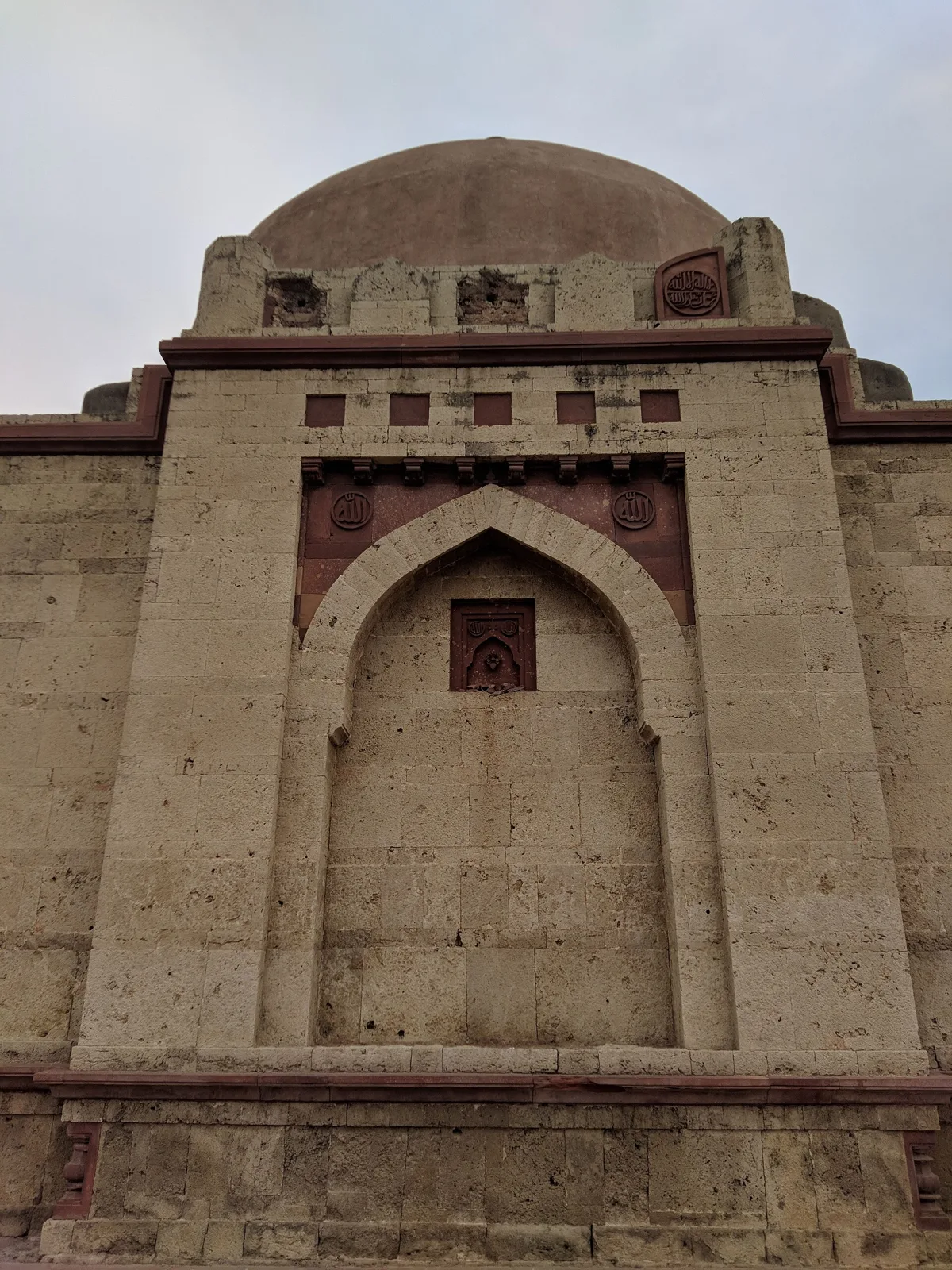
The tomb is traditionally dated to 1522–1524 CE and is attributed to Ibrahim Lodi, who is said to have commissioned it in memory of Khwaja Khizr. The monument is in Jatwara, in present-day Sonipat, Haryana. The account associated with the site identifies Khwaja Khizr as the son of Dharya Khan Sharwani, a notable figure at Ibrahim Lodi’s court; a Persian inscription at the tomb is cited in support of this relationship. Some descriptions also refer to the building as a late work of the Lodi period, though claims that it was the dynasty’s final construction should be treated cautiously unless supported by specialist documentation. The tomb’s fabric is described as combining red sandstone, Lakhauri brick and kankar blocks, materials that reflect construction practices of its era. It has endured as a funerary and devotional landmark through the changing political and urban history of Sonipat. The available account does not provide a reliable chronology of later alterations or restoration campaigns, so visitors interested in conservation history should consult site interpretation or the responsible authority for current details.
Origin stories & folklore
The available accounts identify Khwaja Khizr as a Muslim saint and remember the tomb as his maqbara, but they do not record a detailed, verifiable origin legend tied specifically to this building. Local devotional traditions may regard the resting place of a saint as a setting for reflection, prayer or seeking blessings; such beliefs are matters of faith, not historical evidence about the tomb’s construction. The name “Khwaja Garib Nawaz” appears as an alternate name in some descriptions, but visitors should avoid assuming that this establishes a connection to another saint or shrine without reliable local or scholarly evidence. Ask residents or an authorised guide about oral accounts, and distinguish those stories from the inscription-based historical account.
Architecture & design
Khwaja Khizr Tomb is a maqbara, or tomb monument, in Jatwara. Descriptions of its construction list red sandstone, Lakhauri bricks and kankar blocks, a combination of dressed stone, small-format brick and locally used lime-rich stone material. These details place the building within the broad architectural context of the late Lodi period, though a precise stylistic classification requires on-site or specialist documentation. The tomb’s purpose is commemorative and funerary; it is not a large palace or congregational complex. Visitors should look carefully at the relationship between the masonry materials and the surviving exterior surfaces, and note how age, weathering and repairs may affect their appearance. Do not assume that all visible fabric is original: later maintenance can be difficult to distinguish without conservation records. Keep to visitor routes and avoid touching or climbing on fragile masonry.
Important objects & sculptures
The most significant documented feature to look for is the Persian inscription associated with the tomb. It is cited as identifying Khwaja Khizr as the son of Dharya Khan Sharwani, a noble in Ibrahim Lodi’s court. Visitors may also observe the building materials described in accounts of the monument: red sandstone, Lakhauri bricks and kankar blocks. The available guide does not document a museum collection, movable antiquities or a catalogue of sculptures and carvings, so do not expect display cases or a formal gallery. Inscriptions and architectural details can be difficult to read or interpret on site; use any authorised interpretation provided, and avoid rubbing, tracing or otherwise touching inscribed surfaces.
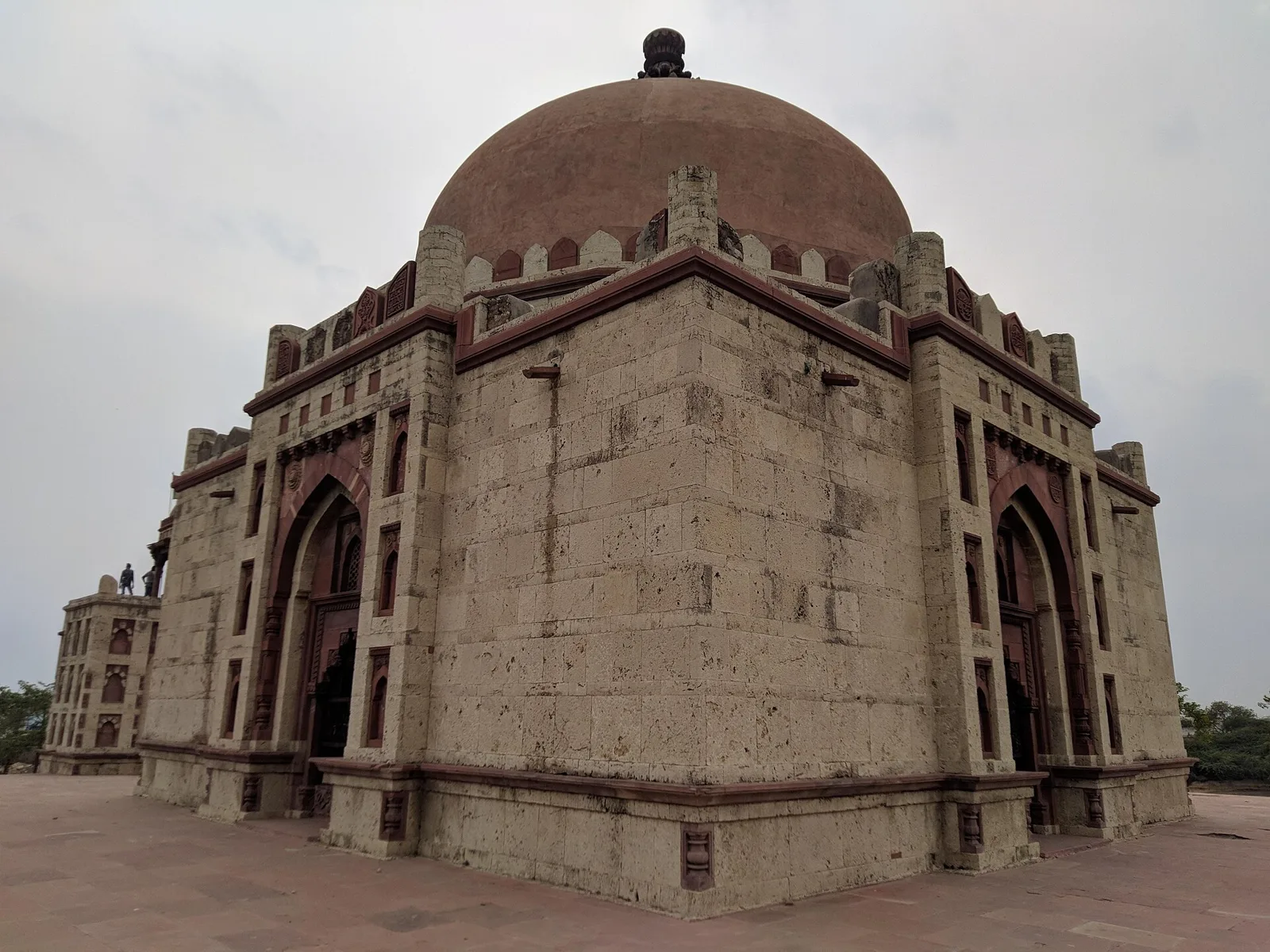
Explore Khwaja Khizr Tomb slowly and read the interpretation boards or hire an authorised guide to understand its history. Check opening days and ticket counters in advance, as many monuments and museums close on one weekday and on public holidays. A comfortable itinerary is one main visit in the morning, a local meal at midday and a short nearby stop before an afternoon return. Use the district list on this site to find other places in Sonipat, but check the actual road route and its condition before combining stops. If a festival or fair is on, local roads and stays can be busy — and the experience can be unforgettable. Leave no litter: many sites are protected by the communities around them.
Suggested itineraries
Half day: Allow about 1–2 hours at the tomb to explore the exterior, read available interpretation and ask about the inscription; then spend time in Sonipat town for a meal or market walk. Full day: Visit the tomb in the morning, pause for a local meal in Sonipat, then continue to Murthal for its established roadside food stops before returning to town. Gentler option: Arrange a vehicle drop-off as close as permitted, keep the tomb visit brief, take seated breaks where available and skip the additional stop if the approach or weather feels tiring.
The tomb stands within the living setting of Sonipat, where everyday life reflects the wider culture of Haryana. Hindi and Haryanvi are commonly heard in the region, alongside other languages spoken by residents. Local customs, foodways and community life are more visible in town markets and neighbourhoods than in a formal visitor programme at the monument. The available information does not establish regular music, dance or devotional events at the tomb itself. Visitors should dress respectfully, speak quietly if people are praying, and ask before photographing worshippers or local residents. A guide or local resident may be able to explain oral histories, but treat personal recollections as local tradition rather than confirmed archival history.
Festivals & events
No annual festival or fair is confirmed by the available information as being held at Khwaja Khizr Tomb. Sonipat and the surrounding region observe major Hindu, Muslim and Sikh festivals, with gatherings and travel activity varying by neighbourhood and year. Celebrations such as Holi, Diwali, Eid and Gurpurab may affect local traffic or the availability of shops and services, but should not be assumed to include a programme at the monument. Ask locally whether any religious observance is taking place before visiting. Festival periods can bring larger crowds to town markets and food stops, so allow extra flexibility and be considerate of worshippers and residents.
Local food in Haryana includes bajra khichdi, singri ki sabzi, kachri chutney, bathua raita, fresh milk, curd and ghee, and sweets such as ghevar and rewri. Ask what is fresh that day; many small eateries cook a limited daily menu. Vegetarian travellers eat very well across this region, and most towns also have simple non-vegetarian dhabas. Remote sites may have no restaurant at all. Carry water and snacks, eat a proper breakfast before long drives, and ask your accommodation for a packed lunch if you are heading out early. Try a home-cooked or dhaba meal when you can — it is often the best food on the route. Choose busy, clean places and carry your packaging back to town.
Shopping & local experiences
Sonipat’s town markets are the practical place to look for everyday goods, snacks and locally made items. The available information does not identify a dedicated souvenir shop or a craft market at the tomb, so visitors should not expect interpretation books or monument-branded keepsakes on site. For a regional food experience, explore Sonipat eateries or Murthal’s established roadside stops; check current availability and choose hygienic vendors. Buy from local businesses, ask before photographing stalls or products, and avoid purchasing objects claimed to be antiquities or removed from heritage sites.
October to March; November to February for birdwatching at Sultanpur
The nearest principal railway station by straight-line distance is Sonipat Junction, roughly 5 km away. The nearest operating airport by straight-line distance is Indira Gandhi International Airport, Delhi (for southern Haryana), roughly 50 km away. These figures are calculated from map coordinates — actual road distance may differ. Delhi, Chandigarh and Amritsar are the main rail and air hubs, and most long-distance journeys connect through them. For the final leg, Haryana Roadways buses and private coaches on the main national highways link district towns; shared taxis usually leave early in the morning. A private taxi gives more flexibility for remote sites. When comparing train, bus and flight, count the complete door-to-door time: a flight saves the most time only if the onward road transfer is short, while an overnight train plus a road journey can save a hotel night. Book your return before you leave, because seats fill quickly on weekends and holidays. Current train numbers, timings, return services and fares are not listed here; check IRCTC and NTES for trains and the airline's own schedule for flights. No permit is needed to visit Haryana. Bird sanctuaries and heritage sites charge entry tickets, and some protected monuments close on one weekday.
Confirm onward and return timings on IRCTC / NTES, the state bus operator or your airline before travel. A dash means current timings or fares have not been verified.
Getting around
On arrival in Sonipat, local autos and taxis can generally help with the final journey to Jatwara; confirm that the driver knows the tomb rather than relying only on its alternate name. Local buses serve routes around the town, but visitors should check the appropriate stop and onward connection locally. Walking may be practical for a short final stretch, depending on where you arrive and the condition of the streets. A taxi offers more flexibility if combining the visit with another stop. Ask about a suitable drop-off and parking before arrival; do not block neighbourhood access or leave a vehicle in a restricted area.
Hours, tickets & permissions
Entry arrangements may depend on the authority or caretaker responsible for the monument. Tickets, permissions, camera restrictions, visitor routes and rules for groups can change, and the available guide does not confirm current arrangements. Dress respectfully and follow any instructions at the entrance; do not enter closed areas or disturb religious activity. Confirm current opening days, hours and fees directly with the managing authority or through reliable local information before setting out. Public holidays and conservation work can affect access.
Facilities
Facilities at the tomb itself may be limited; do not assume there are toilets, drinking-water points, a ticket office or a staffed guide service on site. Check locally for the nearest usable toilets, water and food, which are more likely to be available in Sonipat town than at the monument. Shops, eateries and ATMs can usually be found in town, though availability varies by neighbourhood and day. Parking may be informal or limited near a residential site. Carry drinking water and any personal essentials, and arrange a guide in advance if you need one.
Accessibility
The approach and ground around the tomb may be uneven, and the monument may include steps or raised thresholds; the available information does not confirm step-free access, ramps or accessible toilets. Wheelchair and stroller access should therefore be checked with the responsible authority before travelling. Ask a driver to bring you as close as permitted, since the final walking distance and surface can vary with the chosen approach. Shade and seating may be limited, particularly in hot weather. Older visitors or anyone with limited mobility may find a short, unhurried visit more comfortable, with a companion available to assist where needed.
No permit is needed to visit Haryana. Bird sanctuaries and heritage sites charge entry tickets, and some protected monuments close on one weekday. Carry a photo ID at all times and save the emergency number 112 and your accommodation's contact offline. Heat in summer and dense fog in winter are the main weather risks; carry water and allow extra travel time on foggy December–January mornings. Respect community rules, private property and posted instructions. Check official advisories for the region before travel, and follow local guidance if access changes.
Photography
Soft morning or late-afternoon light can help show the texture of sandstone and brick, but conditions and access vary. Photograph from permitted public areas and avoid climbing on masonry or touching the Persian inscription. Ask before taking pictures of residents, worshippers or any private activity. Camera rules may be posted at the site, so check locally before photographing interiors or details. Drone use may require permissions and can be restricted by aviation, security or heritage rules; do not fly one without confirming current requirements with the relevant authorities.
Choose a stay by the full journey to Khwaja Khizr Tomb, not just the district name. Main towns in Sonipat usually offer hotels, state tourism lodges and guesthouses with better transport, meals and medical access, while village homestays offer a closer connection to local life. In the plains, check fans or air-conditioning in summer and heating in the December–January cold wave. Book in advance for weekends, festival dates and the peak season (October to March; November to February for birdwatching at Sultanpur). Confirm the exact location, meals included, check-in time and cancellation terms in writing. Many homestays accept payment on arrival; avoid sending money to unverified contacts. Mobile network and digital payments can be unreliable in remote areas, so carry some cash.
Sonipat town is the most straightforward place to combine with the tomb, offering local markets and everyday food options. Murthal, in the wider Sonipat area, is well known for roadside eateries and can make a food-focused additional stop, subject to current road conditions. These are practical nearby-area suggestions rather than a claim that either is part of the monument complex. Check the route before combining stops and allow time for local traffic. The available information does not establish a cluster of other major heritage attractions immediately beside the tomb, so ask locally for current, accessible places of interest rather than adding unverified sites.
For couples, Khwaja Khizr Tomb rewards a slow pace: arrive early for soft light and fewer crowds, share a local meal and keep the evening free. Public displays of affection can be frowned upon in conservative communities and at religious sites, so be discreet. A homestay or a small heritage hotel can make the trip memorable — confirm privacy, hot water and transport back. Keep a buffer in your itinerary, because weather and traffic can delay plans in Haryana.
Q: How much time should I allow for the tomb? A: About one to two hours is a reasonable visit, depending on access, interpretation and whether you speak with a guide. Q: When is a comfortable season to visit? A: October to March is generally the more comfortable period in Haryana; summer can be very hot, so check the forecast. Q: Is there an entry ticket or do I need permission? A: Check with the managing authority before visiting for any ticket, permission or camera requirements. Q: Can children and older visitors visit? A: Yes, with supervision and a cautious approach. Uneven ground or steps may make access difficult for some visitors; check conditions beforehand. Q: Where can I stay nearby? A: Sonipat town is the practical base to investigate for accommodation. Confirm current availability and transport arrangements before your trip.
Be the first to share photos, stories, advice or a helpful contact for Khwaja Khizr Tomb.
Loading…