
Amarnath Temple
Amarnath Temple is a Hindu cave shrine in Jammu and Kashmir, visited by pilgrims during its brief summer opening and revered as a Shakti Pitha.
Key facts · verified by Ghumoopedia editors
- Type of place
- Temple / pilgrimage site
- Best time to visit
- April to October for the Kashmir Valley and meadows; December to February for snow at Gulmarg; October to March for Jammu and the plains
- Nearest railway station
- Anantnag · about 60 km (straight line)
- Verified
- 21 Nov 2026
Plan a trip from Amarnath Temple — a day-by-day route through places nearby.
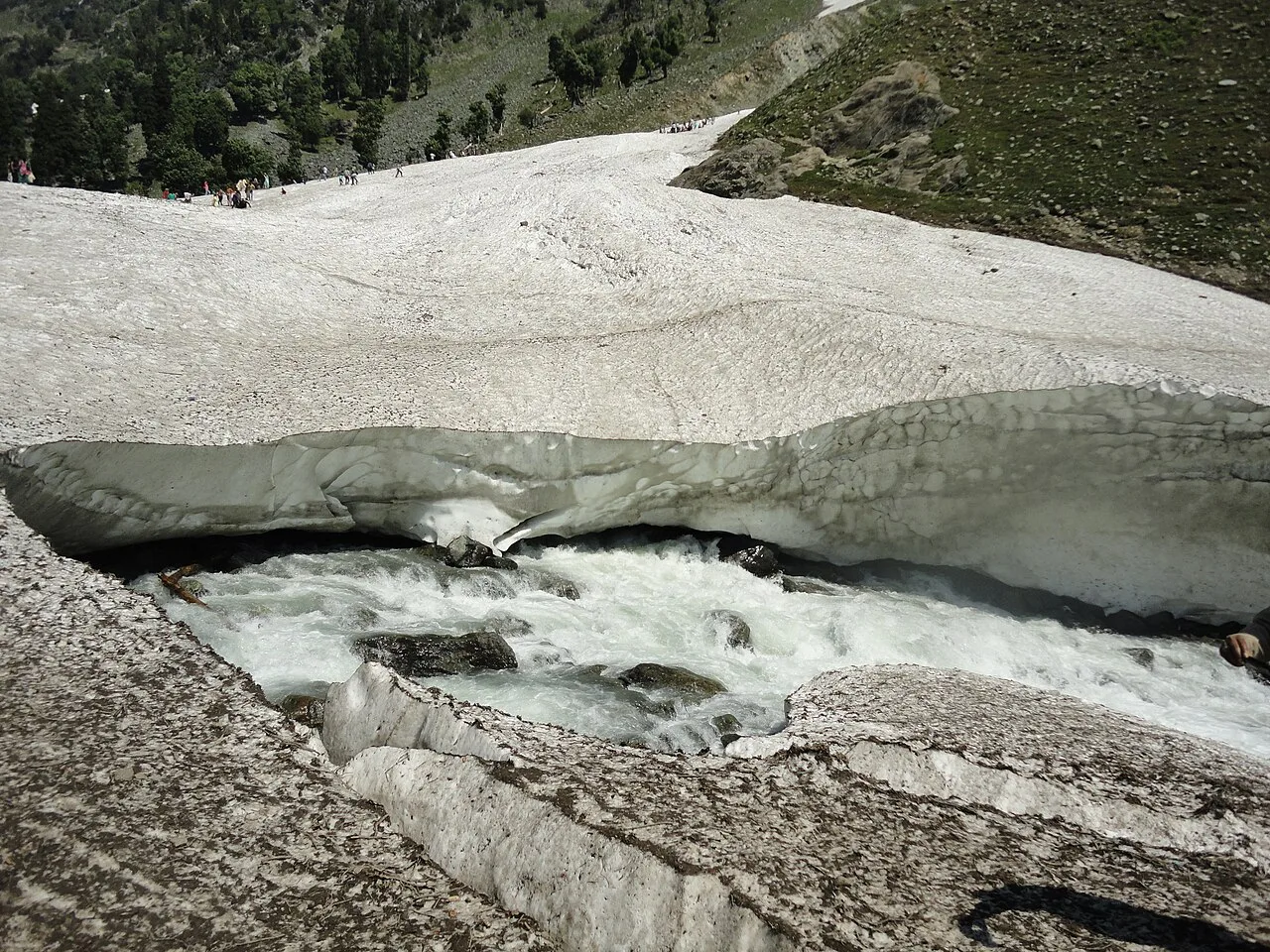
In Pahalgam tehsil, Anantnag district, Jammu and Kashmir, the Amarnath shrine occupies a cave 3,888 metres (12,756 ft) above sea level. It is in the Sind Valley, about 72 km from Anantnag, the district headquarters, and 141 km (88 mi) from Srinagar, the summer capital. Routes to the cave run from Sonamarg or Pahalgam. Glaciers and snow-covered peaks surround the site. It is inaccessible for much of the year, with pilgrims able to visit only during a short summer period. The annual pilgrimage lasts between 20 and 60 days. Attendance was estimated at 12,000–30,000 in 1989, exceeded 6.3 lakh (630,000) in 2011, and reached 2.85 lakh (285,000) in 2018. The cave is regarded as the abode of Mahamaya Shakti Pitha and is one of 51 Shakti Pithas in the Indian subcontinent. These sacred places are associated with locations where parts of the Hindu deity Sati’s body are believed to have fallen. Kashmir is known for its Sufi shrines, Mughal gardens, houseboats and crafts such as pashmina, papier-mâché and carpets, while the Jammu region is the land of Dogra heritage and major Hindu pilgrimages. The Kashmir Valley has mild summers, colourful autumns and snowy winters, with Chillai Kalan (late December to January) the coldest spell; meadows such as Gulmarg and Sonamarg get heavy snow. Jammu and the plains are hot from April to June. Snow and landslides can close the Jammu–Srinagar highway and mountain roads. The usual best time to visit is April to October for the Kashmir Valley and meadows; December to February for snow at Gulmarg; October to March for Jammu and the plains. Timings, fees and access arrangements must be confirmed locally. For official information, see Jammu and Kashmir Tourism at https://jktourism.jk.gov.in.
Why it matters
Amarnath Temple is a major Hindu pilgrimage shrine in the high Himalaya of Anantnag district, Jammu and Kashmir. Worshippers visit a natural cave where a seasonal ice formation is venerated as a form of Shiva. The pilgrimage, commonly called the Amarnath Yatra, is an important religious and social event for Kashmir and draws visitors from across India. The cave is also associated in some Hindu traditions with a Shakti Pitha, though accounts of the Pithas and the body part commemorated vary. The shrine lies at about 3,888 metres and is accessible to pilgrims only during a limited summer season, subject to official arrangements and mountain conditions. It is not listed as a UNESCO World Heritage Site; confirm current management and access information with the Shri Amarnathji Shrine Board.
The cave and its pilgrimage are rooted in Hindu religious tradition, but the precise date when worship began and the identity of any founder or builder are not firmly established. The shrine is a natural cavern rather than a temple constructed by a known ruler or architect. Accounts of the cave and its seasonal pilgrimage appear in later descriptions of Kashmir, while stories about its discovery and antiquity belong partly to local and religious tradition and should not be treated as settled historical fact. The pilgrimage has changed considerably as access, transport, communications and visitor services have developed. In the late twentieth and early twenty-first centuries, annual attendance varied substantially; figures cited for 1989, 2011 and 2018 illustrate that change but do not describe a typical year. Because the route crosses high, exposed terrain and the cave is snowbound for much of the year, access has traditionally been seasonal. The Shri Amarnathji Shrine Board was established under the Jammu and Kashmir Shri Amarnathji Shrine Act, 2000, and now plays a central role in organising the annual pilgrimage. Route arrangements, registration, safety measures and facilities can change from season to season.
Origin stories & folklore
According to a widely told Hindu legend, Shiva chose the secluded cave to reveal the secret of immortality to Parvati. To keep the teaching private, he is said to have left behind the beings and objects that might overhear it. A pair of pigeons in the cave is sometimes said to have heard the discourse and become immortal; pilgrims may recount this story, but sightings or interpretations are matters of belief. Local tradition also tells of a shepherd, often named Buta Malik, who discovered the cave after receiving a pouch of coal that later turned to gold. Versions differ, and the tale is best understood as folklore rather than verified history. These stories help explain the cave’s sacred character for many devotees.
Architecture & design
Amarnath is a natural high-altitude cave, not a built temple with a designed façade or conventional halls. Its rocky entrance opens onto a cavern in a landscape of glaciers, snowfields and steep mountain slopes. The principal object of worship is a naturally forming ice stalagmite, created as water seeps into the cave and freezes; its size and shape can vary with conditions. Smaller ice formations may also appear and are interpreted in devotional tradition in different ways. The shrine’s practical layout is shaped by the cave and by seasonal crowd management. Pilgrims approach through designated routes and follow instructions for movement, queueing and worship near the ice formation. Temporary shelters, service points and crowd-control arrangements may be set up along the pilgrimage routes during the season; these are not permanent parts of the cave’s architecture. The high altitude, cold, uneven ground and limited natural space impose significant engineering and safety constraints. Visitors should not assume that facilities or access arrangements remain the same each year.
Important objects & sculptures
The central focus is the naturally formed ice stalagmite, worshipped by devotees as a Shiva lingam. Its appearance changes with freezing and thawing conditions, so it is not a fixed sculpture or an object carved by artisans. The cave is also associated with other ice formations that some pilgrims interpret through Hindu religious symbolism; interpretations differ, and these formations are likewise natural. Visitors should not expect a large collection of idols, inscriptions, carved panels or museum displays inside the cave. Offerings and ritual objects may be present during the pilgrimage, but what is permitted and where it may be placed are controlled by current arrangements. Observe the shrine from the designated area and do not touch, remove or obstruct access to the ice formation or any ritual items. The surrounding rock, snow and ice are part of a sensitive natural setting as well as a place of worship.
Religious significance
Amarnath is principally a Shaiva pilgrimage site. Devotees worship Shiva in the form of the seasonal ice formation in the cave and may undertake the journey as an act of devotion, prayer or fulfilment of a vow. Worship and observances can include prayers, devotional singing and offerings, conducted according to the arrangements in force that season. Visitors should follow instructions from shrine staff and respect the practices of pilgrims. Some Hindu traditions also identify the cave with Mahamaya, a Shakti Pitha, and connect it with the wider sacred geography of the Indian subcontinent. Lists and accounts of Shakti Pithas vary, so this association is best presented as a religious tradition rather than a universally fixed historical identification. The pilgrimage is physically demanding, and for many worshippers the journey itself is an important part of its spiritual meaning. Participation is open only under current pilgrimage rules and safety requirements.
Visit Amarnath Temple with time to observe daily prayers and rituals respectfully. Follow the posted rules on footwear, photography, head covering and dress, and avoid interrupting worshippers. Ask caretakers which areas are open to visitors, and beware of unofficial 'guides' asking for donations. A comfortable itinerary is one main visit in the morning, a local meal at midday and a short nearby stop before an afternoon return. Use the district list on this site to find other places in Anantnag, but check the route and its condition before combining stops. If a festival or fair is on, roads and stays can be busy — and the experience can be unforgettable. Leave no litter: many sites are protected by the communities around them.
Suggested itineraries
Half day: At an authorised base or route town, allow time for registration checks, acclimatisation, a short local walk and a meal; do not expect to reach the cave and return within half a day. Full day: For registered, acclimatised pilgrims, follow the day’s official route plan and proceed only as far as permitted; a cave visit may require a multi-day journey, depending on route and conditions. Gentler option: Visit a permitted service or viewing area near the base, rest frequently and arrange an early return; anyone unsure of their fitness should seek medical advice and follow official guidance.
The Amarnath Yatra brings together pilgrims, local residents, service workers and volunteers from different parts of India. Prayer, devotional songs and shared acts of service are part of the seasonal atmosphere, while practices vary among individuals and groups. Kashmiri, Urdu and Hindi are commonly heard in the wider region; other languages may be spoken by visiting pilgrims and workers. Local customs and the character of services can differ along the route. The cave is in a region known for both Hindu pilgrimage traditions and Kashmir’s diverse cultural and religious life. Visitors should approach this setting with respect, avoid treating local people as part of a spectacle, and ask before photographing them. Clothing suitable for cold, changeable mountain weather is practical as well as respectful. Organised services and community contributions may operate during the pilgrimage season, but their availability and form can change each year.
Festivals & events
The principal annual event is the Amarnath Yatra, held during a short summer pilgrimage season. Its opening and closing period varies from year to year and is announced through official channels; it should not be assumed to follow the same dates annually. Pilgrim numbers can make routes, transport links, registration points and accommodation busy, so advance planning and compliance with official arrangements are important. Shravana-related observances and other Hindu devotional practices may be associated with the pilgrimage, but the cave is not an ordinary year-round festival venue. Local religious events elsewhere in Anantnag district follow their own calendars. Check the current season’s notices for route access, permitted travel days and crowd-management measures before making plans.
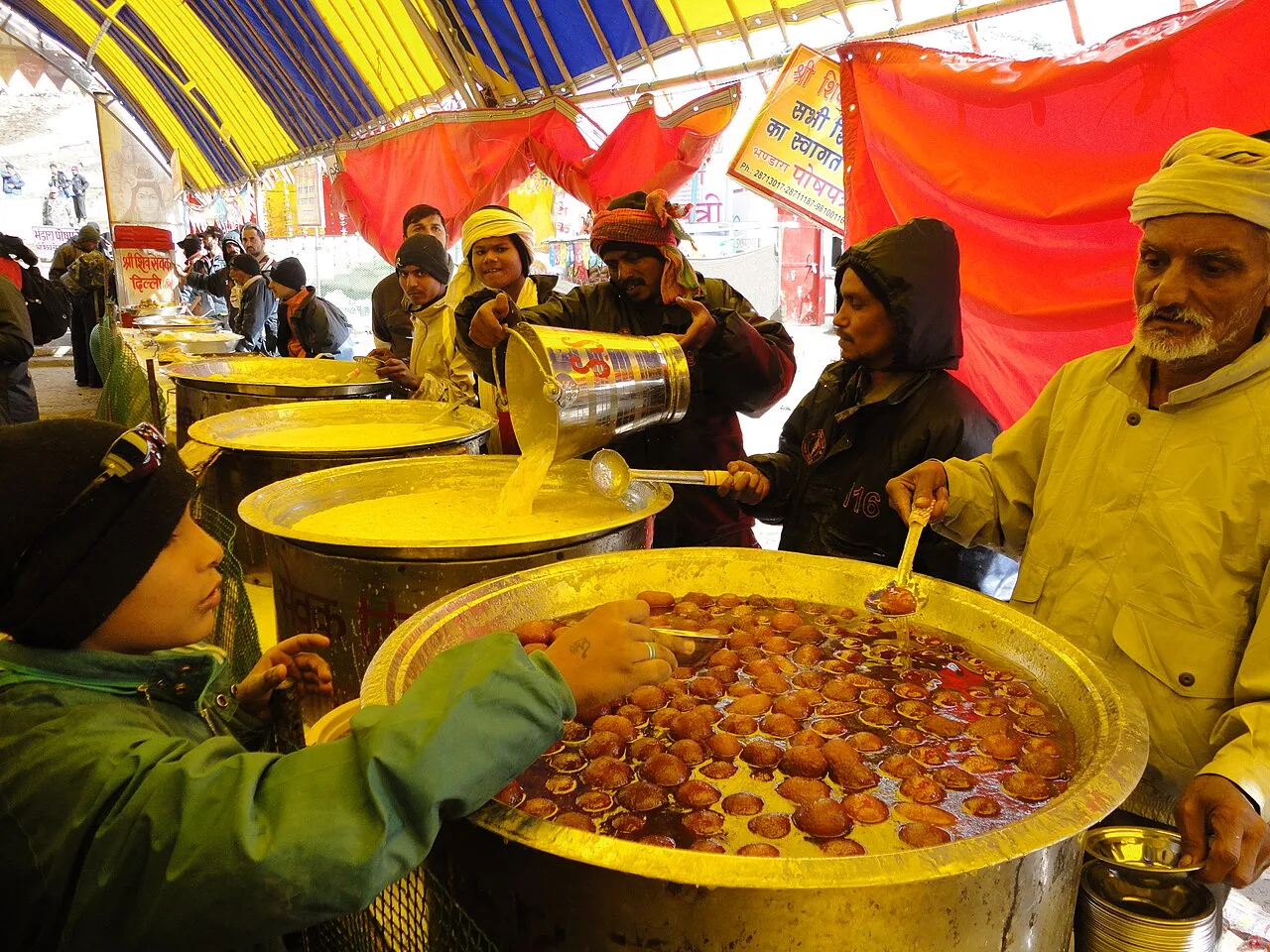
Local food in Jammu and Kashmir includes Kashmiri Wazwan dishes such as rogan josh, yakhni, gushtaba and rista, nadru (lotus stem), haak saag, dum aloo, kahwa and salty noon chai; in the Jammu region, rajma-chawal, kalari cheese and Dogra dishes such as ambal and auria. Ask what is fresh that day; many small eateries cook a limited daily menu. Vegetarian travellers eat very well across this region, and most towns also have non-vegetarian options. Remote sites may have no restaurant at all. Carry water and snacks, eat a proper breakfast before long drives, and ask your accommodation for a packed lunch if you are heading out early. If prasad or langar is offered, accept it according to local custom. Choose busy, clean places and carry your packaging back with you.
Shopping & local experiences
There is no dependable large shopping area at the cave, and sales along the pilgrimage route may be temporary or limited. Pahalgam and larger towns in the region are better places to look for locally made woollens, pashmina, papier-mâché, carpets and walnut-wood crafts. Ask about materials and provenance, and buy from reputable sellers rather than assuming every item is locally made. Food options may include simple meals at route services and Kashmiri dishes in towns, but availability varies by season. Carry only what is useful for the trek and take all packaging and rubbish back with you.
April to October for the Kashmir Valley and meadows; December to February for snow at Gulmarg; October to March for Jammu and the plains
The nearest principal railway station by straight-line distance is Anantnag, roughly 60 km away. The nearest operating airport by straight-line distance is Sheikh ul-Alam International Airport, Srinagar, roughly 70 km away. These figures are calculated from map coordinates — mountain roads wind a lot, so actual road distance and travel time are usually much longer. Jammu Tawi and Shri Mata Vaishno Devi Katra are the main long-distance rail gateways, and the line through the Chenab bridge now continues into the Kashmir Valley — check current services to Srinagar. Srinagar and Jammu airports have the most flights. For the final leg, J&K Road Transport Corporation (JKRTC) buses, private minibuses and shared Sumo taxis link district towns; shared taxis usually leave early in the morning. A private taxi gives more flexibility for remote sites. When comparing train, bus and flight, count the complete door-to-door time: a flight saves the most time only if the onward road transfer is short, while an overnight train can save a hotel night. Book your return before you leave, because seats fill quickly on weekends, festivals and holidays. Current train numbers, timings, return services and fares are not listed here; check IRCTC and NTES for trains and the airline's own schedule for flights. Indian visitors do not need a permit for the main destinations in Jammu and Kashmir. Areas close to the Line of Control, such as Gurez, Bangus, Keran and Machil, may require registration at police or army check posts, and foreign nationals face extra restrictions in some areas. Prepaid mobile SIM cards issued outside Jammu and Kashmir do not work here, so carry a postpaid connection. The Amarnath Yatra needs advance registration and a compulsory health certificate, and Vaishno Devi pilgrims need a yatra registration (RFID) card. Read your government's travel advisory and current local advisories before you go.
Confirm onward and return timings on IRCTC / NTES, the state bus operator or your airline before travel. A dash means current timings or fares have not been verified.
Getting around
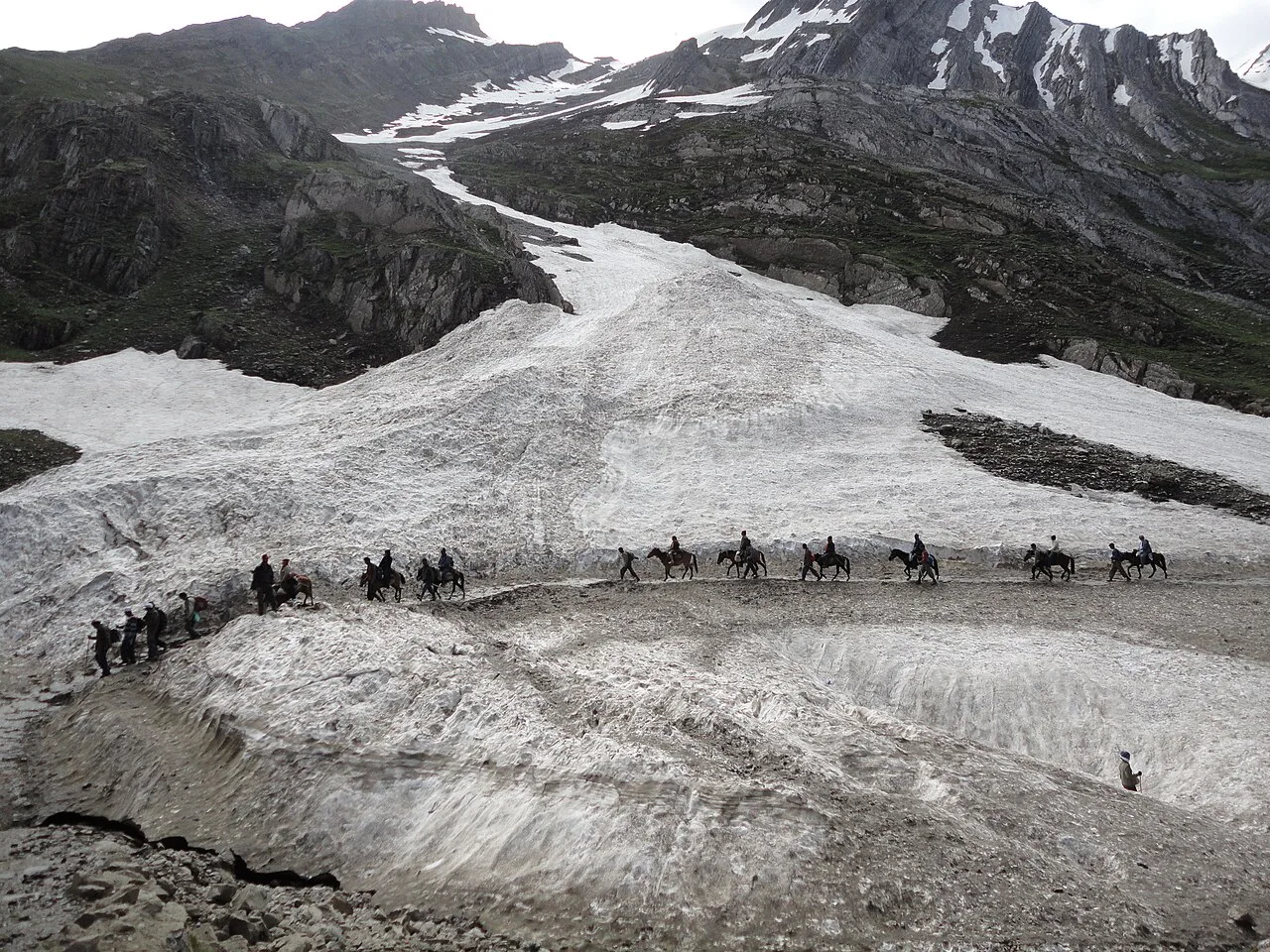
There is no ordinary road journey directly to the cave. Pilgrims travel to an authorised base or route point, commonly using the Pahalgam route or the shorter but steep Baltal route, and continue on foot or through services permitted for that season. Srinagar and other regional towns provide onward connections by road, but mountain conditions can disrupt travel. Local taxis and shared vehicles may serve route towns and base areas; use recognised operators and confirm where vehicles are allowed to go. Parking and drop-off arrangements are seasonal and can be restricted. Follow official signs and staff directions rather than attempting unapproved shortcuts.
Hours, tickets & permissions
The cave is generally accessible to pilgrims only during the officially announced summer Yatra period, and access depends on route, weather and safety conditions. Registration or a pilgrimage permit and health-related requirements may apply; identity documents and other checks can also be required under current rules. Entry procedures, permitted routes, photography restrictions and any applicable fees or charges may change. This is not a walk-in attraction outside the organised season. Confirm current opening arrangements, documentation requirements and fees with the Shri Amarnathji Shrine Board or the relevant official authority before travelling.
Facilities
Facilities vary by route and season. During the Yatra, temporary camps or service points may provide basic shelter, food, drinking water, medical assistance and toilets at selected locations; availability is not guaranteed at every stage. The cave itself has limited space and should not be treated as a fully serviced visitor centre. ATMs, shops, accommodation and more substantial medical services are more likely in larger towns and route bases than on the mountain. Check locally what is operating, carry essential medication and suitable supplies, and use designated waste and toilet facilities. Do not rely on mobile connectivity, cashless payments or continuous food and water access.
Accessibility
The cave lies at high altitude and is reached over demanding mountain terrain. Routes involve long walks, steep gradients, uneven or slippery ground, exposure to cold and weather, and limited shade. Even the shorter route is strenuous and is not an easy-access alternative. The pilgrimage is generally unsuitable for wheelchair users and most strollers; do not assume ramps, lifts or continuous paved paths are available. Older visitors and anyone with heart, lung, mobility or other health concerns should consult a clinician and review official fitness requirements before registering. Acclimatise, move at a safe pace and follow medical and route advice. Conditions can change rapidly, so be prepared to turn back.
Indian visitors do not need a permit for the main destinations in Jammu and Kashmir. Areas close to the Line of Control, such as Gurez, Bangus, Keran and Machil, may require registration at police or army check posts, and foreign nationals face extra restrictions in some areas. Prepaid mobile SIM cards issued outside Jammu and Kashmir do not work here, so carry a postpaid connection. The Amarnath Yatra needs advance registration and a compulsory health certificate, and Vaishno Devi pilgrims need a yatra registration (RFID) card. Read your government's travel advisory and current local advisories before you go. Carry a photo ID at all times and save the emergency number 112 and your accommodation's contact offline. Altitude sickness is possible above about 2,500 m: ascend gradually, rest on arrival, drink water and turn back if you develop a severe headache, breathlessness or confusion. Snow and landslides can close roads at short notice — avoid night driving and keep a spare day. Respect community rules, private property and posted instructions. Follow local guidance if access changes.
Visitor rules
Follow the current Shri Amarnathji Shrine Board instructions, registration conditions and directions from security, medical and route staff. Carry required identification and permits, and use only authorised routes and services. Wear warm, practical clothing that is respectful in a place of worship; footwear requirements may differ by area, so follow posted instructions. Do not enter closed sections, touch the ice formation or interrupt prayers. Carry waste out or use designated bins, and avoid single-use plastic where prohibited. Keep noise low, do not push in queues and never give money to people claiming an unofficial right to guide or admit visitors.
Photography
Photography may be restricted inside the cave or near the principal ice formation, and rules can change during the Yatra. Check posted notices and ask shrine staff before taking pictures; never photograph where it is prohibited or disrupt worship, queues or security checks. On the approach, mountain scenery is often clearest in the morning, but weather and visibility are unpredictable. Photograph people only with their permission and avoid intrusive close-ups of prayer. Drone use may be prohibited or require official permission, particularly around a sensitive pilgrimage and security area; do not launch one without explicit clearance.
Choose a stay by the full journey to Amarnath Temple, not just the district name. Srinagar houseboats, Jammu and Katra hotels and resort towns such as Gulmarg and Pahalgam offer the widest choice; book houseboats only through registered owners. At altitude, check heating, hot water and power backup, and expect cold nights for much of the year. Book in advance for weekends, festivals and the peak season (April to October for the Kashmir Valley and meadows; December to February for snow at Gulmarg; October to March for Jammu and the plains). Confirm the exact location, meals included, check-in time and cancellation terms in writing. Avoid sending money to unverified contacts or touts at stations. Carry some cash, as card and digital payments can be unreliable in remote areas.
Pahalgam is a principal gateway for the traditional pilgrimage route and offers a base for exploring the Lidder Valley. Chandanwari is associated with the Pahalgam approach, while Aru Valley and Betaab Valley are separate scenic outings near Pahalgam; check road and seasonal access before combining them. In Anantnag district, visitors may also consider the historic Martand Sun Temple near Mattan, Achabal Garden and Kokernag’s garden and spring. These places are not immediate stops on the cave approach, and mountain travel times can be substantial. Plan them as separate excursions where needed, and check current local conditions and opening arrangements.
For couples, Amarnath Temple rewards a slow pace: arrive early for soft light and fewer crowds, share a local meal and keep the evening free. A shikara ride or a houseboat night in Srinagar is a classic addition. Public displays of affection can be frowned upon in conservative communities and at religious sites, so be discreet. Keep a buffer in your itinerary, because weather and traffic can delay plans.
Q: How much time should I allow for a visit? A: The Yatra is a mountain pilgrimage, not a quick cave stop. Plan according to the official route schedule; reaching the cave and returning may require more than a day. Q: What is the best season to visit? A: The cave is open to pilgrims only during the announced summer Yatra period. Dates and access depend on official arrangements and mountain conditions. Q: Can I enter without registration? A: Pilgrimage registration, permits and health-related requirements generally apply. Confirm the current process with the Shri Amarnathji Shrine Board before travelling. Q: Can children or elderly visitors make the journey? A: The high-altitude routes are strenuous. Check current age and fitness rules, seek medical advice and do not travel if official guidance or personal health makes the trek unsafe. Q: Where should I stay nearby? A: Pahalgam and other authorised route bases may offer seasonal or town accommodation. Availability varies, so confirm lodging and route access before setting out.
Be the first to share photos, stories, advice or a helpful contact for Amarnath Temple.
Loading…