
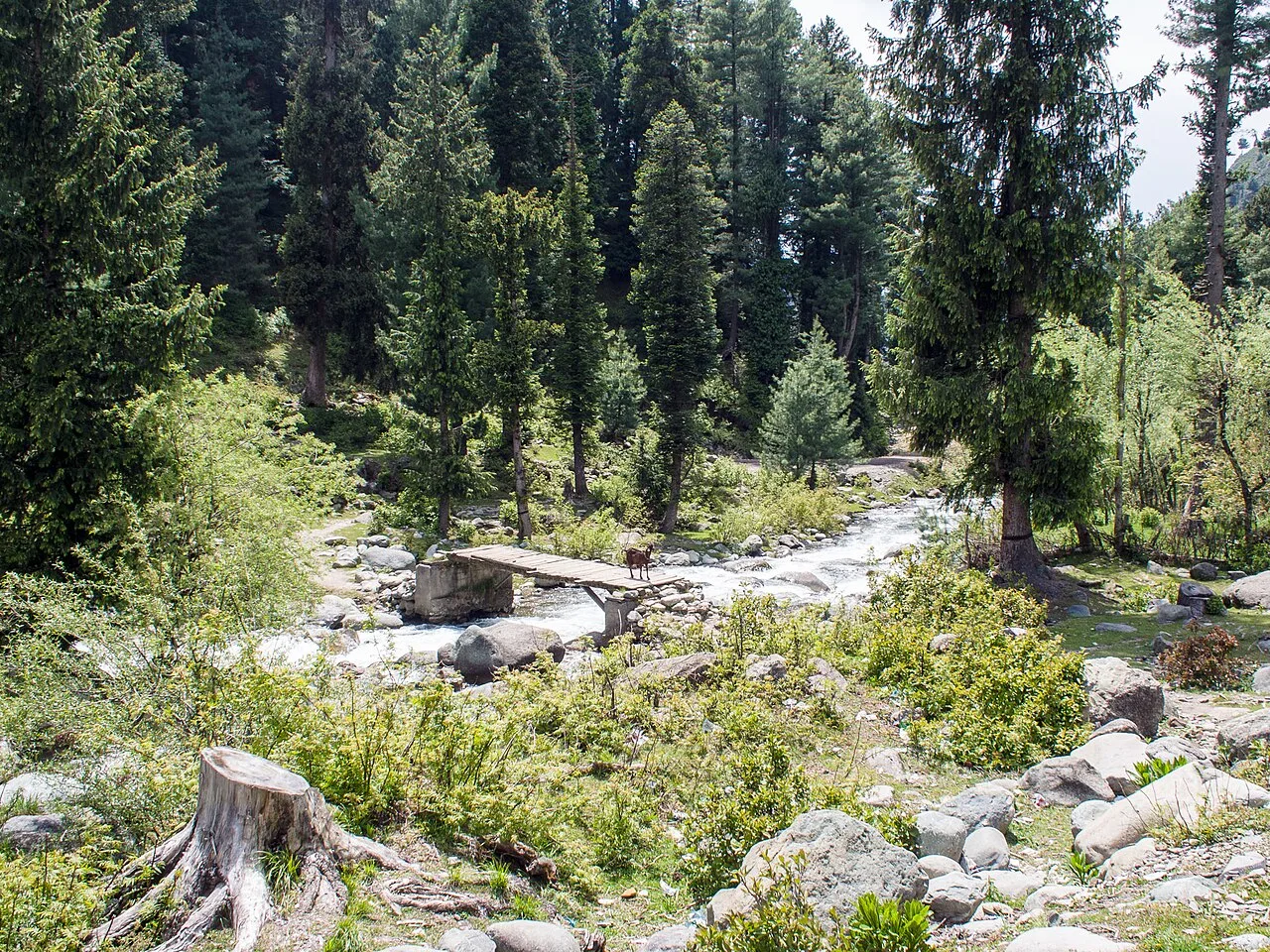
Daksum
Daksum is a scenic natural place in Larnoo tehsil, Anantnag district, Jammu and Kashmir, India. Visitors come for its natural surroundings, beside the Anantnag–Semthan–Kishtwar road (NH-244).
Key facts · verified by Ghumoopedia editors
- Type of place
- Community & living culture
- Best time to visit
- April to October for the Kashmir Valley and meadows; December to February for snow at Gulmarg; October to March for Jammu and the plains
- Nearest railway station
- Qazigund · about 25 km (straight line)
- Verified
- 21 Nov 2026
Plan a trip from Daksum — a day-by-day route through places nearby.
Daksum is a scenic natural place in Larnoo tehsil, within Anantnag district in Jammu and Kashmir, India. People visit for its natural setting and landscape. The spot, beside the Anantnag–Semthan–Kishtwar road, designated NH-244. Its location is described by both its administrative area and its position along this route. For visitors, Daksum is a scenic destination in the Anantnag area. Its setting in Larnoo tehsil and on the named road places it within the district and along the route; the stated reason to visit is its natural scenery. Kashmir is known for its Sufi shrines, Mughal gardens, houseboats and crafts such as pashmina, papier-mâché and carpets, while the Jammu region is the land of Dogra heritage and major Hindu pilgrimages. The Kashmir Valley has mild summers, colourful autumns and snowy winters, with Chillai Kalan (late December to January) the coldest spell; meadows such as Gulmarg and Sonamarg get heavy snow. Jammu and the plains are hot from April to June. Snow and landslides can close the Jammu–Srinagar highway and mountain roads. The usual best time to visit is April to October for the Kashmir Valley and meadows; December to February for snow at Gulmarg; October to March for Jammu and the plains. Timings, fees and access arrangements must be confirmed locally. For official information, see Jammu and Kashmir Tourism at https://jktourism.jk.gov.in.
Why it matters
Daksum is a natural scenic spot in Larnoo tehsil of Anantnag district, on the Anantnag–Semthan–Kishtwar road, now designated NH-244. Its regional importance comes chiefly from its setting among wooded mountain landscapes and its role as a stopping point on a route linking parts of south Kashmir with the highlands toward Kishtwar. For nearby residents and travellers, it is a place to experience the mountain environment and to pause on the journey, rather than a documented monumental site. The available reference describes Daksum as a scenic spot; it does not establish UNESCO status, ASI protection or another formal heritage designation. Visitors should check with Jammu and Kashmir Tourism or local authorities for current access information and any applicable conservation rules.
Published accounts provide little detail about Daksum’s origins as a settlement or visitor destination. There is no well-established record identifying a founder, a specific date of establishment, or a historic building programme, so assigning it a precise founding period would be speculative. The area is part of the wider Anantnag region, whose communities have long lived with the changing seasons and the opportunities and constraints of Kashmir’s mountain terrain. Daksum’s present identity is closely tied to its position on the Anantnag–Semthan–Kishtwar road, an important route through a mountainous landscape. Road access has made the spot easier to include in journeys from district towns, although weather and road conditions can still affect travel. Today it is described primarily as a natural scenic destination, rather than as a site with a documented architectural history. No specific restoration history is established in the reference material. For local accounts of how road access and tourism have changed life in the area, ask residents respectfully and treat recollections as community perspectives rather than as a substitute for documented history.
Origin stories & folklore
No widely documented origin legend specific to Daksum is established in the available reference material. Stories about mountain places are often shared through family memories, local conversation and accounts of journeys, but it would be misleading to attach an unverified tale to this spot. Visitors may hear local beliefs or stories about nearby landscapes; these should be understood as oral tradition, not necessarily as historical fact. If someone offers to share a story, listen respectfully and ask whether it is appropriate to repeat or photograph the telling. Avoid presenting a general Kashmiri folklore motif as a Daksum-specific legend unless a local source clearly identifies it as such.
Use Daksum as a base to understand local life: walk through the market, look for local crafts and ask your host about nearby viewpoints and short excursions. Always ask before photographing people, homes or ceremonies. A comfortable itinerary is one main visit in the morning, a local meal at midday and a short nearby stop before an afternoon return. Use the district list on this site to find other places in Anantnag, but check the route and its condition before combining stops. If a festival or fair is on, roads and stays can be busy — and the experience can be unforgettable. Leave no litter: many sites are protected by the communities around them.
Suggested itineraries
Half day: Take a morning road journey to Daksum, pause at a safe viewpoint, enjoy a short easy walk, have a local meal, then return before road conditions change. Full day: Travel from Anantnag toward Daksum, spend time exploring accessible forest-side paths and viewpoints, take a relaxed midday meal, then add one nearby stop only after checking the route and return conditions. Gentler option: Stay close to the vehicle at an accessible roadside stopping place, enjoy the scenery and a meal, and avoid uneven trails or a rushed onward excursion.
Daksum sits within the wider cultural setting of south Kashmir. Kashmiri is widely spoken in the valley, while Urdu and Hindi may also be used; the languages a visitor encounters vary by person and situation. Everyday hospitality, family and community ties, seasonal food and religious observances are important parts of life across the region, though customs differ between households. Sufi traditions and shrine culture are prominent in Kashmir, alongside Muslim festivals and local devotional practices. Traditional crafts such as weaving and papier-mâché are associated with Kashmir more broadly, but visitors should not assume they are made or sold in Daksum itself. Ask before entering private spaces or joining an event.
Local communities
Daksum is in Anantnag district, and its community life is connected to the settlements and villages of the surrounding mountain area. Livelihoods in the wider district include farming, horticulture, livestock rearing, trade, public services and tourism-related work; the mix varies from place to place and by season. Travellers may meet residents working in transport, food service or accommodation, but should not treat any individual as a spokesperson for the whole community. Be considerate around homes, workplaces and religious gatherings, and ask before photographing people or recording conversations.
Festivals & events
Residents of the wider area observe Muslim festivals including Eid-ul-Fitr and Eid-ul-Adha; their dates follow the lunar calendar and therefore vary each year. Ramadan is a significant period of worship and daily routine, and visitors should be mindful of local practice. Urs observances take place at Sufi shrines in Kashmir, but a particular shrine gathering should not be assumed to occur in Daksum. Public celebrations and local events can make nearby roads, services and accommodation busier, especially around larger towns. Check locally for any event announcements, and do not enter private or religious ceremonies without an invitation.
Local food in Jammu and Kashmir includes Kashmiri Wazwan dishes such as rogan josh, yakhni, gushtaba and rista, nadru (lotus stem), haak saag, dum aloo, kahwa and salty noon chai; in the Jammu region, rajma-chawal, kalari cheese and Dogra dishes such as ambal and auria. Ask what is fresh that day; many small eateries cook a limited daily menu. Vegetarian travellers eat very well across this region, and most towns also have non-vegetarian options. Remote sites may have no restaurant at all. Carry water and snacks, eat a proper breakfast before long drives, and ask your accommodation for a packed lunch if you are heading out early. Try a home-cooked or dhaba meal when you can — it is often the best food on the route. Choose busy, clean places and carry your packaging back with you.
Shopping & local experiences
Daksum is primarily a scenic stop, and a substantial craft market should not be assumed. Small local shops or food sellers may be available, depending on the season. Ask locally about products made in the area rather than assuming that Kashmir-wide crafts are produced here. In larger towns, visitors may find Kashmiri textiles, pashmina, carpets and papier-mâché, but check the seller, materials and provenance before buying. Trying a locally prepared meal or refreshments can be a way to support nearby businesses. Carry reusable bags and avoid purchasing wildlife products or items made from protected plants.
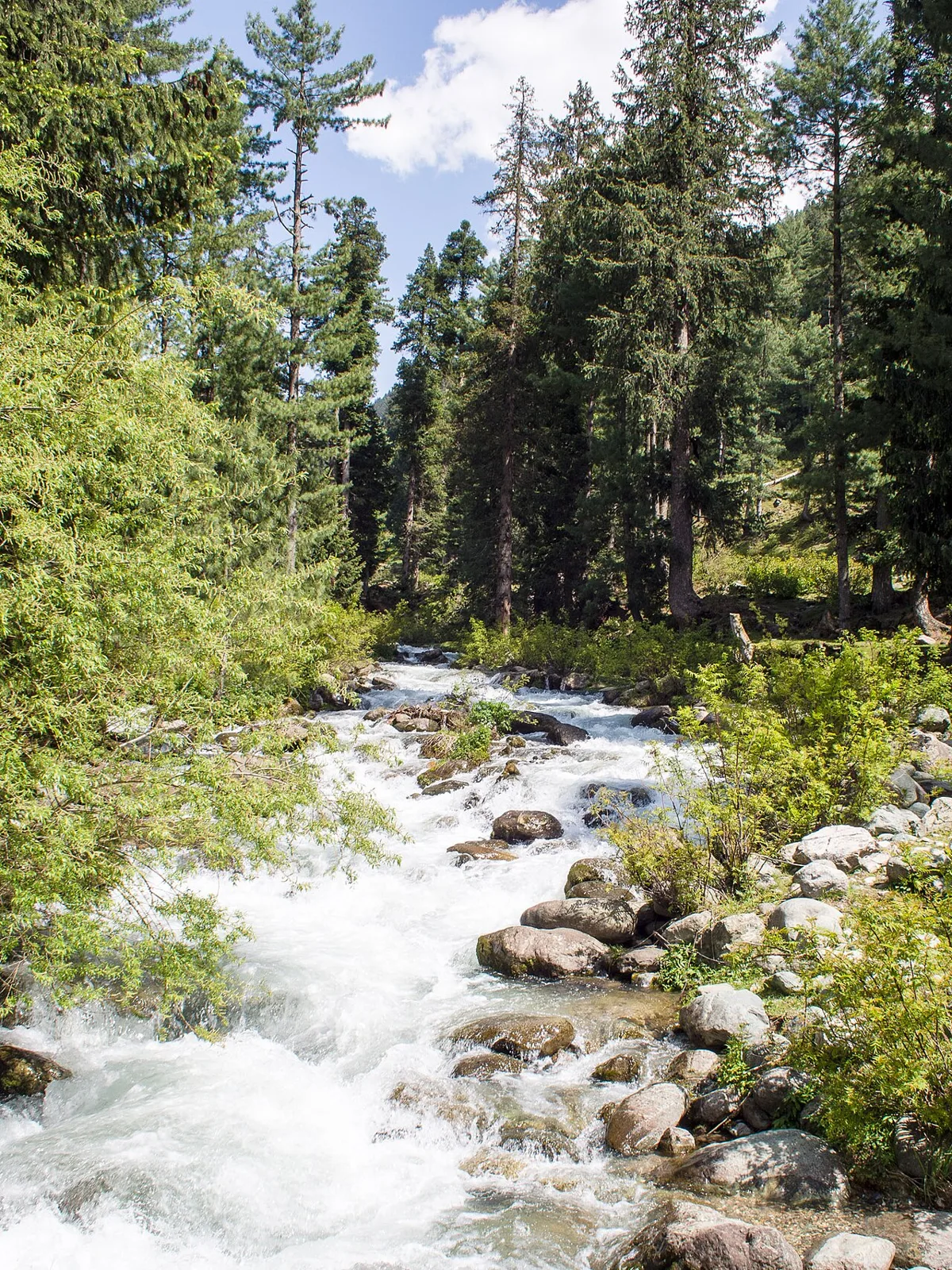
Daksum is a mountain landscape in the Anantnag district, with forested slopes, open clearings and a watercourse in the surrounding valley. The area is associated with the wooded scenery of south Kashmir; conifers are characteristic of many higher parts of the region, though the plants visible vary with elevation and season. The valley’s streams and rivers contribute to the landscape, but water levels and conditions can change with weather. Birds and other wildlife inhabit the broader forest environment, but sightings are never guaranteed. Spring and summer bring greener conditions, autumn changes the colour of the landscape, and winter weather can bring snow or difficult road conditions. Stay on established paths where possible, avoid disturbing wildlife, and take all rubbish away.
April to October for the Kashmir Valley and meadows; December to February for snow at Gulmarg; October to March for Jammu and the plains
The nearest principal railway station by straight-line distance is Qazigund, roughly 25 km away. The nearest operating airport by straight-line distance is Sheikh ul-Alam International Airport, Srinagar, roughly 75 km away. These figures are calculated from map coordinates — mountain roads wind a lot, so actual road distance and travel time are usually much longer. Jammu Tawi and Shri Mata Vaishno Devi Katra are the main long-distance rail gateways, and the line through the Chenab bridge now continues into the Kashmir Valley — check current services to Srinagar. Srinagar and Jammu airports have the most flights. For the final leg, J&K Road Transport Corporation (JKRTC) buses, private minibuses and shared Sumo taxis link district towns; shared taxis usually leave early in the morning. A private taxi gives more flexibility for remote sites. When comparing train, bus and flight, count the complete door-to-door time: a flight saves the most time only if the onward road transfer is short, while an overnight train can save a hotel night. Book your return before you leave, because seats fill quickly on weekends, festivals and holidays. Current train numbers, timings, return services and fares are not listed here; check IRCTC and NTES for trains and the airline's own schedule for flights. Indian visitors do not need a permit for the main destinations in Jammu and Kashmir. Areas close to the Line of Control, such as Gurez, Bangus, Keran and Machil, may require registration at police or army check posts, and foreign nationals face extra restrictions in some areas. Prepaid mobile SIM cards issued outside Jammu and Kashmir do not work here, so carry a postpaid connection. The Amarnath Yatra needs advance registration and a compulsory health certificate, and Vaishno Devi pilgrims need a yatra registration (RFID) card. Read your government's travel advisory and current local advisories before you go.
Confirm onward and return timings on IRCTC / NTES, the state bus operator or your airline before travel. A dash means current timings or fares have not been verified.
Getting around
Daksum lies on NH-244, and visitors commonly reach the area by road from Anantnag or other district towns. JKRTC services, private minibuses and shared Sumo taxis connect district centres, but the last leg and onward travel should be checked locally; shared vehicles may not run when conditions are poor. A hired taxi can offer more flexibility for stops, while walking is suitable only for short distances on safe, open paths. Do not expect autos, local buses or marked parking to be available at every viewpoint. Ask the driver about a safe stopping place and confirm the return transport plan before setting out.
Hours, tickets & permissions
Daksum is described as a natural scenic spot rather than a ticketed monument, but access arrangements can change with weather, road conditions, forest management or local advisories. Do not assume that every area is open or that there is no entry charge. There may be rules for particular facilities or nearby managed sites. Confirm current access, any tickets or permits, camera restrictions and operating arrangements with the relevant local authority or Jammu and Kashmir Tourism before travelling. Carry identification if required for road or security checks.
Facilities
Facilities at Daksum itself may be limited and can vary by season. Food or refreshments may be available nearby, but visitors should not rely on a particular shop being open. Toilets, drinking water, parking, guides and mobile connectivity are not assured at every stopping point; check locally and carry drinking water and essential supplies. ATMs and a broader choice of services are more likely in larger towns such as Anantnag. If travelling with children or older visitors, plan comfort stops before leaving a town and take rubbish back with you.
Accessibility
Daksum is in a mountainous area reached by road, and the terrain beyond roadside stopping places can be uneven, sloping or muddy. Walking distances depend on where a vehicle can safely stop and which paths are open. There is no reliable information confirming step-free routes, ramps or accessible toilets, so wheelchair and stroller access should not be assumed. Older visitors or anyone with limited mobility may prefer to enjoy the scenery from a safe roadside location rather than attempt forest paths. Shade and seating can be limited; bring suitable footwear, weather protection and any personal mobility aids, and check conditions before setting out.
Indian visitors do not need a permit for the main destinations in Jammu and Kashmir. Areas close to the Line of Control, such as Gurez, Bangus, Keran and Machil, may require registration at police or army check posts, and foreign nationals face extra restrictions in some areas. Prepaid mobile SIM cards issued outside Jammu and Kashmir do not work here, so carry a postpaid connection. The Amarnath Yatra needs advance registration and a compulsory health certificate, and Vaishno Devi pilgrims need a yatra registration (RFID) card. Read your government's travel advisory and current local advisories before you go. Carry a photo ID at all times and save the emergency number 112 and your accommodation's contact offline. Altitude sickness is possible above about 2,500 m: ascend gradually, rest on arrival, drink water and turn back if you develop a severe headache, breathlessness or confusion. Snow and landslides can close roads at short notice — avoid night driving and keep a spare day. Respect community rules, private property and posted instructions. Follow local guidance if access changes.
Visitor rules
Respect residents, private property, religious observances and any local or forest-area instructions. Wear practical, modest clothing suited to the weather and choose sturdy footwear for uneven ground. Keep to safe, permitted paths and do not enter restricted areas, disturb wildlife, damage plants or light fires. Carry out all rubbish, including plastic, and avoid loud behaviour in quiet areas. Ask permission before photographing people, homes or ceremonies. Rules may apply to drones, cameras, camping and vehicle stopping; confirm them locally rather than assuming they are permitted.
Photography
Soft morning or late-afternoon light can bring out the wooded slopes and valley scenery, while cloud and weather conditions change quickly. Use safe, established stopping places and do not obstruct traffic to take a photograph. Photography of landscapes is generally less intrusive than photographing people, but ask permission before taking portraits or images of homes, worship or ceremonies. Drone use may be restricted by aviation, security or local rules; check current requirements and do not fly without permission. Avoid disturbing wildlife or entering private land for a viewpoint.
Choose a stay by the full journey to Daksum, not just the district name. Srinagar houseboats, Jammu and Katra hotels and resort towns such as Gulmarg and Pahalgam offer the widest choice; book houseboats only through registered owners. At altitude, check heating, hot water and power backup, and expect cold nights for much of the year. Book in advance for weekends, festivals and the peak season (April to October for the Kashmir Valley and meadows; December to February for snow at Gulmarg; October to March for Jammu and the plains). Confirm the exact location, meals included, check-in time and cancellation terms in writing. Avoid sending money to unverified contacts or touts at stations. Carry some cash, as card and digital payments can be unreliable in remote areas.
In Anantnag district, visitors may consider Kokernag, known for its garden and water setting; Achabal, with its Mughal garden; Verinag, associated with a spring and garden; and the Martand Sun Temple ruins near Anantnag. Sinthan Top is a high mountain destination reached along the route toward Kishtwar, but road access is strongly affected by season and conditions. Pahalgam is another well-known destination in the district. These places are not all close to one another, and combining them can involve substantial road travel. Check the route, access and weather before planning multiple stops.
For couples, Daksum rewards a slow pace: arrive early for soft light and fewer crowds, share a local meal and keep the evening free. A shikara ride or a houseboat night in Srinagar is a classic addition. Public displays of affection can be frowned upon in conservative communities and at religious sites, so be discreet. Keep a buffer in your itinerary, because weather and traffic can delay plans.
Q: How much time should I allow for Daksum? A: A half day can suit a scenic pause and short walk; allow longer if travelling from farther away or adding another stop. Q: When is a good season to visit? A: April to October is generally a useful period for the Kashmir Valley, but mountain weather and road conditions can change at any time. Q: Is there an entry ticket? A: The available information does not confirm a general ticket. Check current access rules and any fees locally before travelling. Q: Is Daksum suitable for children and older visitors? A: The road-accessible scenery may suit many visitors, but paths can be uneven and facilities limited. Choose a safe roadside stop if walking is difficult. Q: Can I stay nearby? A: Accommodation options may be limited or seasonal around Daksum. Check availability in advance and consider arranging a stay in a larger nearby town.
Be the first to share photos, stories, advice or a helpful contact for Daksum.
Loading…