
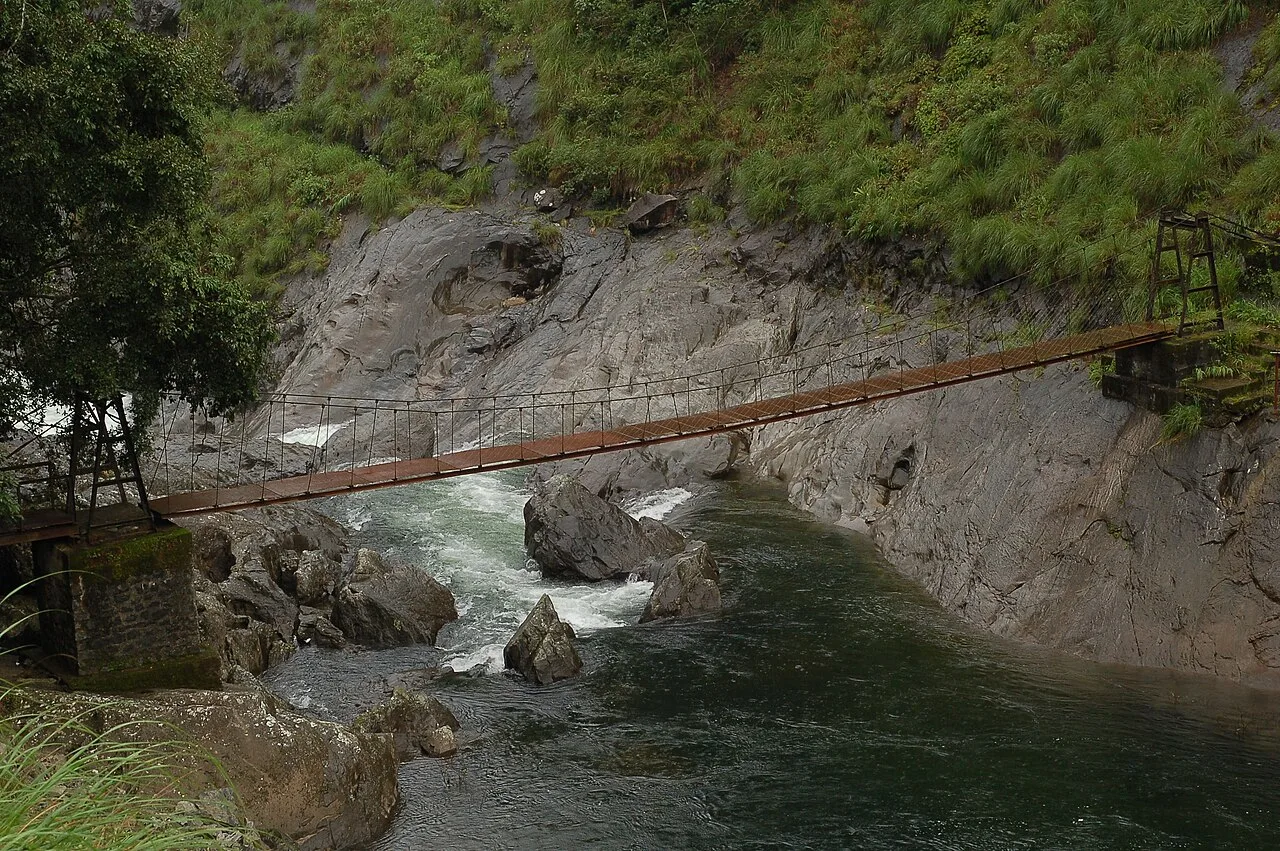
Silent Valley National Park
Silent Valley National Park is a protected forest area in Kerala’s Palakkad district, noted for its rich biodiversity. Visitors come to explore its rainforest landscapes and encounter rare plant and animal life.
Key facts · verified by Ghumoopedia editors
- Type of place
- National park / sanctuary
- Best time to visit
- September to March; June to August for monsoon Ayurveda and green landscapes
- Nearest railway station
- Nilambur Road · about 30 km (straight line)
- Verified
- 21 Nov 2026
Plan a trip from Silent Valley National Park — a day-by-day route through places nearby.
Located in the Nilgiri Hills, Silent Valley National Park has a core covering 89.52 km² and a surrounding buffer of 148 km². The botanist Robert Wight explored the area in 1847. The park lies where Mannarkkad Taluk in Palakkad district, Nilambur Taluk in Malappuram district and the Nilgiris district of Tamil Nadu meet. It forms part of the Nilgiri Biosphere Reserve and contains uncommon species of plants and animals. Several protected areas and forests lie nearby: Karimpuzha Wildlife Sanctuary, New Amarambalam Reserved Forest and Nedumkayam Rainforest in Malappuram district; Attappadi Reserved Forest in Palakkad district; and Mukurthi National Park in the Nilgiris. Mukurthi Peak, South India’s fifth-highest peak, and Anginda Peak are also close to the park. The Bhavani, which flows into the Kaveri, and the Kunthipuzha, which joins the Bharathappuzha, rise in the surrounding area. The Kadalundi River has its source within the park. The park protects one of India’s remaining largely undisturbed areas of South Western Ghats montane rainforest and tropical moist evergreen forest. It adjoins the proposed Karimpuzha National Park, covering 225 km², to the north, and Mukurthi National Park, measuring 78.46 km², to the north-east. Silent Valley is central to the 1,455.4 km² Nilgiri Biosphere Reserve and belongs to the Nilgiri Sub-Cluster, an area exceeding 6,000 km². The Western Ghats were recognised by UNESCO as a World Heritage Site in 2007. In the 1970s, a proposed hydroelectric scheme that threatened the area’s biodiversity prompted an environmental movement. Kerala packs a lot into a narrow strip: the backwaters and houseboats of Alappuzha and Kumarakom, the tea hills of Munnar and the spice forests of Thekkady, the beaches of Kovalam, Varkala and Bekal, the colonial and Jewish heritage of Fort Kochi, and living art forms — Kathakali, Theyyam, Mohiniyattam and temple festivals with caparisoned elephants. Kerala is warm and humid at sea level all year. The southwest monsoon from June to September brings very heavy rain, and the northeast monsoon adds showers in October and November; the hill stations of Munnar, Wayanad and Vagamon are cool year-round and cold on winter nights. The usual best time to visit is September to March; June to August for monsoon Ayurveda and green landscapes. Timings, fees and access arrangements must be confirmed locally. For official information, see Kerala Tourism at https://www.keralatourism.org.
Why it matters
Silent Valley National Park protects a core area of 89.52 km² in the Nilgiri hills of Palakkad district, within the wider Nilgiri Biosphere Reserve. Its evergreen forests and rich biodiversity make it important to conservation across the Western Ghats. The park is contiguous with forests and protected areas in Kerala and Tamil Nadu, forming part of a broader landscape used by wildlife. The proposed hydroelectric project here prompted a prominent environmental movement in the 1970s, drawing national attention to the ecological costs of development. The park is managed as a protected area by Kerala’s Forest Department. It should not be confused with a UNESCO World Heritage property; the broader Western Ghats received that designation in 2012.

The botanist Robert Wight explored Silent Valley in 1847, an early documented encounter with the area by a European botanical collector. The forest remained relatively little disturbed compared with many other parts of the Western Ghats, although people lived in and around the wider landscape and used its resources. In the 1970s, a proposed hydroelectric project on the Kunthipuzha River became the focus of a public campaign. Scientists, conservationists, writers and local supporters argued that the project could damage the valley’s forests and wildlife. The movement, commonly known as Save Silent Valley, helped bring wider attention to rainforest conservation in India. The project was abandoned in 1983, and Silent Valley was declared a national park in 1984. The protected area is now managed by Kerala’s Forest Department, with visitor access subject to conservation rules and permissions. The park’s history is closely connected to changing public attitudes toward forests, river systems and large development projects. The surrounding region remains a lived landscape, not simply a wilderness reserve; communities, forest staff and conservation authorities all shape how it is cared for and visited.
Spend unhurried time at Silent Valley National Park: walk the marked paths, use official viewpoints and ask locally whether a guide, entry ticket or forest permission is needed. On safari or boating trips, follow the naturalist's instructions, stay inside the vehicle or boat, wear muted colours and keep silent near animals — sightings are never guaranteed. A comfortable itinerary is one main visit in the morning, a local meal at midday and a short nearby stop before an afternoon return. Use the district list on this site to find other places in Palakkad, but check the route and its condition before combining stops. If a festival is on — such as Onam, Thrissur Pooram, the Nehru Trophy snake-boat race on Punnamada Lake, the Theyyam season in Kannur and Kasaragod, or the Attukal Pongala — roads and stays can be busy, and the experience can be unforgettable. Leave no litter: many sites are protected by the communities around them.
Suggested itineraries
Half day: Check in at the authorised entry point; take the permitted forest excursion and use marked viewpoints (allow several hours); return to Mukkali for a meal. Full day: Travel to the confirmed gate; join the authorised forest visit; pause at permitted viewpoints and interpretation facilities; have a local meal; return with time for the onward journey. Gentler option: Ask the managing authority about the shortest permitted outing or accessible interpretation facilities; enjoy the forest from authorised stopping points rather than attempting a long walk.
Silent Valley itself is primarily a protected forest, rather than a place for staged cultural performances. In nearby Palakkad and Malappuram districts, Malayalam is widely spoken, alongside other languages and community languages in the region. Local cultural life includes temple festivals, seasonal observances, folk music and dance, and Kerala’s broader traditions of Kathakali and Theyyam, though these are not regular park events. Visitors may encounter local food customs and village markets on the way to the forest. Ask before photographing people, homes or ceremonies, and follow local guidance where customs or access are private.
Local communities
The park lies within a wider region connected to Adivasi communities, including Irula, Muduga and Kurumba people in parts of the surrounding hills and Attappadi area. These communities have distinct languages, histories and relationships with their homelands; they should not be treated as visitor attractions. People in nearby settlements also work in farming, trade, transport, tourism and public services. Forest staff and authorised local guides support visitor management and conservation. Livelihoods and access vary between communities and locations, so visitors should seek consent before taking photographs and respect any areas or knowledge that are not offered for public sharing.
Festivals & events
There are no major public festivals held inside Silent Valley National Park. In nearby towns and villages, Onam is observed in the Malayalam calendar’s harvest season, usually around August or September, and Vishu in April. Local temple festivals and community gatherings take place at varying times of year; dates and public access differ by location. Attappadi and the surrounding districts also have distinct community traditions, but visitors should not assume that ceremonies are open to outsiders. Festival periods can make roads, public transport and accommodation busier, especially near town centres. Check locally before planning a forest visit around a celebration.
Local food in Kerala includes appam with stew, puttu with kadala curry, idiyappam, the vegetarian sadya served on a banana leaf, Kerala parotta with beef or chicken fry, Malabar biryani and pathiri in the north, karimeen pollichathu (pearl-spot fish in banana leaf), toddy-shop fish curry, banana chips and many kinds of payasam. Ask what is fresh that day; many small eateries cook a limited daily menu. Coconut oil and coconut are used in most dishes; ask for less spice if needed. Toddy shops serve some of the best fish curry in Kerala, and a full sadya is the highlight of Onam. Remote sites may have no restaurant at all. Carry water and snacks, eat a proper breakfast before long drives, and ask your accommodation for a packed lunch if you are heading out early. Try a home-cooked or local thali meal when you can — it is often the best food on the route. Choose clean places, drink sealed or filtered water, and carry your packaging back with you.
Shopping & local experiences
There is no need to treat the forest as a shopping destination, and collecting plants, seeds, stones or other natural material is inappropriate. In Mannarkkad and nearby town markets, look for everyday Kerala produce and packaged regional foods, subject to what is available locally. Small shops may carry snacks and essentials; supplies can be limited closer to the park. Ask about locally made crafts through legitimate shops or community enterprises rather than approaching people in the forest for souvenirs. Carry reusable containers where permitted and take packaging away with you.
The park protects tropical moist evergreen forest and South Western Ghats mountain rainforest in the Nilgiri hills. Its steep, forested terrain includes the headwaters of several rivers: the Kunthipuzha, a tributary of the Bharathappuzha, and the Bhavani, which flows toward the Kaveri, rise in the vicinity; the Kadalundi also originates in the area. The forests support varied plant life and wildlife, including species of conservation concern. Birds inhabit different forest levels, but dense vegetation can make them difficult to see. Nearby protected forests and parks connect this landscape across district and state boundaries. Conditions change with elevation and season. Wildlife sightings are never guaranteed, and quiet observation helps reduce disturbance.
September to March; June to August for monsoon Ayurveda and green landscapes
The nearest principal railway station by straight-line distance is Nilambur Road, roughly 30 km away. The nearest operating airport by straight-line distance is Calicut International Airport, Karipur, roughly 56 km away. These figures are calculated from map coordinates — actual road distance is longer. Thiruvananthapuram, Kollam, Kottayam, Ernakulam, Thrissur, Shoranur, Kozhikode and Kannur are the main rail stops along the coast line; Kochi, Thiruvananthapuram, Kozhikode and Kannur have international airports. Safari and boating permits are issued for specific gates and time slots, so confirm which entry point your booking is for before choosing a stay; private vehicles are not allowed on most forest tracks. When comparing train, bus and flight, count the complete door-to-door time: a flight saves the most time only if the onward road transfer is short, while an overnight train can save a hotel night. Kerala's coastal rail line is busy, so reserve trains early; KSRTC buses are frequent and often quicker to hill stations. Book your return before you leave, because seats fill quickly on weekends, festivals and holidays. Current train numbers, timings, return services and fares are not listed here; check IRCTC and NTES for trains and the airline's own schedule for flights. No permit is needed to visit Kerala. Several major temples, including Sree Padmanabhaswamy in Thiruvananthapuram and Guruvayur, admit only Hindus and enforce a strict dress code — men wear a mundu (dhoti) and remove shirts, women wear a saree or long skirt. Forest activities in Periyar, Eravikulam, Silent Valley, Parambikulam and Thattekad must be booked with the Kerala Forest Department, and Eravikulam National Park usually closes in February and March for the Nilgiri tahr calving season.
Confirm onward and return timings on IRCTC / NTES, the state bus operator or your airline before travel. A dash means current timings or fares have not been verified.
Getting around
Mukkali is a common approach point for visits to Silent Valley, but the authorised entry route and onward transport depend on current forest arrangements. Reach the area by bus, taxi or hired vehicle from nearby towns such as Mannarkkad, checking road conditions and connections locally. Private vehicles are not allowed on many forest tracks; visitors may need to use an authorised vehicle arranged under the park’s rules. Autos and taxis can be useful around towns, while local buses serve some routes but may not reach the entrance. Walking is suitable only on permitted paths. Confirm parking and return transport before setting out.
Hours, tickets & permissions
Entry is controlled by the managing forest authority and may require a ticket, advance booking, a permit or an authorised vehicle or guide, depending on the route and current arrangements. Permits are tied to particular entry points and visitor slots, so confirm the gate named on your booking before arranging transport or accommodation. Camera rules and any applicable fees can also vary. Carry identification if requested by the authority. Confirm current opening arrangements, permitted activities and all fees directly with Kerala Forest Department sources before travelling; do not rely on old listings.
Facilities
Facilities inside a protected forest are limited and vary by entry point. There may be toilets, drinking-water arrangements, visitor information or authorised guides at designated locations, but check availability before travelling and carry water in a reusable bottle. Food choices may be limited near the entrance; plan meals in Mukkali or a nearby town. Parking may be available at designated points, subject to local arrangements. ATMs and a wider range of shops are more likely in larger towns than at the park. Do not assume mobile coverage, refreshments or medical services are available inside the forest.
Accessibility
The park is hilly and forested, and permitted outings may involve uneven paths, slopes, steps or extended time in a vehicle. Walking distances and surfaces depend on the authorised route and current conditions. Shade is common under forest canopy, but paths may be slippery after rain and there may be exposed sections at viewpoints. Wheelchair and stroller access cannot be assumed; contact the managing authority to ask about the specific gate, vehicle and facilities before booking. Older visitors or anyone with limited mobility should discuss walking requirements in advance and avoid setting out without a confirmed return plan.
No permit is needed to visit Kerala. Several major temples, including Sree Padmanabhaswamy in Thiruvananthapuram and Guruvayur, admit only Hindus and enforce a strict dress code — men wear a mundu (dhoti) and remove shirts, women wear a saree or long skirt. Forest activities in Periyar, Eravikulam, Silent Valley, Parambikulam and Thattekad must be booked with the Kerala Forest Department, and Eravikulam National Park usually closes in February and March for the Nilgiri tahr calving season. Carry a photo ID at all times and save the emergency number 112 and your accommodation's contact offline. Never step out of the safari vehicle, never walk in the forest without a registered guide, and keep to permitted routes; elephants, tigers and leopards live here. Stay on marked paths, keep away from cliff edges and fast water, and never approach wild animals.
Visitor rules
Follow the Forest Department’s instructions and remain on authorised routes; never enter restricted forest areas or leave a permitted vehicle or path without approval. Wear quiet, practical clothing and sturdy footwear suited to wet, uneven ground. Keep voices low, do not feed or approach wildlife, and take all litter back out. Single-use plastics and other items may be restricted under current rules, so check before packing. Photography may be limited in some places or circumstances; obey signs and staff directions. Do not collect plants, disturb animals, light fires or play loud music.
Photography
Soft morning light can suit forest views, but mist, cloud and dense canopy may limit visibility at any time. Use only authorised viewpoints and paths; the best available outlook depends on the permitted route and weather. Photography may be subject to site rules, and staff can direct visitors not to photograph particular areas or activities. Drone use should not be assumed to be permitted in a national park; obtain explicit approval from the relevant authorities before bringing or operating one. Ask people for consent before taking portraits, and avoid disrupting ceremonies or wildlife for a picture.
Choose a stay by the full journey to Silent Valley National Park, not just the district name. Kerala Tourism's classified homestays are good value and a way to taste home cooking; beach towns have everything from hostels to Ayurveda resorts. In summer, check air-conditioning and backup power; in the monsoon, check that the property is accessible if roads flood. Book in advance for weekends, festivals and the peak season (September to March; June to August for monsoon Ayurveda and green landscapes). Confirm the exact location, meals included, check-in time and cancellation terms in writing. Avoid sending money to unverified contacts or touts at stations. Carry some cash, as card and digital payments can be unreliable in remote areas.
Mannarkkad is a practical nearby town for supplies and onward travel. The Attappadi region, also in Palakkad district, offers a wider hill landscape and local settlements; visit respectfully and check access for any specific site. Across the district boundary, Nilambur is known for its forested surroundings, including Nedumkayam rainforest and New Amarambalam Reserved Forest, where access may be controlled. Karimpuzha Wildlife Sanctuary lies in the broader adjoining landscape. Mukurthi National Park is across the Tamil Nadu border and is a separate protected area, not a casual extension of a Silent Valley visit. Check routes, permissions and travel conditions before combining destinations.
For couples, Silent Valley National Park rewards a slow pace: arrive early for soft light and fewer crowds, share a local meal and keep the evening free. An overnight houseboat on Vembanad, a sunset on the Varkala cliffs or a misty morning walk through Munnar's tea estates makes the trip memorable. Public displays of affection can be frowned upon in conservative communities and at religious sites, so be discreet. Keep a buffer in your itinerary, because weather and road conditions can delay plans.
Q: How much time should I allow for a visit? A: Set aside at least half a day for the authorised forest outing, with extra time for the approach journey and any required check-in. Q: When is a good season to visit? A: Drier periods are often easier for travel and walking, but weather varies; monsoon rain can affect roads and trails. Check current conditions before departure. Q: Do I need to arrange entry in advance? A: Entry rules, permits and available routes can change. Confirm the current process with the managing authority and verify the gate on any booking. Q: Is the park suitable for children or older visitors? A: It can be, if the permitted outing suits their mobility and stamina. Paths may be uneven, and facilities are limited, so plan carefully and follow staff advice. Q: Where should I stay nearby? A: Consider accommodation in Mukkali or nearby towns such as Mannarkkad, after confirming transport and the entry point for your visit.
Be the first to share photos, stories, advice or a helpful contact for Silent Valley National Park.
Loading…