

Tharon Cave
Tharon Cave is a cave in Tamenglong district, Manipur. Visitors interested in caves may come to see it, though no further details about its features are given.
Key facts · verified by Ghumoopedia editors
- Type of place
- Heritage monument
- Best time to visit
- October to March
- Verified
- 21 Nov 2026
In Manipur, Tharon Cave is located in Tamenglong district. It is identified as a cave, which gives the basic description of the place. The available details establish its type and district, but do not describe its size, layout or other features. No additional information about the cave is included here. People seeking to visit a cave in Tamenglong district may be interested in Tharon Cave. Beyond its identity as a cave and its location in Manipur, no further characteristics are specified. Manipur is known for Manipuri classical dance, the Meitei, Naga and Kuki-Zo communities, polo’s historic roots and the women-run Ima Keithel market. The Imphal valley has mild summers and cool winters; hill districts are colder. The monsoon brings heavy rain from June to September. The usual best time to visit is October to March. Days are short in Northeast India: the sun can set before 5 pm in winter, so plan to reach and leave Tharon Cave in daylight. For official information, see Manipur Tourism at https://manipurtourism.gov.in.
Why it matters
Tharon Cave is included in Ghumoopedia’s Manipur index as a cave in Tamenglong district. The label “heritage monument” should therefore not be taken as confirmation of official protection. Visitors interested in its status, custodianship or cultural significance should ask Manipur Tourism or a knowledgeable local host. Until reliable information is available, treat the site as a place requiring local guidance and respect, rather than assuming it has formal visitor infrastructure.
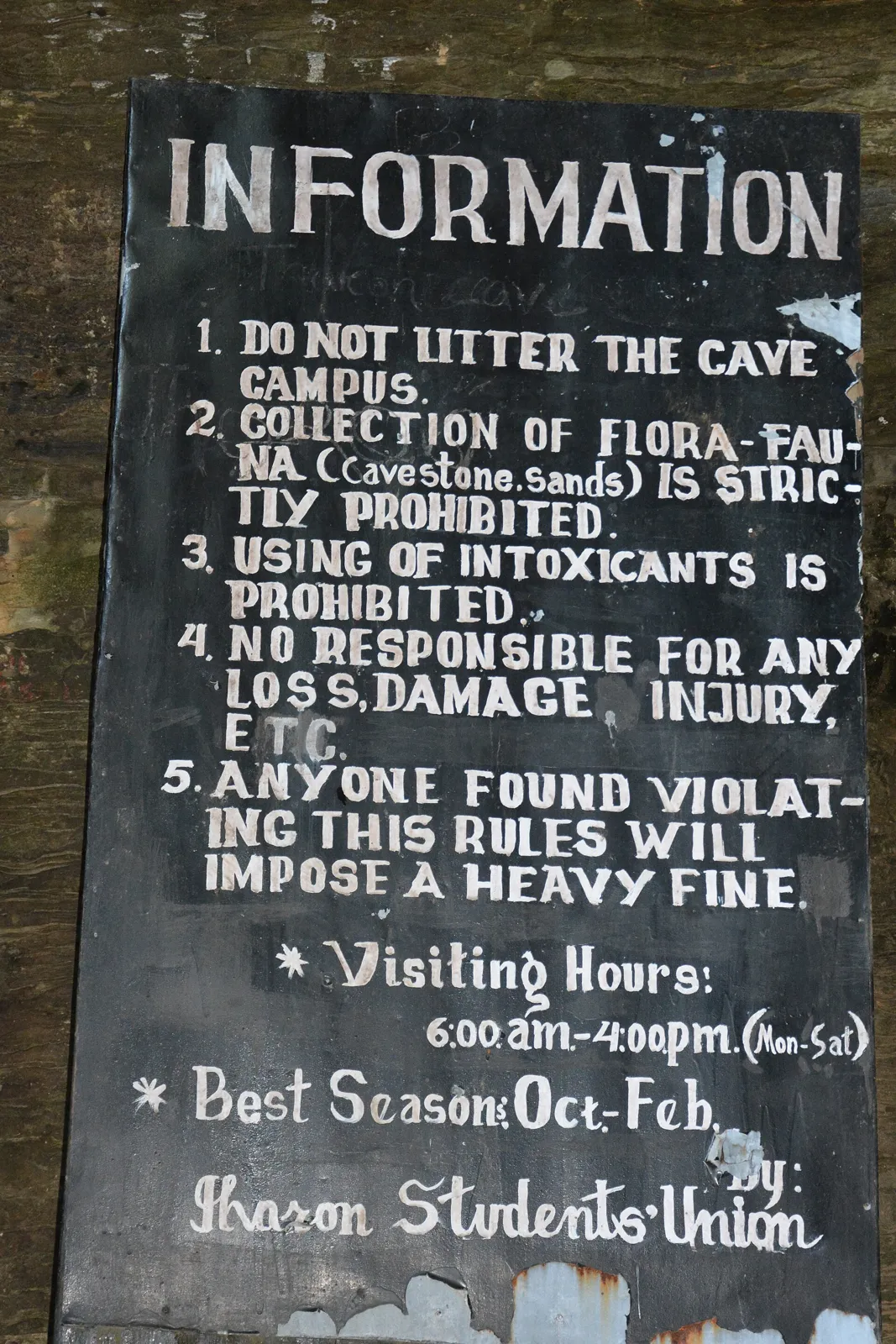
The cave is listed in Ghumoopedia’s Manipur index as being in Tamenglong district, but that listing does not establish its age, archaeological significance or history of human occupation. No reliable account has been found identifying builders; a natural cave should not be described as a constructed monument without evidence. Nor has a dated record of excavation, conservation, restoration or changes in public access been verified. Visitors may encounter local explanations or accounts of past use, but these should be attributed to the people sharing them rather than treated as established historical fact. For research or a more detailed account, ask Manipur Tourism, district authorities or local custodians whether surveys, oral histories or site records are available. Avoid removing material or entering unmarked areas.
Origin stories & folklore
Local people may have oral accounts associated with the cave, its landscape or nearby communities, but it would be misleading to present an unconfirmed story as a documented tradition. If a host or guide shares a tale, ask whether it is a family account, a community tradition or a more recent visitor story, and follow their lead on whether it may be repeated or photographed. Oral traditions can be meaningful expressions of local identity even when they are not historical records. Visitors should listen respectfully, avoid pressing people to disclose restricted knowledge, and not attribute a story to a particular community unless its tellers do so.
Architecture & design
Tharon Cave is described in the available guide information as a cave, not as a constructed building. It is therefore not possible to give a reliable architectural description or identify built features such as steps, platforms, railings or lighting. Natural caves can contain uneven floors, narrow sections and low ceilings, but visitors should not assume that any particular feature is present here. Do not interpret rock formations as carvings or human-made structures without evidence. Follow marked paths and any instructions from local custodians; do not climb on formations, make marks, or enter side passages. Before visiting, ask locally which parts are open and whether a guide and protective equipment are required.
Important objects & sculptures
Visitors should not expect a museum display or assume that marks on rock are historic inscriptions. If a guide points out an object or feature, ask what is known about it and whether the explanation is documented, traditional or uncertain. Leave stones, artefacts and natural formations where they are; removing material can damage a site and may violate local rules. Do not touch, rub, chalk or wet surfaces to make details more visible. Any finds or collections reported locally should be checked with the relevant custodians or authorities before being described as part of the cave’s heritage.
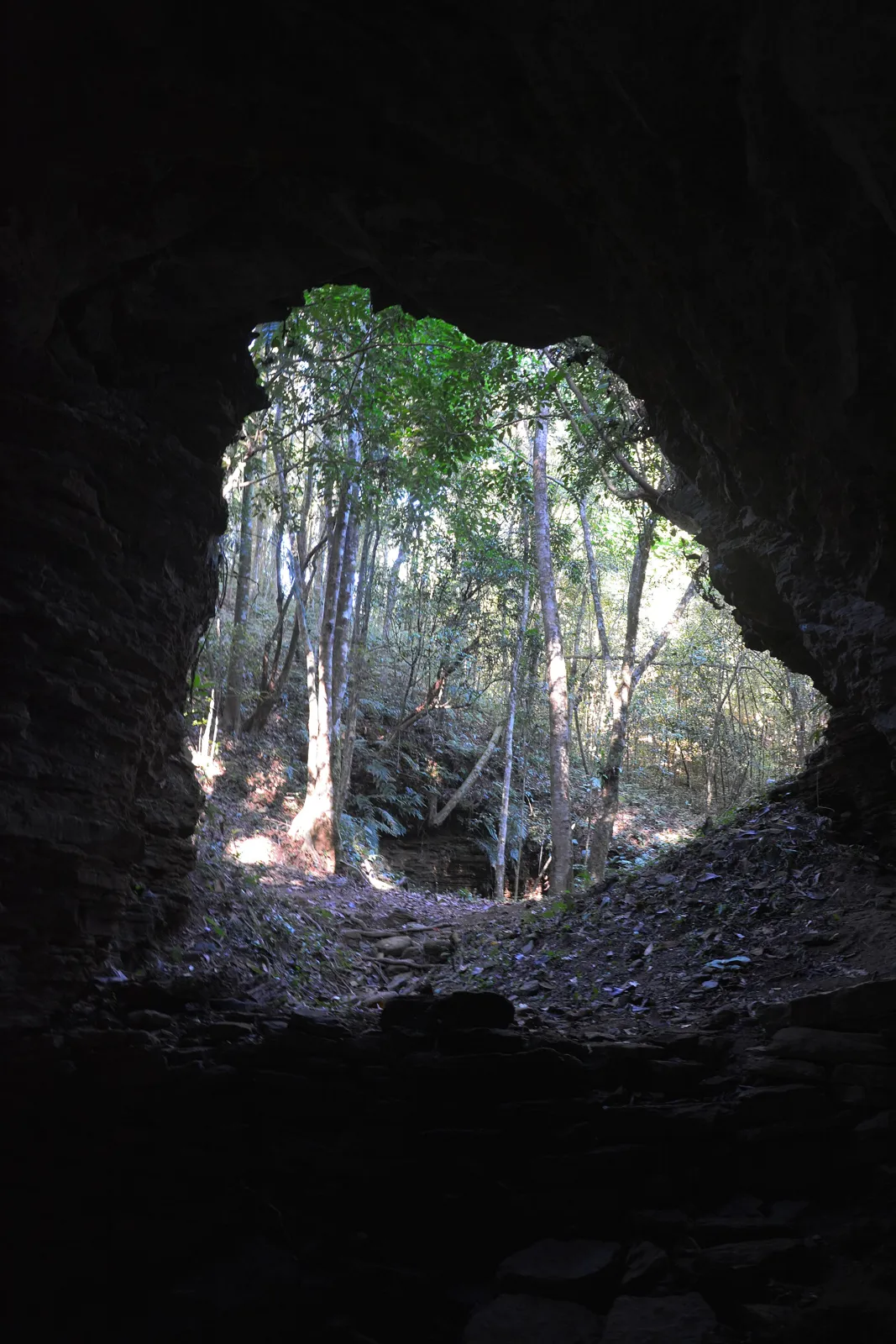
Spend unhurried time at Tharon Cave: walk the marked paths, use official viewpoints and ask locally whether a guide, entry ticket or permit is needed. Caves should only be entered with a registered local guide, proper lighting and a helmet where provided; never explore side passages on your own. Wildlife sightings are never guaranteed — patience and quiet improve your chances. A comfortable itinerary is one main visit in the morning, a local meal at midday and a short nearby stop before an afternoon return. Use the district list on this site to find other places in Tamenglong, but check the actual road route and its condition before combining stops. If a festival is on, local roads and stays can be busy — and the experience can be unforgettable. Leave no litter: many sites in Manipur are protected by the communities who own them.
Suggested itineraries
Half day: Confirm access and meet a local guide; allow time for the approach, a cautious visit along permitted paths, and the return journey in daylight. Full day: Start with the confirmed route to Tharon Cave; visit only areas approved by a guide; pause for a local meal; add a nearby stop only after checking its route and road conditions; return before dark. Gentler option: Ask whether there is a safe, short approach or an accessible viewpoint; enjoy the surrounding area without entering the cave if the route is uneven or strenuous.
The wider Manipur context includes Meitei, Naga and Kuki-Zo communities, with diverse languages and cultural practices; this regional diversity should not be reduced to a single identity for Tamenglong or the cave. Ask local hosts how the site is regarded and whether any customs apply before entering, photographing people or discussing sacred meanings. Dress and behaviour should be respectful, and visitors should follow a guide’s instructions. Manipuri classical dance and other cultural traditions are part of the state’s broader cultural life, but they should not be assumed to take place at this cave.
Festivals & events
Festivals in Manipur vary between communities and places, so do not assume that a state-wide celebration is observed at the cave or nearby. Ask a local host or district contact about any community events during your intended visit and whether access is affected. Festival periods can bring extra traffic, busy accommodation or temporary changes to local arrangements, but no particular crowd pattern at Tharon Cave is confirmed. If invited to an event, follow local guidance about photography, dress and participation, and treat ceremonies as community occasions rather than performances for visitors.
Local food in Manipur includes eromba (fermented fish and vegetable mash), singju salad, kangshoi stew, and chak-hao kheer made with Manipur’s black rice. Ask what is fresh that day; many small eateries cook a limited daily menu. Pork, beef, fish and fermented ingredients are common in tribal cuisines, so vegetarian travellers should explain their needs clearly — rice, dal, vegetables and eggs are usually possible in towns. Remote sites may have no restaurant at all. Carry water and snacks, eat a proper breakfast before long drives, and ask your accommodation for a packed lunch if you are heading out early. Try a homestay-cooked meal when you can — it is often the best food in the hills. Choose busy, clean places and carry your packaging back to town.
Shopping & local experiences
If you visit a market in Tamenglong town, ask locally about community-made crafts and locally produced foods, and buy directly from makers where possible. Do not collect stones, plants or other natural material from the cave as a souvenir. Food availability near the site is uncertain, so arrange a meal or provisions before travelling and check what is open locally. Ask permission before photographing artisans or their work, and avoid presenting an item as traditional or community-specific unless the seller identifies it that way.
October to March
These figures are calculated from map coordinates — hill roads in Manipur wind a lot, so actual road distance and travel time are usually much longer. Guwahati is the main rail and air hub for the region, and most long-distance journeys connect through it. For the final leg, Manipur State Transport and shared taxis from Imphal link district towns; shared taxis usually leave early in the morning and depart only when full. A private taxi gives more flexibility for remote sites. When comparing train, bus and flight, count the complete door-to-door time: a flight saves the most time only if the onward road transfer is short, while an overnight train to Guwahati plus a road journey can save a hotel night. Book your return before you leave, because seats on shared vehicles and the few daily flights fill quickly. Current train numbers, timings, return services and fares are not listed here; check IRCTC and NTES for trains and the airline’s own schedule for flights. Indian visitors who are not residents of Manipur need an Inner Line Permit, applied for through Manipur’s official ILP system. Foreign nationals should check the current Protected Area Permit and registration rules before travel.
Getting around
In Tamenglong district, ask locally about available shared taxis or a private vehicle for the final leg; services and road conditions can vary. Do not assume an auto-rickshaw, local bus or marked parking area serves the cave itself. If the approach ends before the site, check the walking route, surface and expected return arrangement before leaving a vehicle. Avoid setting out late in the day, and plan to complete the visit and return in daylight. Carry water and do not rely on mobile coverage or roadside services without checking locally.
Hours, tickets & permissions
Ask Manipur Tourism, district authorities or your local host to confirm whether the cave is open, whether tickets or permits are required, and whether a registered local guide must accompany visitors. Check current rules for identification, photography and any equipment or dress requirements before setting out. Do not assume that access is unrestricted or that someone will be present to admit visitors. Confirm current hours and any fees with the managing authority; no times or prices are stated here.
Facilities
Do not count on toilets, drinking water, food stalls, parking, lighting, an ATM or an on-site guide. Ask your host what is available along the route and arrange water, food and transport before departure. A guide or protective equipment may be required for entry; confirm this in advance rather than expecting to hire equipment at the site. Services in Tamenglong town may be limited compared with larger cities, so check locally and carry essential supplies. Take all rubbish back with you and leave the site clean.
Accessibility
Caves commonly present uneven ground, low ceilings, narrow spaces or poor lighting, but the features at Tharon Cave should be checked on site rather than assumed. Wheelchair and stroller access is unknown, and entry may not be suitable for visitors who have difficulty walking, balance concerns or limited mobility. Ask a local host about the approach and whether a safe viewpoint is available without entering. Older visitors should consider the return walk and avoid going alone. Do not attempt a route that feels unsafe or continue beyond the guide’s instructions.
Indian visitors who are not residents of Manipur need an Inner Line Permit, applied for through Manipur’s official ILP system. Foreign nationals should check the current Protected Area Permit and registration rules before travel. Carry a printed and digital copy of your permit and a photo ID at all times; checkpoints are common. Save the emergency number 112 and your accommodation’s contact offline. Heat, humidity and sudden downpours are the main weather risks; carry water and rain protection. Stay on marked paths, keep away from cliff edges and fast water, and never approach wild animals. Avoid hill road travel after dark and during heavy rain, when landslides are more likely. Check official advisories for the region before travel, and follow local guidance if access changes.
Photography
No specific photography rules or designated viewpoints have been verified. Ask the guide or site custodian before taking photographs, especially inside the cave or near people, ceremonies or culturally sensitive features. Use a torch only as needed and never rely on a camera flash as a substitute for safe lighting. Do not touch formations or leave equipment behind to stage a photograph. Drone use should not be assumed to be permitted; check local rules and obtain required permissions before flying. Plan the visit in daylight and avoid extending it for a shot if that would make the return journey unsafe.
Choose a stay by the full journey to Tharon Cave, not just the district name. Main towns in Tamenglong usually offer hotels, state tourism lodges and homestays with better transport, meals and medical access, while village homestays offer a closer connection to local life. In the plains and valleys, check fans or air-conditioning and mosquito nets in summer. Book in advance for weekends, festival dates and the peak season (October to March). Confirm the exact location, meals included, check-in time and cancellation terms in writing. Many homestays accept payment on arrival; avoid sending money to unverified contacts. Mobile network and digital payments can be unreliable in remote areas, so carry some cash.
Tamenglong town is a district reference point; confirm the cave’s approach and available services there with a local host. Zeilad Lake is a named attraction in Tamenglong district, but its suitability as a same-day stop depends on the cave’s actual location, road conditions and the time needed for each journey. Check current access and routes before combining destinations, and avoid relying on map distances alone on hill roads. Ask locally about other suitable stops rather than assuming they are close or accessible.
For couples, Tharon Cave rewards a slow pace: arrive early for soft light and fewer crowds, share a local meal and keep the evening free. Public displays of affection can be frowned upon in conservative communities and at religious sites, so be discreet. A homestay can make the trip memorable — confirm privacy, hot water and transport back. Keep a buffer day in your itinerary, because weather and road closures can delay plans in Manipur.
Q: How much time should I allow for Tharon Cave? A: The approach and visit duration are not verified. Allow time for local guidance, the return journey and a daylight finish; confirm the route before planning the day. Q: When is the best season to visit? A: October to March is generally a comfortable period for travel in Manipur. Monsoon rain from June to September can affect hill roads; check current conditions locally. Q: Is there an entry ticket or permit? A: Ask the managing authority or a local host about entry, permits, guide requirements and current fees. Q: Can children or elderly visitors enter? A: Suitability depends on the unverified approach and cave conditions. Ask a local guide first; do not enter if the route is uneven, narrow or otherwise uncomfortable. Q: Where can I stay nearby? A: Check availability in Tamenglong town or ask your host about the closest suitable stay before travelling.
Be the first to share photos, stories, advice or a helpful contact for Tharon Cave.
Loading…