
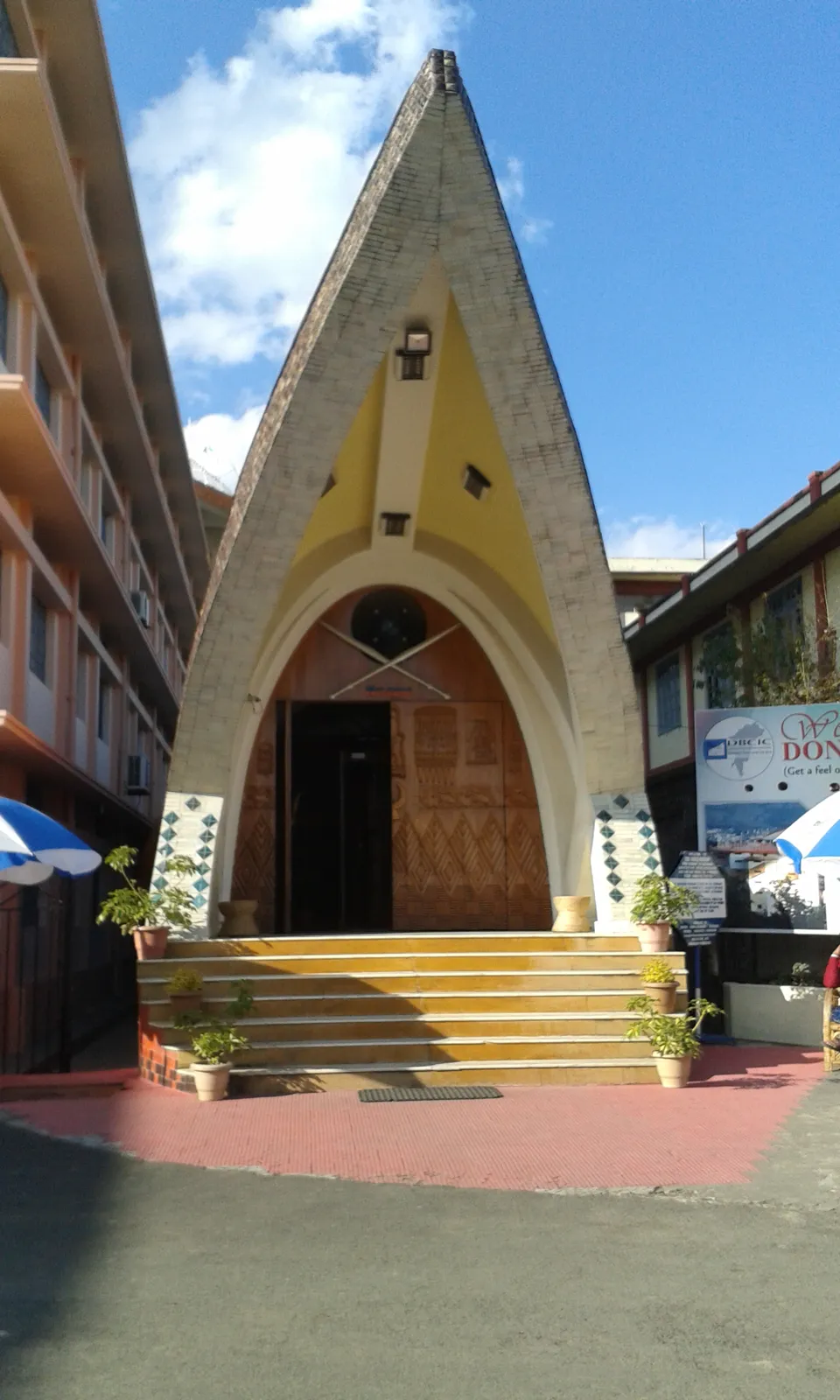
Don Bosco Centre for Indigenous Cultures
In Meghalaya’s East Khasi Hills, Don Bosco Centre for Indigenous Cultures is a museum and cultural centre. Visitors may come to engage with a place identified with indigenous cultures.
Key facts · verified by Ghumoopedia editors
- Type of place
- Heritage monument
- Best time to visit
- October to May; the monsoon is dramatic for waterfalls but roads and treks become slippery
- Verified
- 21 Nov 2026
Don Bosco Centre for Indigenous Cultures is situated in East Khasi Hills, Meghalaya. It is identified as a museum or cultural centre, giving visitors a clear sense of the kind of place it is. The centre’s name connects it with indigenous cultures. For people interested in this subject, its museum and cultural-centre identity offers a reason to include it in their plans while exploring the district. Its location and category are the key details: the centre belongs to Meghalaya’s East Khasi Hills area and is recognised as a cultural institution. These details introduce the place without suggesting further information about its contents or facilities. The Khasi, Jaintia and Garo communities follow matrilineal traditions, and community councils manage much of the land visitors pass through. Meghalaya is among the wettest places on earth: Sohra and Mawsynram receive extreme monsoon rainfall. Shillong is cool all year, and fog can close viewpoints at any season. The usual best time to visit is October to May; the monsoon is dramatic for waterfalls but roads and treks become slippery. Days are short in Northeast India: the sun can set before 5 pm in winter, so plan to reach and leave Don Bosco Centre for Indigenous Cultures in daylight. For official information, see Meghalaya Tourism at https://www.meghalayatourism.in.
Why it matters
Don Bosco Centre for Indigenous Cultures is a museum and cultural centre in East Khasi Hills district, Meghalaya. Its regional importance lies in presenting material and interpretive accounts of the diverse communities of Northeast India, including the Khasi, Jaintia and Garo peoples. It can help visitors place Meghalaya’s living cultures in a broader regional context, though displays and interpretation should not be treated as a substitute for community voices or local guidance. The centre is listed in Ghumoopedia’s Meghalaya index as a museum or cultural centre. Confirm current visitor information with the centre or Meghalaya Tourism before travelling.
Don Bosco Centre for Indigenous Cultures is a purpose-built museum and cultural centre in East Khasi Hills, rather than an ancient monument. It is associated with the Salesians of Don Bosco, a Catholic religious congregation active in education and cultural work in the region. The centre was developed to document and interpret the cultures of Northeast India, a region whose communities have distinct histories, languages and social traditions. The museum’s role is to bring together objects and interpretive material for visitors, students and researchers; its exhibitions may be updated over time. The Khasi, Jaintia and Garo communities are not a single historical or cultural group, and their traditions continue beyond the museum. For authoritative information about the centre’s founding, collection policy, recent gallery changes or conservation work, consult the managing institution directly.
Origin stories & folklore
The museum is a modern cultural institution, so visitors should distinguish its documented history from the oral traditions represented in its displays. Meghalaya’s communities have rich oral histories, including accounts connected with particular landscapes, clans and customary practices; these are diverse and should not be generalised into a single story for the state. If an exhibition presents a traditional narrative, read its attribution and context, or ask an authorised guide how the relevant community tells it. Treat sacred stories and restricted knowledge respectfully, and do not assume that every tradition is intended for public retelling.
Architecture & design
The centre is a contemporary, purpose-built museum in the Shillong area, not a traditional Khasi structure or an ancient fort. Its exhibition spaces are arranged within a substantial multi-level building, allowing displays on several communities and themes to be presented under one roof. The building’s form and interior fittings serve a museum function: visitors move between galleries and interpretive areas rather than through historic courtyards or ritual spaces. Do not assume that every floor or exhibit is accessible during every visit. The centre’s value is primarily in its cultural interpretation and collections, rather than in a documented historic architectural style. Check locally for a current gallery plan and any areas closed for maintenance.
Important objects & sculptures
Visitors may encounter displays of material culture such as clothing and textiles, ornaments, household or agricultural implements, musical instruments, photographs, models and other objects, depending on the galleries open at the time. Treat these as possible collection themes rather than a guaranteed checklist. Read labels for the community, place and use associated with each object; similar-looking items can have different meanings in different traditions. Ask before photographing close-up details, especially where a label or gallery indicates a restriction. For collection highlights and provenance, consult the centre’s own interpretation or an authorised guide.
Explore Don Bosco Centre for Indigenous Cultures slowly and read the interpretation boards or hire an authorised guide to understand its history. Check opening days and ticket counters in advance, as many monuments and museums close on one weekday and on public holidays. A comfortable itinerary is one main visit in the morning, a local meal at midday and a short nearby stop before an afternoon return. Use the district list on this site to find other places in East Khasi Hills, but check the actual road route and its condition before combining stops. If a festival is on, local roads and stays can be busy — and the experience can be unforgettable. Leave no litter: many sites in Meghalaya are protected by the communities who own them.
Suggested itineraries
Half day: Confirm the entrance and current access arrangements; explore the museum galleries at an unhurried pace (2–3 hours); pause for a meal nearby and return in daylight. Full day: Visit the centre in the morning (2–3 hours); have lunch in Shillong; choose one confirmed nearby stop such as Ward’s Lake or the Cathedral of Mary Help of Christians (allow 1–2 hours); return before dusk. Gentler option: Ask locally about the least demanding route through open galleries, take seated breaks, and limit the visit to selected displays before returning by taxi.
The centre introduces visitors to the cultural diversity of Northeast India, with particular relevance to the Khasi, Jaintia and Garo communities of Meghalaya. Khasi, Pnar and Garo languages and cultural practices are distinct, and English is also widely used in Shillong. Khasi, Jaintia and Garo communities have matrilineal traditions, though family customs and contemporary life vary. Music, dance, textiles, food and customary knowledge are living practices, not merely museum subjects. Visitors may learn about them through displays, but performances and community events should not be assumed to take place at the centre on a given day. Ask permission before photographing people, and follow guidance around sacred or culturally sensitive material.
Festivals & events
In the wider region, Shillong and East Khasi Hills observe community and Christian celebrations, while the Khasi festival of Shad Suk Mynsiem is generally held in spring. The Garo harvest festival Wangala is associated especially with Garo areas and is usually celebrated in the autumn; it is not necessarily a local event at this museum. Festival programmes and venues vary, so check with organisers before making plans. Celebrations can bring larger crowds, busy roads and higher demand for local stays. Be considerate of worship, performance and photography protocols, and do not assume that a public festival permits unrestricted access to every ritual.
Local food in Meghalaya includes jadoh (rice cooked with meat), dohneiiong (pork with black sesame), tungrymbai (fermented soybean), pumaloi and Garo dishes such as kapa. Ask what is fresh that day; many small eateries cook a limited daily menu. Pork, beef, fish and fermented ingredients are common in tribal cuisines, so vegetarian travellers should explain their needs clearly — rice, dal, vegetables and eggs are usually possible in towns. Remote sites may have no restaurant at all. Carry water and snacks, eat a proper breakfast before long drives, and ask your accommodation for a packed lunch if you are heading out early. Try a homestay-cooked meal when you can — it is often the best food in the hills. Choose busy, clean places and carry your packaging back to town.
Shopping & local experiences
Shillong markets are a practical place to look for local food and regional crafts, though stock and provenance vary. Visitors may find woven textiles, traditional-style garments, baskets, bamboo or cane goods and locally produced foods. Ask sellers where an item was made and whether it is connected to a particular community; avoid treating distinct designs as interchangeable souvenirs. Choose responsibly made goods, avoid products made from protected wildlife or plants, and ask permission before photographing artisans or stalls. Food options are more dependable in Shillong than at the museum itself.
October to May; the monsoon is dramatic for waterfalls but roads and treks become slippery
These figures are calculated from map coordinates — hill roads in Meghalaya wind a lot, so actual road distance and travel time are usually much longer. Guwahati is the main rail and air hub for the region, and most long-distance journeys connect through it. For the final leg, Meghalaya Transport Corporation (MTC) and shared taxis from Shillong’s Police Bazaar and Anjalee terminals link district towns; shared taxis usually leave early in the morning and depart only when full. A private taxi gives more flexibility for remote sites. When comparing train, bus and flight, count the complete door-to-door time: a flight saves the most time only if the onward road transfer is short, while an overnight train to Guwahati plus a road journey can save a hotel night. Book your return before you leave, because seats on shared vehicles and the few daily flights fill quickly. Current train numbers, timings, return services and fares are not listed here; check IRCTC and NTES for trains and the airline’s own schedule for flights. No Inner Line Permit is needed for Indian visitors to Meghalaya. Many villages, caves, waterfalls and living root bridges charge a small community entry or parking fee, and some sites have their own visitor rules.
Getting around
In Shillong, visitors can generally use local taxis or shared taxis; ask the driver to confirm the destination before boarding. Local buses serve parts of the city, though they may not provide a direct stop at the entrance. Walking may be practical for a short final stretch only after checking the route and road conditions. Ask locally about vehicle access and parking, especially during busy periods. For an onward journey, confirm pickup arrangements with your driver or host rather than relying on an unverified map estimate.
Hours, tickets & permissions
Entry arrangements may include a ticket, rules for groups, and separate permission or restrictions for photography; these can change. Carry identification if requested, and follow notices about bags, food, flash photography and areas that are closed to visitors. Confirm the latest hours, entry rules and fees with the centre’s managing authority before setting out, and check whether galleries are open on the day you plan to visit.
Facilities
Toilets, drinking water, seating, a café or food counter, parking, guides and accessible facilities should all be checked before arrival. Shillong has a wider choice of places to eat and obtain cash, but do not assume an ATM or shop is immediately beside the centre. Carry water and any essentials you need, and ask the managing authority about group visits, school facilities and services for visitors with mobility requirements.
Accessibility
Galleries may involve walking and standing, and visitors should check the route between floors before committing to a full visit. Ask the centre about wheelchair and stroller access, seating, assistance and any areas with steps. Shillong’s sloping roads and uneven footpaths can make the approach more demanding than the indoor visit. Elderly visitors or anyone with limited mobility may prefer a taxi close to the entrance, a shorter gallery visit and planned rest breaks. Do not rely on an unverified map pin for a step-free route.
No Inner Line Permit is needed for Indian visitors to Meghalaya. Many villages, caves, waterfalls and living root bridges charge a small community entry or parking fee, and some sites have their own visitor rules. Carry a photo ID at all times; checkpoints are common. Save the emergency number 112 and your accommodation’s contact offline. Heat, humidity and sudden downpours are the main weather risks; carry water and rain protection. Respect community rules, private property and posted instructions. Avoid hill road travel after dark and during heavy rain, when landslides are more likely. Check official advisories for the region before travel, and follow local guidance if access changes.
Photography
Check the centre’s current photography rules at entry; permission may differ between galleries, objects and events. Avoid flash where prohibited and ask staff before photographing displays in detail. The indoor setting means natural light and outdoor viewpoints may be limited, so follow any restrictions rather than seeking alternative angles. Ask people before taking portraits, and give particular care to children, worship, ceremonies and culturally sensitive objects. Respect signs and staff instructions even when other visitors are taking photographs.
Choose a stay by the full journey to Don Bosco Centre for Indigenous Cultures, not just the district name. Main towns in East Khasi Hills usually offer hotels, state tourism lodges and homestays with better transport, meals and medical access, while village homestays offer a closer connection to local life. In the plains and valleys, check fans or air-conditioning and mosquito nets in summer. Book in advance for weekends, festival dates and the peak season (October to May; the monsoon is dramatic for waterfalls but roads and treks become slippery). Confirm the exact location, meals included, check-in time and cancellation terms in writing. Many homestays accept payment on arrival; avoid sending money to unverified contacts. Mobile network and digital payments can be unreliable in remote areas, so carry some cash.
Shillong offers several established places that may be combined with a museum visit, subject to checking road conditions and actual travel time. Ward’s Lake and the Cathedral of Mary Help of Christians are city attractions; Shillong Peak and Elephant Falls are other commonly visited stops in East Khasi Hills. Mawphlang Sacred Forest is a further excursion, not necessarily a short add-on, and should be visited respectfully with local guidance. Choose one or two stops rather than overloading the day, and check access, weather and daylight before travelling. Fog and rain can affect visibility and road conditions.
For couples, Don Bosco Centre for Indigenous Cultures rewards a slow pace: arrive early for soft light and fewer crowds, share a local meal and keep the evening free. Public displays of affection can be frowned upon in conservative communities and at religious sites, so be discreet. A homestay can make the trip memorable — confirm privacy, hot water and transport back. Keep a buffer day in your itinerary, because weather and road closures can delay plans in Meghalaya.
Q: How much time should I allow for a visit? A: Allow a few hours for the galleries, but check which sections are open and whether a guide is available. Q: When is the best season to visit? A: October to May is generally more convenient for travel in Meghalaya; monsoon visits can bring slippery roads and heavy rain. Q: Is entry ticketed, and what are the opening hours? A: Confirm them with the centre before travelling. Q: Is the centre suitable for children or elderly visitors? A: It can be an educational visit, but check stairs, lift access, seating and the route through galleries, particularly for anyone with limited mobility. Q: Where should I stay nearby? A: Shillong has a range of accommodation. Choose a stay based on your confirmed route and transport, and check availability locally.
Be the first to share photos, stories, advice or a helpful contact for Don Bosco Centre for Indigenous Cultures.
Loading…