
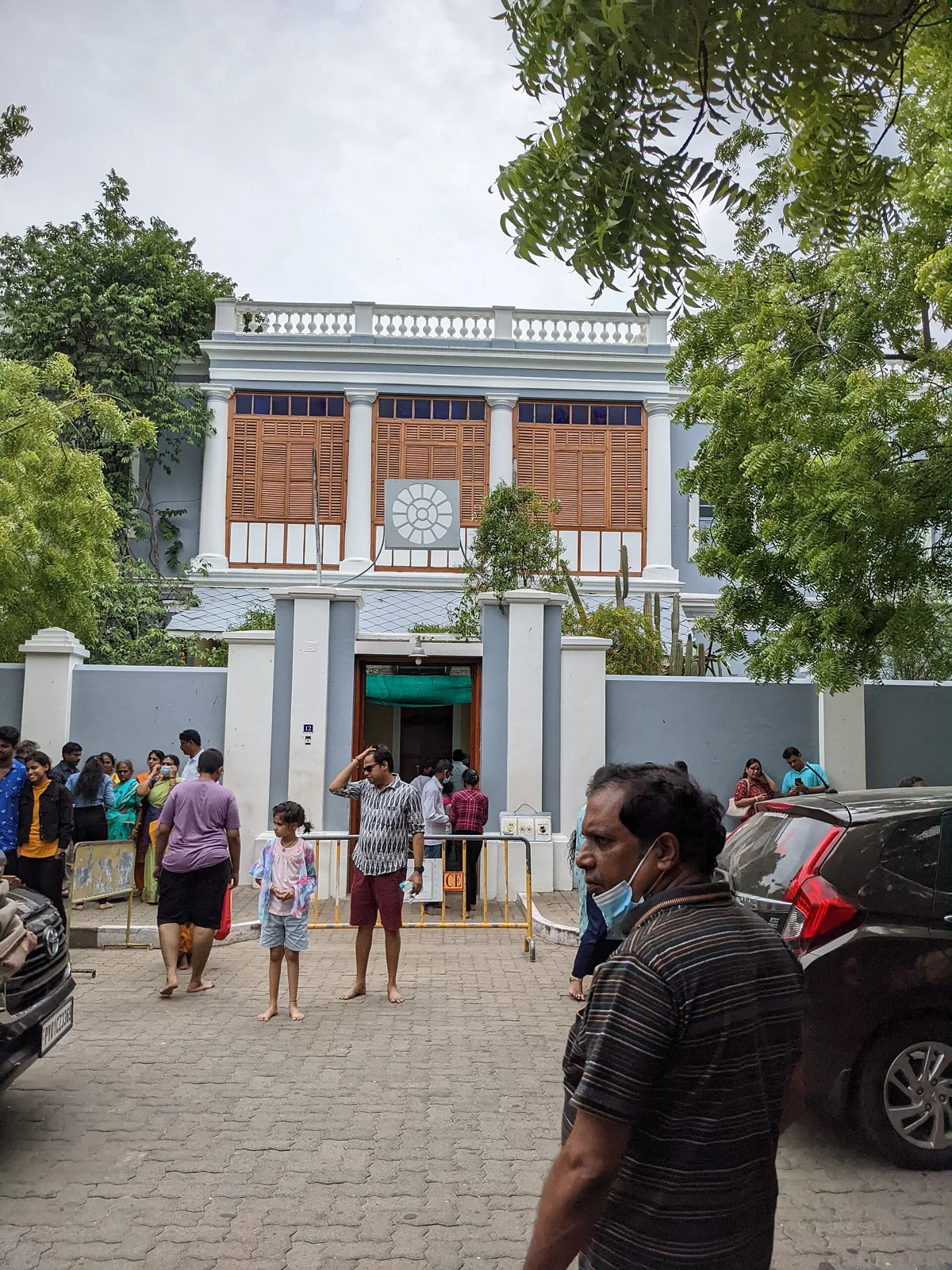
Sri Aurobindo Ashram
A Puducherry spiritual community centred on Integral Yoga, the Ashram draws visitors and devotees to the samadhi of Sri Aurobindo and the Mother and its shared spiritual life.
Key facts · verified by Ghumoopedia editors
- Type of place
- Temple / pilgrimage site
- Best time to visit
- November to March
- Nearest railway station
- Puducherry · about 1 km (straight line)
- Nearest airport
- Puducherry Airport (limited flights) · about 4 km (straight line)
- Verified
- 21 Nov 2026
Plan a trip from Sri Aurobindo Ashram — a day-by-day route through places nearby.
Located in Puducherry, the Sri Aurobindo Ashram took shape in 1926 under the guidance of Indian philosopher Sri Aurobindo and his spiritual associate Mirra Alfassa, widely called the Mother. Over time, it developed into the organisational centre of a modern spiritual movement shaped by Sri Aurobindo’s Integral Yoga. Its grounds include the samadhi of Sri Aurobindo and the Mother. The community is among India’s widely recognised spiritual groups, drawing devotees and visitors from around the world. About 1,200 people are part of the Ashram. Its school, the Sri Aurobindo International Centre of Education, has more than 400 students. Set within an urban environment, the community gives prominence to Integral Yoga as taught by Sri Aurobindo. Its spiritual practice and educational life are closely connected. Puducherry is a former French territory of four separated enclaves — Pondicherry and Karaikal on the Tamil coast, Mahé on the Kerala coast and Yanam in the Godavari delta — known for the French Quarter's mustard-yellow villas, the Sri Aurobindo Ashram, colonial churches, Tamil temples and a laid-back seaside promenade. The coast is hot and humid for most of the year. April to June is the hottest period; the northeast monsoon from October to December brings most of the rain and occasional cyclones; December to March is the most pleasant. Mahé gets heavy southwest-monsoon rain from June to September. The usual best time to visit is November to March. Timings, fees and access arrangements must be confirmed locally. For official information, see Puducherry Tourism at https://www.pondytourism.in.
Why it matters
Sri Aurobindo Ashram is an important spiritual community in Puducherry and the institutional centre of Integral Yoga, a spiritual approach developed by Sri Aurobindo. Founded by Sri Aurobindo and Mirra Alfassa, known as the Mother, it draws devotees and visitors from India and abroad. Its samadhi, where Sri Aurobindo and the Mother are commemorated, is a focus of quiet remembrance. The Ashram is also part of Puducherry’s wider cultural landscape, alongside Tamil religious institutions and buildings from the French colonial period. Its significance is chiefly spiritual, educational and historical; it is not a conventional temple. No UNESCO or Archaeological Survey of India designation is asserted here.
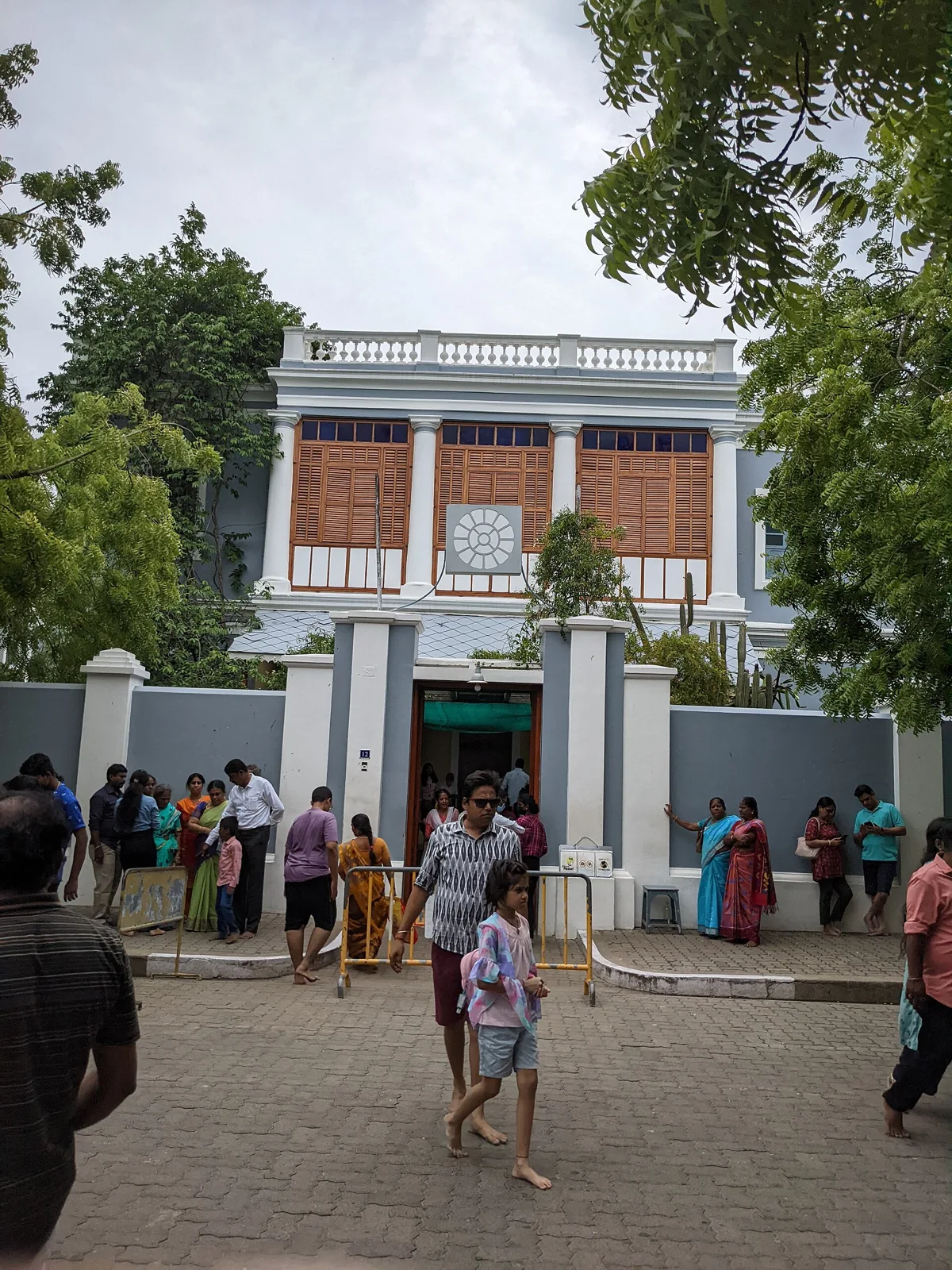
Sri Aurobindo came to Pondicherry in 1910, then under French administration, and continued his spiritual work there. Mirra Alfassa, later called the Mother, had met him during an earlier visit and returned to Pondicherry in 1920. A community of disciples gradually gathered around them. The Ashram is conventionally dated to 1926, when Sri Aurobindo withdrew from public contact and the Mother assumed responsibility for guiding the community. It grew from a small group into an organised institution, with residences, work units and educational activities spread among buildings in the town rather than concentrated in a purpose-built compound. After Sri Aurobindo’s death in 1950, his samadhi became a place of remembrance; the Mother’s samadhi was later placed beside it after her death in 1973. The Sri Aurobindo International Centre of Education developed from the Ashram’s educational work. Over time, the community adapted and maintained buildings for its changing needs. The Ashram’s history is closely connected to Puducherry’s period as a French territory and its later place within India. Specific building histories and restoration details vary, so visitors seeking architectural records should consult Ashram publications or local heritage sources.
Origin stories & folklore
There is no widely established ancient foundation legend associated with the Ashram; its history is relatively modern and documented through the lives and writings of Sri Aurobindo and the Mother. Devotees may describe the samadhi and the Ashram’s central courtyard in terms of spiritual presence, inner peace or the continuing influence of the two founders. These are matters of personal faith, not claims that can be verified as historical events. Accounts of Sri Aurobindo’s spiritual experiences and the Mother’s guidance belong to the community’s devotional tradition. Visitors are best served by distinguishing such beliefs from the documented history of the Ashram and by treating worshippers’ interpretations respectfully.
Architecture & design
The Ashram is not a single monumental temple or a walled campus. It occupies and uses buildings within the urban fabric of Puducherry, including structures adapted over time for residences, offices, education and community activities. The central building and courtyard form the best-known visitor focus. At the samadhi, the memorials to Sri Aurobindo and the Mother are set in a quiet courtyard beneath a tree; the tombs are finished in white marble and are typically decorated with flowers. The setting favours calm and simplicity rather than elaborate sculptural display. The surrounding town includes buildings shaped by Puducherry’s French colonial and Tamil urban histories, but styles and materials differ from one Ashram property to another. Visitors should not assume that every building is open or part of a public tour. The dispersed layout means that the Ashram is experienced through particular accessible spaces, not by touring a single architectural complex.
Important objects & sculptures
The most significant focus for visitors is the white-marble samadhi of Sri Aurobindo and the Mother, often adorned with fresh flowers. It is a memorial rather than an image of a deity, and people commonly pause there in silence. Photographs or portraits of the founders and their writings may be encountered in designated Ashram spaces, while the Ashram’s publications provide context for its philosophy and history. The community is not chiefly known as a museum of sculptures, idols or archaeological collections, and visitors should not expect extensive carved ornament or displayed antiquities. Access to books, archival materials and other collections depends on the particular facility and its current visitor arrangements.
Religious significance
The Ashram’s spiritual life centres on Integral Yoga, associated with Sri Aurobindo and the Mother. It is not dedicated to a particular Hindu deity in the manner of a temple, though visitors from varied religious backgrounds come to the samadhi as a place of remembrance, prayer or quiet reflection. Devotees may offer flowers and sit or stand silently; practices are generally contemplative rather than public, elaborate ceremonies. The samadhi commemorates both founders and holds deep meaning for members of the community. Visitors who do not share these beliefs are welcome to approach respectfully, follow instructions and avoid interrupting prayer or meditation. The Ashram’s teachings draw on spiritual ideas and practices but should not be reduced to a conventional temple ritual.
Explore Sri Aurobindo Ashram slowly and read the interpretation boards, or hire an authorised guide to understand its history. Check opening days, ticket counters and camera rules in advance; many monuments and museums close on one weekday and on some public holidays. Early morning gives softer light, cooler air and smaller crowds. A comfortable itinerary is one main visit in the morning, a local meal at midday and a short nearby stop before an afternoon return. Walk or cycle the French Quarter in the early morning or at dusk, when the promenade is closed to traffic and the light is soft; spend the hot midday in a café or museum. Use the district list on this site to find other places in Puducherry, but check the route and its condition before combining stops. If a festival is on — such as Bastille Day in July, Pongal in January, the Masi Magam sea festival, the International Yoga Festival in January or Sani Peyarchi at Thirunallar — transport and stays can be busy, and the experience can be unforgettable. Keep beaches clean and carry your plastic back with you.
Suggested itineraries
Half day: Spend about 1–2 hours at the accessible Ashram spaces and samadhi; take a quiet walk through the French Quarter; pause for a local meal or café stop. Full day: Visit the Ashram in the morning; explore the French Quarter and Bharathi Park; have lunch; visit the Puducherry Museum or Manakula Vinayagar Temple; end with a walk along the seafront. Gentler option: Arrange a nearby drop-off, spend a shorter period at the samadhi, rest at a shaded café, and choose one nearby attraction rather than attempting a long walking route.
The Ashram is a living community, not simply a heritage attraction. Its members take part in educational, cultural and practical work, and the Sri Aurobindo International Centre of Education is an important part of its life. Visitors may find an atmosphere of quiet attention around the samadhi and in designated spaces; silence and personal reflection are valued. The community’s publications and talks introduce its philosophy, while cultural activities and language use reflect Puducherry’s multilingual setting, including Tamil, English and other Indian languages. There is no single visitor dress or performance tradition that defines the site. Customs can differ between Ashram facilities, so follow local guidance and be considerate of residents and students.
Festivals & events
The Ashram observes important occasions associated with Sri Aurobindo and the Mother, including their birth anniversaries and commemorative days connected with their spiritual work. These observances occur at different times of year, notably in February, August, November and December. They may involve Darshan, quiet gatherings or other community programmes; arrangements are set by the Ashram and can change. Attendance may be heavier on major observance days, so visitors should check in advance whether general access is available. Nearby Puducherry also celebrates regional occasions such as Pongal in January, and town-wide events can increase demand for transport and accommodation.
Local food in Puducherry includes French-Tamil Creole dishes such as meen moilee, assad and curried prawns, fresh seafood, crêpes, croissants and French bakeries in White Town, South Indian breakfasts of idli, dosa and filter coffee, Chettinad dishes and, in Mahé, Malabar biryani and pathiri. Ask what is fresh that day; many small eateries cook a limited daily menu. White Town has many cafés and bakeries; the Tamil town across the canal has busy, inexpensive meal houses. Temple towns such as Thirunallar serve strictly vegetarian food. Remote sites may have no restaurant at all. Carry water and snacks, eat a proper breakfast before long journeys, and ask your accommodation for a packed lunch if you are heading out early. Try a home-cooked or local meal when you can — it is often the best food on the route. Choose busy, clean places, drink sealed or filtered water, and carry your packaging back with you.
Shopping & local experiences
Look for books and publications on Sri Aurobindo and the Mother through designated Ashram outlets, subject to their access and opening arrangements. Puducherry’s shops and markets also offer textiles, handmade goods, incense, postcards and souvenirs, though quality and provenance vary. Goubert Market is a local place to browse produce and everyday goods rather than a dedicated Ashram craft market. Nearby cafés and restaurants are an easy way to sample Tamil and broader South Indian food, alongside bakeries and French-influenced fare found around town. Buy thoughtfully, avoid single-use plastic where possible, and check whether an outlet is open before making a special trip.
November to March
The nearest principal railway station by straight-line distance is Puducherry, roughly 1 km away. The nearest operating airport by straight-line distance is Puducherry Airport (limited flights), roughly 4 km away. These figures are calculated from map coordinates — actual road distance is longer. Chennai airport (about three hours by road) is the main gateway; Puducherry's small airport has limited flights. Trains reach Puducherry station via Villupuram Junction, Karaikal has its own station, Mahé lies on the Mangaluru–Kozhikode line, and Yanam is reached from Kakinada or Rajahmundry. For the final leg, PRTC and Tamil Nadu state buses, rented bicycles and scooters in Pondicherry town, and autos and app cabs cover the local area. A private taxi gives more flexibility for spread-out sights. When comparing train, bus and flight, count the complete door-to-door time: a flight saves the most time only if the onward transfer is short, while an overnight train can save a hotel night. For Puducherry, flying to Chennai and taking a road transfer along the East Coast Road is usually quickest from distant cities, while an overnight train to Villupuram or Puducherry can save a hotel night. For Mahé, fly to Kannur; for Yanam, fly to Rajahmundry. Book your return before you leave, because seats fill quickly on weekends, festivals and holidays. Current train numbers, timings, return services, ferry departures and fares are not listed here; check IRCTC and NTES for trains, the airline's own schedule for flights and the official operator for ships and ferries. No permit is needed to visit Puducherry, Karaikal, Mahé or Yanam. Some heritage buildings, the Sri Aurobindo Ashram and churches have their own visiting hours and rules on photography and silence. The Puducherry territory sets its own fuel and liquor prices, so do not carry alcohol across the border into Tamil Nadu, Kerala or Andhra Pradesh, where it is an offence above small limits.
Confirm onward and return timings on IRCTC / NTES, the state bus operator or your airline before travel. A dash means current timings or fares have not been verified.
Getting around
The Ashram is within central Puducherry, where many nearby streets can be explored on foot. Auto-rickshaws and local taxis or app-based cabs can help with the final leg, especially in hot or rainy weather; agree the destination clearly and allow for narrow streets or traffic restrictions. Local buses serve parts of town, though walking or an auto may be more convenient for short central journeys. Rental bicycles and scooters are available in town, but parking and access can be difficult near busy streets. There are no boats needed to reach the Ashram. Check locally for suitable drop-off points and parking, and avoid blocking residential entrances.
Hours, tickets & permissions
Entry arrangements depend on the Ashram space being visited and may change for observances or community needs. Some areas are intended for residents or authorised visitors rather than general sightseeing. Do not assume that a ticket, guide or walk-in access is available; check current requirements with the Ashram’s official visitor information or managing authority before setting out. Confirm current hours and any fees locally, along with rules for children, groups, identification and photography. Respect signs and staff instructions, as public access may be limited even when nearby streets are open.
Facilities
Facilities differ between Ashram properties, and access to services may be limited to residents or authorised visitors. Toilets and drinking water are available in parts of central Puducherry, but check locally rather than relying on provision inside the Ashram. Cafés, restaurants, pharmacies and ATMs can be found around town. Parking is not guaranteed at the Ashram and may be difficult on narrow or busy streets. Ashram publications may be available through designated book outlets; guided tours should not be assumed, so confirm whether an authorised guide or visitor service is offered. Carry water and plan meal and rest stops nearby.
Accessibility
The Ashram’s setting is urban and dispersed, with access involving public streets and potentially uneven pavements, kerbs or crowded areas. The samadhi courtyard is a relatively contained visit, but the route and entry arrangements may include steps or narrow passages; confirm current access conditions before travelling. Do not assume ramps, lifts, wheelchair access or seating are available in every building. Heat, humidity and limited shade on street walks can make longer visits tiring for older people and visitors with mobility needs. Strollers may be awkward on uneven or congested pavements. A short visit, nearby drop-off and planned rest stops can make the experience gentler.
No permit is needed to visit Puducherry, Karaikal, Mahé or Yanam. Some heritage buildings, the Sri Aurobindo Ashram and churches have their own visiting hours and rules on photography and silence. The Puducherry territory sets its own fuel and liquor prices, so do not carry alcohol across the border into Tamil Nadu, Kerala or Andhra Pradesh, where it is an offence above small limits. Carry a photo ID at all times and save the emergency number 112 and your accommodation's contact offline. The sea along the Promenade is rocky and the currents are strong — do not swim there; swim only at beaches with lifeguards, such as Paradise Beach, and leave the water if a flag or guard says so. Watch your belongings in crowds and on public transport, and follow posted instructions.
Visitor rules
Dress modestly and behave quietly, particularly near the samadhi and in spaces used by residents or students. Follow signs and staff directions, and do not enter areas marked private or restricted. Remove footwear where instructed. Photography may be limited or prohibited in certain places; ask before taking pictures, and never photograph people at close range without their consent. Avoid loud conversation, touching memorials or disrupting prayer and meditation. Carry reusable water if possible, dispose of waste responsibly and do not leave plastic behind. Rules may differ across Ashram buildings, so check locally rather than assuming one policy applies everywhere.
Photography
The courtyard and surrounding streets are often most pleasant to photograph in the softer light of early morning or late afternoon, subject to access rules. The Ashram is an active spiritual community, so photography may be restricted at the samadhi or inside buildings; check signs and ask staff before taking a picture. Avoid photographing devotees, residents or students without permission, and do not interrupt quiet observance to obtain a view. Drone use should not be assumed to be permitted; check current local regulations and Ashram rules, and avoid flying over people or residential areas. Respect any request to put a camera away.
Choose a stay by the full journey to Sri Aurobindo Ashram, not just the district name. White Town has heritage guesthouses and boutique hotels in old French villas; the Tamil Quarter and the East Coast Road have mid-range hotels and beach resorts; Karaikal, Mahé and Yanam have simple hotels suited to short stays. In the hot months, check air-conditioning; in the monsoon, check that the property is reachable if roads flood or ferries are cancelled. Book in advance for weekends, festivals and the peak season (November to March). Confirm the exact location, meals included, check-in time and cancellation terms in writing. Avoid sending money to unverified contacts or touts at stations, airports and jetties. Carry some cash, as card and digital payments can be unreliable in remote areas.
Within central Puducherry, visitors can combine the Ashram with a walk through the French Quarter, including its colonial-era streets and villas, and the seafront promenade. Bharathi Park and the Puducherry Museum are other town-centre options; check their current access arrangements before planning a visit. Manakula Vinayagar Temple offers a distinct Hindu temple experience nearby, while the Basilica of the Sacred Heart of Jesus reflects the town’s Christian heritage. Auroville, outside the central town, is a separate destination and needs additional travel planning. Select a small number of stops rather than trying to cover the whole region in one day.
For couples, Sri Aurobindo Ashram rewards a slow pace: arrive early for soft light and fewer crowds, share a local meal and keep the evening free. A sunrise walk on the Promenade, an evening in the French Quarter's cafés, a boat ride to Paradise Beach or a quiet afternoon at Ousteri Lake makes the trip memorable. Public displays of affection can be frowned upon in conservative communities and at religious sites, so be discreet. Keep a buffer in your itinerary, because weather and transport can delay plans.
Q: How much time should I allow for a visit? A: Allow around one to two hours for the Ashram spaces open to visitors, with extra time if you plan to walk around the French Quarter. Q: When is the best season to visit? A: November to March is generally the most comfortable season in Puducherry; the coast is hot and humid for much of the year, and October to December brings monsoon rain. Q: Is entry ticketed, and can I visit every building? A: Access rules vary, and not every building is open to the public. Confirm current entry requirements and fees with the Ashram before visiting. Q: Is the visit suitable for children and elderly visitors? A: A quiet, short visit can suit many ages, but walking surfaces, heat and possible steps may be challenging. Plan rest stops and check access needs in advance. Q: Where should I stay nearby? A: Central Puducherry has hotels, guesthouses and other accommodation within reach of the Ashram. Book ahead during major observances and busy holiday periods.
Be the first to share photos, stories, advice or a helpful contact for Sri Aurobindo Ashram.
Loading…