
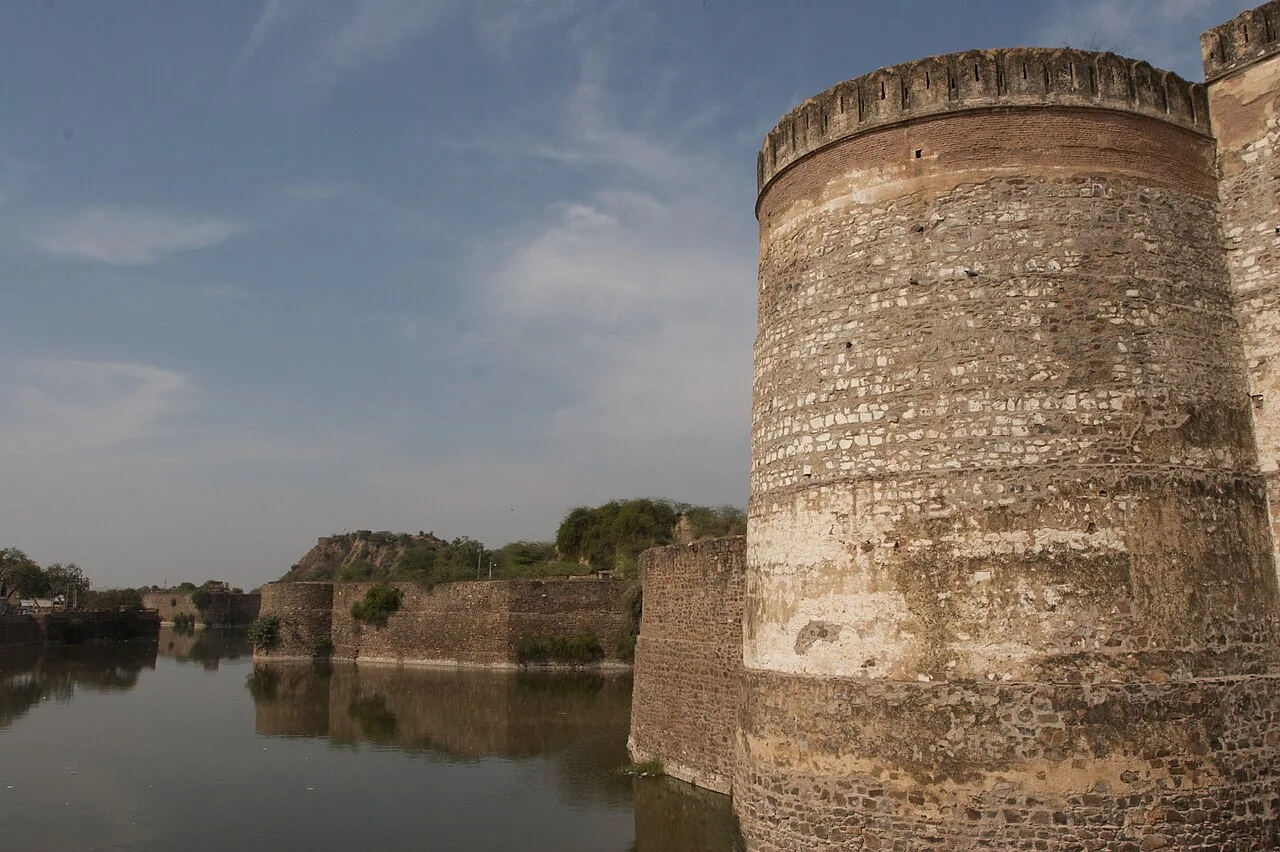
Lohagarh Fort
Lohagarh Fort is an eighteenth-century stronghold in Bharatpur, Rajasthan, commissioned by Maharaja Suraj Mal in 1732. Visitors learn about its resistance to British attacks and its eventual capture.
Key facts · verified by Ghumoopedia editors
- Type of place
- Heritage monument
- Best time to visit
- October to March
- Nearest railway station
- Bharatpur Junction · about 5 km (straight line)
- Nearest airport
- Agra Airport (for Bharatpur) · about 45 km (straight line)
- Verified
- 21 Nov 2026
Plan a trip from Lohagarh Fort — a day-by-day route through places nearby.
In Bharatpur, Rajasthan, Lohagarh Fort was commissioned by Maharaja Suraj Mal in 1732. Its name means Iron Fort, and it dates to the eighteenth century. The fort faced repeated British campaigns, with 13 attempts made to seize it. In January and February 1805, during the Siege of Bharatpur, forces led by Lord Lake made four assaults on its defences; none succeeded. On 18 January 1826, the British East India Company breached the fort under Lord Combermere during the Second Siege of Bharatpur. The capture ended its long-held reputation as a stronghold that could not be taken. Rajasthan is the land of Rajput forts and palaces, painted havelis, desert folk music, puppetry and colourful fairs such as the Pushkar camel fair. Rajasthan is very hot from April to June — often above 45 °C in the desert — with a short monsoon in July–September. Winter days are pleasant and nights are cold, especially in the Thar Desert. Mount Abu is the state's only hill station and stays cooler. The usual best time to visit is October to March. Timings, fees and access arrangements must be confirmed locally. For official information, see Rajasthan Tourism at https://www.tourism.rajasthan.gov.in.
Why it matters
Lohagarh Fort, or “Iron Fort,” is a landmark of Bharatpur and an important reminder of the power of the Jat kingdom in eastern Rajasthan. Maharaja Suraj Mal commissioned it in 1732, and its defences became closely associated with Bharatpur’s resistance to British attacks. The fort’s reputation was shaped especially by the unsuccessful British assaults during the 1805 siege and the later breach in 1826. Its ramparts, gateways and palace buildings preserve a layered account of military and royal life in the region. The fort also houses the Bharatpur Government Museum, subject to current access arrangements. It is a significant heritage site, though visitors should check with the relevant authority for current protection and access information rather than assume a particular formal designation.
Maharaja Suraj Mal, ruler of the Jat kingdom of Bharatpur, commissioned Lohagarh Fort in 1732. Its construction established a fortified centre for the kingdom and reflected the need to protect the town and its ruling house. The fort was designed to withstand artillery and prolonged attack, and its reputation grew during the conflicts between Bharatpur and the expanding British East India Company. During the Siege of Bharatpur in January and February 1805, British forces under Lord Lake made four attempts to storm the fort and failed. Accounts often describe a total of 13 British attempts to conquer it across the broader period of conflict. The fort was eventually breached on 18 January 1826, during the Second Siege of Bharatpur, when British forces under Lord Combermere captured it. That defeat ended its reputation as an unconquerable stronghold. The fort’s buildings and defences have changed through use, damage and later upkeep. The former royal complex now includes the Bharatpur Government Museum, although which buildings and collections are accessible can vary. For details of conservation work or current management, visitors should consult the responsible local authority.
Origin stories & folklore
The name Lohagarh means “Iron Fort,” and popular local accounts connect it with the fort’s reputed strength. According to local tradition, its broad earthen ramparts could absorb or blunt cannon fire more effectively than hard masonry, helping the fort withstand attacks. Stories sometimes describe the surrounding moat and layered defences as making a direct assault exceptionally difficult. These accounts reflect the fort’s historical reputation, but they should be understood as folklore rather than a complete technical explanation of its defences. The documented sieges provide the historical context: British forces failed to storm it in 1805, but captured it in 1826. Ask a local guide to distinguish remembered stories from established events.
Architecture & design
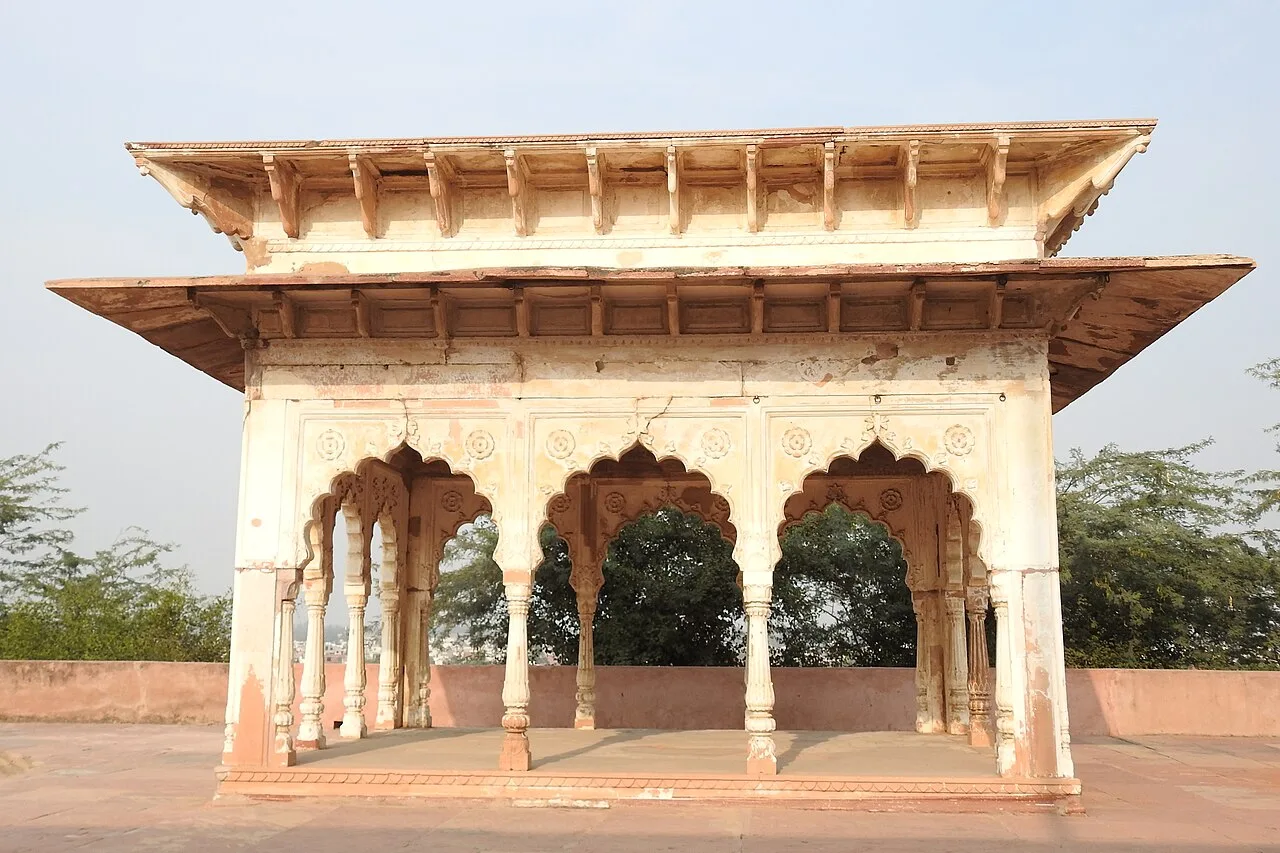
Lohagarh is a fortified complex with broad ramparts, bastions and a moat, laid out to defend the settlement and royal precinct. Its defensive works are notable for extensive earthen construction, often described alongside masonry elements. The softer ramparts were thought to reduce the impact of artillery compared with exposed stone walls. Gates controlled entry, while elevated bastions offered positions for observation and defence. Within the fort are palace buildings and other structures associated with the Bharatpur rulers, including Jawahar Burj and Fateh Burj. The compound combines military planning with courtly architecture rather than following a single uniform style. Surfaces and interiors may show weathering or restricted access, so visitors should follow barriers and signs and avoid climbing on walls.
Important objects & sculptures
Look for the fort’s gateways, bastions and palace structures as historical features in their own right. Jawahar Burj and Fateh Burj are prominent landmarks within the complex; their names are often included in local accounts of Bharatpur’s history. The Bharatpur Government Museum, located within the fort complex, may display archaeological material, sculptures, inscriptions, arms or other objects connected with the region. Galleries and exhibits can change, and not every collection or building is necessarily open on a given visit. Read labels where available and ask museum staff or an authorised guide about an object’s date and provenance rather than relying on an unverified caption or local story.
Explore Lohagarh Fort slowly and read the interpretation boards, use the official audio guide where available or hire an authorised guide to understand its history. Check opening days, ticket counters and camera rules in advance; many monuments and museums close on one weekday and on some public holidays. Early morning gives softer light, cooler air and smaller crowds. A comfortable itinerary is one main visit in the morning, a local meal at midday and a short nearby stop before an afternoon return. Use the district list on this site to find other places in Bharatpur, but check the route and its condition before combining stops. If a festival or fair is on, roads and stays can be busy — and the experience can be unforgettable. Leave no litter: many sites are protected by the communities around them.
Suggested itineraries
Half day: Allow about 2–3 hours to enter the fort, explore the main ramparts and palace landmarks, visit the museum if open, and pause for a local meal nearby. Full day: Spend about 3–4 hours at the fort and museum, take a midday break in Bharatpur, then allow another 2–3 hours for Keoladeo National Park if access and conditions suit your plans. Gentler option: Focus on the most accessible open areas, take frequent seated breaks, and ask at the entrance which buildings involve the fewest steps.
Bharatpur’s cultural life reflects its place in eastern Rajasthan and the wider Braj region. Hindi and local forms of speech are commonly heard; Braj-influenced language and customs are also part of the surrounding cultural landscape. Visitors may encounter regional food, devotional music and folk performance in the town or during special events, rather than as a scheduled part of a fort visit. Dress is varied in daily life, with traditional clothing worn alongside contemporary styles. Treat the fort as a heritage site, respect staff instructions and ask permission before photographing people, especially during worship or community gatherings.
Festivals & events
Bharatpur’s location near the Braj region brings seasonal celebrations associated with Holi, including lively local observances in the weeks around the festival. The Brij Mahotsav is associated with the Bharatpur area and may feature regional music, dance and cultural programmes; its arrangements can vary by year. Gangaur and Teej are also celebrated in Rajasthan, though events should not be assumed to take place inside the fort. Festival periods can bring busier roads, accommodation and public spaces. Check local announcements before travelling, and allow extra time if combining the fort with town visits.
Local food in Rajasthan includes dal baati churma, gatte ki sabzi, ker sangri, laal maas, pyaaz kachori, mirchi vada, ghewar, mawa kachori and chaach (spiced buttermilk). Ask what is fresh that day; many small eateries cook a limited daily menu. Vegetarian travellers eat very well across this region, and most towns also have non-vegetarian options. Remote sites may have no restaurant at all. Carry water and snacks, eat a proper breakfast before long drives, and ask your accommodation for a packed lunch if you are heading out early. Try a home-cooked or dhaba meal when you can — it is often the best food on the route. Choose busy, clean places and carry your packaging back with you.
Shopping & local experiences
In Bharatpur, look for everyday local markets selling snacks, sweets, textiles and practical travel items. Small regional crafts or souvenirs may be available in town, but selection and quality vary; ask about materials and workmanship before buying. Visitors can also try local Rajasthani and Braj-influenced food at eateries around Bharatpur. Do not assume that stalls or shops operate inside the fort. Buy from established vendors, carry reusable bags where practical and avoid purchasing objects presented as genuine antiques unless their provenance and legality are clear.
October to March
The nearest principal railway station by straight-line distance is Bharatpur Junction, roughly 5 km away. The nearest operating airport by straight-line distance is Agra Airport (for Bharatpur), roughly 45 km away. These figures are calculated from map coordinates — actual road distance is longer. Jaipur, Ajmer, Jodhpur, Udaipur and Kota are the main rail hubs, and Jaipur, Udaipur and Jodhpur have the most flights; Delhi is the usual gateway for the north-east of the state. For the final leg, Rajasthan State Road Transport Corporation (RSRTC) buses and private coaches link district towns; shared taxis usually leave early in the morning. A private taxi gives more flexibility for remote sites. When comparing train, bus and flight, count the complete door-to-door time: a flight saves the most time only if the onward road transfer is short, while an overnight train can save a hotel night. Book your return before you leave, because seats fill quickly on weekends, festivals and holidays. Current train numbers, timings, return services and fares are not listed here; check IRCTC and NTES for trains and the airline's own schedule for flights. No permit is needed to visit Rajasthan. Land close to the international border west of Jaisalmer and Barmer is restricted beyond certain points: places such as Tanot can be visited, but border outposts need Border Security Force permission. Forts and palaces charge entry and camera fees, and tiger-reserve safaris must be booked through the official forest department portal.
Confirm onward and return timings on IRCTC / NTES, the state bus operator or your airline before travel. A dash means current timings or fares have not been verified.
Getting around
Autos and local taxis can usually be used to reach the fort from central Bharatpur, while local buses serve routes around the town; availability varies. From the entrance, expect to explore much of the complex on foot, so allow time for walking between structures. Ask the driver to identify an agreed pick-up point if you plan to stay inside for several hours. Check locally for parking arrangements and any vehicle restrictions near the gates. For a fuller explanation of the site, consider an authorised guide arranged locally rather than relying on informal approaches.
Hours, tickets & permissions
Entry may involve a ticket or separate rules for the fort, museum buildings and particular galleries. Camera use, tripods, guided visits and access to some structures may be subject to restrictions. Carry identification if requested, follow posted notices and do not cross barriers or enter closed areas. Opening days and arrangements can change for public holidays, maintenance or local events. Confirm current hours, fees and entry conditions with the managing authority before setting out; do not rely on an old listing or an unverified online schedule.
Facilities
Facilities within the historic complex can be limited or vary with which buildings are open. Toilets and drinking water may be available on or near the site, but check locally and carry water, especially in warm weather. Food and refreshments are more reliably found in Bharatpur town than inside the fort. Parking arrangements, seating and shade may not be consistent throughout the compound. Guides may be available locally; confirm that they are authorised. ATMs and other services are generally easier to find in town, so plan essential needs before entering.
Accessibility
The fort covers a large historic area, with uneven ground, long outdoor stretches and steps in some buildings. Ramparts and older palace interiors may have narrow passages or level changes, and shade can be limited on open routes. A wheelchair or stroller may be difficult to use across parts of the complex; do not assume step-free access or lifts. Elderly visitors and anyone with limited stamina may prefer a shorter route, regular rests and a companion. Ask staff about the condition of paths and which areas are open before choosing a route. Comfortable footwear and water are advisable.
No permit is needed to visit Rajasthan. Land close to the international border west of Jaisalmer and Barmer is restricted beyond certain points: places such as Tanot can be visited, but border outposts need Border Security Force permission. Forts and palaces charge entry and camera fees, and tiger-reserve safaris must be booked through the official forest department portal. Carry a photo ID at all times and save the emergency number 112 and your accommodation's contact offline. Heat in summer and fog in winter are the main weather risks; carry water and allow extra travel time on foggy December–January mornings. Respect community rules, private property and posted instructions. Follow local guidance if access changes.
Photography
Early morning or late afternoon generally offers softer light on the walls and gateways, while open spaces can be harsh in the middle of the day. Photography rules may differ between outdoor areas and museum galleries; check notices and ask staff before photographing collections. Do not use a drone without confirming current aviation rules and site permission. Avoid climbing for a viewpoint, and be considerate of visitors, staff and anyone taking part in worship or a cultural event. Ask before making close portraits of local people.
Choose a stay by the full journey to Lohagarh Fort, not just the district name. Heritage havelis, fort hotels, state tourism (RTDC) hotels and desert camps offer distinctive stays; check that a desert camp is licensed and has proper toilets. In summer, check air-conditioning or coolers; in December and January, check heating and hot water. Book in advance for weekends, festivals and the peak season (October to March). Confirm the exact location, meals included, check-in time and cancellation terms in writing. Avoid sending money to unverified contacts or touts at stations. Carry some cash, as card and digital payments can be unreliable in remote areas.
Keoladeo National Park, also known as Keoladeo Ghana National Park, is a well-known Bharatpur attraction and can be paired with a fort visit if time and access conditions allow. In the wider district, Deeg Palace is another notable heritage destination associated with the former Bharatpur rulers. Bharatpur town itself offers the fort complex and its Government Museum for a longer history-focused visit. Check current routes, transport and site access before combining stops; travel times can vary, and a full day may be more comfortable than trying to fit several places into a short visit.
For couples, Lohagarh Fort rewards a slow pace: arrive early for soft light and fewer crowds, share a local meal and keep the evening free. A heritage hotel or a lakeside sunset makes the trip memorable. Public displays of affection can be frowned upon in conservative communities and at religious sites, so be discreet. Keep a buffer in your itinerary, because weather and traffic can delay plans.
Q: How much time should I allow for Lohagarh Fort? A: Allow a few hours for the main fort areas and museum if open; a slower visit or guided explanation may take longer. Q: When is a comfortable season to visit? A: October to March is generally the most comfortable period in Rajasthan. Summer can be very hot, so check local conditions and plan accordingly. Q: Do I need a ticket to enter? A: Entry rules may differ for the fort and museum. Confirm current tickets, fees and access arrangements with the managing authority before visiting. Q: Is the fort suitable for children and elderly visitors? A: Families can visit, but expect uneven paths and some steps. Elderly visitors or anyone with limited mobility may prefer a shorter route with rest breaks. Q: Where can I stay nearby? A: Bharatpur town has accommodation options. Choose a place based on your transport needs and confirm availability and facilities directly before travelling.
Be the first to share photos, stories, advice or a helpful contact for Lohagarh Fort.
Loading…