
Mehrangarh
Mehrangarh is a historic hilltop fort in Jodhpur, Rajasthan. Visitors explore its palaces, temple and museum, and see the gates and memorials associated with its history.
Key facts · verified by Ghumoopedia editors
- Type of place
- Heritage monument
- Best time to visit
- October to March
- Nearest railway station
- Jodhpur Junction · about 5 km (straight line)
- Nearest airport
- Jodhpur Airport · about 5 km (straight line)
- Verified
- 21 Nov 2026
Plan a trip from Mehrangarh — a day-by-day route through places nearby.
Mehrangarh stands in Jodhpur district, Rajasthan, on a rise about 122 m (400 ft) above the surrounding plains. The fort complex covers 1,200 acres (486 hectares). Rao Jodha, ruler of the Rathore clan, began building it around 1459. Much of the structure visible today was added by his successors during the 17th century. Seven gates provide entry to the fort. Jai Pol, its main entrance, was built by Maharaja Man Singh in 1806 to mark his victories over the armies of Jaipur and Bikaner. Fattehpol, whose name means victory gate, commemorates Maharaja Ajit Singh’s success against the Mughals. English author and Nobel laureate Rudyard Kipling evoked the fort as a monumental palace touched by the morning light. Several palaces within the walls are noted for detailed carving and large courtyards. The complex also contains Chamunda Mataji Temple and a museum displaying a range of relics. A winding road connects the fort with the city below. Cannonball marks from Jaipur’s attacking forces remain visible on the second gate. To the northeast, a chhatri commemorates Kirat Singh Sodha, who fell there while defending the fort. Events held at Mehrangarh include the World Sacred Spirit Festival and Rajasthan International Folk Festival. Rajasthan is the land of Rajput forts and palaces, painted havelis, desert folk music, puppetry and colourful fairs such as the Pushkar camel fair. Rajasthan is very hot from April to June — often above 45 °C in the desert — with a short monsoon in July–September. Winter days are pleasant and nights are cold, especially in the Thar Desert. Mount Abu is the state's only hill station and stays cooler. The usual best time to visit is October to March. Timings, fees and access arrangements must be confirmed locally. For official information, see Rajasthan Tourism at https://www.tourism.rajasthan.gov.in.
Why it matters
Mehrangarh is one of Jodhpur’s defining landmarks and an important expression of Rathore rule in Rajasthan. Set above the old city, it has shaped Jodhpur’s skyline and offers a view of the blue-painted neighbourhoods below. The fort began as a seat of power and residence; today, its palaces, temple and museum also interpret the region’s courtly and military history. The Mehrangarh Museum Trust manages the complex and its collections. The fort is not one of the six properties named in UNESCO’s Hill Forts of Rajasthan listing, so it should not be described as a UNESCO World Heritage Site. Its cultural importance is regional and historical rather than based on that designation.
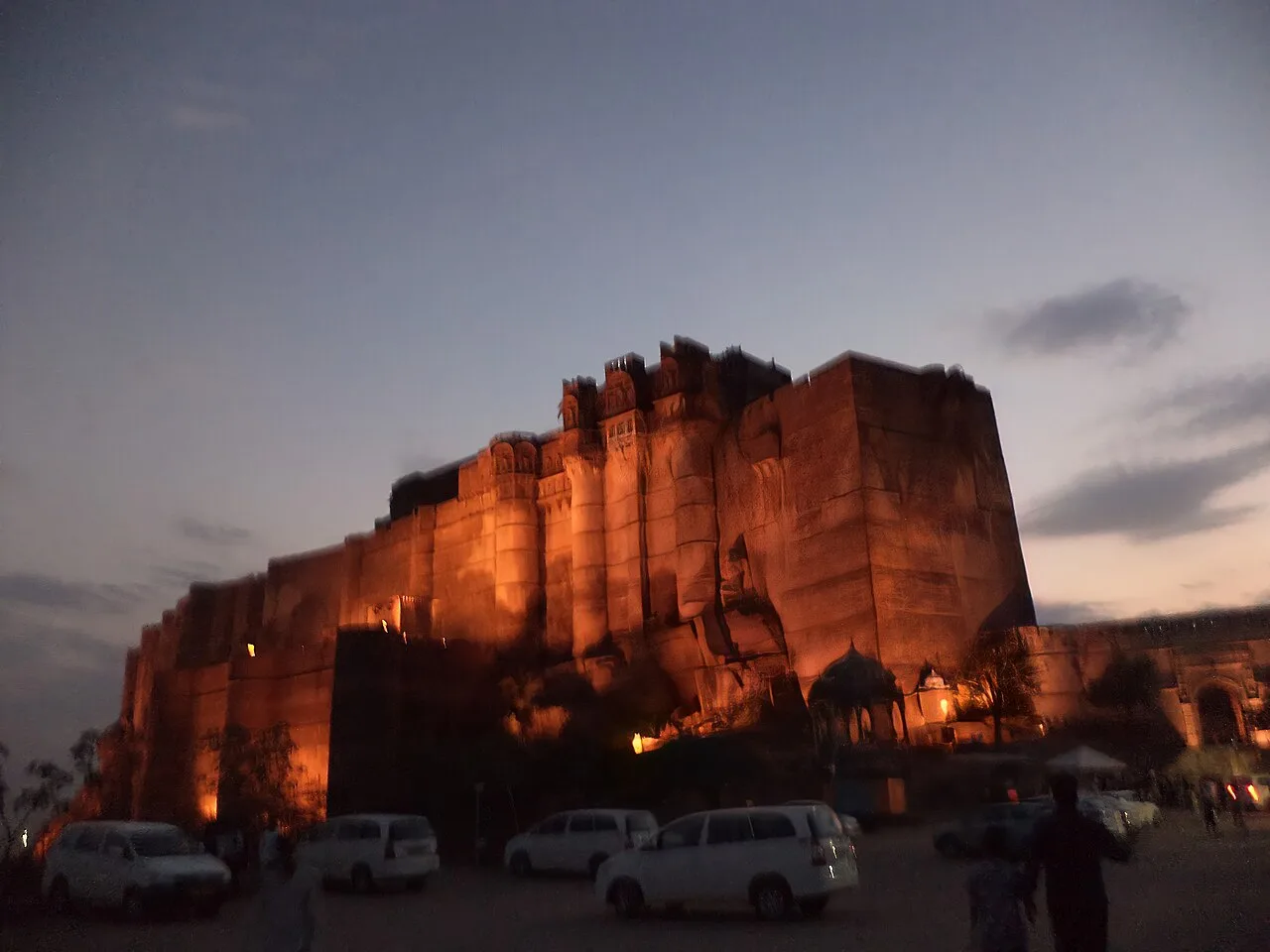
Rao Jodha, ruler of the Rathore clan, founded the fort at Jodhpur around 1459, after establishing the city as his capital. The site’s high rocky ridge offered a defensible position above the settlement and surrounding plains. The name Mehrangarh is commonly interpreted as “fort of the sun,” reflecting the Rathore association with the sun. The fort was expanded over successive generations; much of the palace architecture visible today dates from the 17th century and later, rather than from the original foundation period. Its gates and walls record periods of conflict as well as royal ceremony. Jai Pol, the “Victory Gate,” was built under Maharaja Man Singh to commemorate victories over the armies of Jaipur and Bikaner in 1806. Fattehpol is associated with Maharaja Ajit Singh’s victory over the Mughals. Marks traditionally identified as cannonball impacts from Jaipur forces remain visible near a gate. The chhatri of Kirat Singh Sodha commemorates a soldier who died defending the fort. In modern times, the Mehrangarh Museum Trust has maintained the complex and developed its museum and visitor interpretation. The fort continues to serve as a heritage site and venue for cultural events.
Origin stories & folklore
According to local tradition, when Rao Jodha chose the hill for his new fort, a hermit named Cheeria Nathji—often described as a guardian of the hill—was displaced and cursed the site with water scarcity. Stories say the ruler sought to appease him, and a temple was built on the hill. Another account tells of a man who volunteered to be buried in the foundations to avert the curse; versions of this story differ, so it is best understood as folklore rather than verified history. The fort’s name is also popularly linked to “Mihir,” a Sanskrit word for the sun, but explanations of the name vary. These traditions add a layer of local memory to the fort’s documented history.
Architecture & design
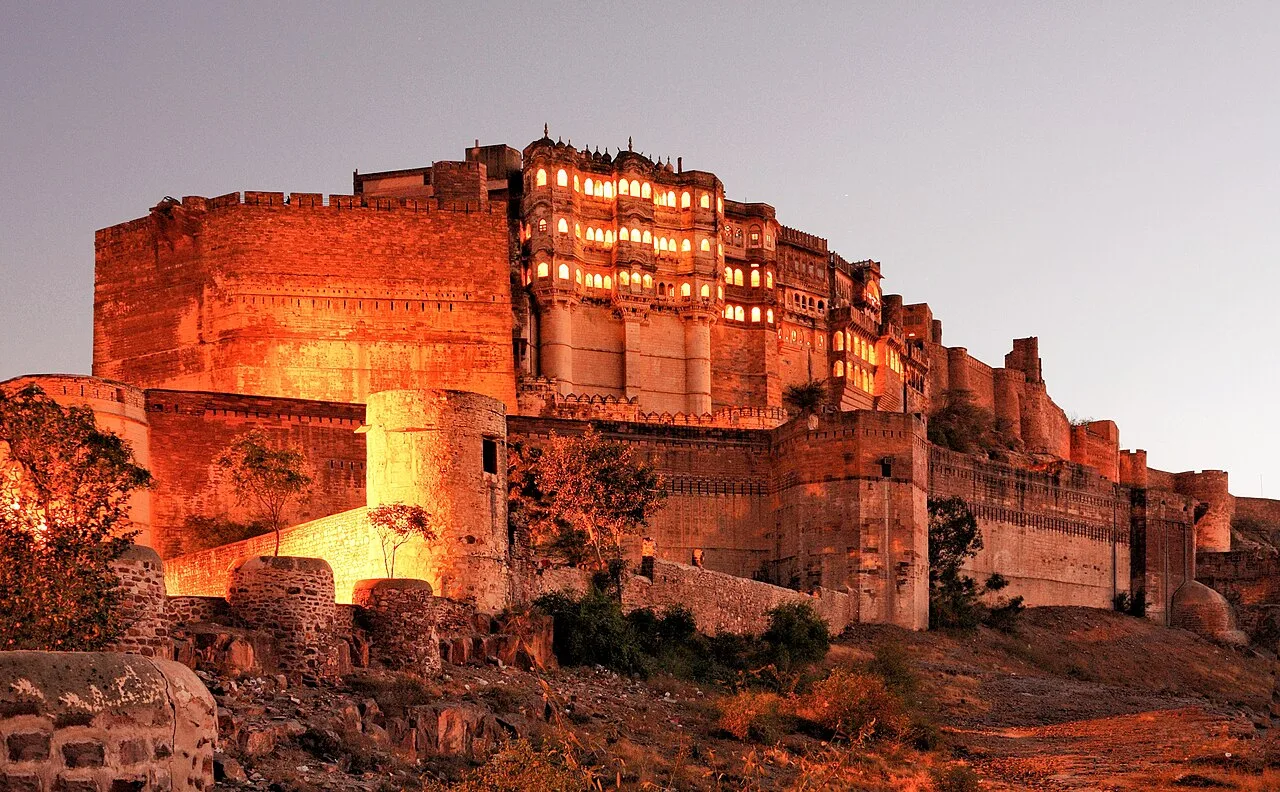
Mehrangarh occupies a steep sandstone ridge, with massive walls following the contours of the hill. The complex is arranged through a sequence of gates, courtyards and palace buildings, reached by a winding approach from the city. Seven gates are commonly noted, including Jai Pol and Fattehpol. Their heavy doors, defensive turns and elevated position reflect the fort’s military purpose, while ceremonial entrances lead visitors into more elaborate court spaces. The palaces combine robust stone construction with finely worked details: carved screens, latticed windows, projecting jharokhas, painted surfaces and decorative ceilings. Moti Mahal, Phool Mahal and Sheesh Mahal are among the named palace interiors visitors may encounter, subject to access arrangements. Courtyards provide light and ventilation within the dense complex. The contrast between thick outer ramparts and richly ornamented interiors reflects the fort’s development from a defensive stronghold into a royal residence. The hilltop setting also provided broad views over Jodhpur and the surrounding plains.
Important objects & sculptures
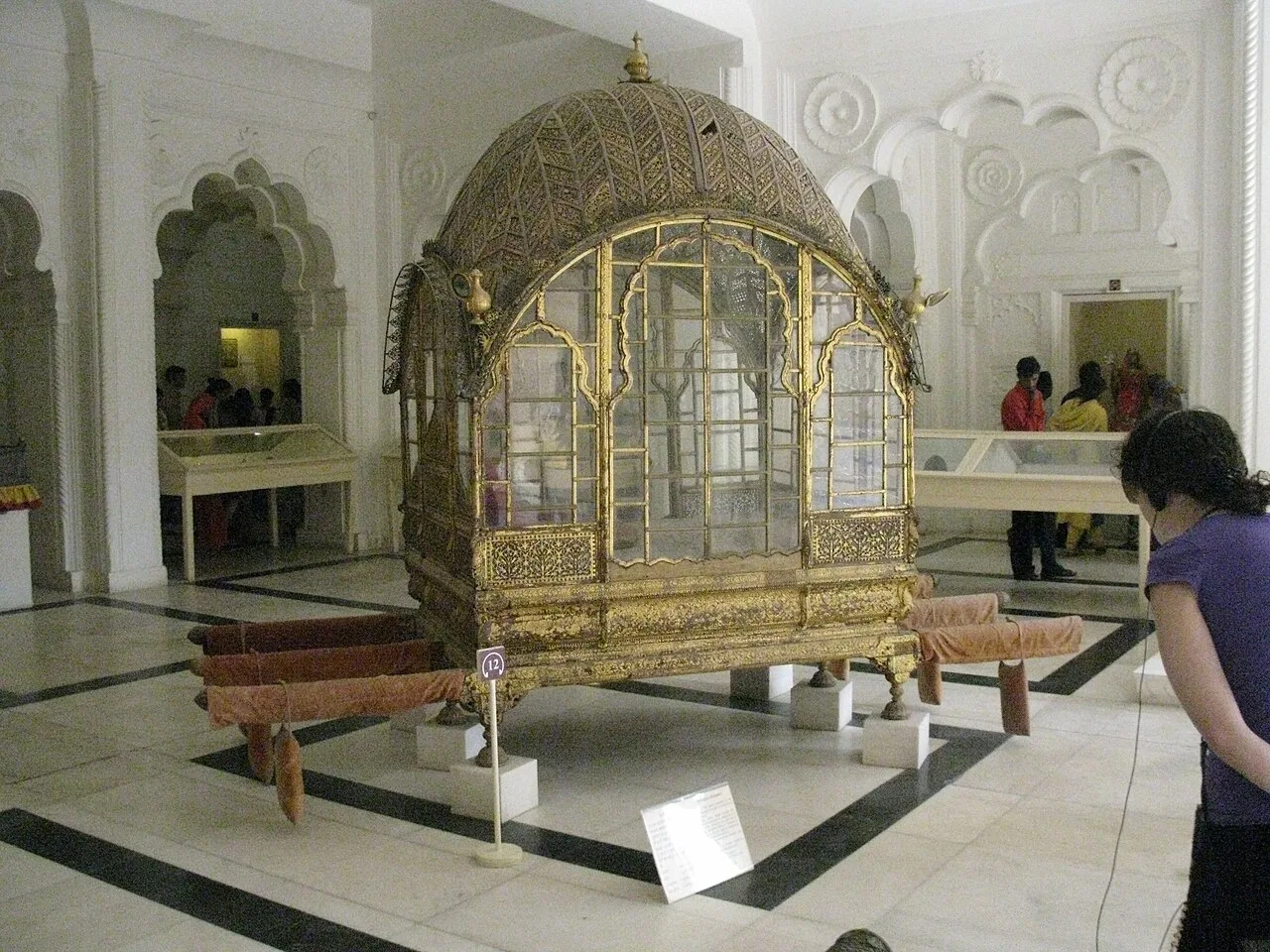
The museum’s collections help explain royal life and the fort’s military history. Look for historic arms and armour, court textiles, paintings, palanquins and elephant howdahs, alongside objects associated with travel and ceremony. The displays and access to particular galleries can change, so check what is open during your visit. Palace interiors themselves reward attention: carved stone details, painted decoration, mirror work and screens are part of the experience, not just the freestanding objects. The Chamunda Mataji Temple is an active place of worship; its image is important to local and Rathore religious traditions. At the fort’s north-east side, the chhatri of Kirat Singh Sodha commemorates a defender who fell there.
Explore Mehrangarh slowly and read the interpretation boards, use the official audio guide where available or hire an authorised guide to understand its history. Check opening days, ticket counters and camera rules in advance; many monuments and museums close on one weekday and on some public holidays. Early morning gives softer light, cooler air and smaller crowds. A comfortable itinerary is one main visit in the morning, a local meal at midday and a short nearby stop before an afternoon return. Use the district list on this site to find other places in Jodhpur, but check the route and its condition before combining stops. If a festival or fair is on, roads and stays can be busy — and the experience can be unforgettable. Leave no litter: many sites are protected by the communities around them.
Suggested itineraries
Half day: Arrive in the morning, allow about 2–3 hours for the gates, palace galleries, museum and viewpoints, then take a nearby refreshment break. Full day: Spend about 3–4 hours exploring the fort at an unhurried pace; have lunch in Jodhpur; then visit Jaswant Thada and, if energy and conditions allow, Rao Jodha Desert Rock Park. Gentler option: Use a taxi to reach the entrance, focus on the most accessible open galleries and courtyards, pause often, and skip steeper or longer sections.
Mehrangarh remains a place where heritage tourism meets living religious and cultural practice. Visitors may encounter worshippers at the Chamunda Mataji Temple, so quiet conduct and respect for any restrictions are appropriate. Marwari and other Rajasthani varieties, as well as Hindi, are widely heard in Jodhpur; English is used in many visitor-facing settings. Folk music and dance traditions, including instruments and performance styles associated with Rajasthan, feature at cultural events in the city and sometimes at the fort. Traditional clothing is part of everyday and ceremonial life, though styles vary. The fort’s museum and interpretation help connect Rathore court history with the broader cultural life of Jodhpur and the Marwar region.
Festivals & events
Mehrangarh is associated with the Rajasthan International Folk Festival, commonly held in autumn, and the World Sacred Spirit Festival, generally held in the cooler season. These events bring music performances to the historic setting and can make the fort and surrounding roads busier than usual. Festival programmes, venues and access arrangements can vary from year to year, so confirm details with the organisers or Mehrangarh Museum Trust before planning around an event. Jodhpur’s wider calendar includes religious observances and local fairs; these may affect traffic and accommodation even when events are not held inside the fort. Consider booking travel and stays ahead during major festival periods.
Local food in Rajasthan includes dal baati churma, gatte ki sabzi, ker sangri, laal maas, pyaaz kachori, mirchi vada, ghewar, mawa kachori and chaach (spiced buttermilk). Ask what is fresh that day; many small eateries cook a limited daily menu. Vegetarian travellers eat very well across this region, and most towns also have non-vegetarian options. Remote sites may have no restaurant at all. Carry water and snacks, eat a proper breakfast before long drives, and ask your accommodation for a packed lunch if you are heading out early. Try a home-cooked or dhaba meal when you can — it is often the best food on the route. Choose busy, clean places and carry your packaging back with you.
Shopping & local experiences
Look for Jodhpur and Marwar crafts such as textiles, embroidered items, leather goods, block-printed fabrics, metalwork and locally made souvenirs. The Clock Tower and Sardar Market area is a well-known place to browse shops and stalls; compare quality and ask about materials before buying. Museum-shop offerings, if open, may include books and heritage-related keepsakes. Jodhpur’s food scene is another way to experience local culture: try regional Rajasthani dishes and snacks at established eateries, and ask about ingredients if you have dietary needs. Choose responsibly made goods and avoid buying items presented as genuine antiques without reliable provenance.
October to March
The nearest principal railway station by straight-line distance is Jodhpur Junction, roughly 5 km away. The nearest operating airport by straight-line distance is Jodhpur Airport, roughly 5 km away. These figures are calculated from map coordinates — actual road distance is longer. Jaipur, Ajmer, Jodhpur, Udaipur and Kota are the main rail hubs, and Jaipur, Udaipur and Jodhpur have the most flights; Delhi is the usual gateway for the north-east of the state. For the final leg, Rajasthan State Road Transport Corporation (RSRTC) buses and private coaches link district towns; shared taxis usually leave early in the morning. A private taxi gives more flexibility for remote sites. When comparing train, bus and flight, count the complete door-to-door time: a flight saves the most time only if the onward road transfer is short, while an overnight train can save a hotel night. Book your return before you leave, because seats fill quickly on weekends, festivals and holidays. Current train numbers, timings, return services and fares are not listed here; check IRCTC and NTES for trains and the airline's own schedule for flights. No permit is needed to visit Rajasthan. Land close to the international border west of Jaisalmer and Barmer is restricted beyond certain points: places such as Tanot can be visited, but border outposts need Border Security Force permission. Forts and palaces charge entry and camera fees, and tiger-reserve safaris must be booked through the official forest department portal.
Confirm onward and return timings on IRCTC / NTES, the state bus operator or your airline before travel. A dash means current timings or fares have not been verified.
Getting around
Auto-rickshaws and taxis can take visitors from central Jodhpur to the fort entrance; agree on the drop-off point, as the approach road rises steeply. Local buses serve parts of the city, but routes may not leave you at the entrance, so check locally. Parking is available around the visitor approach, though availability can be affected by crowds and events. Inside the fort, expect to move mainly on foot through courtyards, galleries and sloping passages. From the old city, walking may be possible for fit visitors, but the uphill route and heat can make a vehicle more comfortable.
Hours, tickets & permissions
Entry is subject to admission rules, ticketing and any separate requirements for museum areas, special events or photography. Camera permissions may differ by device or location, and some interiors or religious spaces may have restrictions. Carry identification if requested and follow notices at the entrance; dress modestly when visiting the temple. Rules can change for festivals, maintenance or public holidays. Confirm current opening hours, fees, ticket arrangements and access conditions directly with the Mehrangarh Museum Trust before setting out.
Facilities
The visitor complex usually has ticketing facilities, toilets and places to pause; availability and access can vary across the site. Food and refreshments may be available at or near the fort, with more choice in Jodhpur below. A museum shop or local vendors may offer souvenirs, but stock varies. Authorised guides or audio-guide services may be available; check current arrangements with the Trust. Parking is generally provided near the approach, though busy days can affect space. ATMs are more reliably found in the city than within the fort, so plan ahead and carry water, especially in warm weather.
Accessibility
The fort’s hilltop setting means an uphill approach, and the historic complex includes uneven stone surfaces, slopes, steps and narrow passages. Walking distances between the entrance, courtyards and galleries can add up; shade is intermittent, particularly on exposed sections. These conditions may be challenging for wheelchair users, stroller users and visitors with limited mobility. Do not assume every palace level or gallery is step-free, or that a lift or ramp is available. Older visitors may find a vehicle to the entrance, sturdy footwear and frequent rests helpful. Contact the Mehrangarh Museum Trust in advance to ask about current access options and any assistance.
No permit is needed to visit Rajasthan. Land close to the international border west of Jaisalmer and Barmer is restricted beyond certain points: places such as Tanot can be visited, but border outposts need Border Security Force permission. Forts and palaces charge entry and camera fees, and tiger-reserve safaris must be booked through the official forest department portal. Carry a photo ID at all times and save the emergency number 112 and your accommodation's contact offline. Heat in summer and fog in winter are the main weather risks; carry water and allow extra travel time on foggy December–January mornings. Respect community rules, private property and posted instructions. Follow local guidance if access changes.
Photography
Early morning often gives softer light on the sandstone and can mean fewer visitors; later light may bring warm tones to the city views. The ramparts and approved visitor viewpoints look over Jodhpur, but stay behind barriers and follow staff directions. Photography rules may differ between outdoor areas, museum galleries, temple spaces and special events, and fees or permissions may apply. Confirm current rules before using cameras or recording equipment. Do not fly a drone without explicit legal permission and site approval. Ask before photographing people, and avoid disrupting worship, performances or private moments.
Choose a stay by the full journey to Mehrangarh, not just the district name. Heritage havelis, fort hotels, state tourism (RTDC) hotels and desert camps offer distinctive stays; check that a desert camp is licensed and has proper toilets. In summer, check air-conditioning or coolers; in December and January, check heating and hot water. Book in advance for weekends, festivals and the peak season (October to March). Confirm the exact location, meals included, check-in time and cancellation terms in writing. Avoid sending money to unverified contacts or touts at stations. Carry some cash, as card and digital payments can be unreliable in remote areas.
Within Jodhpur, Jaswant Thada is a nearby marble memorial often combined with a fort visit. Rao Jodha Desert Rock Park lies beside the fort and offers a closer look at the rocky landscape and native vegetation; check its access and conditions separately. In the old city, Toorji Ka Jhalra stepwell and the Clock Tower area with Sardar Market provide contrasting views of local architecture and commerce. Umaid Bhawan Palace, which includes a museum, is another Jodhpur attraction, while Mandore Gardens lies farther from the centre and can suit a separate outing. Check routes and current access before combining stops.
For couples, Mehrangarh rewards a slow pace: arrive early for soft light and fewer crowds, share a local meal and keep the evening free. A heritage hotel or a lakeside sunset makes the trip memorable. Public displays of affection can be frowned upon in conservative communities and at religious sites, so be discreet. Keep a buffer in your itinerary, because weather and traffic can delay plans.
Q: How much time should I allow for Mehrangarh? A: Allow at least a few hours for the gates, museum and palace areas; add time for rests, views or a guided visit. Q: When is a good season to visit? A: October to March is generally more comfortable than the very hot summer. Winter evenings can feel cool. Q: Do I need to arrange entry in advance? A: Entry is ticketed, and requirements may vary for events or special areas. Confirm current arrangements with the Mehrangarh Museum Trust. Q: Is the fort suitable for children and elderly visitors? A: Families can visit, but expect slopes, steps and uneven surfaces. Plan rests and assess mobility needs before setting out. Q: Where can I stay nearby? A: Jodhpur has accommodation across the old city and newer districts. Choose based on access, transport and comfort, and book ahead during festival periods.
Be the first to share photos, stories, advice or a helpful contact for Mehrangarh.
Loading…