
Nawalgarh
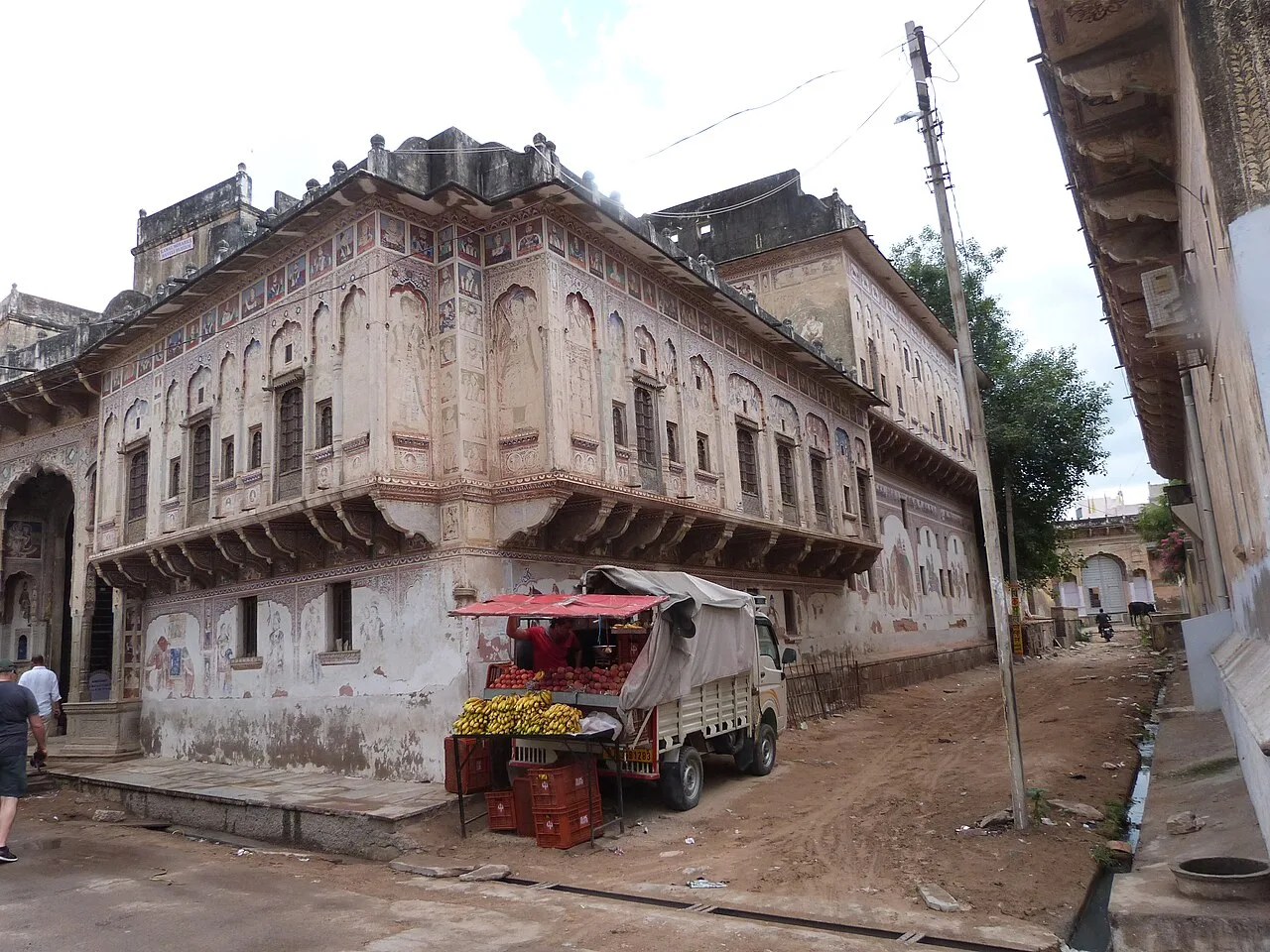
Nawalgarh is a heritage city in Rajasthan’s Shekhawati region, within Jhunjhunu district. Visitors are drawn by its heritage character, and it is 30.5 km from Sikar and 39.2 km from Jhunjhunu.
Key facts · verified by Ghumoopedia editors
- Type of place
- Heritage monument
- Best time to visit
- October to March
- Nearest railway station
- Sikar Junction · about 30 km (straight line)
- Nearest airport
- Jaipur International Airport · about 125 km (straight line)
- Verified
- 21 Nov 2026
Plan a trip from Nawalgarh — a day-by-day route through places nearby.
Nawalgarh is recognised as a heritage city in the Shekhawati region of Rajasthan. Administratively, it belongs to Jhunjhunu district, placing it within both a named district and a wider regional area. The city is 30.5 km from Sikar. Jhunjhunu is 39.2 km away. These distances provide two points of reference for understanding Nawalgarh’s position in relation to the named places. Its heritage character gives visitors a reason to explore Nawalgarh. The city’s setting can also be described by its place in Shekhawati and Jhunjhunu district, as well as its distances from Sikar and Jhunjhunu. Rajasthan is the land of Rajput forts and palaces, painted havelis, desert folk music, puppetry and colourful fairs such as the Pushkar camel fair. Rajasthan is very hot from April to June — often above 45 °C in the desert — with a short monsoon in July–September. Winter days are pleasant and nights are cold, especially in the Thar Desert. Mount Abu is the state's only hill station and stays cooler. The usual best time to visit is October to March. Timings, fees and access arrangements must be confirmed locally. For official information, see Rajasthan Tourism at https://www.tourism.rajasthan.gov.in.
Why it matters
Nawalgarh is a historic town in Rajasthan’s Shekhawati region, known for its painted havelis, fort and streets shaped by the area’s merchant and Rajput histories. It offers a way to explore Shekhawati’s distinctive tradition of mural painting and the role of prosperous trading families in the region. The town lies in Jhunjhunu district, about 30.5 km from Sikar and 39.2 km from Jhunjhunu. Individual havelis and museums may have separate owners or managers, so access and conservation arrangements vary. Nawalgarh is not identified here as a UNESCO World Heritage Site or as an ASI-protected monument; check with the relevant authority for the status of a particular building.
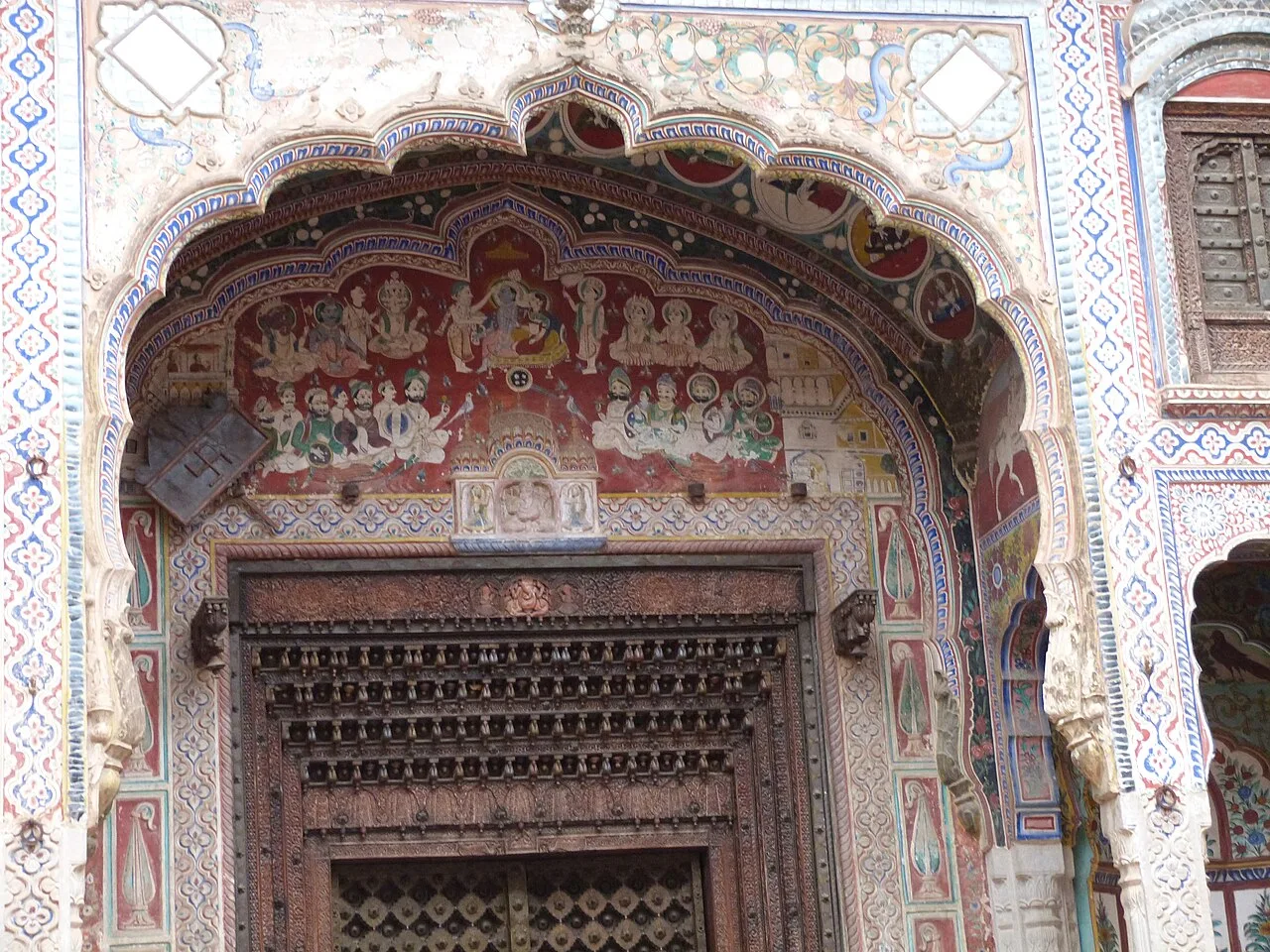
Nawalgarh is traditionally associated with Thakur Nawal Singh, a ruler of the Shekhawati branch of the Jaipur state, who established the town and its fort in the eighteenth century. Its name is linked to him. The fort and settlement formed part of a network of fortified towns in Shekhawati, where local rulers governed amid changing political relationships with Jaipur and other regional powers. From the eighteenth century onward, merchants from the region accumulated wealth through trade and built grand havelis, many decorated with painted walls and ceilings. The mural tradition continued into the nineteenth and early twentieth centuries, reflecting changing tastes, religious subjects and encounters with new technologies and fashions. Nawalgarh’s buildings preserve examples of this layered history, though individual houses have different histories and ownership. As trade patterns and family circumstances changed, some merchant families moved elsewhere, and many havelis were left partly or wholly unused. Weather, neglect and alterations have affected the buildings. Some havelis now operate as museums or visitor attractions, while others remain private homes or have limited access. Conservation and restoration work has been undertaken at individual properties, but the condition and management of each site should be checked locally.
Origin stories & folklore
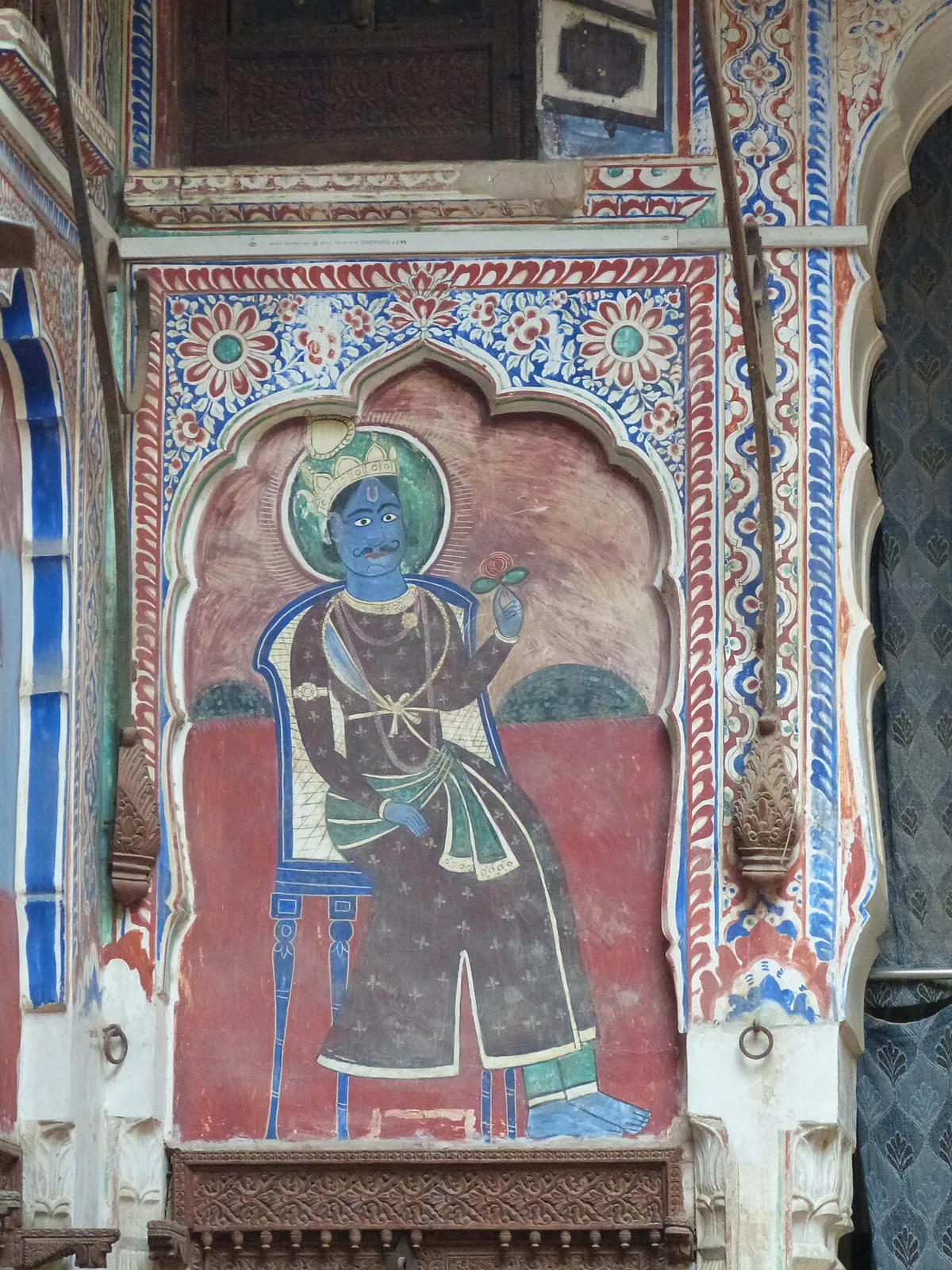
There is no single founding legend that can be confidently presented as the accepted story of Nawalgarh. Local accounts connect the town’s beginnings with its namesake, Thakur Nawal Singh, while the history of the fort and settlement is also recorded through regional histories. Stories attached to Shekhawati’s painted havelis often recall the prosperity, ambitions and religious beliefs of the merchant families who commissioned them. Images of deities, auspicious symbols, animals and processions may carry devotional or good-fortune associations, but meanings can vary between buildings and families. Treat these interpretations as local tradition rather than a single verified explanation, and ask a knowledgeable local guide about the stories associated with a particular haveli.
Architecture & design
Nawalgarh’s built heritage combines a fortified town centre with merchant havelis set along streets and courtyards. The fort, commonly associated with the town’s founder, reflects the defensive and administrative role of a Rajput-era stronghold. Havelis were typically arranged around one or more courtyards, with rooms, balconies and galleries opening inward; this plan offered privacy and helped regulate light and air. Buildings use regional masonry, lime-based finishes and painted plaster, with carved or moulded details varying by property. Their façades may feature projecting balconies, arched openings, ornamental doorways and jharokhas. Painted interiors and exteriors are a defining feature: murals can depict religious subjects, courtly scenes, everyday life and motifs influenced by changing times. Not every building is equally preserved, and some areas remain private or altered. Visitors should follow signs and owners’ directions rather than assume every courtyard is open.
Important objects & sculptures
The most distinctive things to look for are the wall paintings and architectural details within accessible havelis, rather than a single town-wide collection. Depending on the building, murals may show Hindu deities, epic or devotional scenes, processions, animals, flowers and episodes of everyday life. Painted panels can appear on façades, ceilings, inner courtyards and rooms. Also notice carved or decorated doorways, brackets, balconies and jharokha windows. Some properties, including museum-style havelis, may display household objects or furnishings, but displays and access can change. Do not touch painted surfaces, carvings or displayed items; pigments and plaster can be fragile. Ask the site’s caretaker or guide before interpreting a particular image, as meanings and identifications are not always certain.
Use Nawalgarh as a base to understand local life: walk through the market, look for local crafts and ask your host about nearby viewpoints and short excursions. Always ask before photographing people, homes or ceremonies. A comfortable itinerary is one main visit in the morning, a local meal at midday and a short nearby stop before an afternoon return. Use the district list on this site to find other places in Jhunjhunu, but check the route and its condition before combining stops. If a festival or fair is on, roads and stays can be busy — and the experience can be unforgettable. Leave no litter: many sites are protected by the communities around them.
Suggested itineraries
Half day: 3–4 hours; walk through the old market and heritage lanes, visit one accessible haveli or museum, then pause for a local meal or tea. Full day: 6–8 hours; begin with the fort or a principal haveli, explore additional painted havelis with a guide, take a midday meal and rest, then visit another accessible heritage stop before returning. Gentler option: 2–3 hours; arrange a vehicle close to one selected site, visit at an unhurried pace with seated breaks, and skip uneven lanes or upper floors.
Nawalgarh is part of the Shekhawati cultural region, where Hindi and Rajasthani speech, including local Shekhawati forms, are commonly heard. The town’s heritage reflects both Rajput political history and the merchant communities whose havelis shaped its streets. Regional folk music, devotional singing and dance traditions form part of local life, though performances are not guaranteed during an ordinary visit. Traditional clothing and customs vary by person, family and occasion. Markets, places of worship and family homes remain living spaces, not just heritage backdrops. Ask before photographing people, homes or ceremonies, dress respectfully at religious sites, and follow local guidance. A local guide can help explain architectural details and community histories without treating every building as a public attraction.
Festivals & events
Residents observe major Hindu festivals such as Holi, Diwali, Gangaur and Teej, with customs and public activities varying from year to year. Shekhawati towns also host local fairs and religious gatherings, but visitors should confirm whether a particular event is taking place in Nawalgarh before planning around it. Festivals generally follow the seasonal Hindu calendar: Teej and Gangaur are associated with the warmer months, while Diwali falls in autumn or early winter. Celebrations can bring busy markets, crowded roads and higher demand for local accommodation. Be considerate around processions and worship, and ask before taking photographs. Avoid assuming that a festival programme or public performance is held at a specific haveli.
Local food in Rajasthan includes dal baati churma, gatte ki sabzi, ker sangri, laal maas, pyaaz kachori, mirchi vada, ghewar, mawa kachori and chaach (spiced buttermilk). Ask what is fresh that day; many small eateries cook a limited daily menu. Vegetarian travellers eat very well across this region, and most towns also have non-vegetarian options. Remote sites may have no restaurant at all. Carry water and snacks, eat a proper breakfast before long drives, and ask your accommodation for a packed lunch if you are heading out early. Try a home-cooked or dhaba meal when you can — it is often the best food on the route. Choose busy, clean places and carry your packaging back with you.
Shopping & local experiences
Explore the town market for everyday Rajasthani goods, snacks and locally made items; availability changes, so ask shopkeepers about the origin of a product. Visitors may find textiles, household crafts and small souvenirs, but do not assume that every item is made in Nawalgarh. Regional foods and sweets offer an easy way to experience local flavours; ask about ingredients if you have dietary needs. Buy respectfully from local businesses, compare quality, and avoid purchasing fragments or materials removed from heritage buildings. If interested in a craft, ask whether it is locally produced and whether the maker or workshop can be visited.
October to March
The nearest principal railway station by straight-line distance is Sikar Junction, roughly 30 km away. The nearest operating airport by straight-line distance is Jaipur International Airport, roughly 125 km away. These figures are calculated from map coordinates — actual road distance is longer. Jaipur, Ajmer, Jodhpur, Udaipur and Kota are the main rail hubs, and Jaipur, Udaipur and Jodhpur have the most flights; Delhi is the usual gateway for the north-east of the state. For the final leg, Rajasthan State Road Transport Corporation (RSRTC) buses and private coaches link district towns; shared taxis usually leave early in the morning. A private taxi gives more flexibility for remote sites. When comparing train, bus and flight, count the complete door-to-door time: a flight saves the most time only if the onward road transfer is short, while an overnight train can save a hotel night. Book your return before you leave, because seats fill quickly on weekends, festivals and holidays. Current train numbers, timings, return services and fares are not listed here; check IRCTC and NTES for trains and the airline's own schedule for flights. No permit is needed to visit Rajasthan. Land close to the international border west of Jaisalmer and Barmer is restricted beyond certain points: places such as Tanot can be visited, but border outposts need Border Security Force permission. Forts and palaces charge entry and camera fees, and tiger-reserve safaris must be booked through the official forest department portal.
Confirm onward and return timings on IRCTC / NTES, the state bus operator or your airline before travel. A dash means current timings or fares have not been verified.
Getting around
Nawalgarh’s central lanes and heritage streets are best explored on foot, although surfaces may be uneven and some distances feel longer in the heat. Auto-rickshaws can be useful for reaching a starting point or moving between sites; availability should be checked locally. Taxis or a hired car are practical for nearby towns and outlying stops. Ask your accommodation or driver about suitable vehicle access, since narrow lanes may not accommodate cars. Local buses serve regional travel, but routes and convenience for individual attractions should be confirmed on arrival. Parking is usually easier at the edge of busy lanes than beside a haveli; follow local signs and avoid blocking residents’ access.
Hours, tickets & permissions
Nawalgarh is a town rather than a single ticketed site, and access rules differ between the fort, museums, havelis and religious places. Some havelis may be privately owned, charge an admission fee or restrict entry to certain rooms; others may not be open to visitors. Photography rules can also vary. No general town-wide permit or dress rule is assumed here, but modest clothing is appropriate at places of worship. Confirm current opening arrangements, entry requirements and fees with each site’s managing authority or caretaker before travelling.
Facilities
Facilities vary between individual attractions. Museum-style havelis may have an entry desk, caretaker or guide, while privately owned buildings may offer few visitor services. Toilets, drinking water and places to eat are usually easier to find around the town centre than inside heritage properties; check locally and carry water, especially in warm weather. Shops and small eateries serve residents and visitors. Parking may be available near central streets, but not necessarily at the entrance to each site. ATMs and accommodation can be found in town, though visitors should confirm availability and opening arrangements before relying on a specific service.
Accessibility
Expect a mix of paved streets, uneven lanes, thresholds and steps inside historic buildings. Havelis may have narrow passages, stairs and upper floors, and modern wheelchair access should not be assumed. Streets can be crowded or exposed to sun, with shade varying from lane to lane. Strollers may be difficult to manoeuvre in older sections. Older visitors or anyone with limited mobility may find a short, vehicle-supported visit to one selected site more comfortable than a full walking tour. Ask the site manager about step-free access and seating before setting out, and allow time for rests. Carry water and avoid the hottest part of the day where possible.
No permit is needed to visit Rajasthan. Land close to the international border west of Jaisalmer and Barmer is restricted beyond certain points: places such as Tanot can be visited, but border outposts need Border Security Force permission. Forts and palaces charge entry and camera fees, and tiger-reserve safaris must be booked through the official forest department portal. Carry a photo ID at all times and save the emergency number 112 and your accommodation's contact offline. Heat in summer and fog in winter are the main weather risks; carry water and allow extra travel time on foggy December–January mornings. Respect community rules, private property and posted instructions. Follow local guidance if access changes.
Photography
Soft morning or late-afternoon light can bring out the colour and relief of painted façades; ask a local guide about suitable public viewpoints. Photography rules differ between sites, and indoor camera use may be restricted or require permission. Do not touch walls to frame a shot or enter closed rooms. Drone use may be restricted by aviation rules, site management or privacy concerns; check permissions and current regulations before flying. Always ask before photographing residents, shopkeepers, homes, worshippers or ceremonies. Avoid flash where paintings or displayed objects are fragile, and respect any signs requesting that photography stop.
Choose a stay by the full journey to Nawalgarh, not just the district name. Heritage havelis, fort hotels, state tourism (RTDC) hotels and desert camps offer distinctive stays; check that a desert camp is licensed and has proper toilets. In summer, check air-conditioning or coolers; in December and January, check heating and hot water. Book in advance for weekends, festivals and the peak season (October to March). Confirm the exact location, meals included, check-in time and cancellation terms in writing. Avoid sending money to unverified contacts or touts at stations. Carry some cash, as card and digital payments can be unreliable in remote areas.
Within the wider Shekhawati area, Mandawa is known for its havelis and fort, while Dundlod has a fort and historic havelis. Jhunjhunu offers the Rani Sati Temple and other heritage sites. Sikar is another nearby town with historic buildings and religious places. These destinations can be considered for a regional route, but travel time depends on road conditions and the order of stops. Confirm opening arrangements at individual properties before setting out, particularly if combining several towns in one day. Published accounts place Sikar about 30.5 km and Jhunjhunu about 39.2 km from Nawalgarh; actual routes may be longer than straight-line distances.
For couples, Nawalgarh rewards a slow pace: arrive early for soft light and fewer crowds, share a local meal and keep the evening free. A heritage hotel or a lakeside sunset makes the trip memorable. Public displays of affection can be frowned upon in conservative communities and at religious sites, so be discreet. Keep a buffer in your itinerary, because weather and traffic can delay plans.
Q: How much time should I allow for Nawalgarh? A: A half day can cover a short heritage walk and one main site; a full day allows a slower visit to several accessible havelis and a meal break. Q: When is the best season to visit? A: October to March is generally the most comfortable period in Rajasthan. Summer can be very hot, so check local conditions and plan conservatively. Q: Is there one entry ticket for the town? A: No single town-wide ticket is assumed. Entry rules and any fees vary by fort, museum or haveli, so confirm with each site manager. Q: Is Nawalgarh suitable for children and older visitors? A: It can be, but historic lanes and buildings may have uneven surfaces and stairs. Keep children supervised and choose a shorter, vehicle-supported visit if mobility is a concern. Q: Can I stay nearby? A: Accommodation is available in Nawalgarh and nearby towns, but facilities and availability vary. Check locally and consider booking ahead during festivals or busy travel periods.
Be the first to share photos, stories, advice or a helpful contact for Nawalgarh.
Loading…