
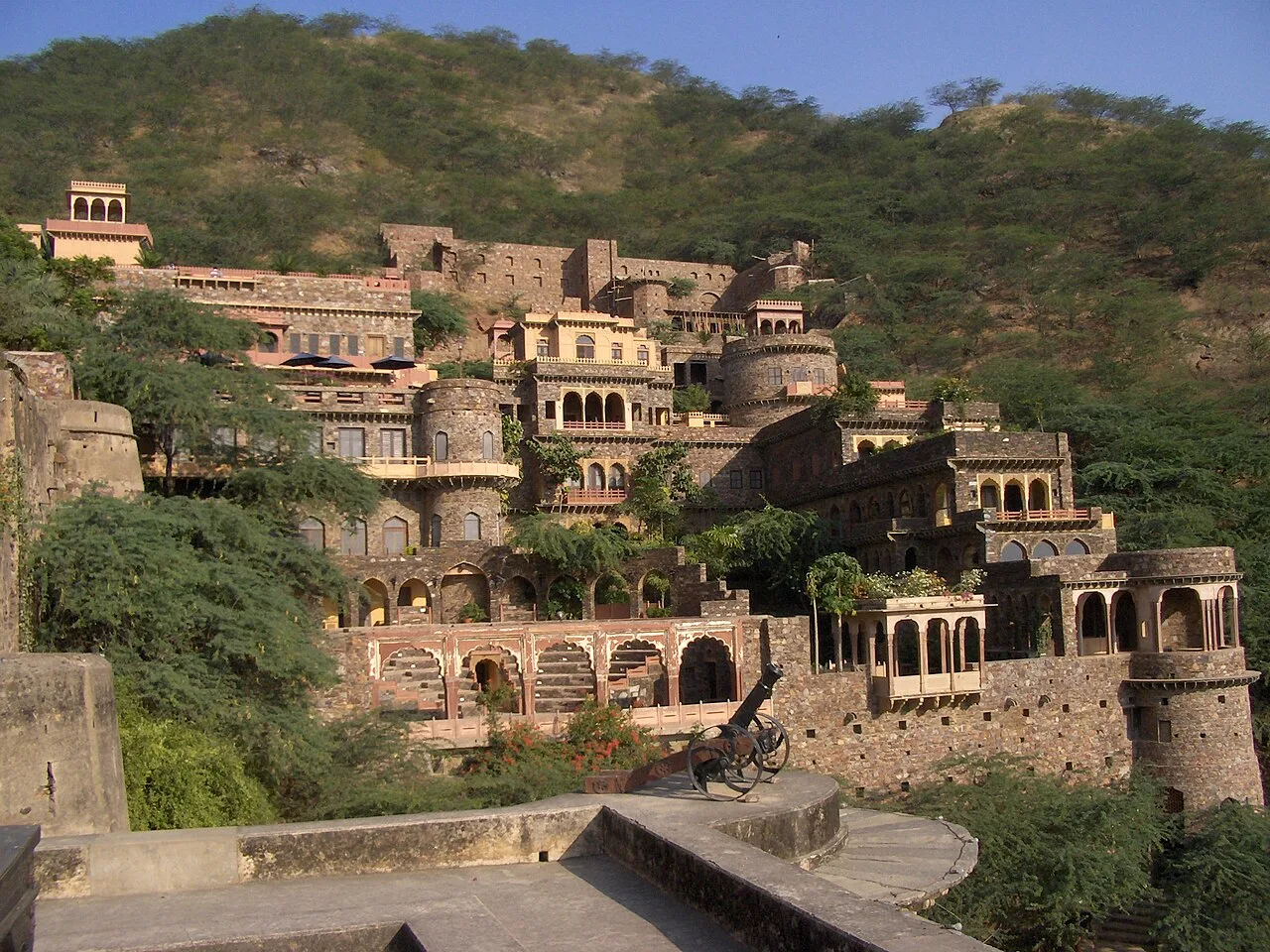
Neemrana Fort-Palace
Neemrana Fort-Palace is a fort in Alwar district, Rajasthan. People visit to see the fort and identify its location within the district.
Key facts · verified by Ghumoopedia editors
- Type of place
- Heritage monument
- Best time to visit
- October to March
- Verified
- 21 Nov 2026
Rajasthan is the state associated with Neemrana Fort-Palace, and Alwar is its district. The place is classified as a fort. Together, those details establish its location and basic identity, without describing other features. The site is named Neemrana Fort-Palace. Its stated type is fort, while its district is Alwar and its state is Rajasthan. These points offer a straightforward way to identify it: by name, category and location. For visitors, the essential description is simple: this is a fort associated with Alwar and Rajasthan. Its defining details are its name, place-type and location. Rajasthan is the land of Rajput forts and palaces, painted havelis, desert folk music, puppetry and colourful fairs such as the Pushkar camel fair. Rajasthan is very hot from April to June — often above 45 °C in the desert — with a short monsoon in July–September. Winter days are pleasant and nights are cold, especially in the Thar Desert. Mount Abu is the state's only hill station and stays cooler. The usual best time to visit is October to March. For official information, see Rajasthan Tourism at https://www.tourism.rajasthan.gov.in.
Why it matters
Neemrana Fort-Palace is a prominent heritage property in Neemrana, Alwar district, Rajasthan. Its hilltop setting and adaptation as a hotel have made it a familiar stop for visitors travelling through the Delhi–Jaipur corridor. The property is associated with Rajput history and with the later restoration and reuse of historic buildings for hospitality. It can help visitors understand how a former fortified residence may be conserved and given a new purpose, although its rooms and facilities are not necessarily open to every visitor. This guide has not verified an official ASI or UNESCO designation for the site; check with the property management or Rajasthan Tourism for its current status and access arrangements.
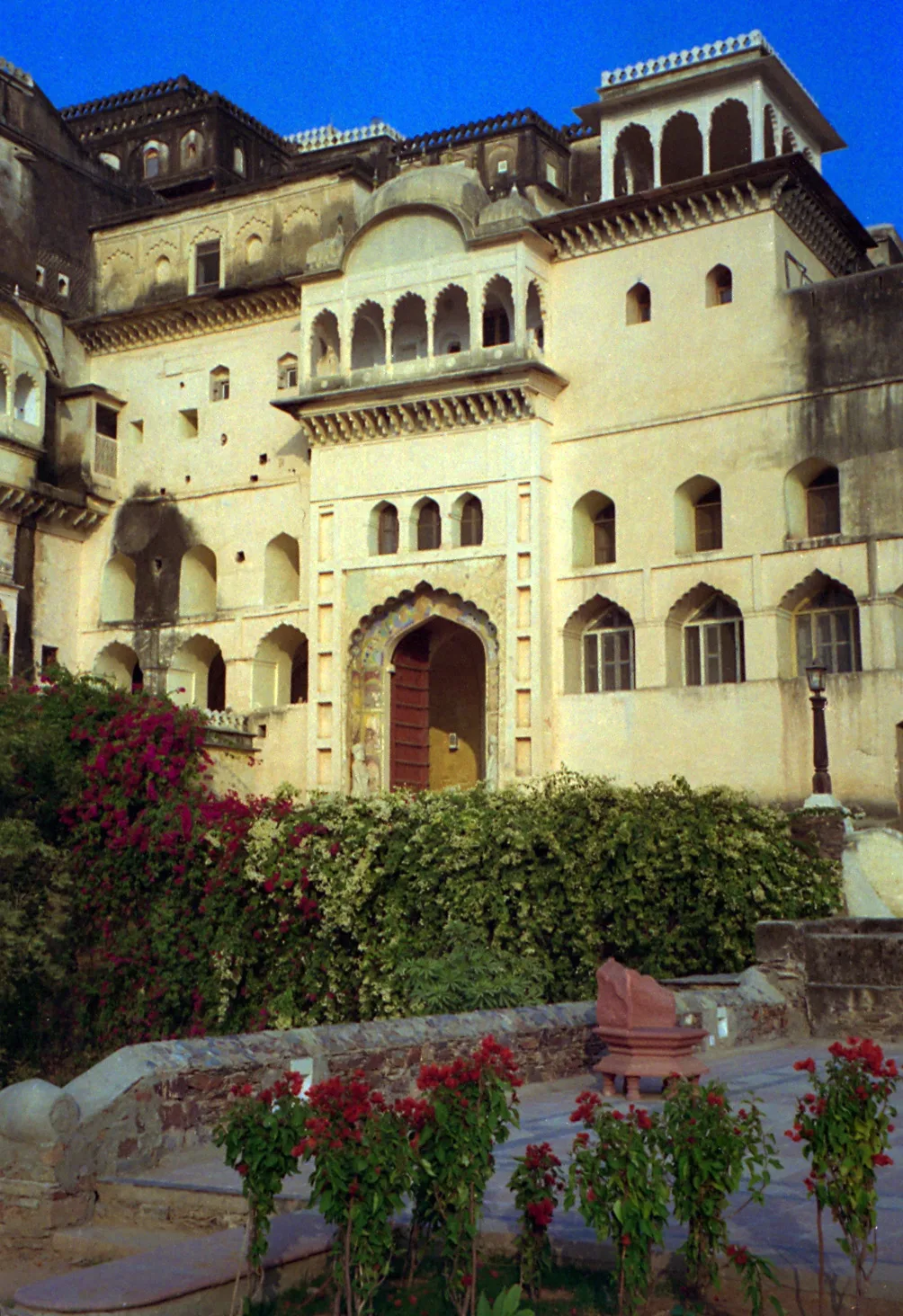
Published accounts commonly date Neemrana Fort-Palace to the 15th century and associate its origins with the Chauhan Rajput lineage. Like many fortified residences, the complex changed over time as its owners, uses and surrounding political conditions changed. It later fell into disrepair. In the 1980s, restoration work led by Aman Nath and Francis Wacziarg began the process of conserving and adapting the property. The restored complex became a heritage hotel, bringing historic spaces into hospitality use while requiring practical changes for guests. Today, the property is best understood as both a historic fort-palace and a functioning private hospitality venue. Access to particular parts may depend on hotel operations, reservations or visitor arrangements. For a detailed chronology, restoration records and current public access, consult the property management or Rajasthan Tourism rather than relying on unsourced dates or anecdotes.
Origin stories & folklore
According to local and heritage-property narratives, Neemrana’s origins are linked to the Chauhan Rajputs and their wider historical association with the region. Such lineage stories are part of how the fort’s past is remembered, but they should be treated as tradition unless supported by documentary evidence. Visitors may encounter stories from guides or staff about former rulers, residents and life within the fort; ask whether a story is documented history, family tradition or local folklore. The distinction makes room for oral memory without presenting it as established fact.
Architecture & design
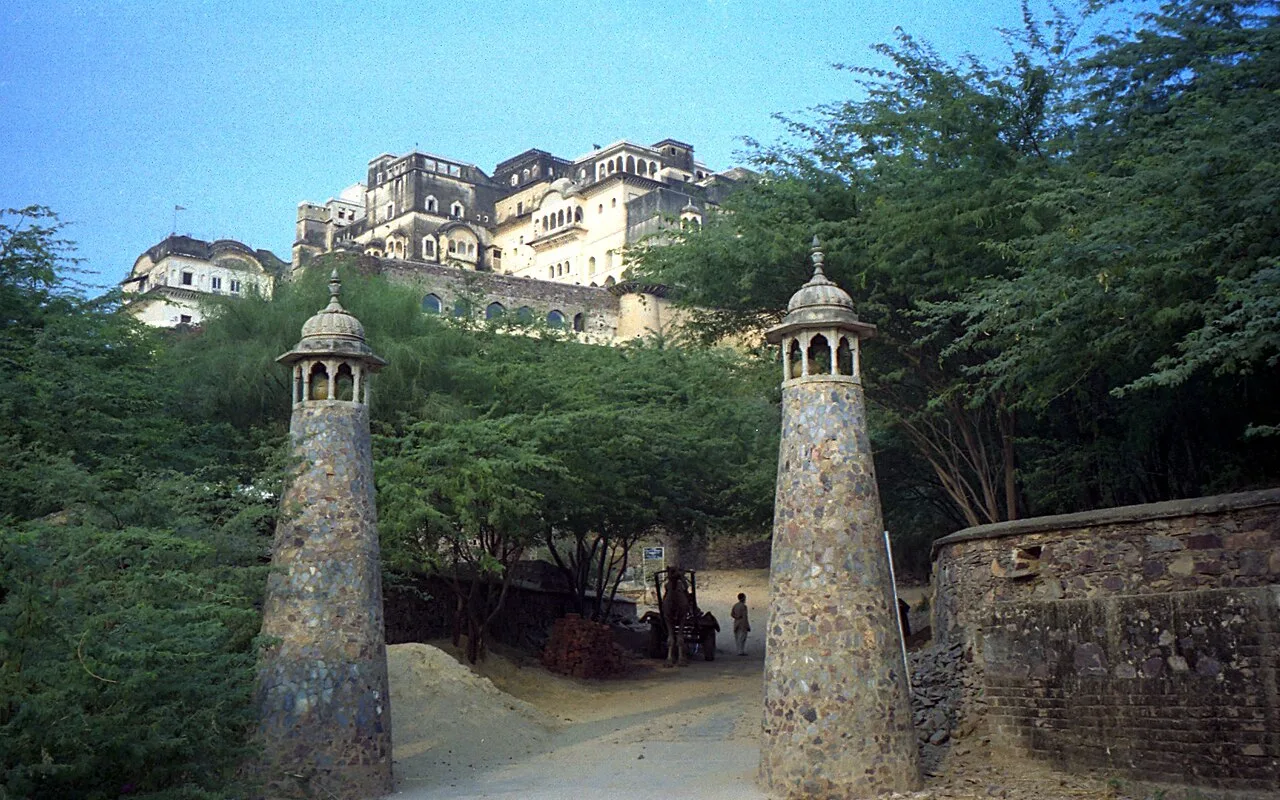
The fort-palace occupies a steep hillside and is arranged across multiple levels, with buildings, terraces and courtyards following the slope. Its setting gives it an elevated outlook over the surrounding landscape. Stone masonry, thick walls, arched openings and carved or shaped architectural details are characteristic features to notice, though individual areas may be altered or closed. The complex combines the defensive character of a fort with the more domestic spaces of a palace. Terraces, balconies and internal passages connect different parts of the property; the changes in level also mean that movement often involves stairs. Restoration and hotel conversion have introduced contemporary facilities alongside historic fabric. Because the site remains in use, not every feature is necessarily original or accessible. Visitors should follow signs and staff instructions, and avoid entering closed rooms or restricted sections.
Important objects & sculptures
During an authorised visit, look for stonework, carved or shaped details around openings, old doors, balconies and architectural fragments that can be viewed from permitted areas. Any inscriptions or objects encountered should be interpreted through on-site information or an authorised guide rather than guessed at. The property is a working heritage hotel, not necessarily a conventional museum, so movable historic objects may be absent, relocated or inaccessible. Do not touch, move or photograph items where signs or staff prohibit it.
Explore Neemrana Fort-Palace slowly and read the interpretation boards, use the official audio guide where available or hire an authorised guide to understand its history. Check opening days, ticket counters and camera rules in advance; many monuments and museums close on one weekday and on some public holidays. Early morning gives softer light, cooler air and smaller crowds. A comfortable itinerary is one main visit in the morning, a local meal at midday and a short nearby stop before an afternoon return. Use the district list on this site to find other places in Alwar, but check the route and its condition before combining stops. If a festival or fair is on, roads and stays can be busy — and the experience can be unforgettable. Leave no litter: many sites are protected by the communities around them.
Suggested itineraries
Half day: Check in or confirm visitor access; spend about two to three hours exploring permitted courtyards, terraces and architectural details at an unhurried pace; finish with a meal if available to visitors. Full day: Begin with the fort-palace visit for about three hours; take a relaxed meal break; visit Neemrana Baori if access and local conditions allow; leave time for the return journey and route checks. Gentler option: Arrange vehicle drop-off as close as permitted, focus on a limited number of accessible viewpoints and rooms, take seated breaks, and skip stair-heavy sections.
Neemrana sits in Rajasthan’s wider cultural landscape, where Hindi and local Rajasthani speech are commonly heard and hospitality customs are important. Regional music, folk performance, festive dress and food traditions vary between communities and occasions; they should not be assumed to take place regularly at the fort. As the property operates as a hotel, visitor experiences may include hospitality-led activities, but these depend on current programming. Be considerate around staff, guests and local residents, ask before photographing people, and follow any guidance about private spaces. For a deeper understanding of local traditions, ask an authorised guide or seek community-led cultural experiences nearby.
Festivals & events
The fort should not be assumed to host public festivals. In Neemrana and the wider Rajasthan region, Holi is generally celebrated in spring, while Teej and Gangaur are observed during the warmer months; Diwali falls in the autumn season. Nearby celebrations can bring heavier road traffic, busier accommodation and changes to local services. Check with the property or local authorities before planning around a festival, and ask permission before photographing worship, processions or private celebrations.
Local food in Rajasthan includes dal baati churma, gatte ki sabzi, ker sangri, laal maas, pyaaz kachori, mirchi vada, ghewar, mawa kachori and chaach (spiced buttermilk). Ask what is fresh that day; many small eateries cook a limited daily menu. Vegetarian travellers eat very well across this region, and most towns also have non-vegetarian options. Remote sites may have no restaurant at all. Carry water and snacks, eat a proper breakfast before long drives, and ask your accommodation for a packed lunch if you are heading out early. Try a home-cooked or dhaba meal when you can — it is often the best food on the route. Choose busy, clean places and carry your packaging back with you.
Shopping & local experiences
Look for Rajasthan-made textiles, block-printed fabrics, pottery, leather goods or lac bangles in local shops and markets when available; stock and local availability vary. Neemrana may offer fewer choices than larger towns, so do not plan on finding a particular craft without checking ahead. Regional sweets and local meals can be part of the visit where shops or food services are open to visitors. Buy from legitimate sellers, ask before photographing artisans, and avoid purchasing items presented as antiques or archaeological finds without clear provenance.
October to March
These figures are calculated from map coordinates — actual road distance is longer. Jaipur, Ajmer, Jodhpur, Udaipur and Kota are the main rail hubs, and Jaipur, Udaipur and Jodhpur have the most flights; Delhi is the usual gateway for the north-east of the state. For the final leg, Rajasthan State Road Transport Corporation (RSRTC) buses and private coaches link district towns; shared taxis usually leave early in the morning. A private taxi gives more flexibility for remote sites. When comparing train, bus and flight, count the complete door-to-door time: a flight saves the most time only if the onward road transfer is short, while an overnight train can save a hotel night. Book your return before you leave, because seats fill quickly on weekends, festivals and holidays. Current train numbers, timings, return services and fares are not listed here; check IRCTC and NTES for trains and the airline's own schedule for flights. No permit is needed to visit Rajasthan. Land close to the international border west of Jaisalmer and Barmer is restricted beyond certain points: places such as Tanot can be visited, but border outposts need Border Security Force permission. Forts and palaces charge entry and camera fees, and tiger-reserve safaris must be booked through the official forest department portal.
Getting around
Neemrana is reached by road, and visitors commonly arrange onward travel by private taxi, hired car or coach. Local autos or other short-distance transport may be available, but availability can vary; check locally rather than relying on a fixed service. Confirm the property entrance and drop-off point with your host, as the final approach may involve a steep or narrow section. Parking arrangements should also be checked in advance. The hillside complex is best explored on foot once access is granted, with stairs and uneven passages in several areas.
Hours, tickets & permissions
Neemrana Fort-Palace is a privately operated heritage property, so access may depend on a reservation, a day-visitor arrangement or hotel operations rather than ordinary monument entry. Tickets, permitted areas, identification requirements, photography rules and any restrictions can change. Confirm current opening arrangements, hours and fees directly with the property management or Rajasthan Tourism before travelling. Do not assume that hotel facilities or guest areas are open to non-residents, and follow staff instructions once on site.
Facilities
Facilities depend on whether you are a hotel guest or an authorised day visitor. The property usually provides hospitality facilities for guests, but access to restaurants, toilets, drinking water, parking and other services should be confirmed before arrival if you are not staying there. Guided interpretation may be available by arrangement; ask whether an authorised guide or audio guide is offered. ATMs and additional food or shopping options may be found in the wider Neemrana area, but do not assume they are close to the entrance. Carry essential water and confirm local arrangements.
Accessibility
The fort-palace is built on a hillside, with steep approaches, stairs, uneven surfaces and changes of level. Walking distances between permitted areas can add up, and shade may be limited on exposed terraces. This can make the visit tiring for older visitors and challenging for anyone with limited mobility. Wheelchair and stroller access should not be assumed; this guide has not verified ramps, lifts or step-free routes. Contact the property before booking to discuss access needs, vehicle drop-off, seating and which areas can be reached. A shorter visit focused on accessible spaces may be more comfortable.
No permit is needed to visit Rajasthan. Land close to the international border west of Jaisalmer and Barmer is restricted beyond certain points: places such as Tanot can be visited, but border outposts need Border Security Force permission. Forts and palaces charge entry and camera fees, and tiger-reserve safaris must be booked through the official forest department portal. Carry a photo ID at all times and save the emergency number 112 and your accommodation's contact offline. Heat in summer and fog in winter are the main weather risks; carry water and allow extra travel time on foggy December–January mornings. Respect community rules, private property and posted instructions. Follow local guidance if access changes.
Photography
Early morning or later in the day can offer softer light on the stonework and surrounding landscape, subject to the access arrangements in force. Photography rules may vary by area, and hotel guest spaces or interiors may be restricted; ask staff before taking pictures. Do not use a drone without all required permissions and confirmation that flying is permitted. Avoid blocking passages, photographing people without consent or disturbing guests, staff, ceremonies or private activities. Check locally whether any camera restrictions or fees apply.
Choose a stay by the full journey to Neemrana Fort-Palace, not just the district name. Heritage havelis, fort hotels, state tourism (RTDC) hotels and desert camps offer distinctive stays; check that a desert camp is licensed and has proper toilets. In summer, check air-conditioning or coolers; in December and January, check heating and hot water. Book in advance for weekends, festivals and the peak season (October to March). Confirm the exact location, meals included, check-in time and cancellation terms in writing. Avoid sending money to unverified contacts or touts at stations. Carry some cash, as card and digital payments can be unreliable in remote areas.
Neemrana Baori, a historic stepwell in the Neemrana area, may be a complementary stop; confirm access and local conditions before setting out. Alwar town offers the City Palace and Bala Quila, while Siliserh Lake and Sariska Tiger Reserve are other well-known places in the wider Alwar region. These are not all immediate neighbours, so check routes, travel time and current access before combining them with a fort visit. A same-day plan is more comfortable if it includes one main attraction and only one additional stop.
For couples, Neemrana Fort-Palace rewards a slow pace: arrive early for soft light and fewer crowds, share a local meal and keep the evening free. A heritage hotel or a lakeside sunset makes the trip memorable. Public displays of affection can be frowned upon in conservative communities and at religious sites, so be discreet. Keep a buffer in your itinerary, because weather and traffic can delay plans.
Q: How much time should I allow for a visit? A: Allow a few hours to explore permitted areas at a relaxed pace; add time for meals and any nearby stop. Q: When is a good season to visit? A: October to March is generally the more comfortable season in Rajasthan. Check weather and road conditions before travelling. Q: Can I enter without staying at the hotel? A: Access may require advance arrangements or a visitor booking. Confirm current entry rules with property management. Q: Is the fort suitable for children or elderly visitors? A: Families can visit, but stairs, uneven surfaces and the hillside setting may be tiring. Plan breaks and check access needs in advance. Q: Are there places to stay nearby? A: Neemrana has hospitality options, including the fort-palace itself, but availability and visitor arrangements vary. Confirm lodging directly before travel.
Be the first to share photos, stories, advice or a helpful contact for Neemrana Fort-Palace.
Loading…