
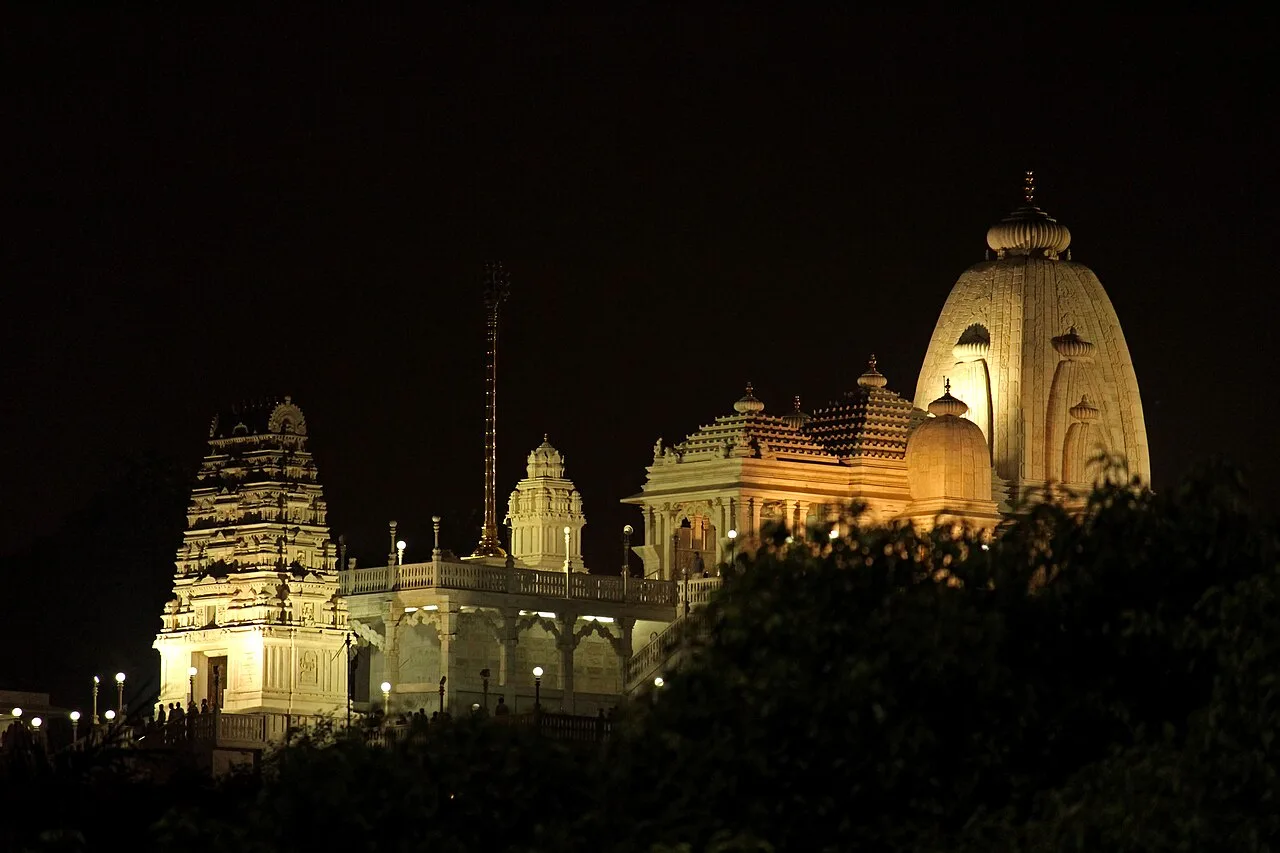
Birla Mandir, Hyderabad
Birla Mandir is a Hindu place of worship in Hyderabad, built on a 280-foot hill. People visit the temple to worship; it was established by the Birla Foundation and opened in 1976.
Key facts · verified by Ghumoopedia editors
- Type of place
- Temple / pilgrimage site
- Best time to visit
- October to February; July to September for waterfalls in Adilabad and Mulugu
- Nearest railway station
- Hyderabad Deccan (Nampally) · about 2 km (straight line)
- Verified
- 21 Nov 2026
Plan a trip from Birla Mandir, Hyderabad — a day-by-day route through places nearby.
The temple occupies a 13-acre plot atop Naubath Pahad, a hillock 280 feet high in Hyderabad, Telangana. The hill was formerly called Band Rock. In the past, official messages from the Mughals to the Nizams were announced from the hill, accompanied by music. This practice is associated with the hill’s former name. The building work lasted ten years, and Swami Ranganathananda of the Ramakrishna Mission opened the temple in 1976. The Birla Foundation built it and has also established similar temples across India, known as Birla Mandirs. Telangana joins the Deccan's Islamic heritage — the Qutb Shahi and Asaf Jahi monuments of Hyderabad, Golconda and the Charminar — with the Kakatiya temples and forts of Warangal and the UNESCO-listed Ramappa Temple, the Godavari pilgrim towns of Bhadrachalam, Basar and Kaleshwaram, the Buddhist heritage of Nagarjunakonda, the ikat weaves of Pochampally and the tribal forests of Mulugu, Adilabad and the Nallamala hills. Summers from March to early June are very hot and dry, often above 40 °C; the southwest monsoon brings rain from June to September and fills the waterfalls of Adilabad and Mulugu. October to February is pleasant and dry, with cool mornings in December and January. The usual best time to visit is October to February; July to September for waterfalls in Adilabad and Mulugu. Timings, fees and access arrangements must be confirmed locally. For official information, see Telangana Tourism at https://tourism.telangana.gov.in.
Why it matters
Birla Mandir is a prominent modern Hindu pilgrimage temple in Hyderabad, dedicated chiefly to Lord Venkateswara. Its hilltop setting on Naubat Pahad makes it a notable landmark above the city and a place of worship as well as a destination for visitors interested in Hyderabad’s religious and architectural landscape. The temple was built by the Birla Foundation, whose temples in several Indian cities are commonly known as Birla Mandirs. It also reflects the city’s layered heritage, where Hindu places of worship stand alongside the monuments and institutions associated with the Deccan’s varied communities. No UNESCO World Heritage or Archaeological Survey of India protected-site designation is claimed here; visitors should consult the relevant authorities for current status.
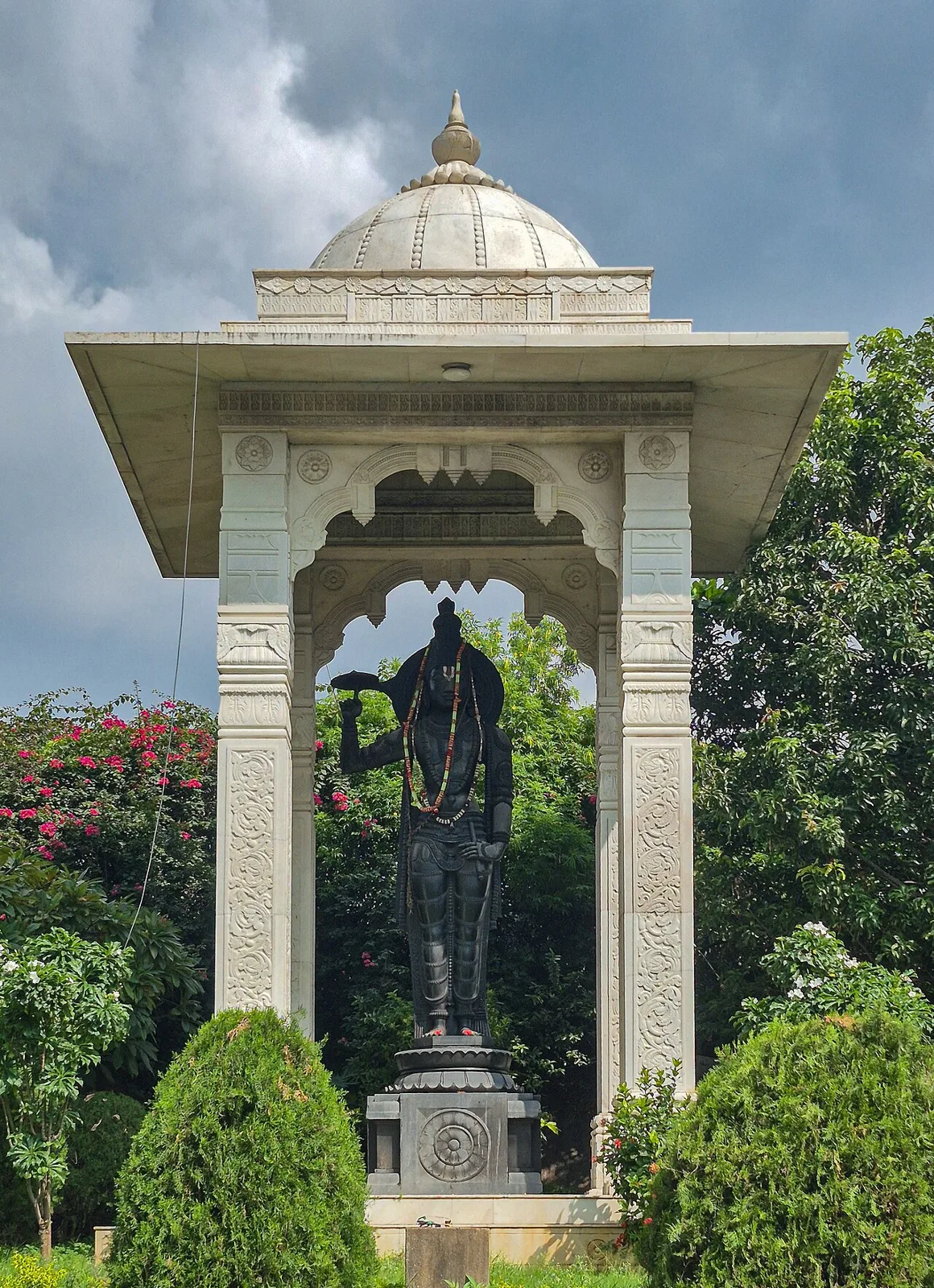
Birla Mandir stands on Naubat Pahad, a hillock in Hyderabad that published accounts describe as about 280 feet (85 metres) high. The Birla Foundation undertook the temple’s construction, part of its wider programme of establishing temples in different parts of India. Construction took ten years, and the temple was opened in 1976 by Swami Ranganathananda of the Ramakrishna Mission. The principal shrine is dedicated to Venkateswara, a form of Vishnu widely worshipped across India. The name Naubat Pahad is associated in local accounts with the hill’s earlier role as a place from which official announcements were proclaimed with music. The hill is also said to have been known as Band Rock. These accounts connect the site to Hyderabad’s earlier political history, although details should be treated as local historical tradition rather than a complete documented chronology. The temple’s design brings together architectural influences from different Indian regions. It remains an active place of worship, and its public arrangements and access rules may change; check locally for current information. No major restoration period is specified in the available guide.
Origin stories & folklore
According to local tradition, Naubat Pahad was once called Band Rock because official communications from the Mughals to the Nizams were proclaimed from the hill, accompanied by music. The word naubat is associated with ceremonial music, and this account offers a local explanation for the hill’s name. It is a story about the hill’s political and cultural past, not a legend about the temple’s founding. The temple itself is a comparatively modern foundation, opened in 1976. Visitors may hear other devotional stories connected with Venkateswara, but these belong to the wider Hindu traditions surrounding the deity and should not be presented as a unique origin story for this particular shrine.
Architecture & design
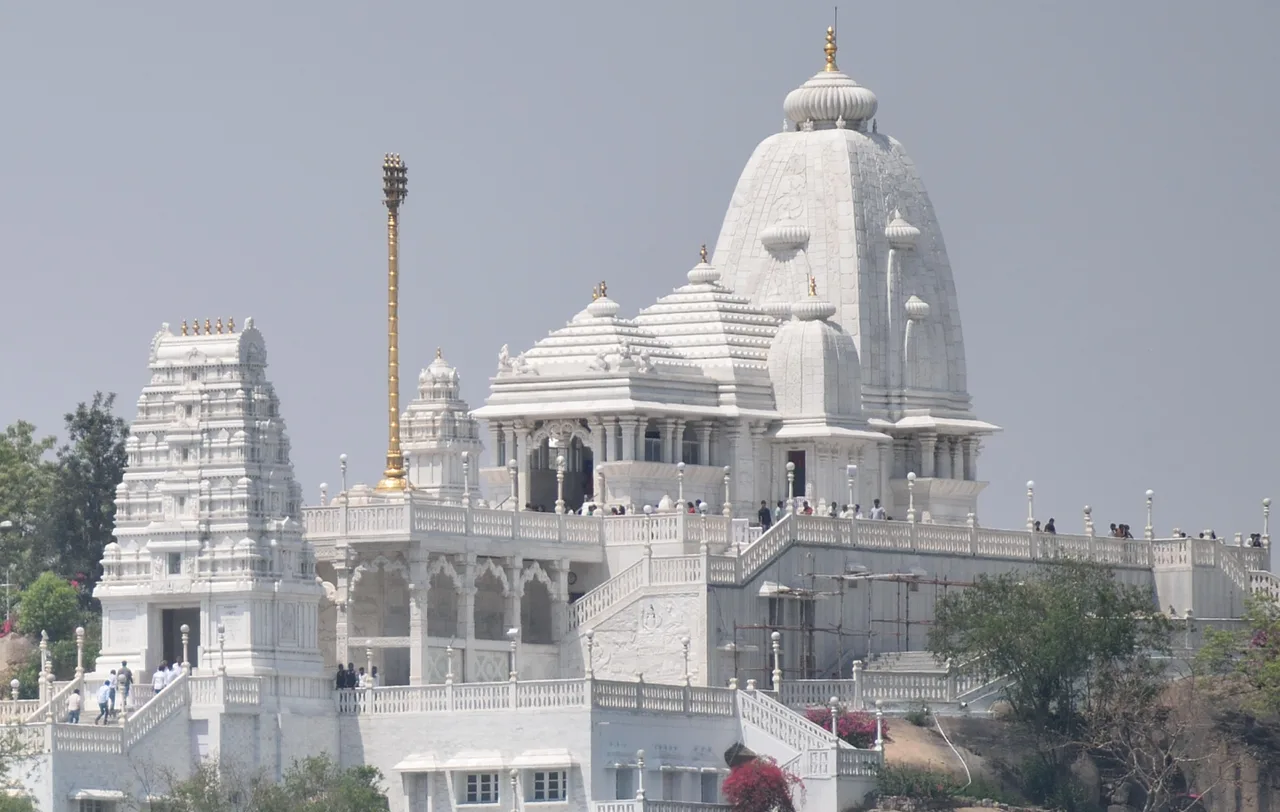
The temple occupies a large hilltop plot on Naubat Pahad and is built predominantly of white marble. Its design combines elements associated with South Indian, Rajasthani and Utkala, or Odishan, temple architecture. The entrance tower and the tower above the principal sanctum draw on different regional forms, giving the complex a deliberately composite appearance. The main shrine is arranged around the image of Venkateswara, with subsidiary shrines and sculptural details elsewhere in the complex. Carved figures and scenes from Hindu sacred narratives ornament the temple. The elevated site provides views across Hyderabad, while the approach requires an uphill journey from the surrounding city. The building is a modern temple rather than an ancient archaeological monument; its construction over ten years culminated in its opening in 1976. Visitors should follow marked routes and any instructions from temple staff, since access to inner areas may be restricted during worship.
Important objects & sculptures
The principal object of worship is the image of Lord Venkateswara in the main sanctum. The temple’s sculptures and reliefs are also worth noticing, including depictions drawn from Hindu sacred narratives such as the Ramayana and Mahabharata. Smaller shrines within the complex honour other deities, offering visitors a sense of the range of worship represented here. The white marble surfaces and carved architectural details form an important part of the visitor experience, though the temple is an active place of worship rather than a museum collection. Some inner areas may be accessible only to worshippers or under particular temple rules. Observe images and ritual objects quietly, and do not touch or photograph them unless the temple explicitly permits it.
Religious significance
Birla Mandir is dedicated chiefly to Lord Venkateswara, a form of Vishnu especially associated with devotion and pilgrimage in South India. Worshippers visit to offer prayers, seek blessings and take part in darshan, the act of seeing and being in the presence of the deity. Daily worship and rituals are conducted according to temple practice, though arrangements can vary. The complex includes shrines to other Hindu deities, reflecting traditions of worship beyond the principal sanctum. Visitors who are not familiar with temple customs can observe respectfully from permitted areas and follow the instructions of staff and worshippers. The temple is both a functioning religious site and a public landmark; quiet behaviour and deference to ongoing prayer help preserve its devotional character.
Visit Birla Mandir with time to observe daily prayers and rituals respectfully. Follow the posted rules on footwear, photography, phones and dress — large temples have separate darshan queues and paid special-entry tickets, and some prohibit phones and leather items inside. Beware of unofficial 'guides' or agents offering quick darshan for a fee. A comfortable itinerary is one main visit in the morning, a local meal at midday and a short nearby stop before an afternoon return. In the hot months, plan outdoor sightseeing for early morning and late afternoon, and spend midday in a museum or a long lunch. Use the district list on this site to find other places in Hyderabad, but check the route and its condition before combining stops. If a festival is on — such as Bathukamma and Dasara in autumn, Bonalu in July–August, the biennial Medaram Sammakka Saralamma Jatara, Sankranti or Ramzan in Hyderabad's Old City — roads and stays can be busy, and the experience can be unforgettable. Leave no litter: many sites are protected by the communities around them.
Suggested itineraries
Half day: Allow about 1–2 hours for the uphill approach, darshan and a respectful look around the temple; then spend 1–2 hours at Birla Planetarium or the nearby Hussain Sagar waterfront. Full day: Allow about 1–2 hours at Birla Mandir; continue to the Telangana State Archaeology Museum and Public Gardens, then take 2–3 hours for Hussain Sagar and Lumbini Park, with time for a meal and travel between stops. Gentler option: Arrange a cab drop-off as close as permitted, allow extra time for the approach and darshan, and limit the day to the temple and one nearby stop with seating.
The temple is part of Hyderabad’s living religious landscape, welcoming local worshippers as well as visitors from elsewhere. Telugu is widely spoken in the region, alongside Urdu, Hindi and English in the city; visitors may encounter several languages during a visit. Customs include removing footwear before entering designated areas, dressing respectfully and observing prayer without interruption. Devotional singing and ritual activity may be heard during worship, although the programme varies. The temple is not principally a performance venue, so visitors should not expect scheduled dance or music events. Its hilltop location also makes it a place where residents and travellers pause to look out over the city, while the grounds remain first and foremost a sacred space.
Festivals & events
Hindu festivals associated with Venkateswara and the broader Vaishnava tradition may bring additional worshippers and activity to the temple. Major regional occasions such as Vaikunta Ekadashi, usually observed in December or January, and Brahmotsavam seasons at temples in the region can influence pilgrimage travel, though visitors should verify which observances are held at this temple. Hyderabad’s Bonalu celebrations in July and August and autumn festivals such as Dasara also enliven the city, but are not necessarily temple-specific events here. Expect queues, traffic and busier surroundings during major religious days and public holidays; confirm local arrangements before planning a visit.
Local food in Telangana includes Hyderabadi dum biryani, haleem during Ramzan, mirchi ka salan, double ka meetha and qubani ka meetha, Irani chai with Osmania biscuits, and Telangana village dishes such as sarva pindi, jonna rotte with spicy pachadi, natu kodi (country chicken) curry and sakinalu during Sankranti. Ask what is fresh that day; many small eateries cook a limited daily menu. Hyderabad's Old City around Charminar is the place for biryani, haleem and late-night Irani cafés; in the districts, Telangana food is spicy and rustic, with millet rotis and tangy pachadis. Temple towns such as Yadadri, Basar and Bhadrachalam serve strictly vegetarian food. Remote sites may have no restaurant at all. Carry water and snacks, eat a proper breakfast before long drives, and ask your accommodation for a packed lunch if you are heading out early. If prasad is offered, accept it according to local custom. Choose busy, clean places, drink sealed or filtered water, and carry your packaging back with you.
Shopping & local experiences
Hyderabad’s markets offer regional textiles, bangles, jewellery, handicrafts and packaged local foods. Visitors may look for Pochampally ikat textiles, a Telangana craft, in city shops or dedicated markets; verify the origin and quality when buying. The temple’s immediate surroundings may have small stalls selling devotional items or refreshments, but availability varies. For a broader food experience, try local Hyderabad dishes at established eateries elsewhere in the city rather than expecting a large dining area at the temple. Buy respectfully, avoid litter and check any restrictions before carrying purchases into worship spaces.
October to February; July to September for waterfalls in Adilabad and Mulugu
The nearest principal railway station by straight-line distance is Hyderabad Deccan (Nampally), roughly 2 km away. The nearest operating airport by straight-line distance is Rajiv Gandhi International Airport, Hyderabad, roughly 19 km away. These figures are calculated from map coordinates — actual road distance is longer. Hyderabad (Rajiv Gandhi International Airport and the Secunderabad, Nampally and Kacheguda stations) is the main gateway; Kazipet and Warangal serve the Kakatiya region, Bhadrachalam Road (Kothagudem) serves the Godavari temples, and Nizamabad, Mancherial and Adilabad serve the north. Inside Hyderabad, the Metro and MMTS suburban trains avoid the worst traffic; app cabs and autos cover the last stretch. Allow extra time at peak hours, when cross-city journeys can take more than an hour. When comparing train, bus and flight, count the complete door-to-door time: a flight saves the most time only if the onward road transfer is short, while an overnight train can save a hotel night. For Telangana, Hyderabad is well linked by air and by overnight trains from most metros; for district sites, an early express train followed by a road transfer is often quicker than driving out of the city. Book your return before you leave, because seats fill quickly on weekends, festivals and holidays. Current train numbers, timings, return services and fares are not listed here; check IRCTC and NTES for trains and the airline's own schedule for flights. No permit is needed to visit Telangana. Monuments such as Golconda Fort, the Qutb Shahi Tombs and Ramappa Temple have entry tickets (buy them online where possible), and several Hyderabad museums and palaces — including the Salar Jung Museum and Chowmahalla Palace — close on Fridays. Jungle safaris in Amrabad and Kawal tiger reserves must be booked in advance through the Telangana Forest Department and do not run in the monsoon closure season.
Confirm onward and return timings on IRCTC / NTES, the state bus operator or your airline before travel. A dash means current timings or fares have not been verified.
Getting around
Autos, app-based taxis and other cabs can reach the area from central Hyderabad, though traffic may slow journeys at busy times. The temple is on a hill, so the final approach involves an uphill route; ask the driver where vehicles may set down or park, as access arrangements can vary. Local buses serve parts of the surrounding city, but visitors should check routes and stops for their starting point. Walking from nearby areas may be possible for some, but account for the slope and heat. Parking is usually available in the wider vicinity, though capacity and access should be checked locally, particularly during festivals.
Hours, tickets & permissions
Entry is subject to the temple’s current worship schedule and management rules. Darshan arrangements, queue systems, access to particular shrines and any special-entry procedures may change, especially on festival days. Footwear must be removed in designated areas, and restrictions may apply to phones, cameras, bags or other belongings. Do not assume that a general visitor rule applies to every part of the complex. Confirm current opening arrangements, entry requirements and any fees directly with the temple’s managing authority before travelling; no times or prices are provided here.
Facilities
Facilities at or near the temple may include footwear storage, drinking water, toilets and parking, but provision and access can change; check locally on arrival. Food and refreshments are more readily found in the surrounding city than within the worship areas. ATMs and shops are available in Hyderabad, though not necessarily beside the entrance. The temple is not a conventional visitor centre, and guided tours may not be provided. Follow signs and ask temple staff about permitted facilities, especially for footwear, belongings and access to rest areas. Carry water for the approach in hot weather, while observing any rules about bringing bottles inside.
Accessibility
The hilltop setting means the approach is uphill, and visitors may encounter steps and uneven walking routes. A road may bring vehicles close to the temple, but drop-off, parking and the remaining distance should be confirmed locally; do not assume step-free access to every area. Wheelchair users and visitors with limited mobility may need assistance, and access to the sanctum can involve barriers or queues. Strollers may be difficult to manage on steps or crowded paths. Older visitors should allow extra time, avoid the hottest part of the day and consider visiting with a companion. Shade may be limited along parts of the approach.
No permit is needed to visit Telangana. Monuments such as Golconda Fort, the Qutb Shahi Tombs and Ramappa Temple have entry tickets (buy them online where possible), and several Hyderabad museums and palaces — including the Salar Jung Museum and Chowmahalla Palace — close on Fridays. Jungle safaris in Amrabad and Kawal tiger reserves must be booked in advance through the Telangana Forest Department and do not run in the monsoon closure season. Carry a photo ID at all times and save the emergency number 112 and your accommodation's contact offline. Summer heat is the main weather risk — carry water, wear a hat and avoid the midday sun; in the monsoon, allow extra time when roads flood. Watch your belongings in crowds and on public transport, and follow posted instructions.
Visitor rules
Remove footwear before entering areas where the temple requires it and use any designated storage arrangements. Dress modestly and follow posted instructions for access to shrines and ritual spaces. Keep voices low, do not interrupt prayers or block queues, and avoid touching idols, offerings or ritual objects. Restrictions may apply to phones, cameras, bags and leather items; check signs and staff directions rather than assuming these are permitted. Dispose of litter only in designated bins, avoid single-use plastic where possible, and do not enter restricted areas. Follow instructions from temple personnel during crowded periods.
Photography
The hilltop can offer broad views of Hyderabad, and morning or late-afternoon light is often more comfortable for outdoor views than the midday sun. Photography may be restricted or prohibited inside the temple, particularly near the sanctum and during worship; check posted rules before using a phone or camera. Always ask before photographing worshippers, staff or ceremonies, and do not obstruct queues for a picture. Drone use requires applicable permissions and may be restricted around religious sites and urban areas; do not fly one without confirming current rules.
Choose a stay by the full journey to Birla Mandir, not just the district name. Hyderabad has stays in every range: Banjara Hills, Jubilee Hills and HITEC City suit business and comfort travellers, while Abids and the Old City are closer to the heritage sights. In summer, check air-conditioning; in the monsoon, check that the property is accessible if roads flood. Book in advance for weekends, festivals and the peak season (October to February; July to September for waterfalls in Adilabad and Mulugu). Confirm the exact location, meals included, check-in time and cancellation terms in writing. Avoid sending money to unverified contacts or touts at stations. Carry some cash, as card and digital payments can be unreliable in remote areas.
Nearby Hyderabad attractions that can be combined with a temple visit include Birla Planetarium, the B. M. Birla Science Museum, Hussain Sagar, Lumbini Park and the Telangana State Archaeology Museum in the Public Gardens area. The lakefront and Necklace Road offer further city views and recreation, though traffic and access vary. Charminar and Salar Jung Museum are farther across the city and are better treated as separate stops with travel time allowed. Check current opening arrangements for museums and parks, and avoid packing too many cross-city visits into a short itinerary.
For couples, Birla Mandir rewards a slow pace: arrive early for soft light and fewer crowds, share a local meal and keep the evening free. A sunset at Golconda Fort, dinner at a heritage palace in Hyderabad, a boat ride on Laknavaram lake or an evening at Hussain Sagar makes the trip memorable. Public displays of affection can be frowned upon in conservative communities and at religious sites, so be discreet. Keep a buffer in your itinerary, because weather and road conditions can delay plans.
Q: How much time should I allow for a visit? A: Around one to two hours is a reasonable starting point for the approach, darshan and a brief look around; queues and festivals can add time. Q: When is the best season to visit? A: October to February is generally more comfortable in Hyderabad. Summer can be very hot, so plan outdoor walking for cooler parts of the day. Q: Is entry ticketed? A: Entry and darshan rules can change. Confirm current requirements and any fees with the temple’s managing authority before visiting. Q: Is the temple suitable for children and older visitors? A: Families are welcome, but the hilltop approach may involve an uphill walk or steps. Allow extra time and assess mobility needs in advance. Q: Where should I stay nearby? A: Hyderabad has accommodation across several neighbourhoods. Choose a location based on your wider itinerary and check traffic and transport access to the temple.
Be the first to share photos, stories, advice or a helpful contact for Birla Mandir, Hyderabad.
Loading…