
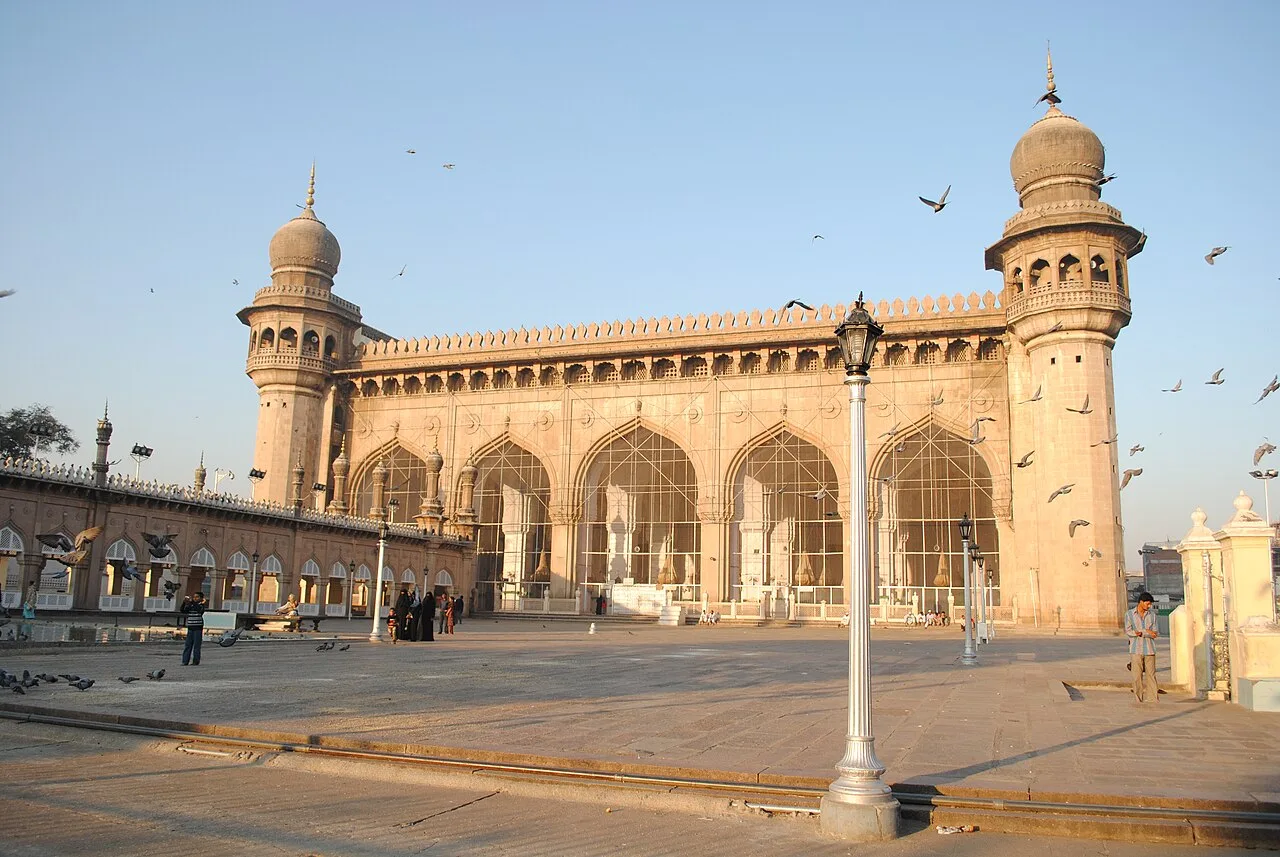
Mecca Masjid
Mecca Masjid is a historic mosque in Hyderabad, Telangana, notable for its size and its place among the Old City’s landmarks. Visitors come to see it near Charminar, Chowmahalla Palace and Laad Bazaar.
Key facts · verified by Ghumoopedia editors
- Type of place
- Temple / pilgrimage site
- Best time to visit
- October to February; July to September for waterfalls in Adilabad and Mulugu
- Nearest railway station
- Hyderabad Deccan (Nampally) · about 4 km (straight line)
- Verified
- 21 Nov 2026
Plan a trip from Mecca Masjid — a day-by-day route through places nearby.
Located in Hyderabad district, Telangana, Mecca Masjid, also called Makkah Masjid, is the city’s biggest mosque and one of India’s largest. It has room for 10,000 worshippers and serves as the main mosque for Hyderabad’s Old City. Charminar, Chowmahalla Palace and Laad Bazaar are nearby. The mosque dates to the seventeenth century. Muhammad Qutb Shah, sixth ruler of the Qutb Shahi dynasty, had bricks made using soil brought from Mecca, Islam’s holiest site. They were used in the central arch, giving the mosque its name. Mughal emperor Aurangzeb completed the building in 1694 CE. The state protects Mecca Masjid as a monument. In 2014, UNESCO placed the complex on its tentative list for World Heritage Site consideration, alongside other regional sites under the title Monuments and Forts of the Deccan Sultanate. The regional grouping includes sites connected with several different sultanates. Telangana joins the Deccan's Islamic heritage — the Qutb Shahi and Asaf Jahi monuments of Hyderabad, Golconda and the Charminar — with the Kakatiya temples and forts of Warangal and the UNESCO-listed Ramappa Temple, the Godavari pilgrim towns of Bhadrachalam, Basar and Kaleshwaram, the Buddhist heritage of Nagarjunakonda, the ikat weaves of Pochampally and the tribal forests of Mulugu, Adilabad and the Nallamala hills. Summers from March to early June are very hot and dry, often above 40 °C; the southwest monsoon brings rain from June to September and fills the waterfalls of Adilabad and Mulugu. October to February is pleasant and dry, with cool mornings in December and January. The usual best time to visit is October to February; July to September for waterfalls in Adilabad and Mulugu. Timings, fees and access arrangements must be confirmed locally. For official information, see Telangana Tourism at https://tourism.telangana.gov.in.
Why it matters
Mecca Masjid, also known as Makkah Masjid, is a major congregational mosque in Hyderabad’s Old City and an active place of worship. It serves Muslim communities locally and is a prominent part of the city’s historic religious and civic landscape, close to Charminar, Chowmahalla Palace and Laad Bazaar. Published accounts describe it as Hyderabad’s largest mosque, with a stated capacity of about 10,000 worshippers. It is a state-protected monument; this should not be confused with protection by the Archaeological Survey of India. In 2014, UNESCO included the complex in the tentative-list proposal titled “Monuments and Forts of the Deccan Sultanate”; tentative listing is not the same as inscription on the World Heritage List.
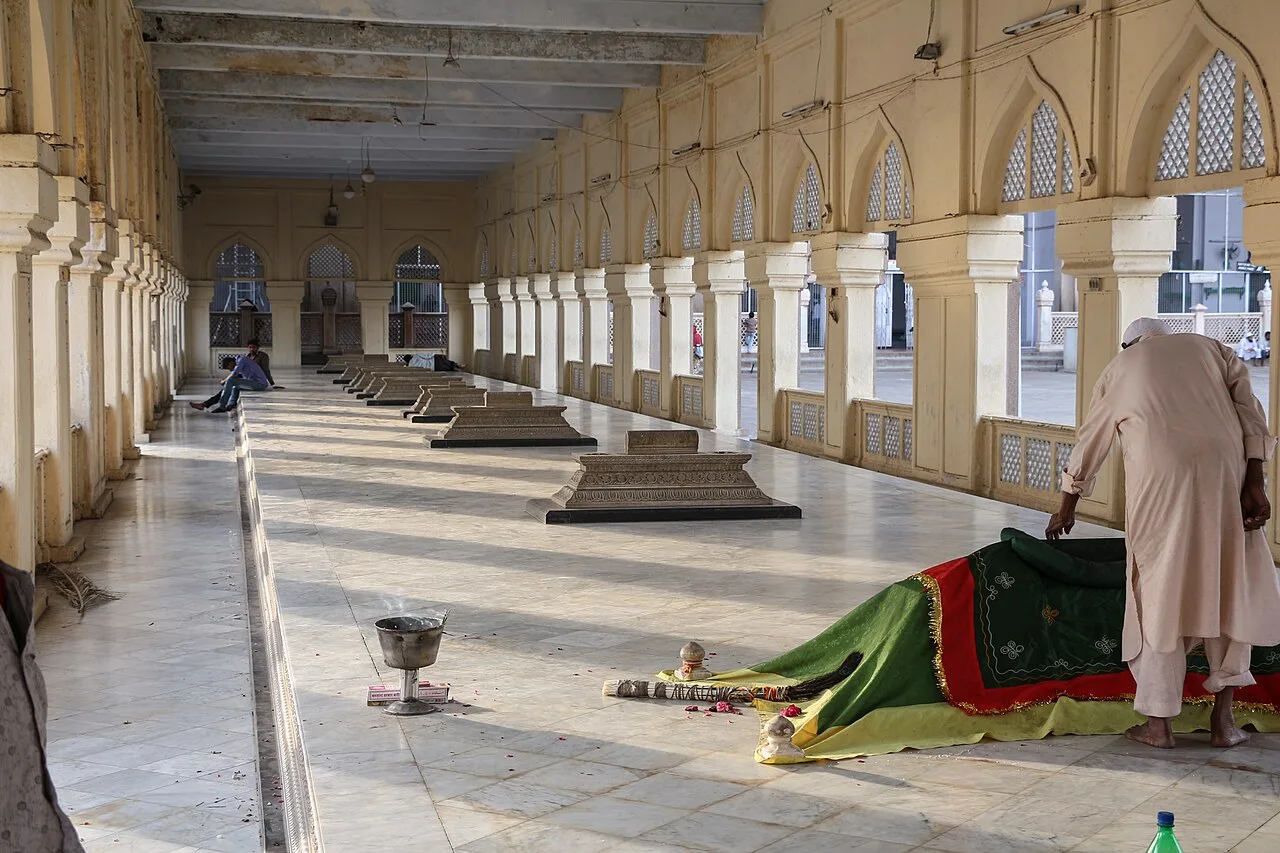
Mecca Masjid was begun under the Qutb Shahi rulers of Golconda during the 17th century. Muhammad Qutb Shah commissioned the mosque, and its construction continued across a period of political change in the Deccan. Mughal emperor Aurangzeb completed it in 1694 CE. Its name is associated with bricks said to have been made using soil brought from Mecca for the central arch. The mosque became an important congregational centre for Hyderabad’s Old City and remains in religious use. Its setting reflects the historic relationship between the mosque, Charminar and the surrounding markets and palaces. The mosque is recognised as a state-protected monument, although it is also a living place of worship, not solely a historic exhibit. The available source summary does not establish a detailed timeline of later repairs or restoration campaigns, so visitors should avoid assuming that every visible feature is original or that a particular restoration date is certain. For current conservation information, consult the relevant Telangana heritage authority.
Origin stories & folklore
According to the well-known account associated with the mosque’s name, Muhammad Qutb Shah had bricks made from soil brought from Mecca, Islam’s holiest city, and used them in the central arch. This story links the building symbolically to pilgrimage and helps explain the name Makkah Masjid. It is best presented as a traditional account rather than as a claim visitors can verify from the structure alone. The mosque’s long construction, royal patronage and prominent place in Hyderabad’s Old City have also encouraged local stories about its past. Treat such accounts as part of living heritage, and distinguish them from documented dates and architectural evidence.
Architecture & design
The mosque is a monumental example of Deccan-era Islamic architecture, built under Qutb Shahi patronage and completed during Mughal rule. Its broad prayer hall faces a large courtyard and is distinguished by a prominent facade of tall arches; the central arch is associated with the traditional account behind the mosque’s name. The building’s substantial masonry and stonework give it a strong, restrained presence amid the dense streets of the Old City. The prayer space is organised around the direction of Mecca, with a mihrab marking the qibla wall. Minarets and elevated architectural details contribute to its skyline, while arcaded areas and open space accommodate worshippers and visitors. The complex is not simply a façade: its courtyard and prayer areas serve practical religious purposes. Entry to particular spaces can be controlled, especially during worship, so visitors should follow local directions rather than treating the layout as an unrestricted monument.
Important objects & sculptures
Look first at the mosque’s large arched facade and the central arch associated with the traditional story of soil brought from Mecca. The prayer hall’s mihrab indicates the direction of prayer, while Arabic calligraphy and restrained decorative details are features to observe respectfully where visible. The courtyard is an important part of the complex and may include historic memorial features; access and interpretation can vary. This is an active mosque rather than a museum, so there may be no visitor collection, labels or displays. Do not touch religious fittings or enter cordoned areas to inspect details. Ask an authorised caretaker or guide before approaching features that are in use for worship.
Religious significance
Mecca Masjid is a Sunni Muslim mosque and a place for congregational prayer, daily worship and religious observance. Its mihrab marks the direction of Mecca, toward which Muslims pray; the mosque does not enshrine a deity or function as a temple. Worshippers may gather for regular prayers, Friday congregational prayer and major Islamic observances. The building’s name and the tradition about soil from Mecca express a symbolic connection to Islam’s sacred geography, but they do not make it a substitute for pilgrimage. Visitors who are not there to pray should remain quiet, follow staff or worshippers’ guidance and avoid interrupting religious activity. Access to prayer spaces may be limited according to worship and local arrangements.
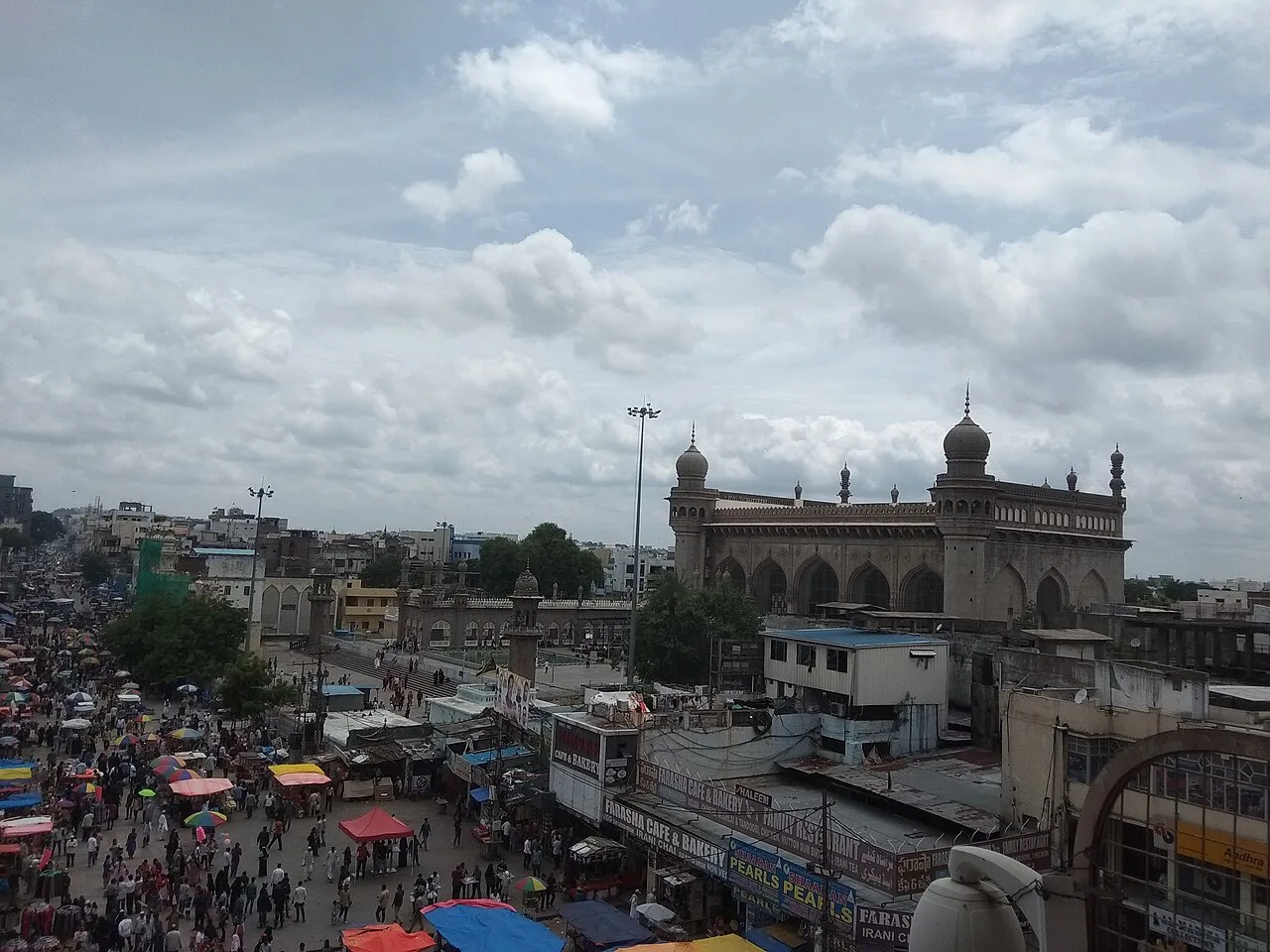
Visit Mecca Masjid with time to observe daily prayers and rituals respectfully. Dress modestly with arms and legs covered, women should carry a scarf, and avoid visiting during Friday prayers unless you are joining them. Beware of unofficial 'guides' or agents offering quick darshan for a fee. A comfortable itinerary is one main visit in the morning, a local meal at midday and a short nearby stop before an afternoon return. In the hot months, plan outdoor sightseeing for early morning and late afternoon, and spend midday in a museum or a long lunch. Use the district list on this site to find other places in Hyderabad, but check the route and its condition before combining stops. If a festival is on — such as Bathukamma and Dasara in autumn, Bonalu in July–August, the biennial Medaram Sammakka Saralamma Jatara, Sankranti or Ramzan in Hyderabad's Old City — roads and stays can be busy, and the experience can be unforgettable. Leave no litter: many sites are protected by the communities around them.
Suggested itineraries
Half day: Allow 1–2 hours for the mosque and its courtyard, then walk to Charminar and browse Laad Bazaar; take a meal break nearby. Full day: Spend the morning at Mecca Masjid and Charminar, visit Chowmahalla Palace, pause for lunch, then explore the Old City markets at an unhurried pace. Gentler option: Arrange a drop-off close to the mosque, visit only the areas open to you, rest between stops and use a taxi between nearby attractions rather than walking the whole route.
The mosque remains embedded in the everyday life of Hyderabad’s Old City, where religious practice shares space with historic markets and neighbourhood streets. Urdu, Dakhni and Telugu are among the languages heard in the wider area, alongside other languages used by visitors and residents. Modest dress and respectful conduct are expected in the mosque. During Ramadan, the surrounding Old City is especially active in the evenings, with food stalls and family gatherings contributing to a seasonal atmosphere. The mosque itself is a place of worship, not a performance venue; visitors should not expect staged music or dance. Its cultural importance is best understood through its continued religious use and its relationship with nearby civic landmarks and markets.
Festivals & events
Ramadan, whose dates shift through the solar calendar, brings increased religious activity and a lively evening atmosphere to Hyderabad’s Old City. Eid al-Fitr after Ramadan and Eid al-Adha are important occasions for Muslim worshippers; congregational prayers can draw large gatherings, subject to local arrangements. Friday prayers also tend to be particularly busy. These are religious observances, not visitor spectacles, so plan around worship and follow any temporary access controls. Nearby Old City streets may experience heavier crowds and traffic during Ramadan and Eid periods. Confirm local arrangements before travelling, especially if you need a quiet visit or have limited mobility.
Local food in Telangana includes Hyderabadi dum biryani, haleem during Ramzan, mirchi ka salan, double ka meetha and qubani ka meetha, Irani chai with Osmania biscuits, and Telangana village dishes such as sarva pindi, jonna rotte with spicy pachadi, natu kodi (country chicken) curry and sakinalu during Sankranti. Ask what is fresh that day; many small eateries cook a limited daily menu. Hyderabad's Old City around Charminar is the place for biryani, haleem and late-night Irani cafés; in the districts, Telangana food is spicy and rustic, with millet rotis and tangy pachadis. Temple towns such as Yadadri, Basar and Bhadrachalam serve strictly vegetarian food. Remote sites may have no restaurant at all. Carry water and snacks, eat a proper breakfast before long drives, and ask your accommodation for a packed lunch if you are heading out early. If prasad is offered, accept it according to local custom. Choose busy, clean places, drink sealed or filtered water, and carry your packaging back with you.
Shopping & local experiences
Laad Bazaar near Charminar is a well-known place to browse bangles, jewellery, textiles and everyday market goods. Shops in the Old City also sell clothing, household items and souvenirs, but quality and prices vary, so compare products and agree terms clearly. Hyderabad’s local food culture is another part of the visit: nearby eateries serve regional dishes, and Ramadan brings seasonal evening food activity across the Old City. Choose food outlets with care and respect queues and local customs. Keep shopping and eating outside prayer spaces, and avoid buying objects presented as religious relics without reliable provenance.
October to February; July to September for waterfalls in Adilabad and Mulugu
The nearest principal railway station by straight-line distance is Hyderabad Deccan (Nampally), roughly 4 km away. The nearest operating airport by straight-line distance is Rajiv Gandhi International Airport, Hyderabad, roughly 14 km away. These figures are calculated from map coordinates — actual road distance is longer. Hyderabad (Rajiv Gandhi International Airport and the Secunderabad, Nampally and Kacheguda stations) is the main gateway; Kazipet and Warangal serve the Kakatiya region, Bhadrachalam Road (Kothagudem) serves the Godavari temples, and Nizamabad, Mancherial and Adilabad serve the north. Inside Hyderabad, the Metro and MMTS suburban trains avoid the worst traffic; app cabs and autos cover the last stretch. Allow extra time at peak hours, when cross-city journeys can take more than an hour. When comparing train, bus and flight, count the complete door-to-door time: a flight saves the most time only if the onward road transfer is short, while an overnight train can save a hotel night. For Telangana, Hyderabad is well linked by air and by overnight trains from most metros; for district sites, an early express train followed by a road transfer is often quicker than driving out of the city. Book your return before you leave, because seats fill quickly on weekends, festivals and holidays. Current train numbers, timings, return services and fares are not listed here; check IRCTC and NTES for trains and the airline's own schedule for flights. No permit is needed to visit Telangana. Monuments such as Golconda Fort, the Qutb Shahi Tombs and Ramappa Temple have entry tickets (buy them online where possible), and several Hyderabad museums and palaces — including the Salar Jung Museum and Chowmahalla Palace — close on Fridays. Jungle safaris in Amrabad and Kawal tiger reserves must be booked in advance through the Telangana Forest Department and do not run in the monsoon closure season.
Confirm onward and return timings on IRCTC / NTES, the state bus operator or your airline before travel. A dash means current timings or fares have not been verified.
Getting around
Autos and app-based taxis can bring visitors to the Old City, though congestion may slow the final approach and vehicle access near the mosque can be restricted. Local buses serve parts of Hyderabad, but routes and stops should be checked for the day of travel. Hyderabad Metro and MMTS can help with longer city journeys; a road transfer or walk may still be needed to reach the mosque. Charminar and nearby landmarks can be explored on foot, but pavements and crossings may be crowded or uneven. Parking in the immediate area can be limited, so consider being dropped off nearby and following local directions.
Hours, tickets & permissions
Mecca Masjid is an active place of worship, so access can depend on prayer, religious observances, security arrangements and the areas open to visitors. Do not assume that every part of the complex is available for sightseeing. Entry rules may include modest dress, removing footwear before entering designated prayer areas, and following instructions from mosque staff. Ticketing, permits, camera rules and any fees can change or differ by area. Confirm current visiting hours, entry conditions and fees with the managing authority or locally before setting out.
Facilities
Facilities within the mosque complex may be limited or reserved for worshippers; check locally for visitor access to toilets, drinking water and shoe storage. Food stalls, restaurants, shops, ATMs and other services are usually available in the surrounding Old City, though availability and convenience vary. Parking may be difficult close to the mosque, particularly during busy periods. Do not assume that an official guide service is available on site. If you need assistance, ask mosque staff or a trusted local information point, and be cautious of unsolicited offers from people claiming they can arrange special access.
Accessibility
The Old City approach can involve crowded streets, uneven walking surfaces and busy crossings. The complex includes open courtyard areas and prayer spaces, but the surface, steps and access arrangements may vary; do not assume that ramps, lifts or wheelchair-accessible toilets are available. Visitors may need to remove footwear before entering designated areas, which can be difficult for some people. Shade and places to sit may be limited or unavailable in parts of the complex. Wheelchair users, people using strollers and elderly visitors may find the approach and movement through crowds challenging. Consider visiting at a quieter time, travelling with a companion and checking access directly with the managing authority.
No permit is needed to visit Telangana. Monuments such as Golconda Fort, the Qutb Shahi Tombs and Ramappa Temple have entry tickets (buy them online where possible), and several Hyderabad museums and palaces — including the Salar Jung Museum and Chowmahalla Palace — close on Fridays. Jungle safaris in Amrabad and Kawal tiger reserves must be booked in advance through the Telangana Forest Department and do not run in the monsoon closure season. Carry a photo ID at all times and save the emergency number 112 and your accommodation's contact offline. Summer heat is the main weather risk — carry water, wear a hat and avoid the midday sun; in the monsoon, allow extra time when roads flood. Watch your belongings in crowds and on public transport, and follow posted instructions.
Visitor rules
Dress modestly, with arms and legs covered; women should carry a scarf and follow any local guidance on head covering. Remove footwear where required before entering prayer areas. Keep voices low, do not interrupt prayers, and follow staff instructions about restricted spaces. Avoid littering and do not touch religious fittings or memorial features. Photography may be limited, particularly inside prayer areas or during worship, so seek permission before taking pictures. Plastic use and other site rules may be subject to local restrictions; check notices and dispose of waste responsibly. Do not pay unofficial agents for promised quick access.
Photography
The mosque’s exterior and arches are striking in soft morning or late-afternoon light, although the streets around it can be busy. Photography rules can vary by area and may change during prayer or security restrictions; ask before photographing inside, worshippers or religious activity. Be discreet and do not interrupt people at prayer for a picture. Keep equipment clear of entrances and crowded passages. Drone use over a historic, religious and densely populated area may be restricted and should not be attempted without the required official permissions. Follow posted signs and instructions from mosque staff.
Choose a stay by the full journey to Mecca Masjid, not just the district name. Hyderabad has stays in every range: Banjara Hills, Jubilee Hills and HITEC City suit business and comfort travellers, while Abids and the Old City are closer to the heritage sights. In summer, check air-conditioning; in the monsoon, check that the property is accessible if roads flood. Book in advance for weekends, festivals and the peak season (October to February; July to September for waterfalls in Adilabad and Mulugu). Confirm the exact location, meals included, check-in time and cancellation terms in writing. Avoid sending money to unverified contacts or touts at stations. Carry some cash, as card and digital payments can be unreliable in remote areas.
Charminar is the closest major historic landmark and is commonly combined with a visit to the mosque. Chowmahalla Palace offers another perspective on Hyderabad’s royal history, while Laad Bazaar is known for its market streets and bangles. The wider Old City contains other historic mosques, shops and food streets, but access and crowd levels vary. These nearby places are within Hyderabad; they are not all part of the mosque complex. Plan extra time for traffic and walking between stops. For a longer city visit, consult current local information before adding attractions farther away.
For couples, Mecca Masjid rewards a slow pace: arrive early for soft light and fewer crowds, share a local meal and keep the evening free. A sunset at Golconda Fort, dinner at a heritage palace in Hyderabad, a boat ride on Laknavaram lake or an evening at Hussain Sagar makes the trip memorable. Public displays of affection can be frowned upon in conservative communities and at religious sites, so be discreet. Keep a buffer in your itinerary, because weather and road conditions can delay plans.
Q: How much time should I allow for a visit? A: Allow about one to two hours for the mosque and courtyard, with extra time for nearby landmarks and traffic. Q: When is the best season to visit? A: October to February is generally more comfortable for Hyderabad sightseeing; summer heat can be intense. Q: Is there an entry ticket, and can everyone enter? A: Entry conditions, fees and access to particular areas can change. Confirm locally and follow the mosque’s directions for visitors. Q: Is the visit suitable for children and elderly visitors? A: It can be, but crowds, uneven surfaces and footwear requirements may be challenging. Keep children close and plan rests. Q: Where can I stay nearby? A: Hyderabad has accommodation across the city. Choose a location that suits your transport needs and check travel time to the Old City.
Be the first to share photos, stories, advice or a helpful contact for Mecca Masjid.
Loading…